You’re a standby passenger when you wait at the gate for an open seat on a flight you haven’t been assigned in advance, relying on the airline’s allocation rules, fare class, elite status, and check‑in time to set your boarding priority. Standby can be voluntary—when you give up a confirmed seat for a possible upgrade—or involuntary, when the airline can’t place you on the original flight. Employee, buddy‑pass, and upgrade standby follow similar rules but have distinct priority codes and fee structures. Ticket class, refundability, and frequent‑flyer status heavily influence your chances, and airlines such as American, Delta, United, and Southwest each have specific policies and fees. Arriving early, checking in promptly, and holding a higher‑priced or elite‑qualified ticket improve your odds; the next sections will show exactly how.
TLDR
- Standby passengers wait for an unassigned open seat on a flight, typically after checking in and staying near the gate.
- Priority is determined by fare class, elite status, and check‑in time; higher‑priced tickets and frequent‑flyer members rank higher.
- Voluntary standby lets passengers give up a confirmed seat for incentives, while involuntary standby occurs when the airline must reassign seats.
- Employee, buddy‑pass, and upgrade standby have separate priority codes and often require early check‑in and specific eligibility.
- Airline policies differ on fees and eligibility; many carriers offer free same‑day standby for premium cabins or elite members, while basic economy may be excluded or incur a charge.
What Does It Mean to Be a Standby Passenger?
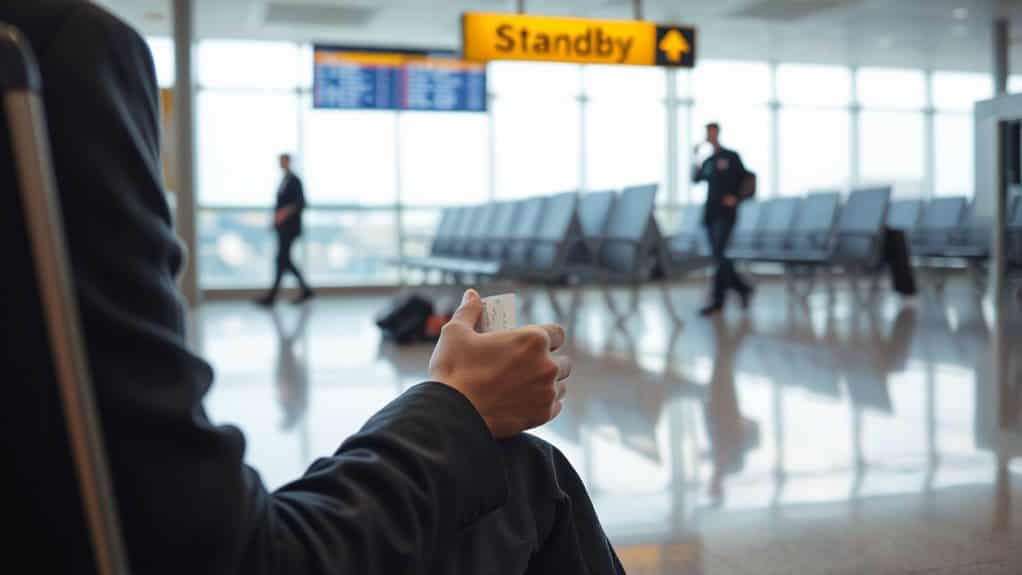
When you’re a standby passenger, you’re basically waiting for an open seat on a flight that isn’t assigned to you in advance. You hold a ticket, check in, and then stand near the gate, hoping extra seats remain after scheduled passengers board. Priority depends on fare class, elite status, and check‑in time. Airlines use algorithms to allocate seats, and you must stay until boarding closes. Standby passengers may also be waiting for a seat that opens due to a cancellation. If you miss your flight, you may need to plan around possible overnight layovers depending on airport and airline policies.
Voluntary or Involuntary Standby – What’s the Difference?
When you volunteer for standby, you’re choosing to give up your confirmed seat in exchange for incentives you negotiate, and you retain control over your travel options. If the airline can’t find enough volunteers, it may place you on involuntary standby, a process driven by operational necessity and governed by strict compensation rules. buddy passes are also subject to strict standby-only operations, meaning seats are never guaranteed and assignments depend on availability. Understanding this distinction helps you decide whether to accept a voluntary offer or prepare for the mandatory rerouting that involuntary standby entails.
Voluntary Standby: Passenger Choice
If you decide you’d rather fly earlier or later than your booked itinerary, you can put yourself on a voluntary standby list.
You must have a confirmed ticket for the original flight, check in early, and request the change at the counter, online, or gate.
Priority depends on fare class, elite status, and request time.
If no seat opens, you stay on your original flight without penalty.
Involuntary Standby: Operational Necessity
Because airlines sometimes have more passengers than seats, they place those affected on an involuntary standby list—a status you didn’t choose and can’t control.
Oversold flights, missed connections, or cancellations force you onto the gate line, waiting for any open seat.
Priority depends on check‑in time, fare class, and elite status, while compensation applies if you’re denied boarding.
You must stay flexible, as rebooking occurs minutes before departure.
What Are Employee, Buddy‑Pass, and Upgrade Standby?
You’ll find that employee standby is limited to non‑revenue travelers who meet specific eligibility rules, such as seniority or check‑in time, and they only get a seat if one opens up after all revenue passengers are boarded. FAA requires drug testing for safety-sensitive airline roles, which is part of the broader compliance backdrop for flight crew and other covered staff. Buddy‑pass standby works similarly, but the passenger pays just taxes and fees, with no ticket cost, and they sit lower on the priority list than active employees. Upgrade standby lets anyone—whether an employee, a buddy‑pass holder, or a regular ticket buyer—request a higher‑class seat after the cabin is filled, with priority given to full‑fare payers.
Employee Standby: Eligibility Rules
When you’re a Delta flight attendant, your standby eligibility kicks in once HR verifies your documentation and loads you into the system, and it extends to a defined group of family members—including spouses, domestic partners, travel companions, dependent and non‑dependent children, and parents.
You can travel only on a space‑available basis, using priority codes S1A, S1, S2, S3, or S3B, with seniority determining order.
Furloughed, on‑leave, sick, OJI, or retired attendants can’t use flowback agreements.
Listings must be created 72 hours before travel, and check‑in closes 24 hours prior, with gate‑level boarding after revenue passengers.
Buddy‑Pass Standby: Tax‑Only Cost
While employee standby eligibility hinges on HR‑verified documentation and seniority‑based priority codes, buddy‑pass standby operates under a different set of rules centered on tax‑only cost.
You pay only taxes and fees, no fare, and the charge appears on the employee’s payroll or credit card after travel.
Seats are allocated after all revenue passengers, so you’ll be low on the priority list and must check in early.
What Factors Determine a Passenger’s Standby Priority?
Your standby priority is shaped by a handful of concrete factors that airlines weigh in a specific order.
Ticket class and fare type matter first—refundables outrank discount fares, while basic economy often blocks standby.
Frequent‑flyer status follows, with elite members ahead of non‑members.
Check‑in timing breaks ties within the same class and status.
Involuntary bumps and missed connections jump to the top, regardless of fare or status.
Corporate designators, partner cabins, and airline credit cards can also enhance placement.
How Do I Request Standby at the Airport?
When you get to the airport, head straight to the ticket desk and show your boarding pass to the agent.
Ask them to add you to the standby list and confirm any required details, then proceed to the gate and wait for clearance.
Keep in mind that solid snacks are generally easier to screen than liquids, so if you’re carrying food it can help to have solid items accessible while you wait.
Keep an eye on the display or your phone for updates, and be ready to board as soon as your name is called.
Find Ticket Desk
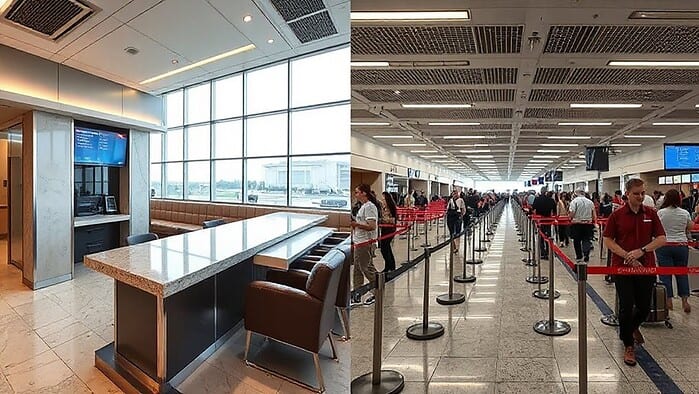
Most airlines require you to go directly to the ticket desk or check‑in counter to request standby, so you’ll want to locate the airline’s designated area as soon as you arrive at the airport.
United agents sit at the check‑in desk; Southwest staff are at ticket counters or gates; American crew assists at counters and gates.
Arrive early, identify signage, and ask the representative to add you to the standby list.
Show Boarding Pass
How do you actually get a boarding pass when you’re on standby?
Go to the airline’s check‑in counter, tell the agent you want to be added to the standby list, and confirm your fare and status.
United agents handle it in person; Southwest lets you add yourself via the app 60 minutes before departure.
Fees vary—United $75, free for Premier; Southwest free for eligible fares.
Arrive early, keep your ID handy, and watch for the gate‑agent’s call.
Await Gate Clearance
After you’ve secured a boarding pass for your original flight, the next step is to get gate clearance for standby.
Arrive at the gate early, show your pass, and tell the agent you’re on the standby list.
Keep an eye on the airline app for your position, stay polite, and wait until the flight boards for any last‑minute seat.
When Do Travelers Typically End Up on Standby?
When a flight is delayed, cancelled, or overbooked, you’ll often find yourself placed on standby for the next available service. You end up on standby after missing a connection, when your original flight is canceled, or if the airline overbooks and bumps you. Early arrivals can request standby for an earlier flight, and a no‑show or late arrival may also trigger involuntary standby placement. weather cancellations can also increase the odds of being offered standby as airlines adjust schedules during disruptions.
Which Ticket Classes and Elite Status Qualify for Airline Standby?
If you’re wondering which tickets and loyalty tiers let you sit on the standby list, the answer varies by carrier but follows a common pattern: higher‑priced cabins and elite members receive free or reduced‑fee standby, while basic economy fares usually incur a charge or are outright ineligible. You’ll qualify with business or first class, unrestricted economy, or any elite status—American AAdvantage Platinum/Gold, Delta Medallion Diamond/Platinum/Gold, United Premier, Southwest A‑List, Alaska MVP Gold, or Frontier Elite—while basic fare holders typically pay a fee or are excluded. Rail over road is generally faster and safer in Bangkok, but airline standby policies still depend on the specific airline and fare rules.
Airline‑Specific Standby Policies You Need to Know
Airline‑specific standby policies differ enough that you need to know each carrier’s rules before you try to hop on an earlier flight.
American lets you standby for free same‑day if you’re elite or in premium cabins; otherwise a $75 fee applies and economy tickets can’t.
Delta offers free same‑day standby via the app for eligible fares, but basic economy is excluded and a $75 change fee applies.
United gives free standby to Premier members, non‑Premier pay $75.
Southwest lets you standby free same‑day if you add to the list ten minutes before departure; missing that window counts as a no‑show.
Spirit charges $99 for same‑day standby unless you’re elite, and a $99 fee applies for different‑day changes.
Proven Strategies to Increase Your Standby Clearance Odds
A solid way to increase your chances of clearing standby is to align your fare type, loyalty status, and timing with the airline’s priority rules.
Choose refundable or flexible tickets, secure elite status, and request standby the moment online check‑in opens.
Arrive at the gate early, especially on mid‑week off‑peak flights.
Prioritize routes with lower demand and watch for distressed‑passenger alerts.
If You Don’t Clear Standby, What Are Your Options?
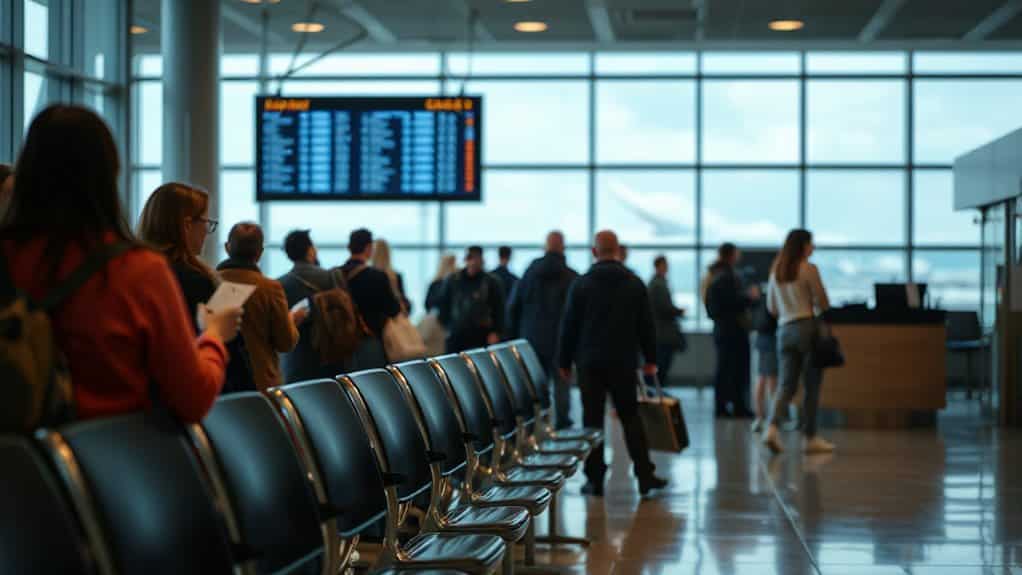
When you’t’t clear standby, you still have several viable paths to reach your destination. You can ask the gate agent to re‑tag your luggage for the next flight, check non‑rev loads on StaffTraveler, or request a same‑day confirmed change for a fee.
Refunds cover unused buddy passes, taxes, and fees, and you may switch airlines, though you’ll need to collect baggage and rebook manually.
And Finally
Understanding standby means knowing your ticket type, airline policies, and priority factors. You can increase your chances by arriving early, checking flight status, and using elite status or employee perks when available. If you don’t clear, you’ll receive a refund or credit, or you can rebook on a later flight. Keep these details in mind to manage standby efficiently and make informed travel decisions.