Pick a well‑lit, high‑traffic ATM or bank lobby and inspect the reader for loose parts, mismatched colors, or broken seals before inserting your card. Shield the keypad with your hand while entering your PIN to block shoulder‑surfing and hidden cameras. Verify the terminal supports EMV chip transactions, which generate a unique encrypted code for each purchase. Review foreign‑transaction and ATM fees, set real‑time mobile alerts, and keep a backup credit card stored separately. If you continue, you’ll find out more details.
TLDR
- Choose ATMs in bank lobbies or well‑lit, high‑traffic indoor locations and verify the machine looks intact before use.
- Inspect card readers for loose parts, mismatched colors, or broken seals, and cover the keypad with your hand while entering the PIN.
- Ensure the terminal supports EMV chip transactions; chip‑based encryption prevents cloning and adds a PIN security layer.
- Enable real‑time transaction alerts, submit travel notices, and confirm foreign‑transaction fee‑free networks before departure.
- Keep a backup card stored separately (e.g., hotel safe) and report any suspicious charges to the bank immediately.
Choose a Safe, Well‑Lit ATM for Travel Card Use
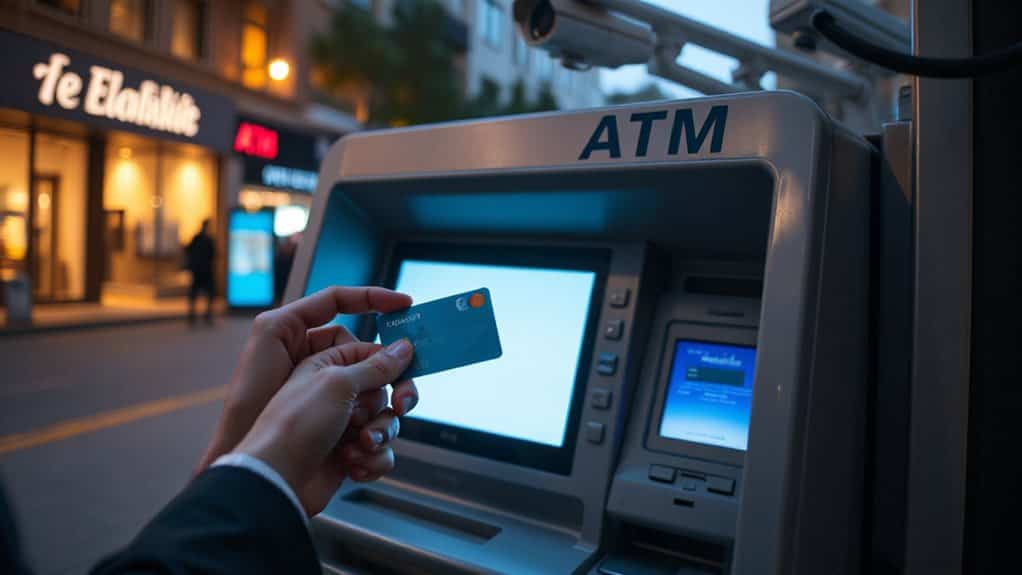
Pick a well‑lit, busy ATM before you insert your travel debit card. You’ll find bank or hotel lobbies secure, monitored, and staffed, which deters tampering and muggings. For TSA liquid rules planning, remember that carry-on toiletries must be 3.4 oz (100 ml) or less and placed in a clear quart-sized bag. Choose indoor, high‑traffic spots where crowds provide natural surveillance and bright lighting lets you scan for suspicious behavior. Verify the machine belongs to a reputable network and that your card is accepted, ensuring safe, hassle‑free withdrawals. Cash accessibility remains crucial for vulnerable users, especially in deprived urban areas.
Inspect Card Readers for Skimming to Ensure Travel Card Safety
Before you insert your card, scan the reader for crooked edges, loose parts, or any extra attachments that could hide a skimmer. If anything looks off, move to another machine and keep your hand over the keypad while you enter your PIN. Covering the keypad also blocks shoulder‑surfers and hidden cameras, adding an extra layer of protection. pickpockets target crowded areas so keep your card and PIN shielded when using machines in busy London transport hubs.
Detect Suspicious Card Readers
When you approach a card‑reading terminal abroad, start by giving it a quick visual inspection. Look for loose parts, mismatched colors, bulging sections, or broken tamper‑evident seals.
Wiggle the slot; a sturdy feel means it’s likely legit.
Check security seals on ATMs and gas pumps for “void” labels.
Scan the area for hidden cameras or lenses.
If anything feels off, avoid using that reader.
Cover Keypad While Scanning
If you place your hand or palm over the keypad while entering your PIN, you block any hidden camera that might be watching the keys.
Use your opposite hand to shield the numbers on ATMs, gas pumps, or POS terminals, and even a hat for full coverage.
This simple habit stops skimmers from recording keystrokes, complements contactless payments, and works everywhere you travel.
Cover Your PIN When You Type It at ATMs or Stores
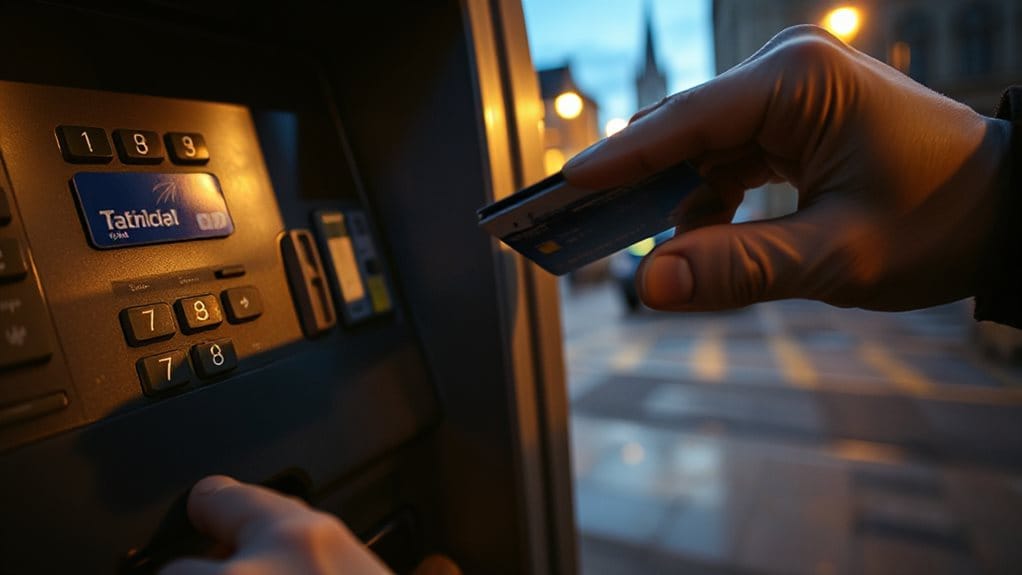
Cover your PIN whenever you enter it at an ATM or a point‑of‑sale terminal to block shoulder‑surfing and hidden‑camera attacks. Choose busy, well‑lit machines, inspect readers for odd parts, then shield the keypad with your hand or body. Keep eyes on surroundings, never whisper the code, and review statements promptly. This simple habit cuts fraud risk dramatically while preserving your travel freedom—TSA PreCheck pat-down avoidance starts with being prepared and staying aware of your surroundings.
Use Chip‑Activated Terminals for Travel Card Safety
Shielding your PIN at the keypad is only half the battle; the next step is to make sure the terminal you use can read the chip on your debit card.
When you insert or dip the card, the EMV chip creates a unique, encrypted code for that purchase. This code can’t be copied, so counterfeiters can’t reuse it.
Chip‑enabled terminals are standard worldwide, especially in Europe, and they often require a PIN, adding another layer of protection while you travel freely.
Also, look for EMV chip support on the payment terminal so it processes encrypted, per-transaction chip codes instead of relying on less secure magnetic-stripe methods.
Check Foreign Transaction and ATM Fees Before You Travel
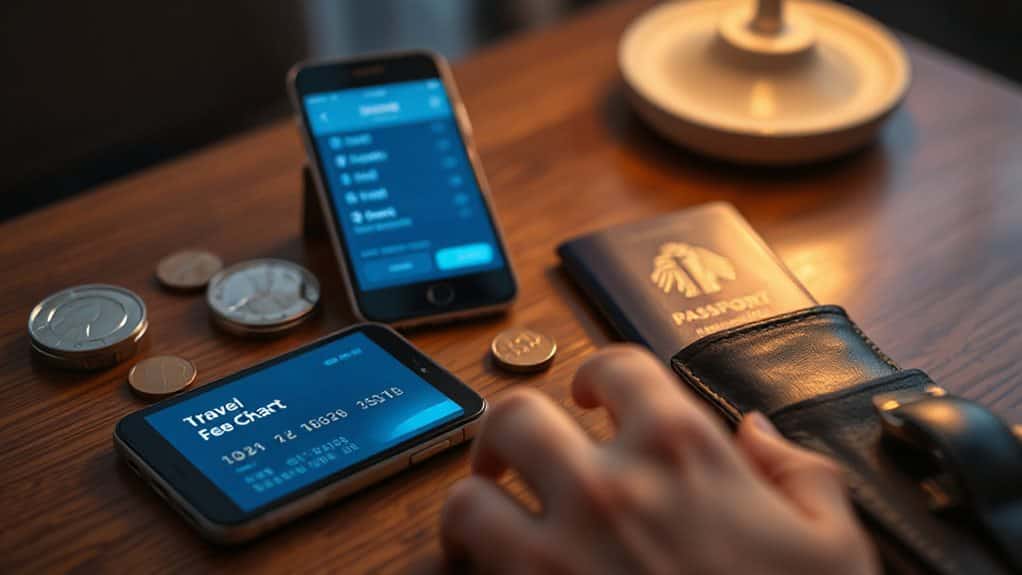
Before you book your trip, look up the foreign transaction and ATM fees your cards charge, because those costs can quickly add into your travel budget. Compare cards that waive the 2‑3% fee, like Chase Sapphire Preferred or Charles Schwab Checking, and note ATM partner networks that eliminate $2‑$5 withdrawals. Choose a fee‑free option to preserve your spending freedom abroad. Keep an eye on carry-on size limits as well, since enforced baggage rules can add unexpected costs or delays during boarding.
Tell Your Bank You’re Traveling and Verify Visa/PLUS Compatibility
After comparing fees, the next step is to let your bank know you’ll be abroad and confirm that your debit card works with the local Visa or PLUS network.
Use your bank’s app or website to submit a travel notice, even if it isn’t required, and verify that the card’s EMV chip and PIN will be accepted.
Update email and mobile contacts so the bank can reach you for fraud checks, and ask about daily withdrawal limits and any country‑specific restrictions.
This helps smooth ATM access and prevents unexpected freezes.
Before your trip, consider adding a request with American Airlines Special Assistance if you’ll need any onboard accommodation during travel, since advance documentation can improve availability.
Set Up Real‑Time Mobile Alerts for Travel Card Activity
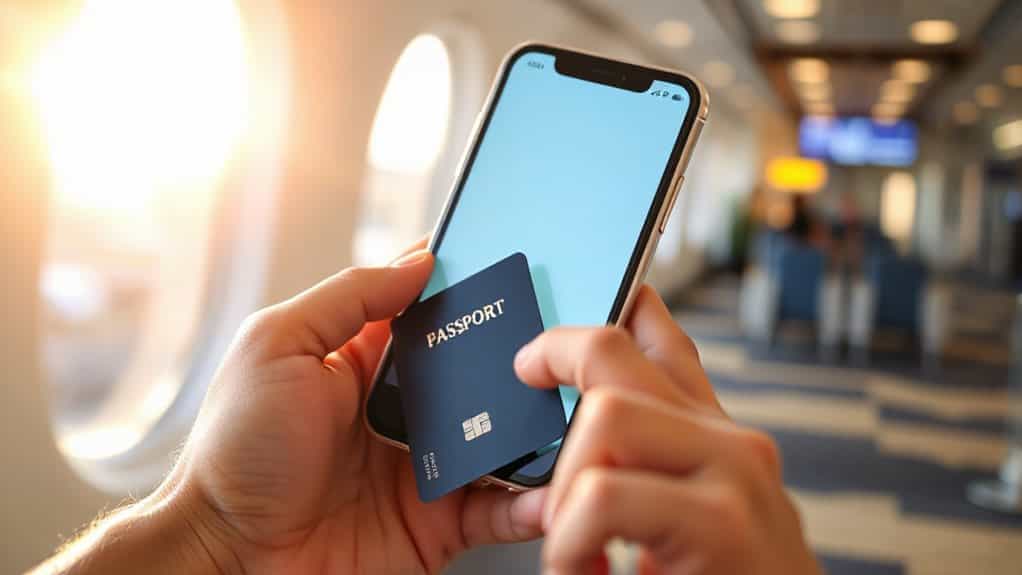
Ever wondered how to keep tabs on your debit card while you’re abroad? Log into your banking app, select the travel card, and tap alerts.
Add destinations, dates, and verify with a security token.
Choose push, text, or email notifications for transactions, low balances, and suspicious activity.
Set up the same in online banking, and you’ll receive real‑time alerts that protect your funds and keep you free to discover.
Avoid Foreign Prepaid Cards and Understand Liability
If you rely on a foreign prepaid travel card, you’ll quickly uncover that hidden fees, limited protection, and regulatory gaps can turn a convenient tool into a costly liability.
You’ll face foreign transaction, ATM, and inactivity fees that pile up, often exceeding the card’s value.
Fraud, limited merchant acceptance, and absent zero‑liability safeguards increase risk, while foreign issuers lack strong AML tools and legal recourse.
Choose alternatives that protect your freedom and finances.
Carry a Backup Credit Card Safe and Accessible
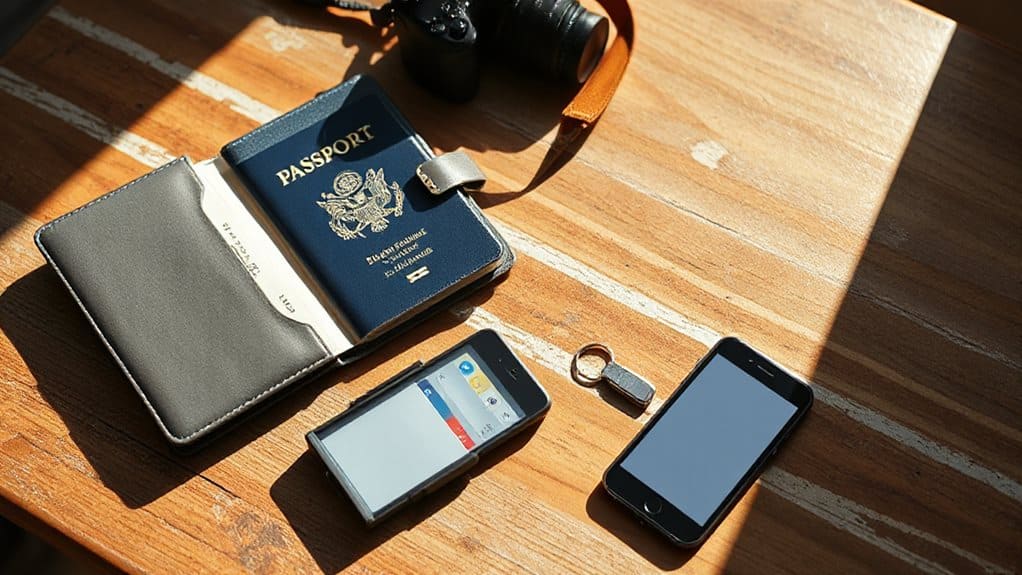
You should keep your backup credit card in a secure spot separate from your primary card, like a hotel safe or a hidden pouch, to limit exposure if one is lost or stolen.
By storing it apart, you also avoid hitting the same transaction limits on both cards, ensuring you have usable funds when needed.
This simple separation lets you access the backup quickly while keeping it safe from theft or accidental misuse.
Emergency Card Storage
When you’re abroad, keeping a backup credit card in a hotel safe is the most reliable way to protect your finances.
Use separate hiding spots—books, luggage compartments, or unworn shoes—if a safe isn’t available.
Activate the card, set travel notifications, and verify international use before departure.
Store digital copies in a password‑protected manager, and set phone alerts to retrieve the card when you check out.
Separate Transaction Limits
Storing a backup credit card in a hotel safe protects your finances, but you also need to manage how each card can be used abroad.
Use your debit for ATM cash, respecting daily caps of £300‑£500, and switch to your credit card for purchases to stay under its separate limit.
Alternate cards to avoid fees, enable travel alerts, and keep issuer contacts handy for quick assistance.
Report Unauthorized Charges Immediately and Follow Visa Zero‑Liability Steps
Notify your bank the moment you spot an unfamiliar charge, because prompt reporting is essential to keep Visa’s zero‑liability protection intact.
Call Arbor Financial at 269‑375‑6702 or use the mobile app to flag the transaction.
Review statements daily, set alerts, and act within five business days to receive provisional credit.
Prompt action preserves zero liability and speeds fund replacement.
And Finally
By staying alert at well‑lit ATMs, checking for skimmers, covering your PIN, and using chip‑enabled terminals, you’ll keep your travel debit card safe abroad. Review foreign transaction and ATM fees ahead of time, enable real‑time alerts, and know your liability limits. Carry a backup credit card in a secure spot, and report any unauthorized charges immediately to follow zero‑liability procedures. These steps protect your funds and help you avoid costly surprises while traveling.