You’ll need accurate paperwork, correct HS codes, and a completed 6059B form to clear U.S. customs quickly and avoid unexpected duties. Gather a commercial invoice, packing list, and Certificate of Origin before you arrive, and fill out Form 5106 with up‑to‑date broker info. Declare any cash or monetary instruments over $10,000 on FinCEN 105, and list all food, plants, alcohol, tobacco, and prized items on the declaration. Remember the $800 duty‑free limit was removed in August 2025, so items above that amount may be taxed. If you follow these steps, the next section will show you how to handle prohibited items and penalties.
TLDR
- Complete the U.S. customs declaration (Form 6059B) with full name, birthdate, citizenship, passport number, and address in capital letters.
- Declare all items, including food, plants, alcohol, tobacco, and valuables; use accurate HS codes and provide a commercial invoice and packing list for shipments.
- Be aware that the $800 de‑minimis exemption ended on August 29 2025; any goods exceeding $800 per person may incur duties and tariffs.
- Report cash or monetary instruments over $10,000 using FinCEN Form 105 and declare them to customs officers upon entry or exit.
- Register high‑value items with CBP Form 4457 or use an ATA Carnet for professional samples to simplify re‑entry and avoid import taxes.
Why a Smooth Customs Check Starts With Document Prep

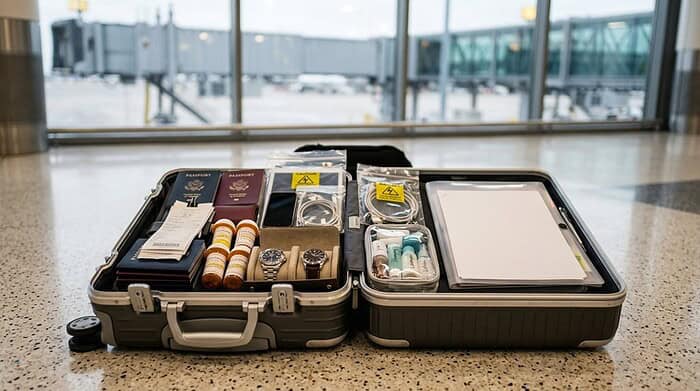
If you gather all required paperwork before you even step foot in the customs area, the inspection process will run far smoother. Accurate HS codes, matching the material and use, prevent delays and penalties. State the exact country of origin and attach a Certificate of Origin. Prepare a commercial invoice with detailed descriptions, values, and Incoterms. Include a packing list with dimensions, weights, and HS codes. Verify any needed licenses or permits. Review the CBP Form 5106 to keep broker contact information current. Also, double-check that your shipments and carry-on items follow the relevant aircraft/airport rules such as carry-on size limits, since mismatches can create delays that spill into your arrivals and documentation workflow.
How to Complete the U.S. Customs Declaration Form 6059B?
When you sit down to fill out the U.S. customs declaration, print your last name, first name, and middle initial in capitals.
Enter your birthdate as day/month/year, then list citizenship, passport number, and address.
Mark transportation mode, flight or vessel name, and arrival port.
Answer yes or no on agriculture, livestock, and monetary thresholds.
Finally, describe each item and its approximate value.
Which Items Exceed the $800 Duty‑Free Allowance?
Most travelers now need to assume that every item they bring into the United States will be subject to duty, because the $800 de‑minimis exemption was eliminated on August 29 2025.
Any product—electronics, clothing, souvenirs, or gifts—exceeding $800 per person per trip triggers tariffs.
Even small parcels, previously exempt, now require full customs entry and tariff assessment, regardless of origin or declared value.
How to Report Currency and Monetary Instruments Over $10k?
The $800 duty‑free exemption is gone, and now the next big compliance hurdle for travelers is declaring any currency or monetary instrument that totals more than $10,000.
When flying internationally in a private aircraft, your crew and passengers must also be prepared for customs and immigration checks that can include documentation review.
You must complete FinCEN Form 105 and present it to the customs officer when entering or leaving the U.S., or file it online before travel.
Include all cash, traveler’s checks, negotiable instruments, and securities.
If you receive money abroad, report it within 15 days.
Failure to report can lead to confiscation and severe civil or criminal penalties.
Prohibited Foods, Plants, and Animal Products for Travelers
You’ll find that fresh fruits, vegetables, and any unpackaged produce are off‑limits because they can carry invasive pests, so you must declare every such item you carry. Meat, dairy, and even foods containing animal ingredients—like soups or sweets with raw eggs—are prohibited unless they’re specially processed and declared, and failing to do so can lead to seizure and fines. Likewise, soil, seeds, bulbs, and live plants require permits or are entirely banned, so you should check the regulations before packing any botanical souvenirs. Also, if you’re unsure whether an item falls under prohibited animal products, declare it rather than risk penalties.
Fresh Produce Restrictions
If you’re traveling to the United States, you must declare every agricultural item you’re carrying—fresh fruits, vegetables, plants, seeds, soil, and even plant‑based souvenirs—on the CBP declaration form, regardless of where you bought them or whether they touched a farm or pasture beforehand.
Fresh produce like citrus, mangoes, or Canadian potatoes is generally prohibited because pests could hitch a ride.
Only commercially canned or sealed dry foods are allowed, and you should keep receipts to prove origin.
Declare everything; penalties for non‑declaration can reach $10,000.
Meat and Dairy Limits
Fresh meat and most dairy items are off‑limits for travelers entering the United States, and you must list every such product on your CBP declaration form even if it’s sealed, packaged, or purchased abroad.
Declare canned, cured, or dried meats, sausage, bouillon, and any meat‑based soup mix.
List all milk, butter, yogurt, hard cheeses, and egg products, noting that soft cheeses and fresh dairy may be denied.
Receipts help, but penalties follow undeclared items.
Soil and Seed Bans
Because soil can carry foreign pests and diseases, the United States bans all soil‑related products from entering the country.
You must declare any soil, seeds, or plant material to CBP on arrival, even if you think they’re harmless.
Small seed lots (≤12) may enter without a permit, but larger shipments need a PPQ 587 permit and must be pest‑free, labeled, and free of soil.
Honest declaration avoids penalties.
Alcohol, Tobacco, and Gift Limits: Avoid Unexpected Duties
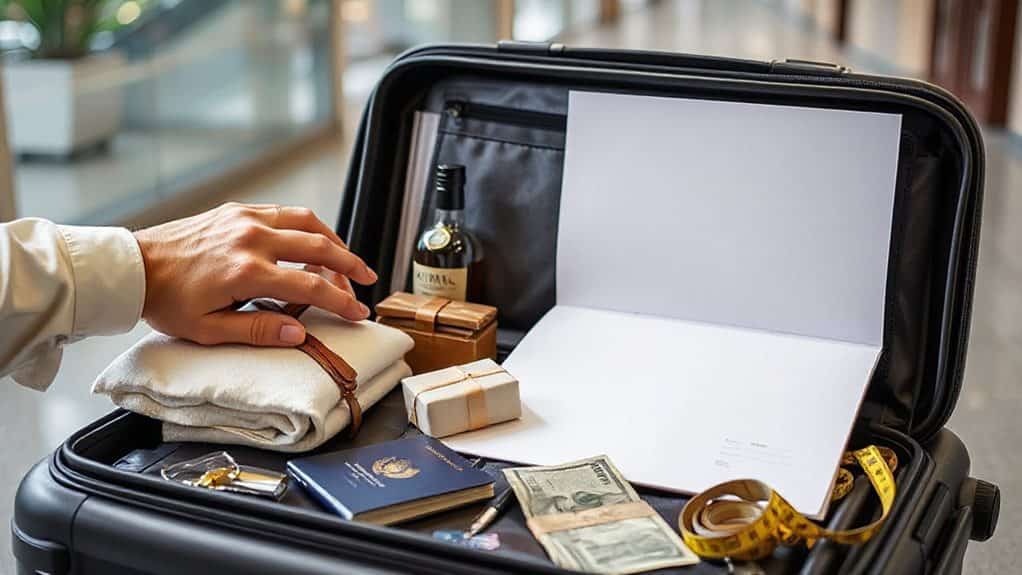
You can bring up to 200 cigarettes, 50 cigars, or 2 kg of smoking tobacco duty‑free, but the total amount must stay within the personal‑use limits and Cuban cigars are excluded.
You may also carry one liter of beer, wine, or liquor, split among types, but any excess triggers duty.
Gifts and prohibited items can’t include cigarettes, alcohol or perfumes over $5, and only up to 100 cigars qualify under the $100 gift exemption.
Declare anything beyond these caps.
For checked baggage, alcoholic beverages between 24–70% ABV are limited to 5 liters per person, and anything over 70% ABV is not allowed.
Register Valuables With Form 4457 and Use Carnets for Samples
If you’re taking high‑value personal items abroad and want to avoid duties when you return, registering them with CBP Form 4457 is the simplest solution. Bring your items to a CBP office, list serial numbers and values, and get the form stamped before departure. Keep the stamped certificate; it proves U.S. origin and speeds re‑entry. For professional samples, consider an ATA Carnet to bypass foreign import taxes and simplify temporary export. Prescription travel rules also matter—travel with your medication in original packaging and carry documentation so you don’t run into airport issues.
Step‑by‑Step U.S. Entry Process at Immigration & Customs
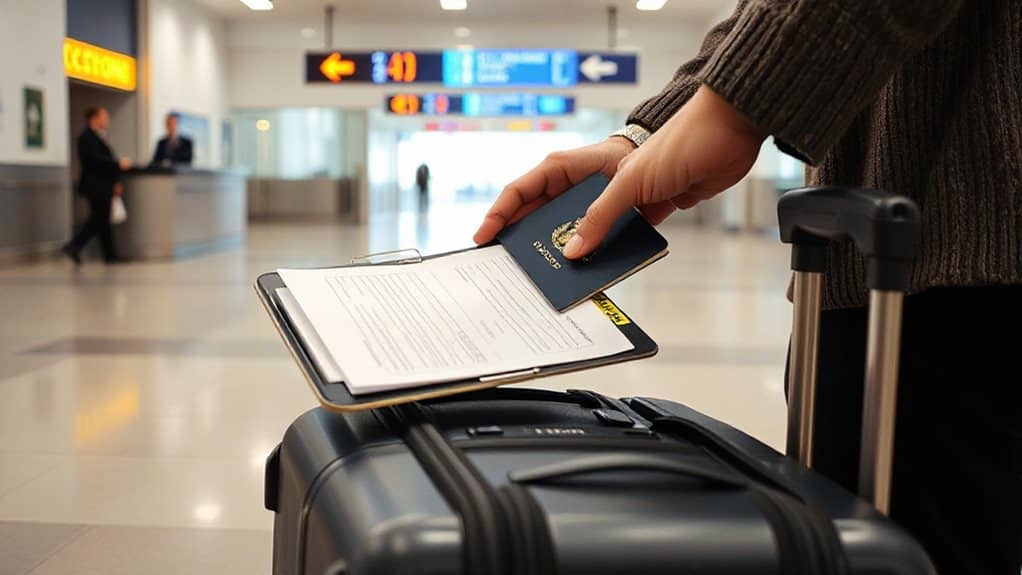
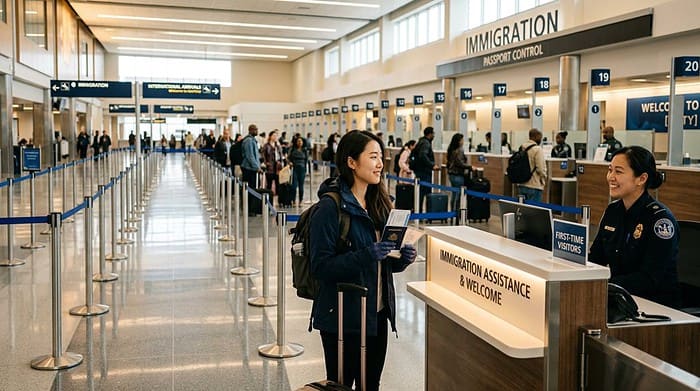
When you arrive in the United States, the entry process begins with presenting your passport, completed U.S. customs declaration form, and any student paperwork like an I‑20 or DS‑2019.
CBP officers will scan your electronic I‑94, ask why you’re entering, and may request university or financial documents.
They’ll stamp your passport with “F/1 D/S” if applicable, then let you proceed.
Penalties for Undeclared Items and How to Prevent Them
Because the U.S. Customs system treats oversight lightly, you’ll pay duties on items under $100 without penalty, but you must still declare them. Intentional concealment can trigger forfeiture, fines up to six times the duty, or even criminal charges for high‑value or prohibited goods. Prevent trouble by truthfully completing Form 6059B, knowing the $800 residence and $100 visitor exemptions, and double‑checking cash, food, and agricultural items before you board. Also, if you’re carrying any liquids in your carry‑on, make sure they follow the 3‑1‑1 Rule to avoid confiscation or delays at security.
And Finally
By preparing your documents, knowing the $800 duty‑free limit, and declaring any excess cash, foods, or essential items, you’ll keep the customs process smooth and avoid unexpected fees. Remember to fill out Form 6059B accurately, respect prohibited item rules, and use Form 4457 or a carnet for high‑value samples. Following these steps helps you clear immigration and customs efficiently, reducing penalties and ensuring a hassle‑free entry.