
You can enjoy European luxury hotels without blowing your budget because the market, valued at €35 billion in 2025, offers many rooms under €200‑€150 in places like Budapest, Sofia, Lisbon, and Berlin, while still providing high‑end amenities and personalized service. These affordable options often sit in historic buildings or modern boutique sites and include wellness features such as spas and eco‑friendly practices. The market’s 5 % CAGR means more choices are emerging, and the next section will show you exactly where to find them.
TLDR
- Target Eastern European cities like Budapest, Sofia, and Berlin, where luxury hotels such as Corinthia Budapest and Hilton Sofia offer rooms under $200.
- In Southern Europe, Lisbon and Greek islands provide boutique luxury stays below €180, delivering high‑end amenities at affordable rates.
- Look for hotels with average room rates around €489 (€570 USD) and seek special promotions or off‑season pricing to reduce costs.
- Prioritize properties that emphasize wellness and personalized experiences, as they often add value without significantly raising the price.
- Use price‑comparison tools and book directly with chains (e.g., Accor, Marriott) to access member discounts and package deals for affordable luxury.
How Big Is the European Luxury‑Hotel Market and How Fast Is It Growing?

How big is the European luxury‑hotel market, and how quickly is it expanding? You’ll see it valued at €35.36 billion in 2025, part of a global $118.3 billion sector. It’s projected to rise from $30.36 billion in 2025 to $33.01 billion in 2026, reaching $50.18 billion later. The CAGR of 5.14 % outpaces the global 3.43 % and signals strong, sustained growth. The market is moderately concentrated with large chains like Accor and Marriott holding significant share. Consumer demand for quality stays is being driven by preferences for amenity-rich yet affordable options on long-haul travel routes.
Top Growth Drivers for the European Luxury‑Hotel Market
You’ll notice that the surge in high‑net‑worth travelers is reshaping demand across Europe’s luxury‑hotel sector, pushing properties to offer more personalized, high‑value experiences.
At the same time, sustainable wellness‑focused stays—spanning spa retreats, eco‑luxury packages, and authentic cultural immersions—are becoming a core part of the value proposition.
Together, these trends are driving higher occupancy and premium pricing while keeping the market competitive and resilient.
Travelers should also remain vigilant in major tourist areas, especially near landmarks where pickpocketing and distraction tactics are common.
HN‑Net‑Worth Travel Surge
What’s driving the surge of high‑net‑worth individuals (HNWI) across Europe is a blend of rising disposable income and expanding purchasing power among affluent travelers. You’ll see Northern and Eastern markets gaining wealth, while emerging economies add new luxury seekers. Business travel rebounds 10 % annually, and long‑haul leisure arrivals grow 6 % in 2026, all fueling premium hotel demand.
Sustainable Wellness‑Focused Experiences
Why are sustainable wellness experiences becoming a cornerstone of Europe’s luxury‑hotel growth? You’ll find that the market hit $3.65 bn in 2026 and is set to climb to $4.56 bn by 2031, driven by preventive‑health focus, green‑spa certifications, and demand for organic, low‑waste treatments. Alpine cryotherapy, Mediterranean thalassotherapy, and revitalized Eastern European thermal baths illustrate how personalized, eco‑friendly programs enhance stays, rates, and repeat visits.
Emerging Guest‑Experience Trends in European Luxury Hotels
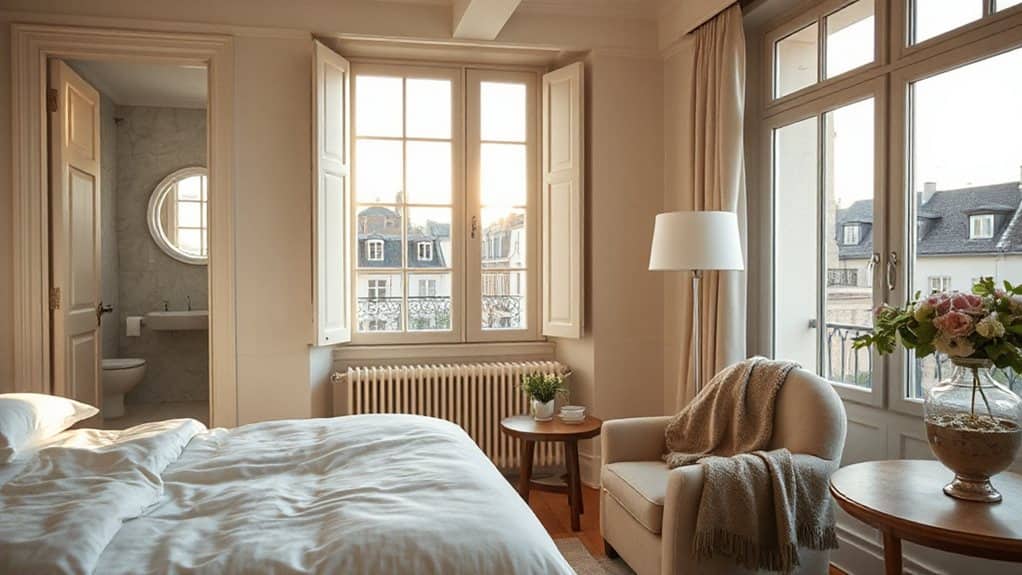
How are European luxury hotels reshaping your stay? They hyper‑personalize by analyzing past trips, social media, and preferences like pillow type or room temperature, then pre‑set those details before arrival.
Experiential luxury adds sensory lighting, scents, and co‑created itineraries, while heritage authenticity converts historic monuments into upscale venues with compelling stories.
Urban wellness blends city‑center gyms and magnesium pools, and unified tech‑privacy platforms protect data, enabling real-time, consent‑driven service.
Most Affordable Luxury‑Hotel Regions Across Europe
Ever wondered which European regions let you enjoy luxury without blowing your budget? In Eastern Europe, Hungary’s Corinthia Hotel Budapest stays under $200, while Bulgaria’s Sofia Hilton and Moon Boutique Hotel offer $126 doubles with breakfast.
Portugal’s Lisbon boasts 168 hotels under $150, and Greece’s Kastellorizo provides sea‑view rooms at €180.
Germany’s Berlin lists 78 hotels under $99 near attractions.
Pricing Benchmarks & RevPAR Outlook for European Luxury Hotels

Where do the numbers stand for luxury‑hotel pricing and RevPAR across Europe? Average room rates sit at EUR 489.09 (USD 570) nightly, while penthouses exceed EUR 2,500. RevPAR is projected to rise 1 %–3 % in 2026, driven by ADR gains and a 1.1 % growth forecast for 31 markets. Spain’s RevPAR jumped 11.5 % to USD 137.90, and Milano‑Cortina’s Olympics lifted Q1 RevPAR by nearly EUR 21. Nights in cities with vibrant rooftop bars also support higher average rates as travelers pay for skyline views.
Competitive Landscape of the European Luxury‑Hotel Industry
The strong RevPAR gains highlighted earlier set the stage for a closely contested market, where a handful of global chains and regional players vie for dominance across Europe’s luxury segment. You’ll see Accor, IHG’s voco, Hyatt, Hilton, Marriott, Melia and others racing to fill 174 new luxury projects and 21,249 rooms.
Competition intensifies from boutique rentals, budget hotels, and mid‑scale urban brands, while quality‑over‑quantity shifts and AI‑driven personalization reshape strategies. Travelers and operators increasingly balance guest expectations with practical concerns like luggage tracking and screening compliance to maintain seamless service.
And Finally
You now see that Europe’s luxury‑hotel market is sizable and expanding, driven by affluent travelers, digital booking tools, and sustainability trends. Guest‑experience innovations—personalized services, tech‑enhanced rooms, and local immersion—are reshaping expectations while keeping costs manageable. Regions such as Central Europe, the Mediterranean fringe, and emerging Eastern hubs offer the best price‑to‑luxury ratios. Pricing benchmarks suggest steady RevPAR growth, and a competitive landscape ensures diverse options for budget‑conscious luxury seekers.


