
You should spend at least four days in Bangkok to comfortably see major sights like the Grand Palace, Wat Pho, and Wat Arun, and investigate markets and riverside culture. Efficient ferry routes and clustered attractions make touring manageable. For a deeper experience, a week allows visits to hidden spots and local neighborhoods. Your budget and travel pace matter—luxury or extended stays often reveal more. Seasonal weather also shapes your plans. There’s more to contemplate based on your travel style.
TLDR
- First-time visitors should spend at least 3 days to comfortably see Bangkok’s major temples, markets, and river attractions.
- A 4-day itinerary allows a more relaxed pace to cover key sights like the Grand Palace, Wat Pho, and Wat Arun.
- For deeper exploration including canals, hidden spots, and cultural experiences, plan a week-long stay.
- Budget and travel style influence duration; micro-trips of 1–3 days suit those with limited time or tight budgets.
- Peak season (November–February) offers ideal weather, but longer stays help avoid crowds and discover quieter city gems.
The Reality of Bangkok’s Major Attractions
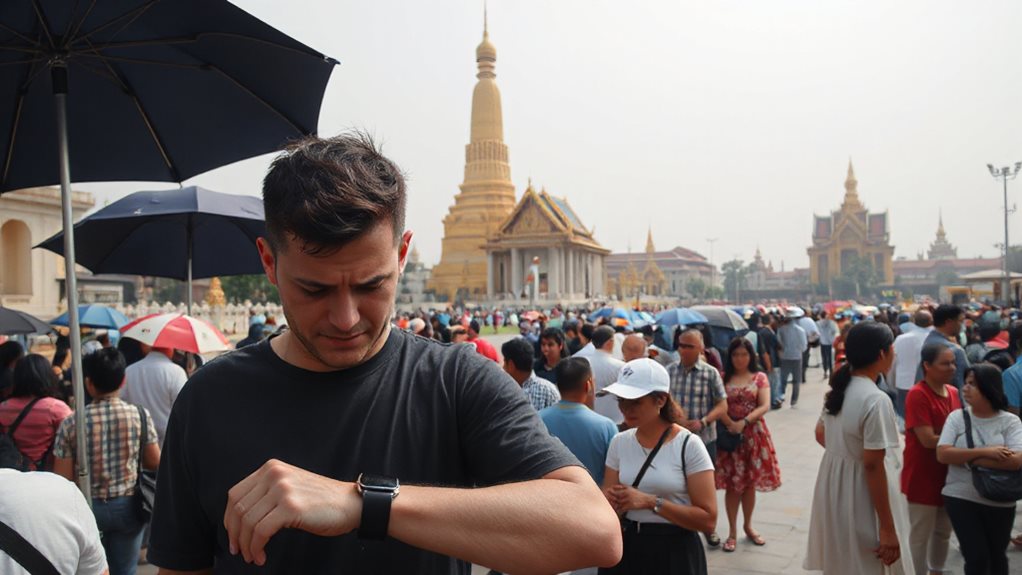
While Bangkok offers a wealth of cultural landmarks, its major attractions are concentrated in a few key areas, making them both accessible and manageable to visit.
You’ll find Wat Pho’s 46-metre reclining Buddha and the sacred Emerald Buddha at Wat Phra Kaew within the Grand Palace grounds.
Ferry access and clustered sites along the Chao Phraya River let you roam freely, efficiently.
Many of these sites, including Wat Arun, are located within close proximity on the river’s east and west banks, enhancing ease of visitation with options like cross-river ferries and express boats Wat Arun location.
For first-time visitors, three days is a practical amount of time to see the highlights without feeling rushed.
Daily Spending Habits of Tourists in Bangkok
You’ll likely spend between $42 and $170 per day in Bangkok, depending on your travel style and choices.
Budget travelers keep costs down with hostels and street food, while mid-range and luxury visitors spend more on hotels, dining, and tours.
Your daily expenses can vary widely based on where you stay, what you eat, and how you get around, so adjusting your plans can help match your preferred spending level.
Many visitors also budget time for key attractions like the Grand Palace, which can take several hours to fully explore.
Average Daily Expenditure
Depending on your travel style, your daily spending in Bangkok can vary markedly, from budget-friendly street food and hostels to luxury hotels and fine dining.
Budget travelers spend ฿1,500–2,500, while mid-range guests average ฿3,000–5,000. Luxury stays exceed ฿6,000.
Prices rise 50–100% in tourist zones, so mix local areas for better value.
Spending by Visitor Origin
As international tourism continues to shape Bangkok’s economy, the spending habits of visitors vary considerably by country of origin, reflecting diverse travel behaviors and economic influences.
You’ll spend more if you’re Chinese—averaging 6,400 baht daily—while Malaysians and Indians tend to align with regional, short-haul patterns.
South Koreans and Westerners, including high-spending Americans and British tourists, contribute notably, though recent softness has emerged in early 2025.
Budget Flexibility Options
Bangkok’s appeal as a top global destination hinges not just on visitor numbers but on how flexibly tourists manage their daily spending. You’ll find value in wellness, cuisine, and culture, even with a strong baht. Many opt for 1–3 day micro-trips to stretch budgets.
High-spending long-haul travelers enhance revenues, but cautious spending persists due to global uncertainty and economic pressures.
Uncovering Bangkok’s Hidden Layers Over Time
You’ll start noticing Bangkok’s quieter rhythms the longer you stay, as hidden spots like Benchakitti Park and Talat Noi reveal themselves beyond the usual tourist pace.
As you adapt, places like the Secret Floating Market or Siriraj Medical Museum offer glimpses into local life that aren’t rushed or staged.
Over time, the city’s layers—its green escapes, creative markets, and offbeat temples—begin to connect, giving you a clearer portrait of Bangkok’s true character.
Plan at least a week to fit in sights like the canals, temples, and markets, including a visit to the Chao Phraya River which ties many of these experiences together.
Beyond the Tourist Trail
While many visitors stick to Bangkok’s well-known landmarks, exploring beyond the tourist trail reveals a city rich with hidden spiritual sites, creative spaces, and local life often missed by guidebooks.
Visit Wat Pariwat’s quirky art or ride a bike through Bang Krachao’s green trails.
Unearth the Erawan Museum’s elephant tower, wander Chinatown’s food lanes, or attend a puppet show at Baan Silapin—each offers a genuine, unhurried glimpse into Bangkok’s diverse soul.
Time to Adapt
Exploring Bangkok’s lesser-known corners gives you a deeper sense of the city, but understanding how visits have evolved over time reveals another layer.
You’ve seen stays shorten to 3.8 nights recently, driven by more hotel rooms and shifting markets.
Even as 2025’s first half drew 15.5 million international tourists, occupancy dipped slightly, reflecting adaptation in travel patterns and urban challenges like heat and changing demand.
Rhythms of the City
Beneath the pulse of modern Bangkok, centuries of history echo through quiet temple halls, narrow alleyways, and preserved neighborhoods waiting to be uncovered.
You’ll find Ayutthaya-era murals at Wat Suwannaram, serene frescoes at Wat Suthat, and royal artifacts in hidden palaces.
Discover Talat Noi’s street art, old shophouses, and local temples.
Museums and replica sites reveal layered stories, letting you move freely through time and tradition at your own pace.
Visitor Demographics and Their Impact on Stay Length
As Bangkok continues to draw a growing number of international and domestic travelers, the mix of visitor demographics plays a key role in shaping how long people stay.
You’re likely to see short-haul Asians staying briefly, while long-haul visitors from Europe or the Americas often extend their trips.
Most Thai travelers take 1–3 day micro-trips, favoring city or coastal getaways, influencing overall stay patterns.
The city’s wide range of attractions, from cultural sites like the Grand Palace to bustling markets and nightlife, further affects how visitors allocate their time.
How Seasonal Changes Influence Your Itinerary
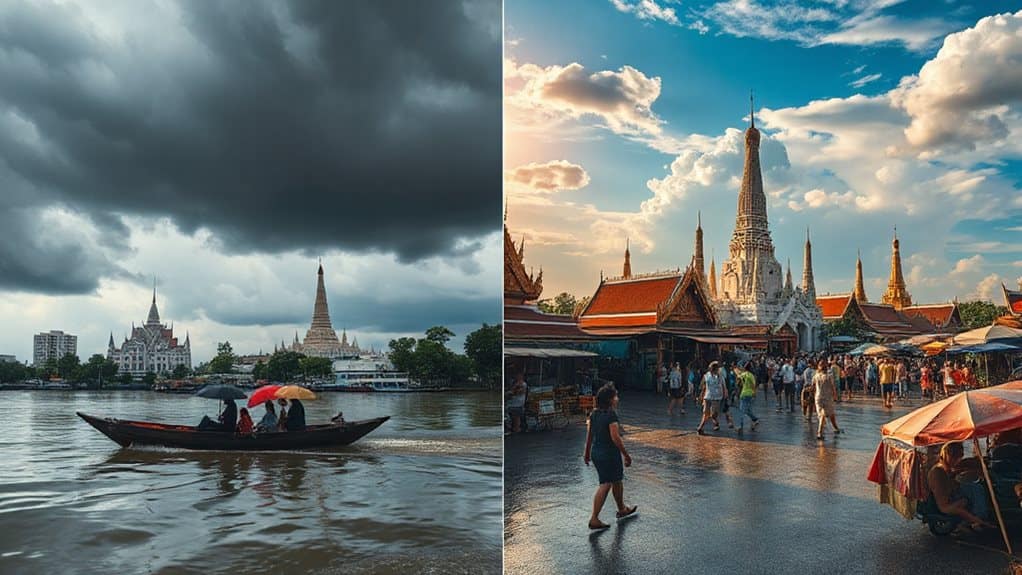
When planning your trip to Bangkok, timing your visit around the city’s distinct seasons can substantially shape your daily routine and overall experience.
Visit November to February for comfortable 25–30°C weather, minimal rain, and ideal outdoor exploration.
March to May brings intense heat, so prioritize indoor activities.
During July to October, expect heavy rains—especially in September and October—requiring flexible planning and indoor alternatives.
If you’re visiting Thailand in April, consider joining the Songkran celebrations for a culturally immersive experience and water-based fun with locals and visitors alike Songkran Festival.
Comparing Bangkok to Other Thai Destinations
Now that you’ve considered how Bangkok’s seasons affect your travel plans, it’s worth comparing the city to other popular destinations in Thailand and Southeast Asia to better understand what sets it apart.
Bangkok offers more urban intensity, cultural depth, and entertainment variety than Chiang Mai or Hanoi, with superior public transport and walkability compared to Ho Chi Minh City, while surpassing Kuala Lumpur in nightlife and street food vibrancy. Nearby regional cities like Kuala Lumpur also offer distinct attractions such as the Petronas Twin Towers and major shopping districts that reward a longer stay.
Crafting the Ideal Bangkok Itinerary
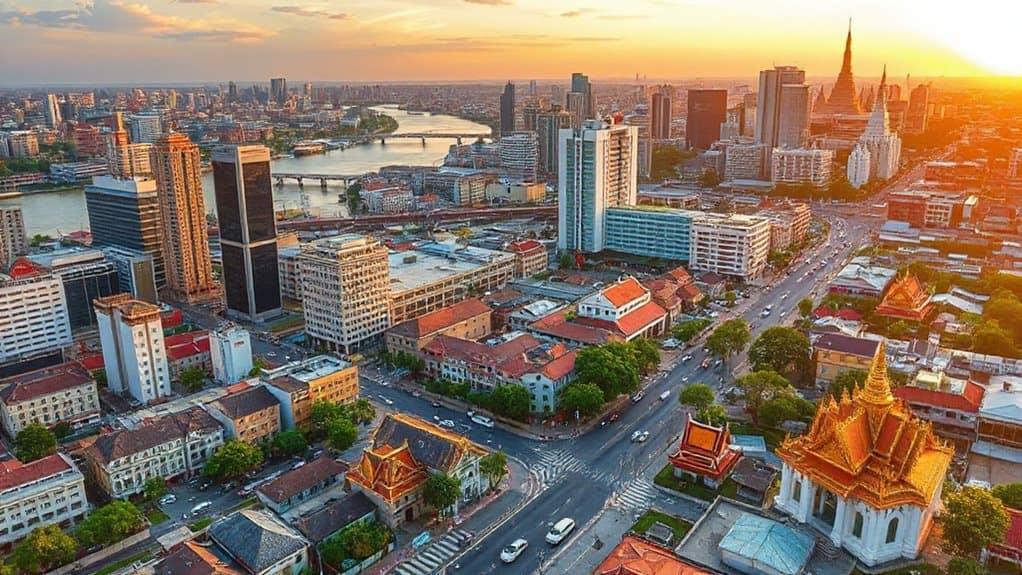
While your ideal Bangkok itinerary depends on personal interests and travel pace, most international visitors spend between four and five nights in the city, with Airbnb data from late 2023 to mid-2024 showing an average stay of 5.5 days.
You’ll need at least four days to discover major temples, markets, and river sights comfortably, while longer stays allow deeper cultural immersion or side trips.
And Finally
You’ll likely spend 3 to 5 days in Bangkok, which gives you enough time to see major temples, markets, and museums without rushing. This duration fits most travel styles and budgets, letting you adjust for weather or personal interests. Whether you’re connecting to other Thai destinations or exploring deeper into the city, a few well-planned days balance sightseeing and comfort efficiently.


