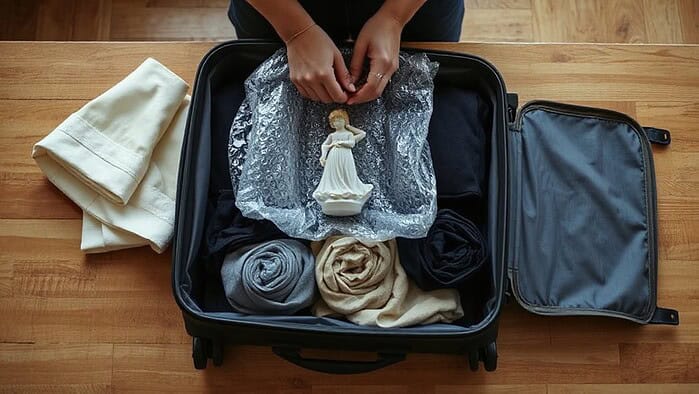
Pick destinations like Iceland, Japan, Portugal, Denmark, and Austria for low crime and English‑friendly environments, then set up real‑time location sharing with apps such as TripWhistle or Life360 and add trusted emergency contacts. Keep a laminated emergency card with passport, ICE, and consular numbers in multiple spots, and store encrypted digital copies in a secure cloud. Use licensed rideshares or taxis, verify driver PINs, and avoid cash. Download offline maps, get a local SIM, and pack anti‑theft gear while staying alert; continue for deeper details.
TLDR
- Choose destinations with high Global Peace Index scores and low violent crime, such as Iceland, Japan, Portugal, Denmark, and Austria.
- Enable real‑time location sharing via apps like TripWhistle, MayDay, or Life360, and add trusted emergency contacts before departure.
- Carry a laminated emergency card with passport, ICE, consular, and medical details, and store encrypted digital copies in a password‑protected cloud.
- Use app‑based rideshare or licensed taxis with driver PIN verification, especially at night, and prefer well‑lit, CCTV‑monitored routes.
- Pack anti‑theft gear (slash‑proof bag, RFID pockets), keep power banks accessible, and download offline maps (MAPS.ME, OsmAnd) for connectivity without data.
Top Safe Destinations for Solo Female Travelers
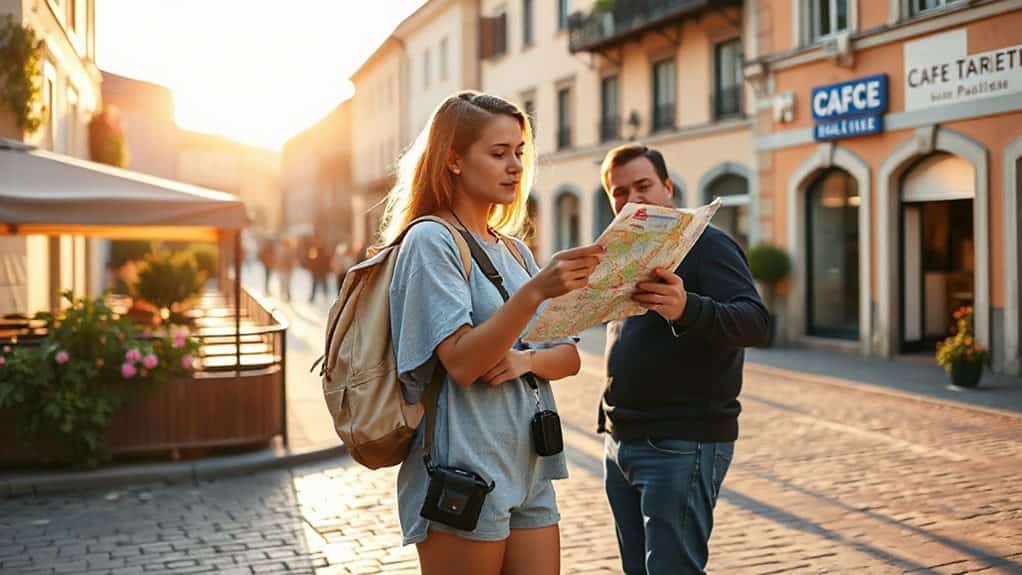
Where should you start your solo expedition? Iceland tops the list with a GPI of 1.095, near‑nonexistent crime, English‑speaking locals, and walkable Reykjavik. Japan offers a GPI of 1.44, low violent crime, respectful culture, and safe night transport, especially in Kyoto. Portugal’s Porto scores 1.371, clean, female‑friendly, and welcoming. Denmark’s Copenhagen leads safety rankings, bike‑friendly, English‑fluent, and well‑lit. Austria’s Vienna and Hallstatt rank 1.294, respectful, efficient, and secure. Solo travel thrives in these destinations due to their robust safety infrastructure. Many solo travelers also find carrying compact essentials like a lightweight travel pillow improves comfort and rest on long transfers.
How to Set Up Real‑Time Location Sharing & Emergency Contacts
Pick an app that supports real‑time sharing, like TripWhistle or MayDay, and enable location services so your phone constantly updates your whereabouts. Add your trusted emergency contacts in the app’s settings, making sure each number is entered correctly and that the app can send them alerts automatically. Test the feature before you leave, then keep the app running in the background throughout your trip for continuous safety coverage. Consider sharing your location when exploring walkable districts like Le Marais to stay connected in busy shopping and café areas.
Enable Sharing App
How can you keep friends, family, or travel companions instantly aware of your whereabouts while you investigate new destinations? Open Google Maps, tap location details, and share a link for a set time; the map updates as you move. WhatsApp lets you send live location for 15 minutes, 1 hour, or 8 hours from a chat. iPhone’s Find My shares indefinitely with selected contacts, while Life360 creates circles with arrival alerts and an SOS button. Enable background location permissions for continuous tracking.
Emergency Contact List
A solid emergency contact system starts with a physical card you can carry everywhere, so you’re never without essential numbers. Include your name, citizenship, passport, phone, email, an ICE contact, and toll‑free bank lines. Add consular and medical insurance details. Laminate the card, place copies in wallet, passport holder, backpack, and carry‑on. Store the same contacts digitally, enable international calling, and set real-time location sharing for quick alerts.
Safe Transportation Choices (Day & Night) for Solo Women
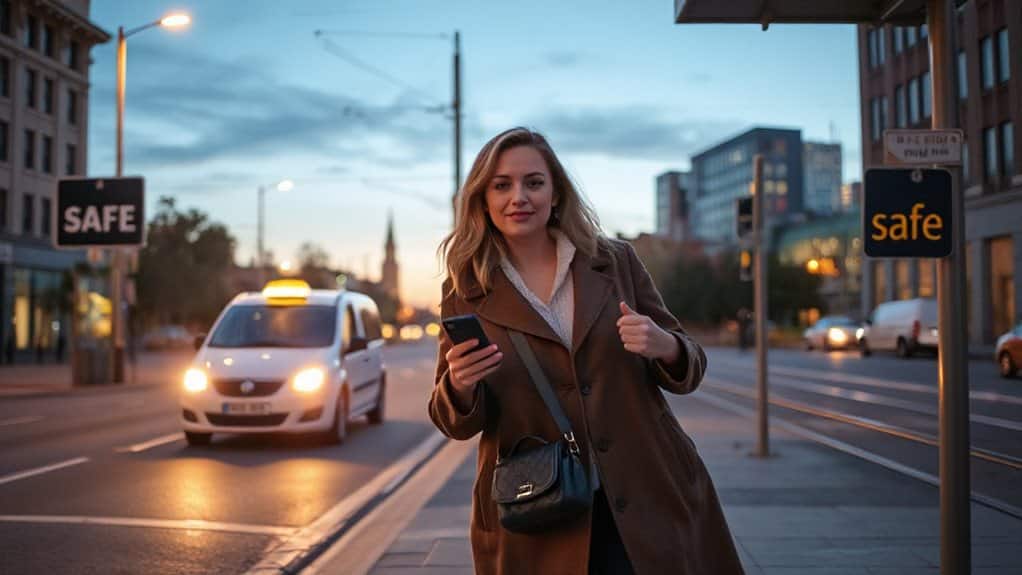
When you travel during the day, stick to app‑based rides or licensed taxis and avoid crowded train cars that can attract pickpockets and unwanted contact.
At night, use ride‑share services that offer driver PIN verification, real‑time location sharing, and stick to well‑lit, populated routes rather than informal taxis or minibuses.
These habits let you keep control of your safety while moving through public transit and rideshare options.
Low season travel can also reduce crowds and costs, so consider visiting during September discounts when attractions are quieter and rates are lower.
Daytime Public Transit Safety
Ever wondered which transit options keep you safest during daylight hours? Choose app‑based rides with live location sharing, driver verification, and digital payments to stay trackable and cash‑free.
Opt for women‑only coaches or buses with CCTV, well‑lit stations, and security staff.
Avoid peak crowds, sit near exits, keep a power bank, and research routes beforehand to reduce harassment and theft.
Nighttime Ride‑Share Precautions
What should you double‑check before stepping into a night‑time rideshare? Verify the driver’s name, photo, car make, and license‑plate match the app details. Sit in the back‑seat passenger side, keep your bag and phone within reach, and enable the emergency button and share‑trip feature. Trust instincts, stay alert, and exit at a well‑lit public spot if anything feels off.
Secure Your Documents, Money, and Tech Before You Depart
How can you travel knowing your essential documents, cash, and devices are safe before you even step onto a plane? Scan passport, visa, ID, insurance, and cards; store encrypted copies in a password‑protected cloud and email them to trusted contacts. Keep printed copies separate, lock originals in hotel safes, and distribute cash and cards across bags. Use RFID‑blocking wallets, slash‑proof bags, and a VPN on all devices. Consider packing a small, heat‑resistant pouch for tech and styling tools like curling irons to protect them in transit and comply with carry-on rules.
Stay Connected Offline: Maps, Phrases, and Local SIMs
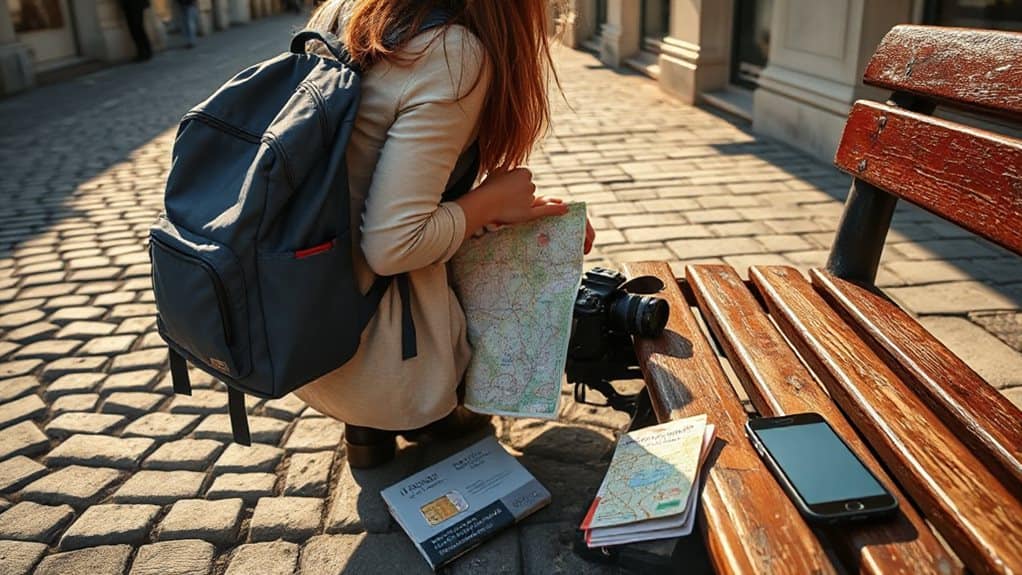
Where can you find reliable guidance and communication tools when you’re offline? Download Google Maps, HERE WeGo, MAPS.ME, or OsmAnd for turn‑by‑turn directions and points of interest without data.
Keep a local SIM for emergencies and real‑time alerts, but rely on pre‑saved maps and CityMaps2Go guides to reduce data use.
Install offline translation apps and note essential phrases in OsmAnd for quick communication.
Pack lithium batteries and power banks in carry-on and ensure power banks are accessible during screening.
Anti‑Theft Packing Tips & Low‑Profile Dress for Solo Women
Even with offline maps and saved phrases, the moment you step out of the hotel you become a target for pickpockets and bag‑slashing, so the way you pack and dress matters as much as your direction tools. Choose a slash‑proof, cross‑body bag with locking zippers and RFID pockets. Keep cash and cards split across a slim wallet and a hidden bra pocket. Pack lightweight, under‑45 L luggage, roll outfits, leave space empty, and wear neutral, low‑profile clothing that doesn’t attract attention. On trains, keep luggage compact and within size limits to avoid obstructing aisles and follow local flow by wearing backpacks on the front when necessary to maintain space and movement pack light.
Instinct‑Based Decision‑Making & Situational Awareness on the Road
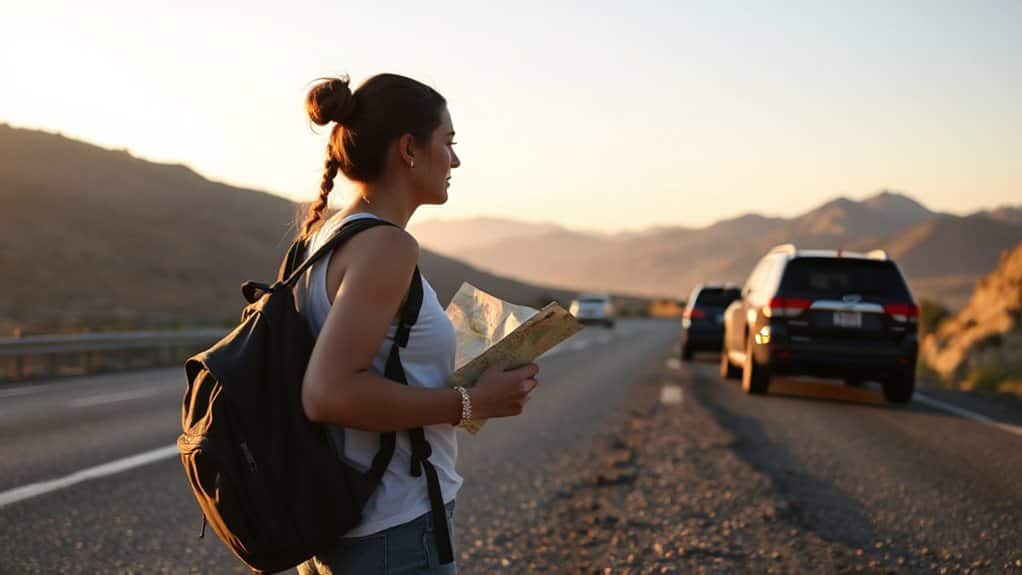
Ever notice how a sudden feeling of unease can signal a hidden risk? Trust that gut and leave immediately if something feels off. Scan exits, spot helpers like families or staff, and keep your eyes on surroundings. Walk purposefully, maintain eye contact, and use one earbud so you hear footsteps. Change direction or lodging when insecurity rises, and verify rides by matching plates and names.
Daily Check‑In Practices to Keep Friends Informed & Safe
How can you ensure friends stay informed about your whereabouts without constantly texting? Share a detailed itinerary in Google Docs before you leave, including accommodations, flights, and activities.
Set a daily check‑in time, send a quick confirmation, and enable live location sharing via Find My Friends. Drop a pin when you arrive, update plans instantly, and keep a powerbank handy for reliable device use.
And Finally
By following these safety tips—choosing reputable destinations, sharing your location in real time, selecting secure transport, safeguarding documents and money, using offline maps and local SIMs, packing low‑profile clothing, trusting your instincts, and checking in daily—you’ll reduce risks and enjoy a smoother solo travel experience. Consistently applying these practices keeps you prepared for unexpected situations and helps you stay safe while exploring new places.