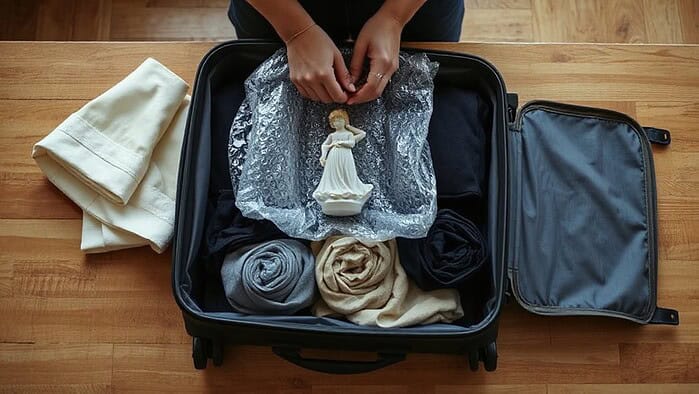
Use TSA‑approved, leak‑proof containers—like 3.4 oz Cadence capsules or 1-oz silicone squeeze bottles—seal the caps tightly, and place each bottle inside a heavy‑duty waterproof zip‑top bag with a TRU® Zip seal. Wrap glass containers in clothing or padding, then cushion the bags with soft items such as blankets or microfleece. Keep the total liquid volume under 70 oz and each aerosol under 18 oz, and declare any medication or specialty liquids at security. Following these steps will ensure your liquids stay secure and compliant, and the next sections will show you how to handle prohibited items and customs requirements.
TLDR
- Use TSA‑approved, leak‑proof containers (≤3.4 oz for carry‑on, any size for checked) and seal them tightly with magnetic or snap caps.
- Place each liquid in a heavy‑duty PVC zip‑top bag with TRU® Zip seals; double‑bag for extra protection.
- Wrap glass bottles or fragile containers in clothing or padding before sealing the zip‑top bag.
- Keep total liquid volume under 70 oz (≈2 L) and ensure aerosols do not exceed 18 oz (500 ml) with protected valves.
- Declare any medication or exempt liquids at security and verify airline/customs restrictions on alcohol and prohibited substances.
3‑1‑1 Rule and Checked‑Luggage Liquid Limits
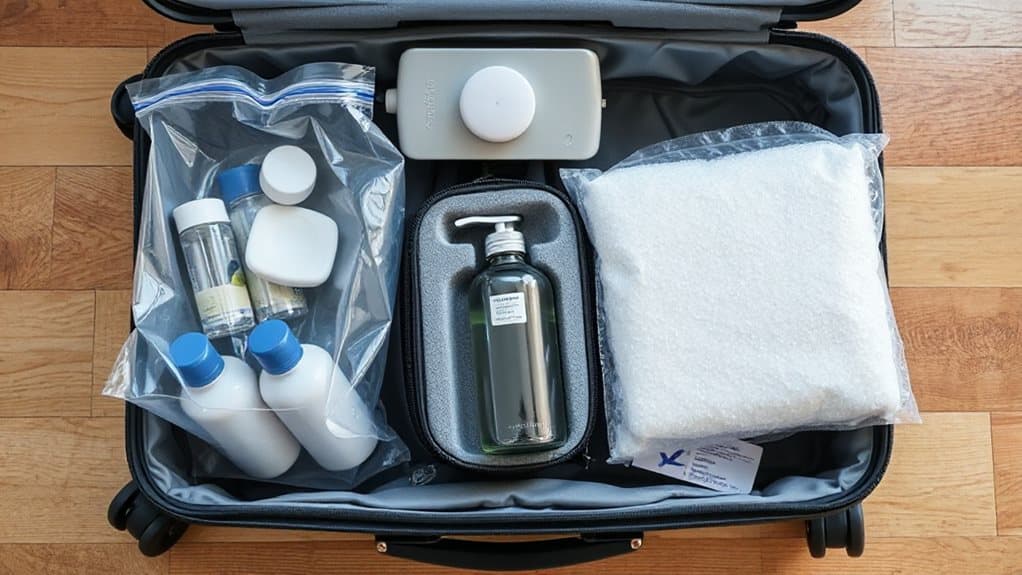
How does the 3‑1‑1 rule shape what you can bring on a plane? You can carry only containers up to 3.4 oz (100 ml) that fit inside a single clear quart‑size bag, regardless of how full they are. Gels, creams, pastes, and aerosols count as liquids.
In checked luggage, volume is unlimited except for alcohol 24‑70 % ABV, capped at five liters per passenger, and all other liquids must be sealed, double‑bagged, and declared if they fall under the 11 exempt items or medical needs. Advanced CT scanners allow security officers to verify liquids more accurately, but the 3‑1‑1 limits still apply to carry‑on bags. Airlines may have additional policies affecting transport of liquids and related items, so check your carrier’s rules before packing and consider purchasing extra space or accommodations if needed for larger or special items seat width.
Choose TSA‑Approved Liquid Containers and Cap Them Securely
After reviewing the 3‑1‑1 rule, the next step is picking containers that meet TSA standards and sealing them properly. Choose 3.4‑oz‑max Cadence Capsules or 1‑oz silicone squeeze bottles; both display volume and feature magnetic or leak‑proof caps. Guarantee caps snap tight, preventing spills in checked bags. Larger bottles are allowed, but they must stay securely capped throughout travel. Consider packing leak-prone bottles inside waterproof packing cubes to protect clothing and contain any spills.
Pack Liquids in Waterproof Zip‑Top Bags and Cushion Glass Bottles
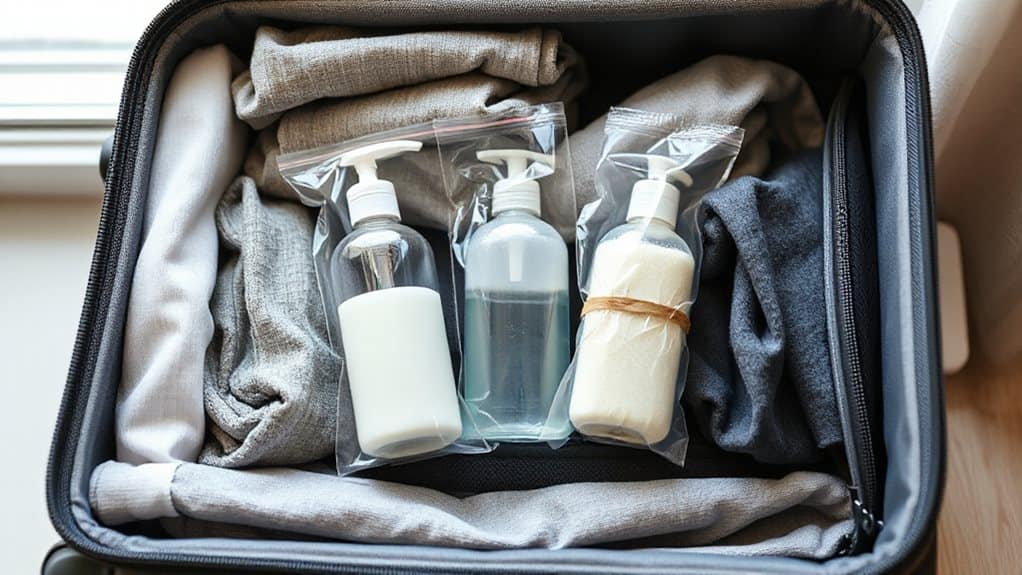
Ever wondered how to keep your liquids safe from leaks and damage while they sit in checked luggage? Slip each bottle into a heavy‑duty PVC zip‑top bag with a TRU® Zip seal; the welded seams and double‑strip closure block water, dust, and air. Wrap glass containers in clothing or padding inside the bag, and use adjustable straps or a roll‑top for extra cushioning. This setup resists punctures, absorbs shocks, and prevents spills throughout handling. For added protection, pack bottles amid soft items like folded blankets or microfleece garments to cushion impacts and stabilize contents during transit (consider using microfleece travel blankets for lightweight, compressible padding).
Stay Within 70 oz Total and 18 oz per Aerosol Container
Do you know the exact limits you must stay within when packing liquids and aerosols in checked luggage? Keep your total liquid volume at or below 70 oz (≈2 L) across all containers. Each aerosol can’t exceed 18 oz (500 ml) and must be sealed with a protected valve. Measure and weigh everything before you pack, and double‑check airline policies to avoid bag rejection. Many travelers also bring cameras to visit places like Fotografiska when choosing what to carry in checked versus carry‑on luggage.
Identify Prohibited Hazardous Liquids to Avoid
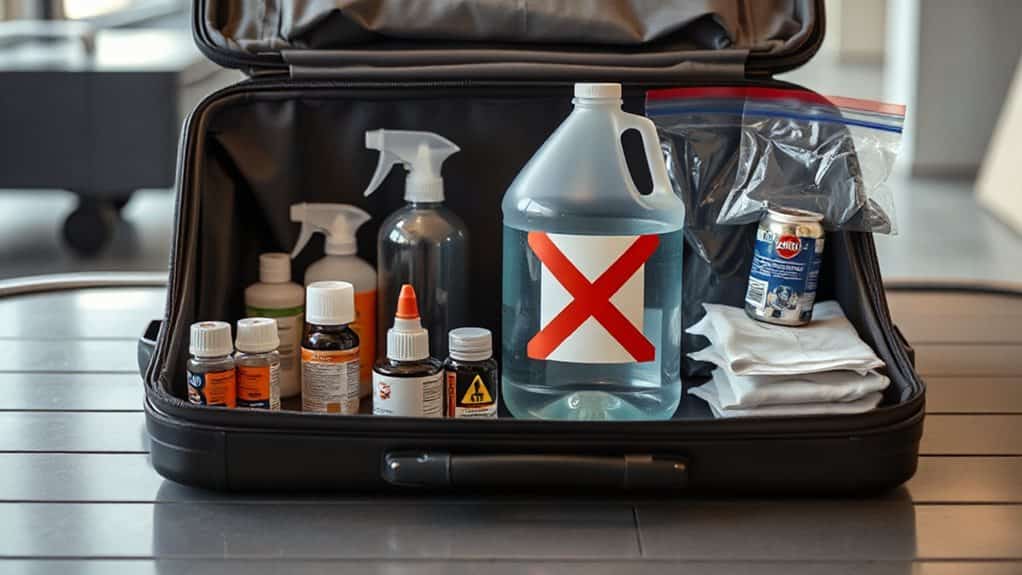
What liquids and aerosols are strictly off‑limits in checked baggage? You must leave flammable liquids such as gasoline, lighter fluid, paint thinner, diesel, kerosene, and any solvent labeled flammable. High‑proof alcohols over 70 % ABV, including grain alcohols and strong rums, are banned. Compressed gases—CO₂ cartridges, butane, propane, scuba tanks, and non‑medical oxygen—are prohibited. Corrosives like bleach, drain cleaners, strong acids, and oxidizers can’t be packed. Self‑defense sprays, pepper spray, tear gas, mace, and bear deterrents are also disallowed. Consider using water‑resistant, sealed containers or specialized packing solutions like water-resistant fabrics to protect surrounding items from leaks.
How to Declare Liquid Medications and Specialty Items at Security?
How do you make certain your liquid medications and specialty items clear through security without delay? You’ll approach the TSA officer, show ID and ticket, and verbally declare each medically necessary liquid. Place them in the gray bin for separate X‑ray screening, keep prescriptions and labels handy, and request alternative screening if you dislike opening containers. Documentation and reasonable quantities ensure smooth, exempt processing. Consider carrying prescription labels or a doctor’s note and keeping medications accessible to avoid delay at checkpoints.
Check Destination Customs for Liquid Alcohol Limits
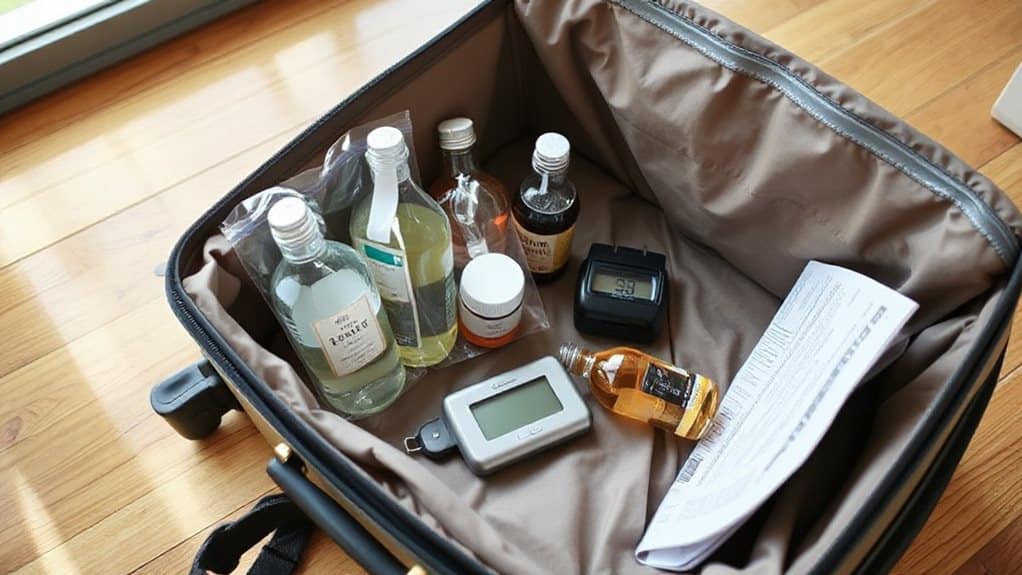
Ever you’re traveling internationally, the first step is to verify the alcohol import limits of your destination country before you pack.
Canada lets you bring 1.14 L spirits, 1.5 L wine, or 8.5 L beer duty‑free after 48 h, while India permits up to 5 L sealed liquor (24‑70% ABV) per passenger.
Norway allows 1 L spirits, 1.5 L wine, and 2 L beer; EU non‑members get 4 L wine, 16 L beer, plus 1 L spirits.
The U.S. offers 1 L duty‑free for travelers 21+, and TSA allows up to 5 L 24‑70% ABV in checked bags.
Check each country’s specific age and ABV restrictions before you seal your suitcase.
And Finally
By following the 3‑1‑1 rule, using TSA‑approved containers, sealing items in zip‑top bags, and cushioning fragile bottles, you’ll keep your liquids within the 70 oz total and 18 oz per aerosol limits. Remember to exclude prohibited hazardous liquids and declare any medications or specialty items at security. Check your destination’s customs regulations for alcohol restrictions before you travel. This preparation ensures a smooth check‑in process and avoids delays or confiscations.