
Cruise ship Wi-Fi primarily relies on satellite technology, using systems like Starlink and geostationary satellites to provide internet access at sea. Costs vary depending on the plan you choose; there are free options for basic browsing or social media, but more extensive use or streaming usually requires paid packages. Factors like weather, ship location, and satellite traffic can affect speed and reliability. Continuing will help you understand how to choose the best plan and maximize your connectivity.
TLDR
- Cruise ship Wi-Fi relies on satellite technology, including systems like Starlink, for internet connectivity at sea.
- Costs vary by plan, with free basic options and paid packages supporting streaming and multiple devices.
- Weather and ship location can impact Wi-Fi speed and reliability due to satellite signal disruption.
- Pre-booking Wi-Fi plans online often offers discounts and immediate access onboard.
- Free Wi-Fi is typically limited to messaging or basic browsing, with higher bandwidth tasks requiring paid plans.
How Cruise Ship Wi-Fi Works and What Technology Powers It

Cruise ship Wi-Fi primarily relies on satellite technology to deliver internet connectivity, with systems like Starlink playing a central role. These networks use geostationary and low-earth orbit satellites for space-based connectivity. Advanced antenna technology enhances maritime internet, providing faster internet speeds and more reliable Wi-Fi on cruise ships, despite occasional disruptions from weather or remote locations. Many cruise itineraries also depend on offline maps downloaded before sailing, with real-time updates syncing after you reconnect.
Available Wi-Fi Options on Cruise Ships: Plans, Free Access, and Costs
When it comes to staying connected while at sea, cruise ships offer a range of Wi-Fi options customized to different needs and budgets. You can choose Wi-Fi plans with onboard internet, some offering free Wi-Fi for social media networks, or more all-encompassing Wi-Fi packages supporting streaming services and multiple devices. Access costs vary, but pre-cruise discounts can reduce expenses considerably. Similar to how travelers often avoid Grand Palace crowds in Bangkok by choosing Wat Paknam instead, selecting the right ship Wi-Fi plan can help you get the coverage you need without paying for more than you’ll use.
Choosing the Best Wi-Fi Package for Your Cruise Needs and Budget
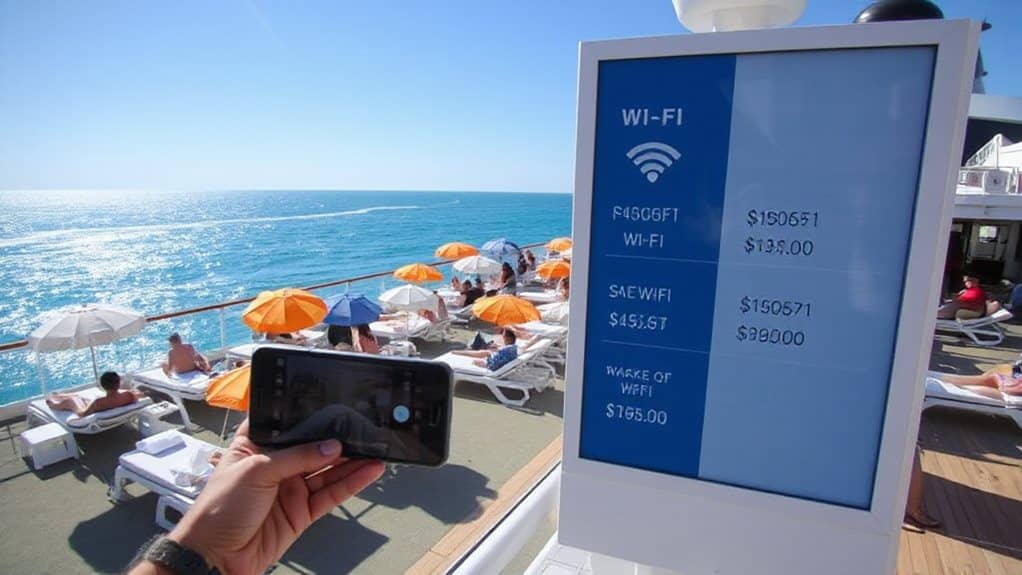
To choose the best Wi-Fi package for your cruise, it’s important to assess your needs and compare options carefully.
Consider Wi-Fi packages that match your usage, like streaming plans or browser access, and check for pre-booking discounts or loyalty offers.
Evaluate device limits, group usage, and long-term packages to maximize value, while performing a cost comparison between onboard Wi-Fi and pre-cruise plans.
Also note that the seat belt extender policy differs by airline, so it’s worth confirming your onboard options if you anticipate needing extra comfort or safety accommodations.
What Factors Affect Wi-Fi Speed and Reliability at Sea?
Your Wi-Fi speed and reliability at sea depend on several key factors. Weather conditions like storms or heavy rain can weaken satellite signals, causing interruptions or slower connections. Additionally, your ship’s location, satellite technology used, and physical obstructions can all influence the quality and consistency of your onboard internet. Seat pitch clearance and onboard equipment placement can also affect how well signals and network distribution perform in specific areas of the ship.
Satellite Signal Quality
Satellite signal quality at sea is influenced by several factors that can impact your Wi-Fi speed and reliability. Signal fluctuations occur due to satellite coverage limitations, obstructions, and satellite traffic.
Proper antenna alignment and strong signal strength enhance satellite communication, while outdated satellite technology and coverage gaps can cause slower speeds. These elements collectively determine overall signal quality.
Weather and Remote Areas
Weather conditions and remote locations at sea can considerably affect Wi-Fi speed and reliability. Satellite signals weaken during storms, heavy rain, or atmospheric interference, leading to connection drops or reduced internet speed.
Remote areas and ocean coverage often cause signal obstruction and weather interference, increasing connectivity issues and decreasing Wi-Fi reliability, especially when the ship is far from satellite coverage zones.
Can You Get Free Wi-Fi on a Cruise? Here’s What You Should Know
While some cruise lines offer limited free Wi-Fi, it’s usually restricted to basic browsing or specific areas on the ship.
Complimentary access may be available for suite guests, loyalty program members, or during promotional events.
However, extensive, high-speed internet generally requires a paid package.
Understanding these restrictions can help you plan your connectivity needs while at sea, adventure activity coverage limits so you know how to match your plan to the activities you’ll actually do.
Free Wi-Fi Opportunities
Can you access free Wi-Fi on a cruise ship? Yes, in some cases. Complimentary Wi-Fi is available for loyalty program members or suite guests, often as a promotional perk.
Certain cabins and onboard apps like Disney’s Navigator or MSC for Me provide free messaging, ship information, internet browsing, and email for basic activities, reducing the need for paid plans.
Limitations and Restrictions
Although free Wi-Fi options are available on some cruises, they often come with significant limitations and restrictions. These include limited availability, data caps, and restrictions on activities like streaming or video calls.
Free Wi-Fi usually supports basic browsing and messaging but may not allow high-bandwidth tasks. Onboard, access varies based on cabin type and loyalty perks, not always offering unlimited use.
Tips to Maximize Your Cruise Wi-Fi and Stay Connected
To get the most out of your cruise Wi-Fi, planning ahead is essential. Pre-book your plan online to connect immediately and save up to 30%. Use loyalty programs or onboard credits for discounts. Conserve bandwidth by turning off background apps, connect only one device at a time, and consider external solutions like eSIMs for faster, more affordable options outside the ship’s Wi-Fi. Unlock airport lounges without membership can also be a useful backup connectivity option when you’re traveling through hubs.
And Finally
Understanding how cruise ship Wi-Fi works helps you choose the right plan and set realistic expectations. While options range from free access to premium packages, factors like signal strength and bandwidth impact your experience. Planning ahead and selecting the appropriate package guarantees better connectivity during your voyage. Remember, staying informed about costs, technologies, and limitations allows you to make the most of your time at sea without surprises. Proper preparation can enhance your onboard experience greatly.