
You should prioritize electrified rail for long distances, since it emits the fewest CO₂ per passenger kilometer and many networks run on renewable power. When flights are unavoidable, pick airlines that offer Gold‑Standard‑verified carbon offsets and combine them with rail segments to keep the total footprint near zero. Use AI‑driven itinerary planners that integrate EV rentals, bike‑share, and low‑emission hotels, and pack light to cut fuel use. Follow SB 253 and SB 261 reporting rules, and leverage grants, loyalty points, and tax credits to fund your eco‑friendly trip; the next sections explain how to do each of these steps in detail.
TLDR
- Prioritize rail travel on electrified or hydrogen‑powered lines, using emission‑comparison tools to choose routes under 24 hours.
- Select flights with verified carbon‑offset programs (Gold Standard, ClimateCare) and combine them with rail to keep total footprint near zero.
- Use AI‑powered multi‑modal itinerary planners that integrate EV buses, bike rentals, and LEED‑certified hotels while respecting a carbon budget.
- Pack lightweight, reusable items and use eco‑friendly detergents to lower aircraft and ground‑vehicle energy demand.
- Finance sustainable trips through ISCOMS, grant programs, rail loyalty points, and tax credits, documenting compliance with SB 253/261 reporting.
Why Eco‑Friendly Carbon‑Neutral Transportation Matters in 2026
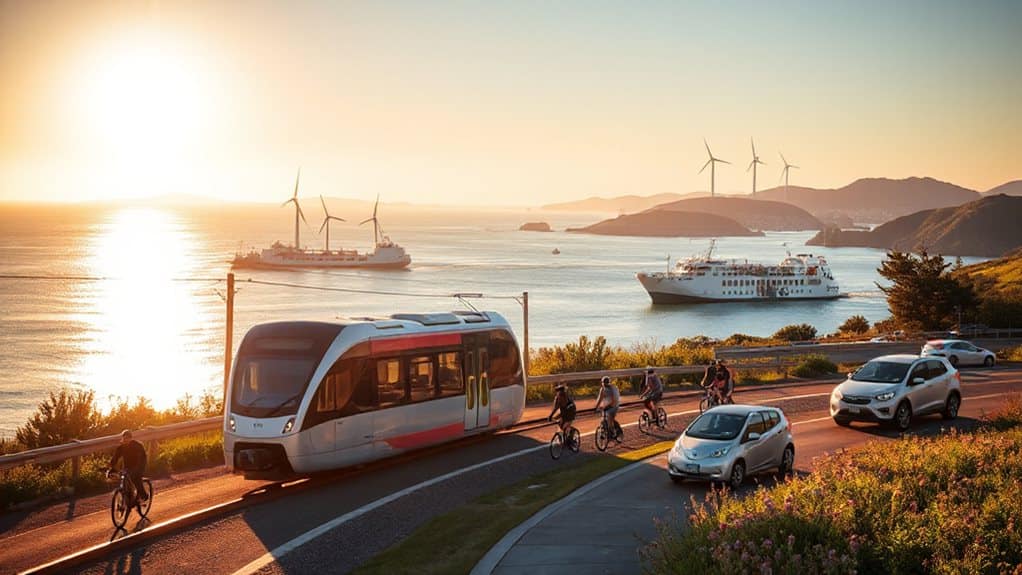
Why does eco‑friendly, carbon‑neutral transportation matter in 2026? You’ll feel the impact of strict government mandates, like California’s SB 253 and SB 261, forcing zero‑emission reporting for billion‑dollar firms. Real‑time CO₂ tracking, sustainable aviation fuel, and bio‑CNG cut emissions dramatically. Infrastructure upgrades—charging corridors, hydrogen stations—support electric buses and trucks, giving you the freedom to travel while meeting global carbon goals. Rapid EV fleet adoption accelerates cleaner logistics across the supply chain. Increased investment in public transit and safer late‑night travel options also helps reduce car dependency and emissions while improving urban safety in transit‑heavy areas transit safety.
How to Choose Eco‑Friendly Carbon‑Neutral Transportation in 2026
When you plan a trip, prioritize rail travel because it consistently offers lower emissions per passenger kilometer than cars or planes, and many networks now run on renewable electricity.
If a flight is unavoidable, look for carriers that provide verified carbon‑offset programs, ensuring the money you spend funds projects that neutralize the emissions from your journey.
Combining these choices lets you keep your overall travel footprint as close to zero as possible.
Also consider the broader implications of transportation policies and security regulations, such as how background checks influence access to certain travel roles and services.
Rail Travel Prioritization
How can you pick the most eco‑friendly rail option for a 2026 trip? Look for electrified or hydrogen‑powered lines, like Eurostar’s 6 g CO₂/km or Germany’s new hydrogen trains. Choose routes under 24 hours, such as Amsterdam‑Barcelona Nightjet or Boston‑NY‑DC AmeriStarRail. Use tools like ecotree.green to compare emissions, favor high‑capacity services, and prioritize operators with low‑emission upgrades.
Carbon‑Offset Flight Options
What you need to know about carbon‑offset flight options in 2026 is where the emissions savings actually come from and how to verify them. Choose providers like Sustainable Travel International, Atmosfair, or GoClimate for high impact. Compare costs—Terrapass $17.63, myclimate $30, Climate Care $11.56, Clear $14.99 per 1,000 kg CO₂. Prefer Gold Standard or ClimateCare verified credits and check airline programs, such as Delta, JetBlue, Qantas, and British Airways, for integrated offsets. Verify CORSIA eligibility and EU ETS compliance to guarantee real neutrality.
Why Train Travel Is the Fastest‑Growing Eco Choice for Young Travelers

You’re seeing a friendly mobility surge as more 18‑ to‑year‑olds choose trains over flights, because rail tickets often cost less for long‑distance trips. The lower price tags and reduced carbon footprints make train travel a cost‑effective option that fits tight budgets while still delivering scenic routes.
Plus, seamless multi‑modal integration lets you combine rail with bikes, buses, or rideshares, turning a simple journey into a flexible, eco‑friendly adventure. Moped-enabled thefts and street snatching remain a concern in some transit zones, so keep valuables secure in crowded areas and on first/last‑mile connections to reduce risk moped-enabled thefts.
Friendly Mobility Surge
Why are young travelers gravitating toward trains? You enjoy freedom, and rail offers it with lower emissions, less noise, and central stations that cut extra trips.
Amtrak’s electric fleet emits up to 83% less CO₂ than cars and 72% less than planes, while new Acela models shave another 20% off energy use.
Europe’s dense rail network replaces short‑haul flights, and AI‑driven routing makes trips smoother and greener.
Cost‑Effective Long‑Distance Travel
The surge in friendly mobility naturally leads to a look at cost‑effective long‑distance travel, where trains are outpacing planes for budget‑ conscious young travelers.
Europe Europe saw a 186% passenger rise, Italy 98%, and Germany and France hit triple‑digit growth, while airline fares jumped 25%.
Trains give you legroom, scenic views, and no airport security lines, letting you stretch budgets, stay connected via onboard Wi‑Fi, and enjoy flexible, immersive expedition.
Seamless Multi‑Modal Integration
How does seamless multi‑modal integration make train travel the fastest‑growing eco choice for young travelers?
You book a train, a bike, or a bus on one app, then hop on a high‑speed rail with Wi‑Fi, legroom, and scenic views.
Digital ticketing syncs with LEO satellite coverage, while private transfers and skip‑the‑line services keep your itinerary fluid, sustainable, and freedom‑focused.
How to Find and Book Eco‑Certified Hotels on a Tight Budget

Looking for an eco‑certified stay without breaking the bank? Use Ecobnb or Green Pearls® to filter budget hotels that meet renewable‑energy, recycling, and water‑reduction criteria.
Check Expedia’s eco‑filters for free‑cancellation options and LEED badges.
Apply codes like IMPT10, call hotels for corporate rates, and prioritize hostels such as Flying Pig Downtown or Albergue Studio Hostel for affordable, sustainable lodging.
TSA permits crochet hooks in carry-on bags, but security officers have final discretion and may require items to be checked.
AI‑Powered Itinerary Tools for Eco‑Friendly Travel
Ever wondered how AI can simplify planning a greener trip? You can use TripPlannerAI, RoamAround, and Wonderplan to generate personalized itineraries that factor in carbon‑light flights, LEED‑rated hotels, and electric‑vehicle tours. Their interactive canvases let you reorder stops, while real‑time updates adjust for delays or weather. You also get eco‑filters, carbon budgets, and offline PDFs, keeping your travel free‑spirited and sustainable. Many travelers pair these tools with neighborhood guides to choose stays that match their interests, such as rooftop bars in Silom‑Sathorn for skyline views.
Carbon Offsetting for Eco‑Friendly Flights: Best Practices & Trusted Providers

What does carbon offsetting actually achieve for your flights? It compensates the CO₂ you emit by funding projects that capture or prevent emissions elsewhere, such as forest restoration or renewable energy. Use an online calculator to gauge your footprint, then choose a trusted provider—Carbonmark Marketplace, IATA‑approved programs, or Guyana REDD+ credits. Prioritize direct, economy flights, integrate offsets via APIs, and combine with reductions like virtual meetings for maximal impact. Many travelers also seek out nearby hidden courtyards and green spaces to connect with nature and reflect on sustainable choices.
Multi‑Modal Eco‑Friendly Trip Planning: Rail, Bus, and Low‑Emission Flights
After covering how carbon‑offsetting can neutralize flight emissions, the next step is to look at how you can cut those emissions before they occur by combining rail, bus, and low‑emission air segments into a single itinerary. Use AI‑driven platforms to sync rail schedules, bus last‑mile links, and certified low‑emission flights, leveraging real‑time routing, digital tracking, and emissions calculators for a seamless, low‑impact voyage.
Eco‑Friendly Destination Selection for Low‑Impact, High‑Value Trips

Where do you go when you want a trip that feels luxurious yet leaves a tiny carbon footprint? Choose Costa Rica’s solar‑powered eco‑lodges, Denmark’s renewable‑energy cities, or Iceland’s geothermal resorts for high‑value experiences with low emissions.
Consider Bhutan’s carbon‑negative, low‑volume model, or New Zealand’s electric‑vehicle road trips. Each destination offers strict conservation policies, clean transport, and community benefits, ensuring responsible, upscale travel.
Pack Light to Reduce Eco‑Friendly Travel Waste
How much weight you pack directly influences your travel’s environmental impact. Choosing versatile, high‑quality pieces reduces fuel use and emissions because lighter luggage eases aircraft and ground‑vehicle energy demand. Prioritize durable fabrics, neutral colors, and multi‑purpose items, and incorporate pre‑loved garments to cut manufacturing waste. Fold efficiently, use eco‑friendly detergent, and donate or upcycle unused clothes after the trip, keeping your footprint minimal.
Comply With U.S./Eu Travel Climate Disclosure Rules
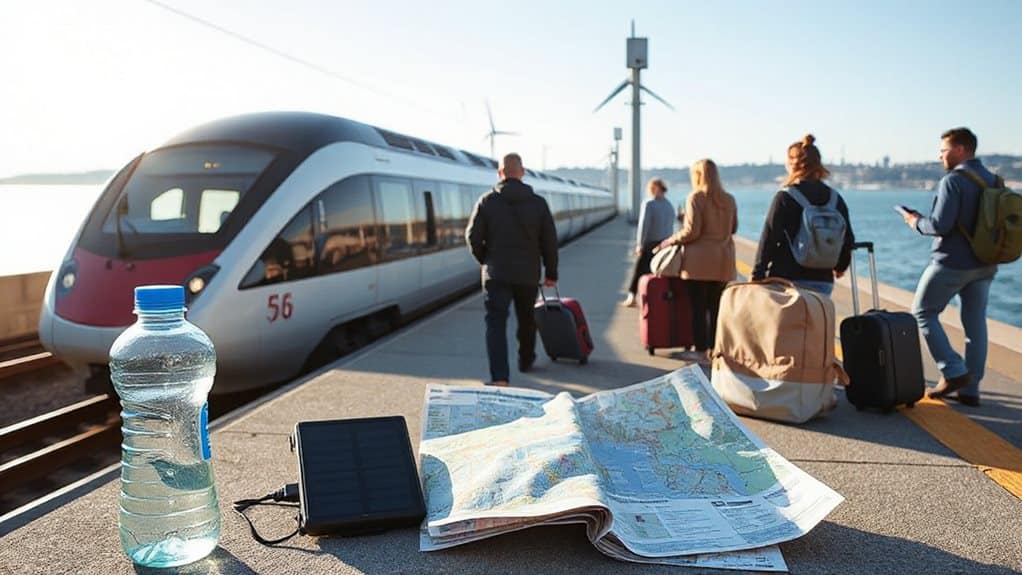
Packing light reduces fuel consumption, but travelers and businesses must also meet emerging climate‑disclosure regulations. In the U.S., companies earning over $1 billion must file SB253 Scope 1/2 reports by August 10, 2026, with third‑party assurance, while SB261 financial‑risk disclosures start January 1, 2026. Penalties reach $50 000 per year for non‑compliance. Prepare now, even if enforcement pauses, to avoid fines and keep your trips free and compliant.
How to Finance Eco‑Friendly Trips With Grants, Loyalty Perks, and Tax Breaks
Ever wondered how you can turn sustainable travel into a financially savvy choice? Apply ISCOMS for train, bus, or bike trips from abroad, and submit proof of booking.
Use MDPI, Salata, ASEH‑NSF, or UC Davis SDG grants for conferences, meeting deadlines.
Utilize loyalty points for rail passes, claim mileage deductions, and investigate tax credits for eco‑friendly transportation.
Combine these options to fund your freedom‑focused journeys.
And Finally
By 2026, sustainable travel isn’t a niche—it’s a practical choice you can make every trip. Prioritize carbon‑neutral transport, book eco‑certified lodging within budget, and use AI itinerary tools to minimize emissions. Select destinations with low environmental impact, pack light, and stay compliant with U.S./EU climate disclosure rules. Leverage grants, loyalty perks, and tax incentives to finance greener journeys. Applying these steps consistently reduces your footprint while keeping travel rewarding and affordable.