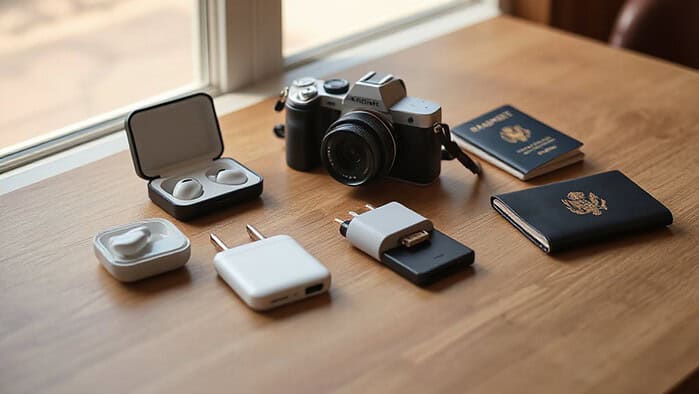
Choose a compact, CE‑certified adapter that covers 100‑240 V, has interchangeable plug sliders for Types A, C, G, and I, and includes USB‑C Power Delivery up to 100 W with surge protection. Look for dual 10 A fuses, flame‑resistant polycarbonate housing, and a sturdy, foldable design so you can charge laptops, phones, and tablets safely worldwide. The CARD CA4‑Pro meets these specs and adds replaceable plugs for over 200 countries. Keep an eye on safety marks and voltage labels, and you’ll see why it’s a top pick.
TLDR
- Choose a universal adapter covering 100‑240 V with interchangeable plug sliders (A, B, C/E/F, G, I) for 200+ countries.
- Prioritize models with CE/FCC certification, dual 10 A fuses, and flame‑resistant polycarbonate for safety.
- Select adapters offering USB‑C Power Delivery (up to 100 W) alongside USB‑A ports for fast charging of high‑wattage devices.
- Verify the adapter’s voltage compatibility; no converter needed for dual‑voltage gear, but use a step‑down converter for 120 V‑only devices.
- Opt for compact, durable designs (e.g., CARD CA4‑Pro) with replaceable plugs and a warranty for reliable, minimalist travel.
How to Choose Universal Compatibility for Global Travel
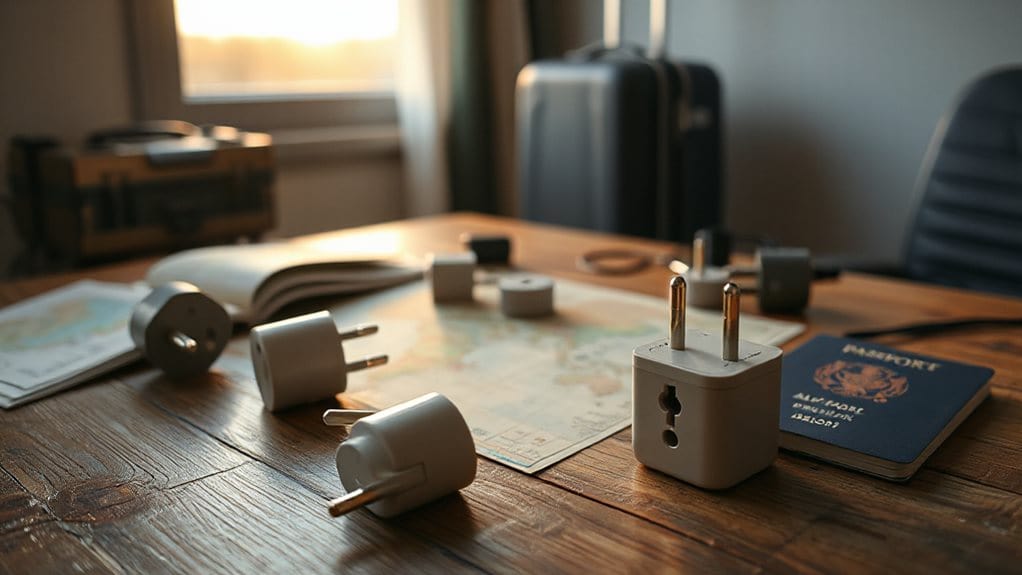
How do you ensure your devices stay powered safely across continents? Check each device’s voltage label; if it reads 100‑240 V 50/60 Hz, a universal adapter with interchangeable plug sliders (A, B, C, E/F, G, I) suffices. For 120 V‑only gear, add a voltage converter. Choose adapters with CE/FCC certification, surge protection, and grounded pins. Look for USB‑C PD ports (up to 100 W) and robust, lockable prongs for reliable, portable use. One adapter can cover multiple destinations within certain regions.
How to Identify the Right Plug Types for Your Destination?
You’ll first identify the common plug types used in your destination by checking a reliable country‑by‑country list, noting whether the region employs flat, round, or grounded pins.
Then you match those plug shapes to the local voltage standards, because adapters only change the physical connection while converters are required when the voltage differs from your device’s rating.
Hybrid ANC systems are effective at blocking low- and mid-frequency sounds on planes, so consider noise when charging and using devices in flight low-frequency engine rumble.
Identify Common Plug Types
A quick glance at a country’s electrical standards tells you exactly which plug shape you’ll need. You’ll encounter flat‑pin Type A/B in North America and Japan, round‑pin Type C/E/F across Europe and parts of Asia, three‑rectangular Type G in the UK and Hong Kong, and angled flat Type I in Australia, China, and New Zealand.
Match each destination to its list, check device labels, and note regional quirks like Italy’s L‑shaped pins or India’s mixed types, ensuring you pack the right adapter for every stop.
Match Voltage Standards
After you’ve sorted out which plug shape fits each country, the next step is to match the voltage standard to your devices. Check the charger label; a 100‑240V range means you’re safe with an adapter only. Single‑voltage gear, like a 120V hair dryer, needs a step‑down converter abroad. Dual‑voltage laptops and phones work worldwide without conversion. Match frequency (50 Hz/60 Hz) if your device relies on precise timing.
Top Compact Travel Adapters for Minimalist Travelers

Where can you fit a powerful charger into a pocket‑sized adapter without sacrificing safety? You’ll appreciate the CARD CA4‑Pro’s wallet‑size, foldable prongs and replaceable plugs, which cover 200+ countries and include Type A, C, G, and I.
Dual USB‑C/USB‑A ports deliver up to 28 W, while double 10 A fuses, flame‑resistant polycarbonate, and CE certification keep your gear protected during minimalist travel. The adapter’s safety features, including dual 10A fuses and compatibility with devices rated 100–240V, make it suitable for most modern phone and laptop chargers and minimize the risk of overload when used properly with wide‑voltage devices.
Which Travel Adapter Handles the Most Devices Simultaneously?
Which travel adapter lets you power the most gadgets at once? The BESTEK model tops the list, offering seven devices simultaneously—four USB ports and three AC sockets—while converting 90‑220 V to 110 V US voltage. It includes surge protection and a velvet storage sleeve.
EPICKA follows with six devices, featuring three USB‑C, two USB‑A, and one universal socket, plus fast‑charging support.
Ground shipping rates for heavy items like 50‑pound packages can be much lower than express options, making it economical to ship bulky adapters or accessories when needed; see FedEx Ground rates.
Safety Features You Should Never Skip When Buying a Travel Adapter
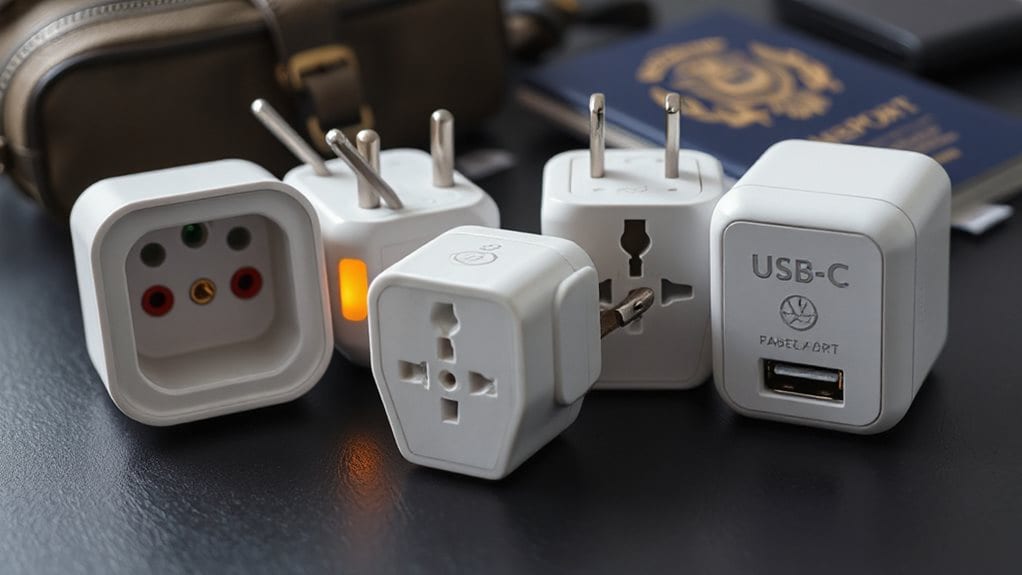
What safety features should you never overlook when picking a travel adapter? Look for CE, FCC, RoHS, UL, ETL, BS 8546, PSE, or TUV markings, which prove compliance with fire‑resistance and electrical standards.
Ensure surge and overload protection, fuse or fire‑resistant components, and insulated shutter openings. Verify detachable pins meet strength specs and that the adapter fits sockets without gaps, guaranteeing safe, reliable power abroad.
Fast‑Charging Travel Adapter Technologies: GaN and Power Delivery Explained
Ever wondered why your travel charger feels bulkier than a smartphone? GaN (gallium nitride) replaces silicon, switching up to 100 × faster and cutting heat, so chargers shrink while staying efficient.
When paired with USB‑C Power Delivery, GaN handles high‑wattage protocols without overheating, letting you power laptops and phones from a compact, lightweight adapter that fits any suitcase.
Smoking policies often treat vaping the same as cigarettes, so always check hotel rules and consider designated smoking areas before using devices indoors.
Budget‑Friendly Travel Adapters Under $20 vs. Premium Picks Over $35
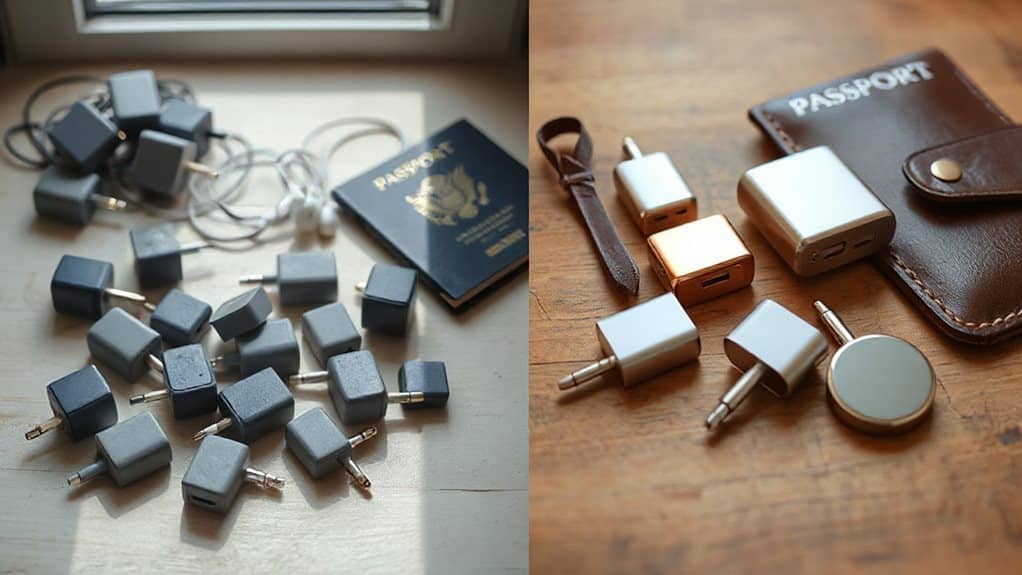
How do you decide whether to spend a few dollars on a basic adapter or invest in a premium model?
Budget options like the $11.99 Insten cover 150+ countries, offer dual USB and one AC socket, and include short‑circuit protection.
Premium picks such as the $36.99 BESTEK add voltage conversion, three AC outlets, four USB ports, surge protection, and longer warranties, providing broader functionality for higher‑priced trips.
Be mindful of transit and crowded-area risks when traveling with devices and valuables, and consider keeping phones and chargers secured to prevent phone snatching or quick grabs.
User Review Scores and Real‑World Reliability of Top Travel Adapters
You’ll notice that the top adapters keep their review scores steady across hundreds of ratings, which signals consistent user satisfaction.
Their performance holds up in Europe, Asia, and Africa, showing reliable voltage conversion and safe charging no matter the outlet type.
Over months of travel, the devices prove durable, with protective features and sturdy construction that prevent wear and failure.
Many top picks also include protective features like surge protection and durable housings that extend lifespan.
Score Consistency
What really matters when you compare travel adapters is whether their high Amazon ratings translate into consistent, real‑world performance. Epicka and Baseus both hold steady 4.7‑star scores across thousands of reviews, indicating reliable user satisfaction. Anker’s compact model maintains similar praise, while Insignia’s 3.2‑star average and frequent one‑star ratings reveal shaky consistency. These patterns help you gauge which adapter will reliably support your freedom‑focused explorations.
Reliability Across Regions
A majority of top travel adapters maintain consistent performance across regions, as shown by their user‑review scores and real‑world testing. You’ll see BESTEK’s 4.1‑star rating and reliable charging in China, Ceptics’ flawless two‑week Croatia‑Slovenia trip, EPICKA’s steady multi‑region results, VYLEE’s 5‑in‑1 success in over 200 countries, and Targus’s stable operation across 150+ locales.
Durability Over Time
Reliability across regions sets the stage, but long‑term durability determines whether an adapter will keep working after dozens of trips. You’ll find BESTEK’s 24‑month warranty, EPICKA’s safety fuse, MOGICS’s self‑repairing fuse, Targus’s rugged housing, and TESSAN’s sliding plugs all backed by thousands of five‑star reviews and no reported breakdowns.
Their designs survive frequent plugging, varied voltages, and months of use, ensuring consistent power worldwide.
Quick Maintenance Tips for Travel Adapters
How can you keep your travel adapter reliable on the road? Inspect it before each trip for cracks, frayed cables, or loose ports, and clear lint with a toothpick. Unplug, then wipe surfaces with a damp microfiber cloth, avoiding harsh chemicals. Store loosely coiled, unplug when idle, and label for quick access. Keep ventilation clear, avoid overloading, and replace if overheating or intermittent charging occurs.
And Finally
Pick the adapter that matches your plug types, offers the safety features you need, and fits your budget. Prioritize models with GaN or Power Delivery if you require fast charging, and check how many devices they can handle at once. Remember to verify compatibility with your destination’s voltage and to maintain the adapter clean and undamaged. By weighing these factors, you’ll ensure reliable, efficient power for any international trip.