You might overpay for airport transfers if you skip the official taxi queue or accept touts outside the terminal. Scammers often target newcomers with fake gem shops or rigged meters. Staying in quiet districts could leave you stranded, while party zones like Khao San Road may overwhelm. Avoid street money changers and always verify exchange rates. Bangkok’s heat and humidity can drain you quickly—pace yourself. Choosing the right area, transport, and currency habits now sets you up for a smoother trip ahead.
TLDR
- Taking unofficial taxis from the airport departure hall can lead to overcharging—use official queues or pre-booked transfers.
- Falling for “too good to be true” tuk-tuk or tour deals often results in gem shop detours or scams.
- Staying in overly touristy or isolated areas may disrupt comfort—choose central, well-connected neighborhoods like Pathum Wan.
- Exchanging money at airport counters or on the street risks poor rates and counterfeit bills—use licensed exchange offices.
- Underestimating Bangkok’s heat and humidity can cause exhaustion—stay hydrated and plan activities during cooler hours.
Overpaying for Airport Transfers
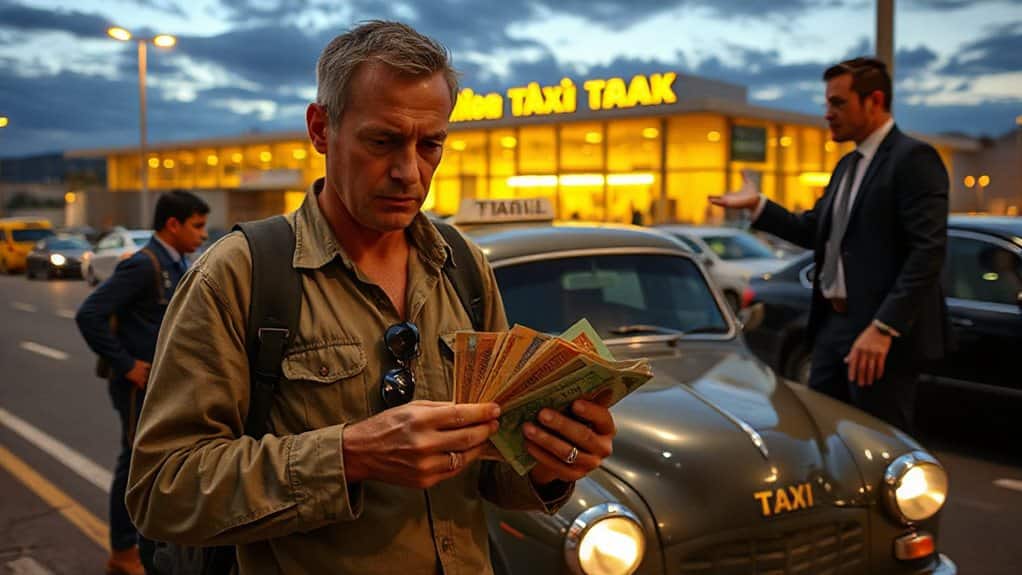
You might be tempted to hop in the first taxi you see at Bangkok’s airport, but doing so could cost you more than necessary.
Official taxis charge 50 THB base, 6.50–7 THB/km, plus 50 THB airport fee. A 20km trip should cost 350–450 THB, including tolls.
Avoid unofficial cabs demanding fixed, inflated rates—stick to queue booths or pre-book trusted transfers for fair, predictable pricing. Many first-time visitors spend more than necessary when they don’t compare official taxi fares beforehand.
Be aware that unofficial taxis often wait outside the departure hall on the 4th floor, where they bypass the official system and unregulated taxis.
Falling for Common Tourist Scams
Riding in from the airport, it’s easy to feel relieved once you’ve secured a ride—yet the risks don’t end there.
You might face taxi drivers refusing meters or tuk-tuks offering low fares that lead to gem shops. Scammers often claim attractions are closed, redirecting you to stores. Fake tours, tailor tricks, and jet ski damage scams are common. Stay alert, insist on meters, verify attraction status, and book tours from trusted agencies to protect your freedom and funds. Many visitors also overlook simple local precautions like using public boat services along the Chao Phraya River to avoid overpriced private transfers.
Choosing the Wrong Neighborhood to Stay
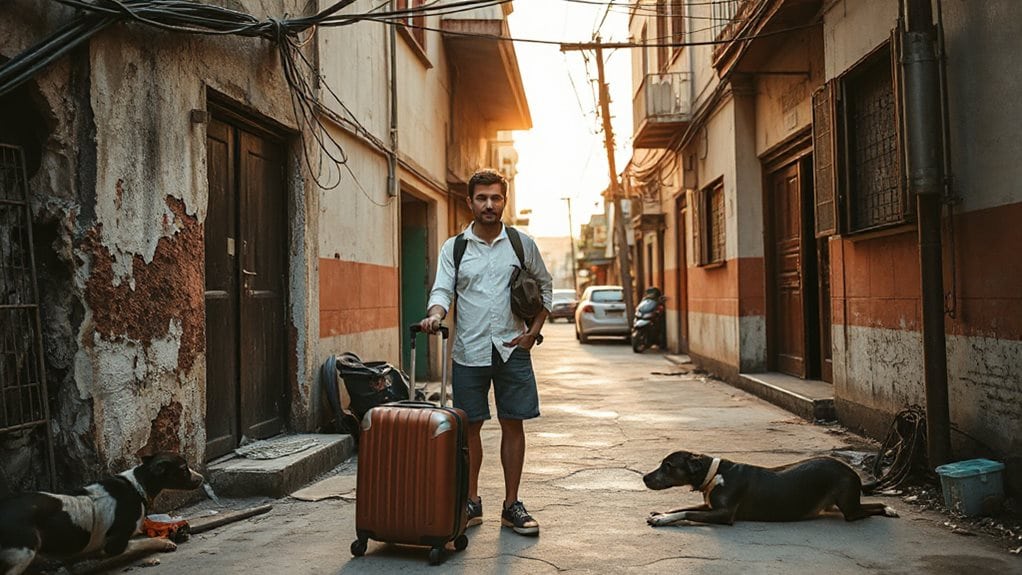
While Bangkok’s vast urban setting offers a neighborhood for every type of traveler, picking the wrong one can mean sacrificing convenience, comfort, or safety.
Staying in outer districts like Nong Khaem means lower rents but poor services and transport.
Areas like Khao San Road buzz with nightlife but overwhelm those seeking calm.
Sukhumvit’s lower sois have red-light zones, while central spots like Pathum Wan balance access and amenities, ideal for first-timers wanting freedom and ease.
If you’re traveling with children, consider daytime-friendly options near attractions such as Khao San Road that offer stalls and activities suitable for families.
Mishandling Money and Currency Exchange
When arriving in Bangkok, many first-time visitors overlook how easily small money mistakes can disrupt their trip.
You might pay high fees at airport exchange counters or withdraw cash from ATMs with hidden charges.
Some fall for counterfeit bills or inaccurate rates at street changers.
Always check the THB/USD rate—around 31.50—and use licensed exchange offices or banks to protect your money.
Consider saving on transport and sightseeing costs by taking the riverboats for cheap, scenic transfers and visiting attractions like Wat Arun during your first days.
Underestimating Bangkok’s Climate and Physical Demands

You’ll feel the sun’s intensity quickly, with UV levels staying dangerously high for most of the year.
The humidity sticks to your skin, making even short walks feel exhausting, especially when temperatures hover around 35°C in April.
Don’t push yourself too hard—your body needs time to adjust, and overestimating your stamina can lead to dehydration or heat fatigue.
Plan ahead for hydration and consider timing activities to avoid the hottest parts of the day, as drink bottled water when unsure about local water quality.
Intense Sun Exposure
Even if you’re used to warm weather, Bangkok’s sun packs a stronger punch than most realize, especially during the midday hours when temperatures regularly climb above 35°C in the spring.
You’ll face intense UV exposure year-round, with nine hours of daily sunshine and limited shade from sparse green spaces.
Low visibility and high humidity reduce relief, so protect your skin and stay hydrated to keep exploring freely.
Humidity Challenges
Bangkok’s humidity rarely lets up, turning every breath into a thick, damp effort no matter the season.
You’ll face 78% average humidity year-round, peaking near 90% during monsoon months.
Even in December, low humidity still feels muggy.
Dew points stay between 71–76°F, so heat sticks.
Pack moisture-wicking clothes, stay hydrated, and plan indoor breaks to manage constant mugginess.
Overestimating Stamina
Often, travelers misjudge how quickly Bangkok’s climate can drain their energy, especially during the first few days.
You’ll face daily highs above 33°C, minimal nighttime cooling, and humidity that amplifies fatigue.
Even in so-called cooler months, temperatures stay near 32°C.
With little relief from wind or shade, physical exertion adds up fast—pace yourself to stay active and avoid burnout in the unrelenting heat.
Ignoring Cultural Norms and Local Etiquette
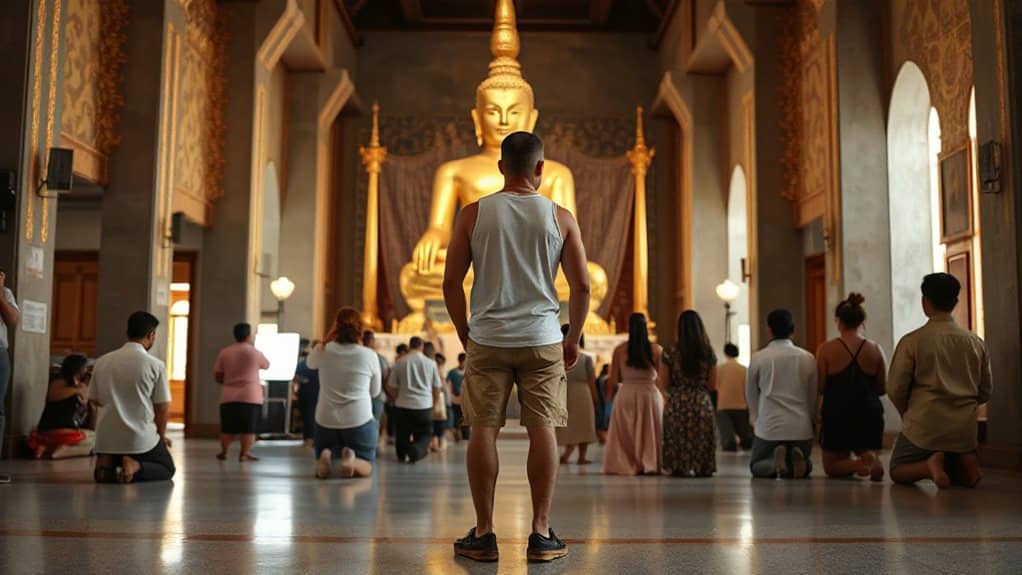
While exploring Bangkok’s sacred sites, you’ll need to dress and behave respectfully to honor local customs.
Cover your shoulders and knees, remove shoes and hats, and never point your feet at Buddha images or people.
Avoid touching heads, use a wai to greet, and step over thresholds.
Show respect during the royal anthem, and refrain from criticizing the monarchy—doing so risks legal consequences.
Be mindful that in nearby countries, including Vietnam, public behavior is monitored and political sensitivity can affect traveler conduct.
Relying Too Much on Tourist-Focused Transportation
If you stick to tourist-focused rides, you’ll quickly pay more and get less than travelers using Bangkok’s local transit.
Taxis and tuktuks often charge 2–3 times standard rates, with hidden surcharges and detours.
You’ll face delays in traffic, while the BTS Skytrain moves faster.
Tourist shuttles and boats cost more and cover less.
Skip the scams—use the rail link, metered taxis, or ride-hailing with set prices.
And Finally
You now know the most common mistakes first-time visitors make in Bangkok. By avoiding overpriced transfers, staying in smart neighborhoods, and respecting local customs, your trip will go more smoothly. You’ll save money, stay comfortable, and connect better with the culture. Use this advice to make informed choices, from currency exchange to transportation. Small adjustments make a big difference.


