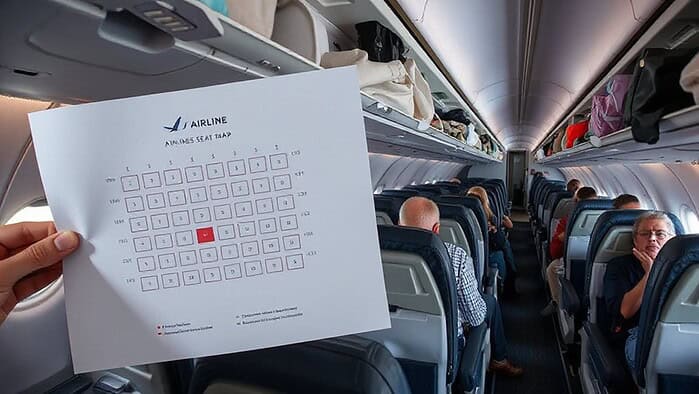
You walk the aircraft before flight, checking for damage and confirming fuel and control security. You verify documents, set switches, and test systems, ensuring everything’s ready. During long flights, you monitor autopilot, guidance, and engine performance while managing crew roles and rest periods. You respond to weather changes and ATC updates, staying alert despite automation. You follow checklists, balance workloads, and prepare for any phase of flight—knowing every decision supports safety and efficiency from takeoff to touchdown.
TLDR
- Monitor autopilot and flight systems continuously to ensure safe and efficient cruise performance.
- Rotate flying duties with co-pilot to manage workload and reduce fatigue on long sectors.
- Communicate with ATC for updates on weather, routing, and altitude changes using standard phraseology.
- Conduct periodic checklist reviews and system checks to maintain situational awareness and readiness.
- Rest during designated periods, especially on ultra-long flights with augmented crew and onboard bunks.
Preparing for Takeoff and Ensuring Aircraft Readiness
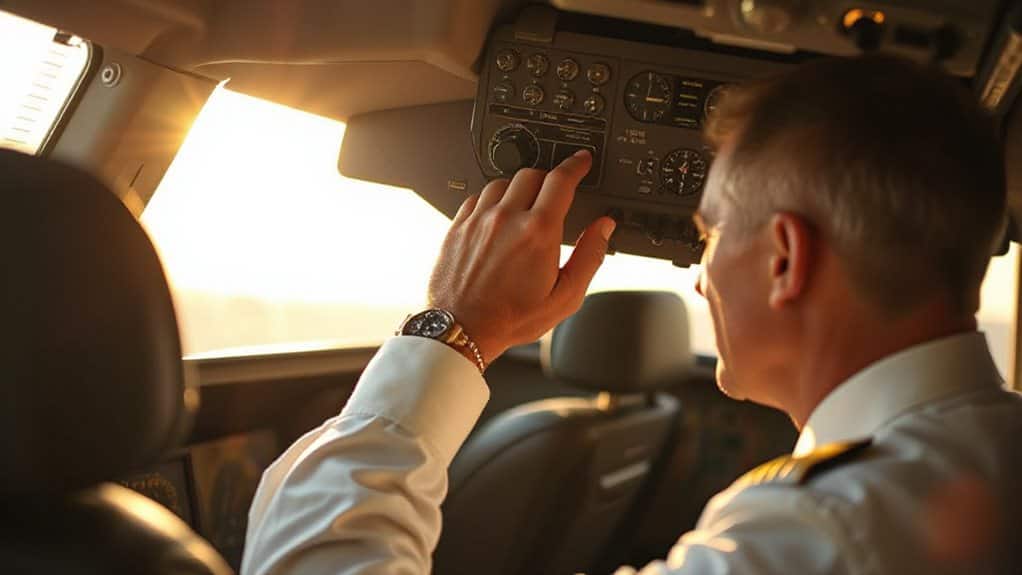
Before you even fire up the engines, a thorough pre-flight routine guarantees everything’s in order for a safe and efficient departure.
You’ll walk the aircraft, checking for damage, fuel levels, and secure controls. Inside, you verify documents, set switches, and test systems.
Confirm weight balance, weather, and flight plans—you’re not just ready, you’re free to fly with confidence. Pilots also complete required medical checks and certifications as part of standard pre-flight procedures. This process ensures systematic execution of critical steps to minimize human error and catch potential issues before they become hazards.
Managing Roles and Responsibilities in the Cockpit
While cruising at 35,000 feet, your role in the cockpit stays fluid, even with automation handling much of the flying.
You and your First Officer switch duties mid-flight to balance workload, with one flying and the other monitoring systems.
On ultra-long flights, relief pilots rotate in, each taking command for segments.
You lead briefings, manage checklists, and stay ready to act—ensuring smooth, safe operations throughout the voyage.
Federal regulations require specific crew levels based on passenger capacity and flight type, including provisions for relief pilots on ultra-long sectors.
Executing a Safe Takeoff and Initial Climb
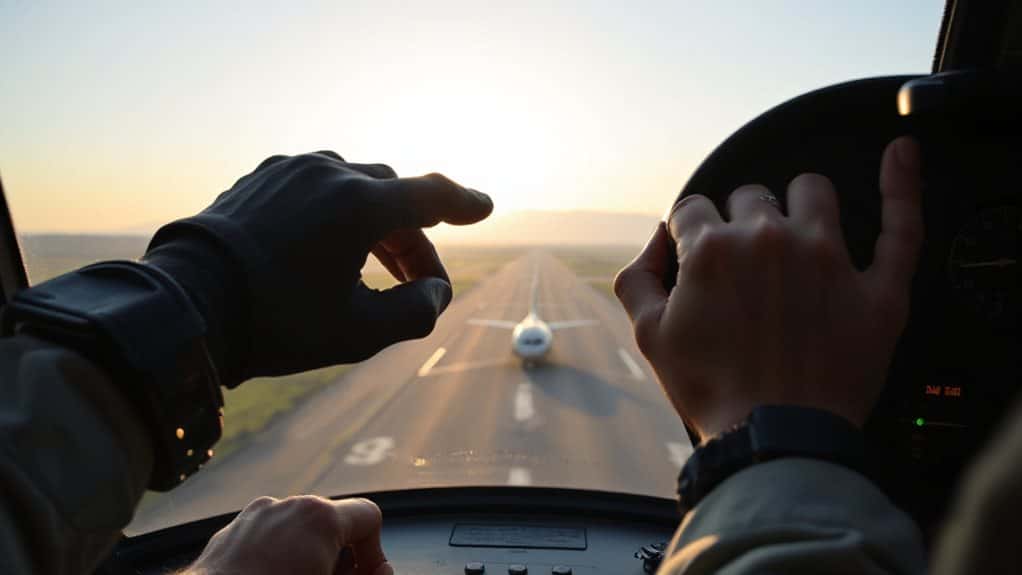
As you prepare to launch into the sky, every action during takeoff and the initial climb follows a precise sequence designed to guarantee safety and performance.
You confirm cabin doors are latched, run engine checks at 2000 RPM, and brief emergencies.
You line up confidently, apply full throttle, accelerate smoothly, lift off, then retract flaps and gear—each step sharp, deliberate, and essential for flight.
Pilots also ensure visibility systems like windshield wipers or hydrophobic coatings are functioning or applied when expecting precipitation.
Monitoring Systems and Navigation During Cruise
You keep a close eye on the autopilot by regularly verifying its performance against the flight plan and making small adjustments as needed.
You monitor fuel levels and engine parameters to guarantee everything runs efficiently, especially as the aircraft gets lighter and climbs higher for better fuel economy.
If air traffic control suggests a route change, you’re ready to assess the impact on time, fuel, and altitude while keeping the flight on track.
You also track fuel consumption and remaining range to ensure compliance with required reserves and planned alternates, since large airliners can carry tens of thousands of gallons in multiple tanks and refueling logistics affect operational decisions.
Autopilot Performance Checks
When cruising at altitude, you’re not just along for the ride—your role shifts to actively monitoring the autopilot and interconnected systems to guarantee everything runs smoothly.
You check pitch, roll, and yaw control, verify flight path accuracy, and make certain the autopilot responds correctly.
Using tools like Visionair GCS, you watch telemetry charts, confirm configuration integrity, and stay ready to intervene if anomalies arise.
Fuel and Engine Monitoring
Throughout the cruise phase, you’re constantly tracking fuel and engine performance to guarantee peak efficiency and safety.
You monitor fuel flow and weight changes to detect meter inaccuracies, often up to 8%.
Using digital systems, you adjust altitude and speed as weight drops, optimizing fuel burn.
You verify engine health through performance trends, ensuring reliability.
These checks keep your flight on target, efficient, and safe, giving you the freedom to focus on smooth operations.
Route Change Preparedness
Pilots keep a close watch on multiple systems during cruise to stay ready for any route adjustments that may come up. You monitor guidance displays, weather trends, and ATC clearances to respond quickly.
Vertical deviation indicators and FMS updates guarantee you stay on track. Real-time communication lets you request reroutes around turbulence or storms, while Doppler data and HGA links maintain route-finding accuracy, keeping your path safe and efficient.
Scheduling Rest and Handling Fatigue on Long Hauls
Because managing fatigue is critical to safety on long-haul flights, airlines follow strict rest regulations to guarantee you remain alert and effective throughout your duty period.
You’ll get 10 hours of rest every 24 hours, often extended to 12 hours.
On long flights, augmented crews rotate through bunks, allowing 2.5–3 hours of rest.
You must avoid sleep during takeoff, landing, or high-workload phases.
Airlines also schedule additional cabin crew beyond legal minimums to support extended operations and passenger service, especially on larger aircraft with higher passenger counts and multiple cabins, which helps maintain safety and reduce individual workload with extra attendants.
Responding to Weather and Air Traffic Control Updates
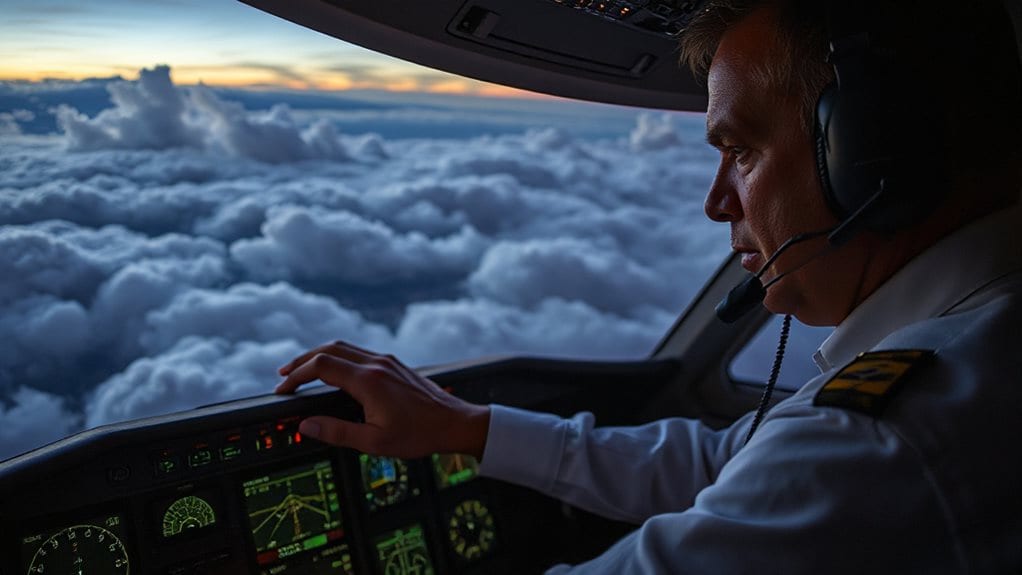
You keep a close eye on weather changes using real-time radar and satellite data displayed in the cockpit.
When you spot turbulence, icing, or storms ahead, you adjust your route early and coordinate with ATC for clearance. ATC also shares updates from other pilots and weather services, helping you make informed decisions throughout the flight. FAA standards require pilots to meet specific color vision testing requirements to ensure they can accurately interpret cockpit displays and external lighting.
Monitoring Weather Deviations
Frequently, you’re relying on a suite of advanced tools and real-time updates to monitor weather deviations throughout a long flight.
You use AWOS, PIREPs, and onboard radar to track storms, turbulence, and wind shifts.
Satellite data and datalink weather help over oceans.
You adjust altitude or route using dispatcher input, METARs, TAFs, and GFA forecasts.
Cumulonimbus clouds or cyclones prompt timely reroutes, ensuring safety and efficiency.
Coordinating With ATC
While piloting through ever-changing airspace, you must maintain constant coordination with Air Traffic Control to respond effectively to weather developments and traffic updates.
You use standard phraseology and read back clearances, ensuring accuracy.
You report traffic sightings, follow vectors, and immediately act on resolution advisories.
You confirm instructions—altitude, heading, squawk codes—and maintain frequency discipline, staying alert during handoffs to keep airspace safe and efficient.
Completing Post-Flight Procedures and Layover Planning
Once the aircraft comes to a complete stop at the gate or ramp, you begin a series of essential post-flight procedures to guarantee the plane is safely secured and ready for its next operation.
You turn off the master switch, clean the cockpit, and complete the after-landing checklist.
You park facing the wind, install chocks and covers, then conduct a walkaround to check for damage.
You record Hobbs and tach times, refuel with proper oversight, and log any squawks.
You secure all doors and notify staff of discrepancies.
Thoughtful planning guarantees a smooth layover and next departure.
And Finally
You stay alert and focused throughout the flight, balancing duties with your co-pilot to guarantee safety. You monitor systems, adjust to weather or traffic updates, and manage rest periods to fight fatigue. During cruise, you stay engaged with routing and communication tasks. After landing, you complete checklists and prepare for the next leg. Every action follows strict procedures, keeping flights smooth and secure from takeoff to touchdown.