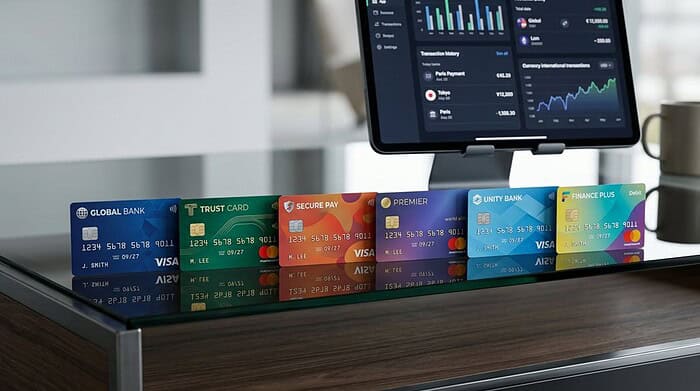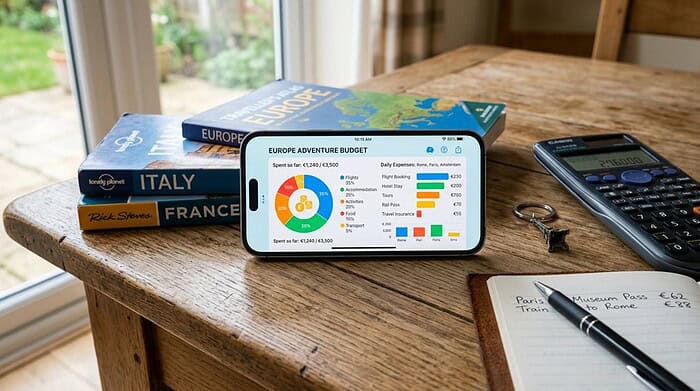
When traveling internationally, you should carry enough cash to cover daily expenses like transportation, tips, and small purchases, typically between $50 and $100 per day. For longer trips, consider bringing more in the local currency or a mix of currencies, especially if ATM access is limited. To keep your funds safe, divide cash into small amounts and store them securely. Balancing cash and cards improves security and convenience—continue to investigate strategies to manage your funds effectively.
TLDR
- Carry enough cash for daily expenses, typically $50 to $100, depending on destination and trip length.
- Keep small amounts of foreign currency for tips, transportation, and small purchases.
- Use a combination of cash and credit cards for safety and convenience.
- Divide cash into multiple secure locations to minimize theft risk.
- Withdraw larger sums from ATMs within bank networks to reduce fees and ensure better exchange rates.
How Much Cash Do You Need for Your Destination?
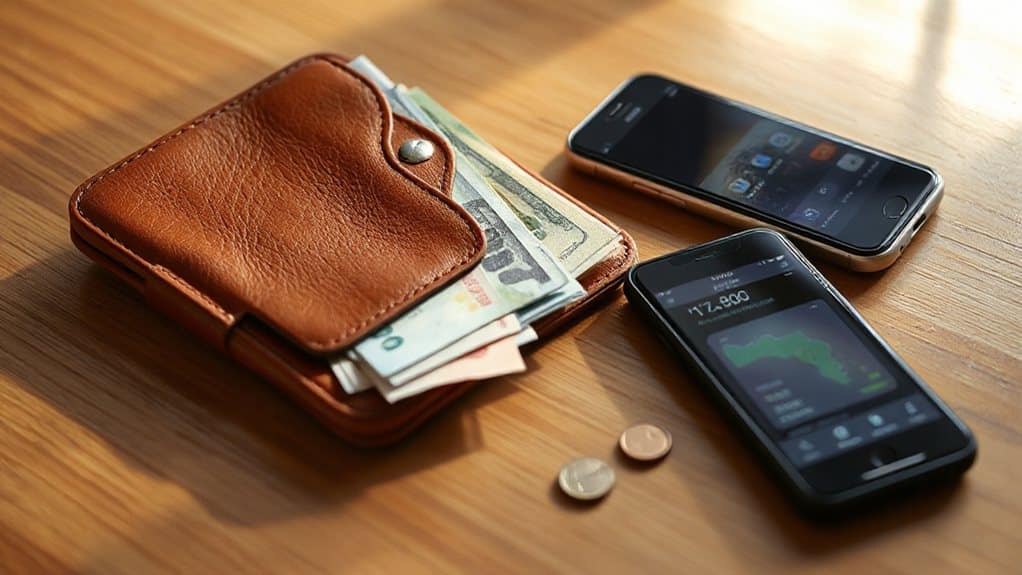
Before you travel, it’s important to determine how much cash you’ll need for your destination. Consider the local currency and your travel plans, including expenses like transportation, tips, and small transactions.
If ATM access is limited, carrying enough cash in foreign currency guarantees smooth transactions.
Typically, $50 to $100 daily suffices, but longer trips may require more cash for essentials.
When planning your budget, also account for seat pitch differences and onboard expenses that may make extra spending during travel more likely.
How Can You Keep Your Cash Safe While Traveling?
Keeping your cash safe while traveling requires careful planning and strategic habits. Use secure storage like a money belt or hidden compartments, especially in crowded areas.
Divide your cash into small amounts and keep it in multiple locations such as hotel safes or hidden pockets.
Carry only what you need for daily expenses to enhance travel safety and theft prevention.
Cash or Card: Which Is Safer and More Convenient Abroad?
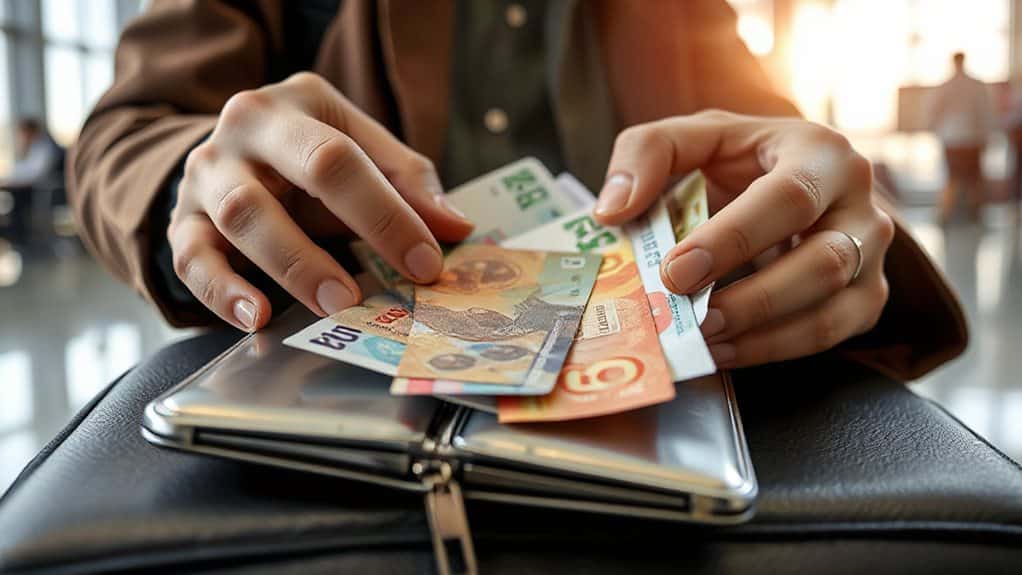
Choosing between cash and cards when traveling abroad involves considering safety and convenience. A credit card offers better security for large purchases and reduces theft risk, especially with fraud protection and zero liability. Cash is useful in remote areas or for small expenses, but it’s more vulnerable to theft. Combining both provides balance, maximizing convenience and security during international travel. For example, using Widevine L1 helps ensure you can stream HD entertainment securely on major services when you rely on your mobile devices abroad.
When and How Should You Convert Excess Currency?
Knowing when and how to convert excess foreign currency can help you make the most of your funds and avoid unnecessary losses. Convert excess currency before leaving a country when exchange rates are favorable. Avoid converting leftover foreign cash at airports or hotels, and consider spending foreign cash on small purchases or tips. Store leftover currency securely for future trips or emergencies. When planning a trip, remember that budgeting for accommodation and transportation often matters most.
Tips for Managing Currency Exchange and ATM Withdrawals
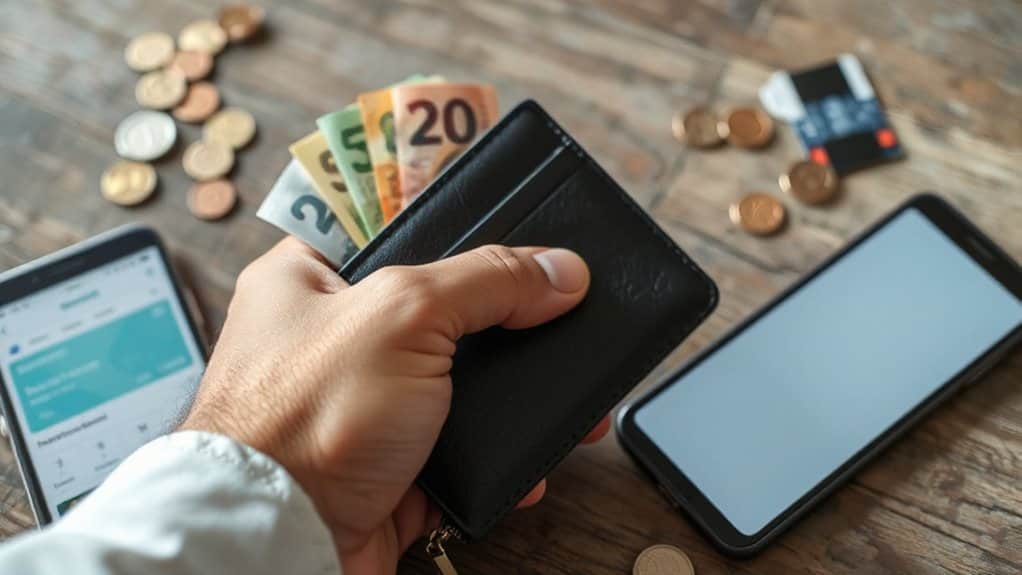
To effectively manage your currency exchange and ATM withdrawals while traveling, it’s important to plan ahead and understand how fees and rates can impact your funds. Use ATMs within your bank’s network to access favorable exchange rates and reduce foreign transaction fees. Withdraw larger sums at once, stay within limits, and decline currency conversion offers to avoid inflated rates. If you’re visiting Museo del Prado (where tickets can involve lines), arriving early can help you avoid rushing mid-trip and reduce the temptation to withdraw emergency cash.
And Finally
When traveling internationally, carry enough cash for small expenses and emergencies, but rely primarily on cards for safety and convenience. Keep your cash secure in hidden compartments or theft-proof wallets, and use ATMs cautiously. Convert excess currency at reputable locations to avoid poor exchange rates. By planning ahead and managing your cash wisely, you minimize risks and guarantee a smoother travel experience while complying with carry-on restrictions and security guidelines.