Yes, hotel security cameras are monitored, typically by trained security staff and advanced AI systems working together. You’ll find cameras in public areas like entrances, hallways, and parking lots, but never in guest rooms or restrooms. They’re watched 24/7, with motion sensors and smart analytics alerting staff to suspicious activity. Audio isn’t recorded, and footage is securely stored. Alerts can come from unauthorized access, unattended items, or panic buttons. Key card data also helps track movement. You’re protected without compromising privacy—there’s more to how this works behind the scenes.
TLDR
- Hotel security cameras are actively monitored by trained security personnel in real time.
- Management and authorized staff can access live feeds for oversight and incident response.
- Remote monitoring capabilities allow security teams to view camera feeds offsite when needed.
- AI systems analyze footage continuously to detect threats and trigger instant alerts.
- Monitoring is limited to public areas, with no cameras in guest rooms or restrooms to protect privacy.
Where Hotel Security Cameras Are (And Aren’t) Placed
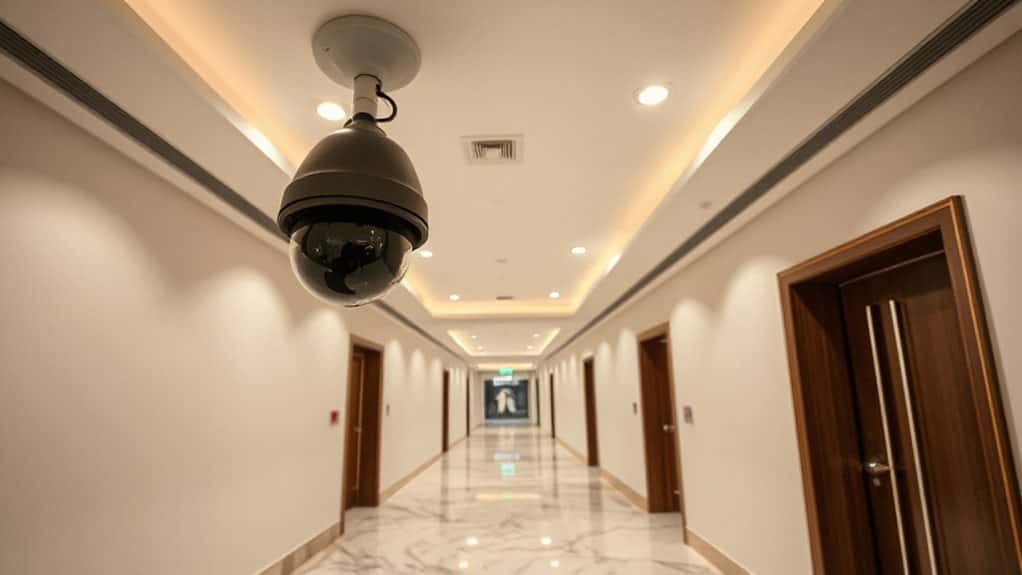
While you might expect privacy in certain areas, hotel security cameras are strategically placed in public and high-risk zones to guarantee safety without crossing into personal spaces.
You’ll find them at entrances, hallways, lifts, lobbies, and parking lots—never in private rooms or restrooms. Bright or distinctive luggage colors can also make guests easier to spot and help deter theft, so many hotels advise travelers to use bright luggage when possible.
They’re mounted 8–10 feet high, use facial recognition, night vision, and motion sensors, and are angled to capture clear footage of activity while respecting guest privacy.
Emergency exits are also monitored to prevent unauthorized access, ensuring safety during critical situations through emergency exit coverage.
Who Monitors Hotel Security Cameras: And When
You’re likely wondering who’s actually watching the footage when you pass by a hotel security camera, and the answer is straightforward: trained hotel security personnel are the primary eyes on the system, actively monitoring live feeds and responding to alerts around the clock.
They receive instant notifications, use smart analytics to detect real threats, and can access cameras remotely. Management also views feeds when needed, ensuring constant oversight without invasive surveillance. Key cards are typically programmed with room-specific info and time windows to prevent unauthorized access, which complements camera-based security measures and audit logs with room-specific access.
What Triggers Alerts in Hotel Surveillance Systems?
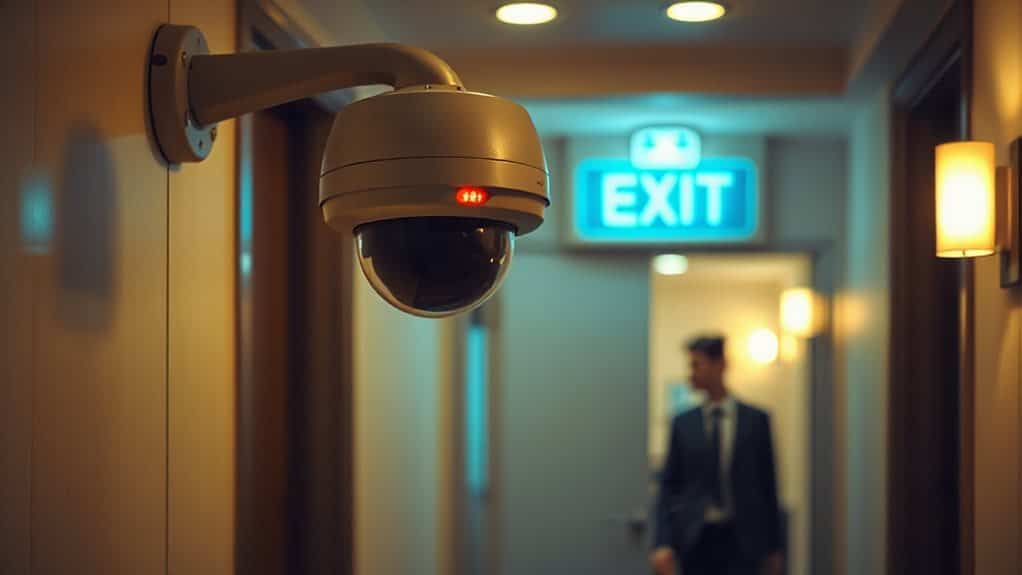
When unexpected movement occurs in restricted areas after hours, motion detection systems instantly trigger alerts, notifying hotel security of potential unauthorized access.
Glass-break sensors, virtual fences, and smoke detectors activate alarms when breaches or hazards are detected.
AI analytics spot guns, unusual behavior, or unattended bags.
Smart sensors in private zones detect vaping or fighting.
Panic buttons and access control systems also prompt immediate responses, keeping everyone safer without constant surveillance.
Millimeter wave scanners can also detect variations in body density such as scar tissue, which is relevant for staff and guest screening protocols.
How AI Detects Threats in Real Time
Hotel security systems now rely on artificial intelligence to identify threats the moment they happen, building on the automated alerts described earlier.
AI analyzes your behavior, movements, and surroundings in real time using cameras and sensors. It spots anomalies like unauthorized access, unattended bags, or weapon cues, then instantly alerts staff.
With 24/7 vigilance and no human lapses, the system acts fast, keeping you safe without compromising your freedom to move freely.
Helicopter air support also provides rapid response in emergencies, often arriving before ground units as part of coordinated public safety efforts with police helicopters.
How Hotels Protect Guest Privacy
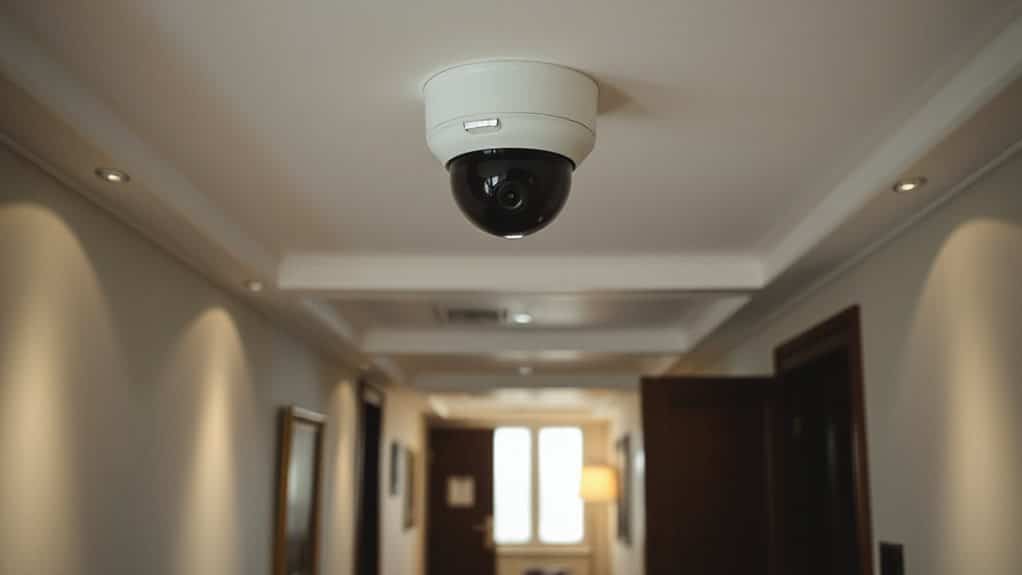
While ensuring guest safety remains a top priority, hotels implement strict measures to protect privacy through carefully regulated camera use.
You’ll find cameras only in public areas like lobbies and hallways, never in guest rooms or restrooms.
They’re visible, monitored 24/7, and store footage securely.
Audio recording is banned, and data retention follows clear policies, ensuring your freedom and peace of mind.
When traveling with gifts such as fresh flowers, be aware that security protocols may require them to be screened and no water in containers is generally advised to avoid issues.
And Finally
You now know where hotel cameras are typically placed—and where they aren’t, like inside guest rooms. Security teams monitor feeds during peak times or when alerts trigger. Modern systems use AI to spot unusual behavior in real time, improving response speed. Hotels balance safety and privacy by following strict guidelines on data use and access. You’re protected, but not watched constantly.
