You’ll find pristine white‑sand beaches like Koh Rong’s 8 km stretch, quiet jungle waterfalls on Koh Kood, massive limestone caves at Gunung Mulu, and the dramatic Ban Gioc cascade on the Vietnam‑China border. Each spot offers sustainable lodging, clear‑season weather windows, and simple safety tips such as packing a water filter and using marked paths. Boat rides, short treks, and local transport connect you to these hidden gems, and the next sections reveal more details.
TLDR
- Koh Rong’s 8 km white‑sand beach offers crystal‑clear, shark‑free swimming under casuarina and coconut shade, perfect for sunrise at Long Set Beach.
- Khlong Yai Kee’s secluded northern cascade on Koh Kood provides a quiet jungle trek, while Khlong Chao offers reliable water flow and easy parking.
- Gunung Mulu’s vast limestone caverns, including Clearwater and Deer Caves, host millions of bats and diverse ecosystems; guided tours require permits and modest climbs.
- Ban Gioc Waterfall on the Vietnam‑China border features a 60 m high, 300 m wide cascade with boat tours, nearby Nguom Ngao Cave, and eco‑lodges for sustainable stays.
- Nusa Penida’s Manta Point and Manta Bay deliver unforgettable manta‑ray encounters in clear waters during the dry season, with eco‑friendly lodging and reforestation initiatives nearby.
Visit Koh Rong’s 8 km White‑Sand Beach – Why It’s a Must‑See

Ever wondered why Koh Rong’s 8 km white‑sand stretch stands out among Southeast Asian beaches? You’ll find soft, rock‑free sand sloping gently into crystal‑clear water that’s safe for swimming, with no sharks or jellyfish.
Casuarina trees and coconut palms shade the shore, and a 10‑minute walk from Koh Touch brings you to Long Set Beach, perfect for sunrise, sunset, and quiet relaxation.
Reach Koh Kood’s Jungle Waterfalls Without Crowds
Where can you find Koh Kood’s jungle waterfalls without the usual crowds? Take a motorbike to Khlong Yai Kee, a quieter northern cascade with a steep jungle path, but check the season—its flow dries in hot months.
For a more reliable splash, head to Khlong Chao’s paved parking lot and short walk.
If you want seclusion and a night’s stay, visit Huang Nam Kaew, now accessible and free, with a local guesthouse nearby. Pack food, as no shops exist at any site.
Avoid noisy, crowded areas and seek quieter bases elsewhere in Thailand to enjoy more relaxed, scam-free travel.
Explore Gunung Mulu’s UNESCO‑Listed Caves
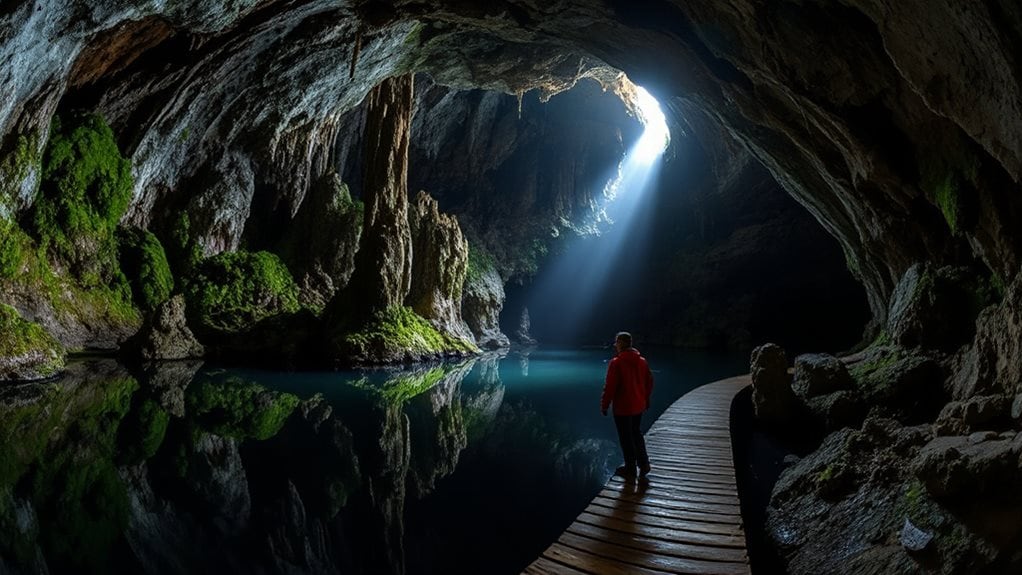
You’ll find Gunung Mulu’s limestone caverns stretching for hundreds of kilometres, forming some of the world’s most extensive underground networks.
The caves host a rich tapestry of life, from millions of bats to unique plant species that thrive in the darkness.
Exploring these majestic chambers gives you a clear view of the park’s extraordinary geology and biodiversity.
Many visitors choose bases with easy transit access in nearby towns to maximize their time exploring the park.
Majestic Limestone Caverns
How can a single park hold some of the world’s most expansive underground rivers and chambers? You’ll find Clearwater Cave’s 250‑kilometre network, Deer Cave’s chamber big enough for forty Boeing 747s, and four public show caves. Guided tours require permits, ten‑person groups, and boat rides plus 200‑step climbs. A nightly bat exodus of ten million adds a unique, free‑spirited spectacle.
Biodiverse Cave Ecosystems
What makes Gunung Mulu’s cave ecosystems so extraordinary is the sheer breadth of life they support, both above and below ground. You’ll find 3.5 million bats, 12 bat species, dozens of snakes, swiftlets, and unique fish thriving in darkness.
The park spans 52,865 ha, housing 270 birds, 80 mammals, 3,500+ plants, and countless insects, making it a living laboratory for biodiversity and conservation.
See Ban Gioc Waterfall – The Ultimate Border‑Side Escape
Ever wondered why Ban Gioc Waterfall stands out among Southeast Asia’s natural wonders? You’ll drive 6‑7 hours from Hanoi, then a short ride from Trung Khanh.
The 60‑meter‑high, 300‑meter‑wide cascade straddles the Vietnam‑China border, offering boat tours that reveal three limestone tiers and emerald waters.
Nearby attractions include Nguom Ngao Cave and Ban Gioc Pagoda, both within a few kilometres.
A higher seat pitch generally means more legroom and a more comfortable travel experience.
Discover Ko Tarutao’s Secluded Prison‑Island Beauty
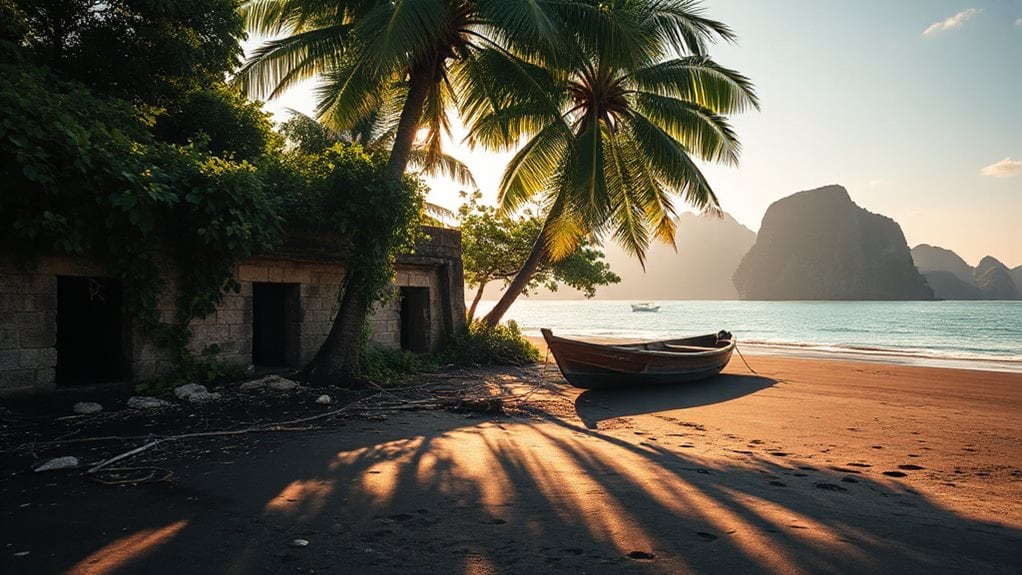
Why wander to Ko Tarutao? You’ll find a rugged island where history meets untouched nature. The former penal colony, established in 1938, left concrete roads, a small museum, and prison remnants at Talo Wao Bay. Rental bicycles let you investigate jungle footpaths to pristine coves.
The marine national park, created in 1974, protects 152 km² of jungle, hills, and wildlife, while the sea closes the park May through October.
Dive With Manta Rays at Nusa Penida’s Manta Bay & Point
How can you experience some of the most reliable manta‑ray encounters in the world? Hop on a 45‑60‑minute boat from Toyapakeh to Manta Point or Manta Bay.
At Point, depths of 8‑40 m and cleaning stations at 5‑15 m draw mantas 95 % of the time.
Bay offers shallow 5‑12 m water, coral bommies, and 10‑20 m visibility.
Bring certification for dives, or try a discovery snorkel.
Prices range $54‑$220 per adult.
If you’re planning your trip during off‑peak months you can often find lower prices and fewer crowds, making it easier to save money.
When to Visit Southeast Asia’s Hidden Gems for Ideal Weather
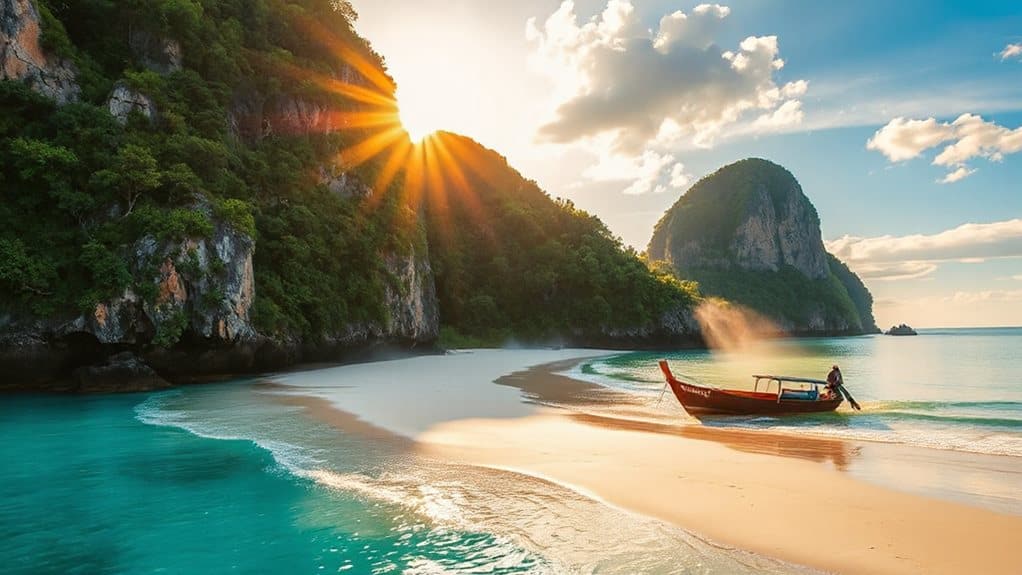
You’ll find the dry‑dry season peaks from November to February give you clear skies and comfortable temperatures across most mainland gems, while the monsoon‑shifted microclimates on coastal islands like Koh Samui and Borneo stay dry from May to September.
Planning your trip around local festivals, such as Laos’ Boat Racing Festival in October, lets you experience cultural highlights when crowds thin and weather remains pleasant.
For added peace of mind when flying between these hidden gems, consider checking seat dimensions and legroom—many economy seats average about 17–18 inches wide, so you can choose flights with more comfortable seating options.
Dry‑Dry Season Peaks
When planning a visit to Southeast Asia’s hidden gems, timing your trip around the dry‑dry season peaks guarantees the most reliable weather for outdoor activities. On the mainland, November through February offers 30 °C highs, low humidity, and as little as 0.2 inches of rain in Bangkok.
In the archipelago, the same months keep islands dry, while Indonesia, Singapore, Brunei, and Malaysia stay dry from April to September, perfect for beach and diving adventures.
Monsoon‑Shifted Microclimates
Ever wondered why some hidden‑gem destinations feel perfectly dry while others stay humid even in the same month? Monsoon‑shifted microclimates mean that coastal islands may stay breezy during the continental wet season, while high‑land valleys dry out early in the dry period. Check local monsoon boundaries—southeasterly summer winds, northeasterly winter breezes—to time visits for clear skies, comfortable humidity, and reliable trekking conditions.
Local Festival Timing
Where does the ideal weather intersect with Southeast Asia’s hidden‑gem festivals? You’ll find January‑February crowds in Laos’s Boun Pha Vet, Thailand’s Bo Sang Umbrella, and the Philippines’ Panagbenga, all under cool, dry skies.
March‑April offers Bali’s Nyepi and Thailand’s Songkran with warm, sunny days.
May‑June brings Laos’s Boun Bang Fai and Malaysia’s Kaamatan, while November’s Loy Krathong and Yi Peng light up clear, calm nights.
Getting Around All Destinations: Boats, Jungle Treks & Local Transport
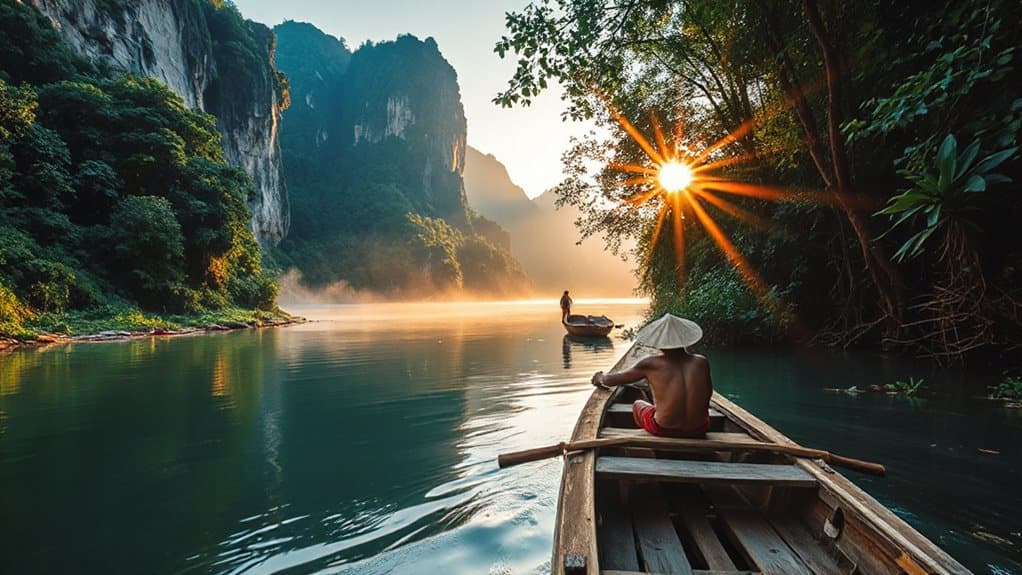
How do you dive Southeast Asia’s diverse terrain without missing a beat? You’ll hop on motorbikes, catch paratransit vans, and ride tuk‑tuks that dominate city streets.
In towns, angkots and electric three‑wheelers shuttle you between sites.
For remote gems, board river boats or trek jungle trails, while metros and BRT lines cut travel time in larger hubs.
All options blend speed, flexibility, and growing green alternatives. Airlines may restrict carrying certain gear like electric skateboards, so always check battery rules before flying.
Where to Stay: Eco‑Lodges, Homestays, and Low‑Impact Resorts by Location
What you’ll find across Southeast Asia is a growing network of eco‑lodges, homestays, and low‑impact resorts that let you stay comfortable while minimizing your footprint.
In Indonesia, Bawah Reserve runs off‑grid with solar power and marine conservation.
The Philippines offers solar‑powered beach bungalows at Nay Palad Hideaway.
Thailand’s Soneva Kiri applies zero‑waste policies, while hill‑tribe lodges near Chiang Mai support cyclists.
Cambodia’s Alila Villas Koh Russey uses energy‑efficient design and reforestation programs.
Vietnam features community‑run eco‑lodges on former logging routes and sustainable urban projects near Da Lat.
Packing Essentials & Safety Tips for Remote Southeast Asian Adventures
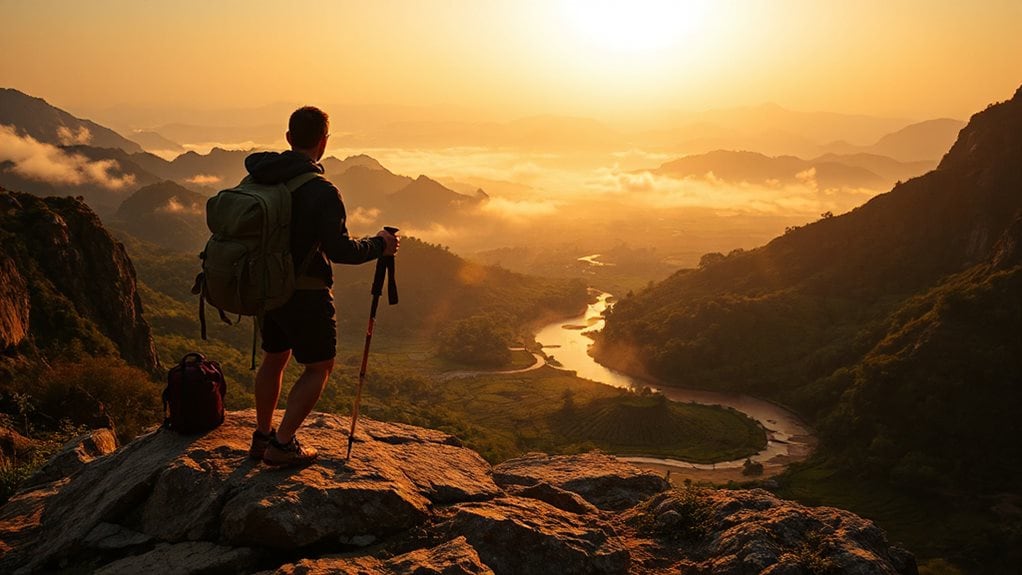
You’ll want a lightweight gear checklist that covers quick‑dry clothing, a reliable water‑filter bottle, and a compact first‑aid kit, while also packing a portable charger and a sturdy daypack for daily excursions.
Make sure you’ve updated any required vaccinations, carried a copy of your travel insurance, and downloaded offline maps or a GPS app to navigate remote trails and uneven roads safely.
Finally, keep a small lock, a money belt, and a basic language phrasebook handy to protect your valuables and reduce misunderstandings with locals.
Light Gear Checklist
Ever wondered which items will keep you comfortable and safe while traversing remote corners of Southeast Asia? Pack lightweight tops, shorts, a long‑sleeve shirt, and quick‑dry trousers; sturdy shoes and a rain jacket. Include a microfiber towel, swimwear, a dry bag, sunscreen, DEET repellent, a hat, UV sunglasses, a universal adapter, power bank, waterproof phone case, headlamp, packing cubes, zip‑locks, a compact first‑aid kit, shampoo bar, and a reusable water bottle.
Health & Navigation Preparedness
Why should you treat health and navigation as inseparable priorities when venturing into remote parts of Southeast Asia?
Pack a kit with stomach meds, rehydration salts, painkillers, prescription drugs, soap, sanitizer, tissues, toilet paper, and DEET repellent. Boil water, avoid ice, and use purification. Wear helmets, long clothing, proper shoes, and carry a power bank for maps. Use ride‑hailing apps, negotiate fares, and stick to marked paths. Secure bags, verify life jackets, and get travel insurance.
And Finally
By timing your trips to avoid monsoon peaks, you’ll enjoy clearer skies and smoother travel across Koh Rong, Koh Kood, Gunung Mulu, Ban Gioc, and Ko Tarutao. Use local boats, jungle trails, and budget transport to reach each spot efficiently. Choose eco‑lodges or homestays that respect the environment, and pack lightweight gear, a reliable water filter, and basic medical supplies. Staying informed about entry permits, weather alerts, and safety protocols ensures a hassle‑free adventure in Southeast Asia’s hidden gems.


