
Connecting rooms have an internal door that links two rooms, allowing easy internal access and more privacy, making them ideal for families or groups. In contrast, adjoining rooms are side-by-side with no internal door, meaning you must go into the hallway to switch rooms, which offers less privacy but still keeps rooms close. Availability varies by hotel, and specific arrangements aren’t always guaranteed. To learn more about differences and booking tips, keep exploring the details below.
TLDR
- Connecting rooms have an internal door linking two rooms, while adjoining rooms are side-by-side without an internal connection.
- Connecting rooms offer better privacy and internal access; adjoining rooms require exiting to the hallway to move between them.
- Connecting rooms are typically more expensive and limited in availability compared to adjoining rooms.
- Connecting rooms are ideal for families or groups needing internal access; adjoining rooms suit guests seeking proximity with privacy.
- Hotel policies and availability influence whether guests can secure connecting or adjoining rooms, and requests are not always guaranteed.
Connecting vs. Adjoining Hotel Rooms: What’s the Difference?
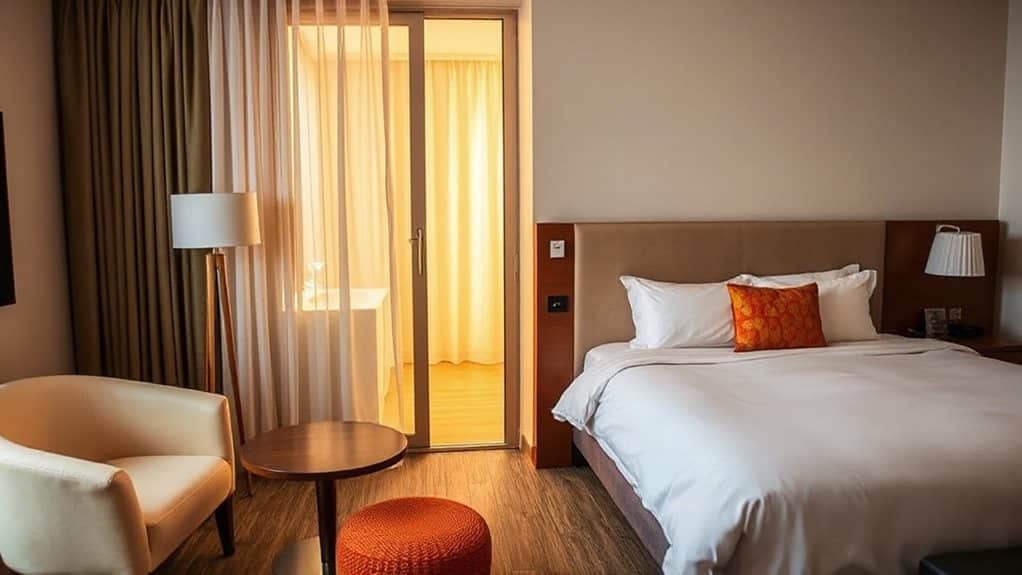
The key difference between connecting and adjoining hotel rooms lies in their internal accessibility. Connecting rooms have an internal door linking the two, enabling direct access without exiting to the hallway.
Adjoining rooms are side by side but lack this internal connection, requiring guests to go into the hallway to move between them. Connecting offers seamless movement; adjoining provides privacy. If you’re comparing options for comfort and convenience on trips, it can also help to look at how products are designed for adjustability & dimensions.
How Do Connecting and Adjoining Rooms Differ?
Have you ever wondered how connecting and adjoining rooms actually differ? Connecting rooms have an internal door linking two rooms, allowing direct access without hallway entry. Adjoining rooms are next to each other but lack this internal connection. Connecting rooms offer convenience and privacy, ideal for families, whereas adjoining rooms provide proximity without internal access. Availability varies by hotel, and it’s a good idea to confirm the exact layout and whether armrests/seat width concerns or safety requirements (like seat belt extenders) could affect comfort and access during your stay.
Which Room Type Is Better for Privacy?
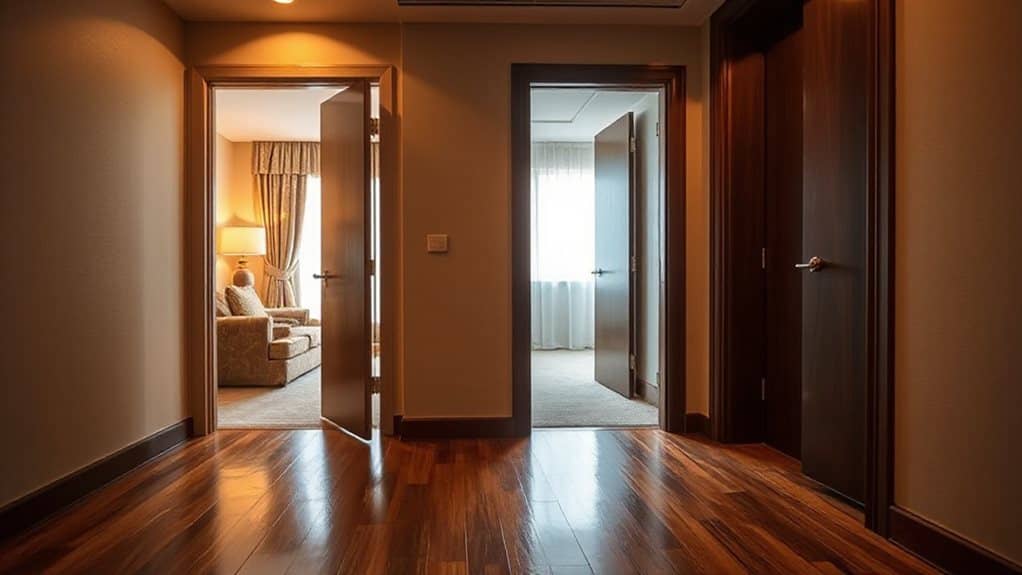
When choosing between connecting and adjoining rooms, privacy becomes an important factor to contemplate.
Connecting rooms typically offer better privacy because they’ve a connecting door that can be closed or locked, creating a barrier from the adjacent room.
Adjoining rooms provide less privacy, as guests must exit to the hallway, making them less ideal for those seeking maximum privacy.
In busy London transit and tourist areas, maintaining physical boundaries is especially helpful—situational awareness can reduce the likelihood of distraction and opportunistic theft.
When Should You Book a Connecting Room?
Booking a connecting room is most beneficial when you need quick, internal access between spaces, such as for families or groups.
To guarantee these rooms, booking early is essential, as availability is limited, especially during peak seasons.
Confirm directly with the hotel to make certain the rooms will be connected, since online bookings may not guarantee this feature.
When Are Adjoining Rooms the Right Choice?

Adjoining rooms are a practical choice when you want to stay close to others but prefer to keep your spaces separate. They offer privacy because each room has its own entrance from the hallway.
This allows you to come and go freely without disturbing others. Adjoining rooms are ideal for those seeking independence while maintaining proximity for convenience.
How to Book Connecting and Adjoining Rooms Seamlessly
To book connecting or adjoining rooms smoothly, it’s important to specify your request clearly when making the reservation, whether online or over the phone.
Contact the hotel ahead of time to confirm availability, especially since such rooms can be limited.
Always verify your arrangements at check-in. Communicating your preferences early and following up guarantees your needs are met and reduces the risk of misunderstandings.
In a similar way, travel planning benefits from understanding key checkpoints like the DMZ to avoid last-minute surprises.
Clarify Room Types Early
Making certain your hotel stay goes smoothly begins with clearly communicating your room preferences early in the booking process.
To avoid surprises, clarify whether you want an adjoining or connecting room, and specify these details when booking.
Contact the hotel ahead of time to confirm availability, and verify your request during check-in to guarantee your preferred room layout.
Communicate Special Requests
When booking connecting or adjoining rooms, it’s important to communicate your preferences clearly and early in the process. Use the “Room Requests” or “Special Requests” section to specify your needs.
For guaranteed placement, contact the hotel directly after booking to confirm your room requests. If online options are limited, calling the hotel can improve your chances of securing your preferred room type.
Confirm Upon Arrival
When you arrive at the hotel, it’s important to check in early and speak directly with the front desk staff to confirm your room preferences.
Clearly specify your desire for adjoining or connecting rooms and mention your reservation details.
Confirm upon arrival that your request is noted and available, understanding that availability depends on hotel capacity and can’t be guaranteed in advance.
Are Connecting Rooms More Expensive Than Adjoining Rooms?
Are connecting rooms generally more expensive than adjoining rooms? Yes, connecting rooms usually cost 10-30% more due to their internal door access and limited availability. Hotels charge a premium for connecting rooms because they offer greater convenience and seamless access, making them more desirable. Adjoining rooms are typically less costly, being simply adjacent without internal access. When traveling with fresh flowers, it’s also important to plan ahead for screening, since TSA may request extra screening if any alarms are triggered.
Myths About Connecting and Adjoining Hotel Rooms

Many travelers believe that adjoining and connecting rooms are interchangeable, but this is a common misconception. Connecting rooms feature an internal door that allows direct access. While adjoining rooms are simply next to each other without internal access. Not all adjoining rooms connect, and availability depends on hotel policies and occupancy, so requesting doesn’t guarantee their arrangement. As with travel safety warnings, you should confirm the specific details with the property before you arrive.
Best Uses for Connecting and Adjoining Rooms: Family, Business, and Group Travel
Connecting and adjoining rooms serve different needs depending on your travel plans. Families often choose connecting rooms for easy supervision and convenience.
While adjoining rooms offer privacy for those who want separation but stay close. Business and group travelers can benefit from both options, using connecting rooms for collaboration and adjoining rooms for individual work or rest.
Family Travel Advantages
When traveling with family, choosing the right room configuration can greatly impact convenience and comfort. Connecting rooms are ideal for family travel, offering internal access that allows quick movement and supervision, especially for young children.
They enable shared experiences while maintaining some independence, making them a practical choice for families seeking flexibility and ease during their stay.
Business & Group Benefits
Have you ever considered how room arrangements can enhance convenience for business meetings or group stays? Connecting rooms are ideal for quick collaboration, offering internal access for groups and larger parties.
Adjoining rooms provide privacy and independence, suitable for guests needing flexible, separate spaces.
Early booking is recommended as hotels limit connecting rooms, while adjoining rooms are more readily available.
How to Confirm Your Room Preferences Before Arrival
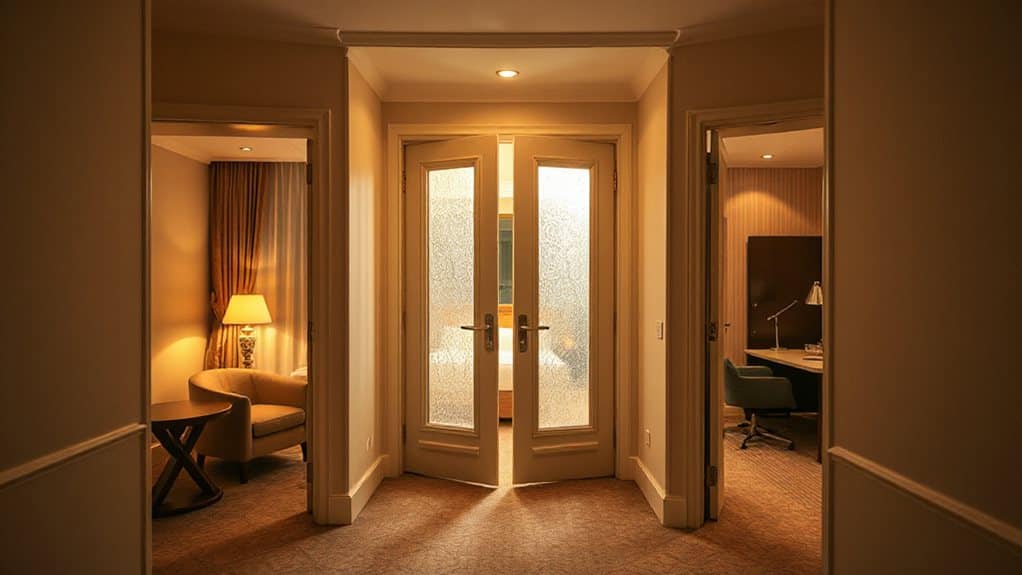
To guarantee your room preferences are honored, it’s essential to specify whether you want adjoining or connecting rooms when you make your reservation.
Be sure to confirm your door preferences directly with the hotel before arrival, as requests made in advance aren’t always guaranteed.
Contact the hotel or use their online platform to clarify and confirm your needs.
And Finally
Understanding the difference between connecting and adjoining rooms helps you choose the best option for your needs. Connecting rooms allow access between doors, ideal for families or groups seeking privacy and convenience. Adjoining rooms are simply next to each other without internal access, suitable for flexible arrangements. Consider your priorities, such as privacy, cost, or purpose, and verify your preferences before booking. Clear communication guarantees your stay meets your expectations and avoids misunderstandings.


