Watch out for tuk-tuk drivers who approach you with free tours near Khao San Road or the Grand Palace—they often demand extra fees later. Avoid gem shops offering “wholesale” deals; these are high-pressure scams. Reject laminated club flyers in Patpong, as hidden charges add up fast. Use official exchange counters, secure your valuables in crowded markets, and never rent vehicles without documenting damage. Spot digital scams by verifying offers independently—many fake tours and jobs target tourists online. There’s more to staying safe than just knowing the perks.
TLDR
- Avoid tuk-tuk drivers near Khao San Road who offer “free” tours with hidden fees and forced shop stops.
- Reject gem shops with “government deals”—they’re scams using fake certificates and high-pressure sales.
- Skip nightlife touts offering cheap entry; hidden charges often inflate bills to thousands of baht.
- Use ATMs that dispense Thai baht and avoid street currency changers offering suspiciously good rates.
- Watch for rental scams and pickpockets in crowded spots by documenting vehicle condition and securing valuables.
Beware of Tuk-Tuk Drivers Offering Unsolicited Tours
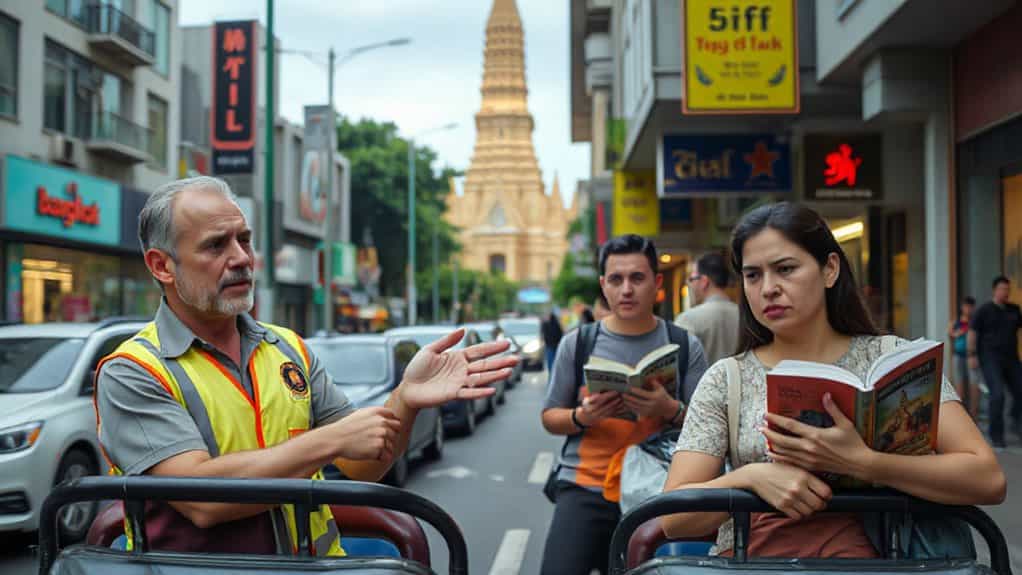
You’ll often run into tuk-tuk drivers who pull up out of nowhere, especially near tourist spots like Khao San Road or the Grand Palace, and immediately start pitching a tour.
They’re overly friendly, pushy, and promise secret deals or free attractions.
Don’t trust unsolicited offers.
These rides often include forced shop stops, inflated prices, or sudden fee demands.
Stay free—say “no, thanks” and walk away.
Unofficial tours are a common tactic used to lure tourists into scams. A common hotspot for these approaches is near major attractions such as the Grand Palace, where crowds make it easy for touts to target visitors.
Recognize Fake Gem and Jewelry Deals
You’ll often hear claims of government-backed gem deals or wholesale prices, but these offers aren’t affiliated with any official Thai authority.
Stores may look professional and offer free drinks or personal service, yet they’re designed to pressure you into buying overpriced or fake stones.
TSA guidance notes that fine jewelry is generally recommended to be worn during travel rather than packed in checked luggage to reduce the risk of loss.
Too-Good-To-Be-True Offers
Watch out for strangers who strike up conversations near major tourist sites like the Grand Palace, especially if they mention site closures or offer free tuk-tuk rides sponsored by the tourism ministry.
They may steer you to gem shops with fake export deals, using fake IDs, staged customers, and high-pressure tactics.
Real gems cost less than claimed—often worthless.
Never pay cash or share passport details.
Trust your instincts and walk away.
No Government Affiliation
While some gem shops in Bangkok may claim official backing, none are actually affiliated with the Thai government or the Tourism Authority of Thailand.
Scammers use fake IDs, counterfeit certificates, and business cards linked to temples to appear legitimate. They pose as officials, offer false export programs, and lack verifiable credentials.
Always verify claims independently—real government programs won’t rely on high-pressure sales or untraceable shipping.
Avoid Misleading Ping Pong Show Invitations
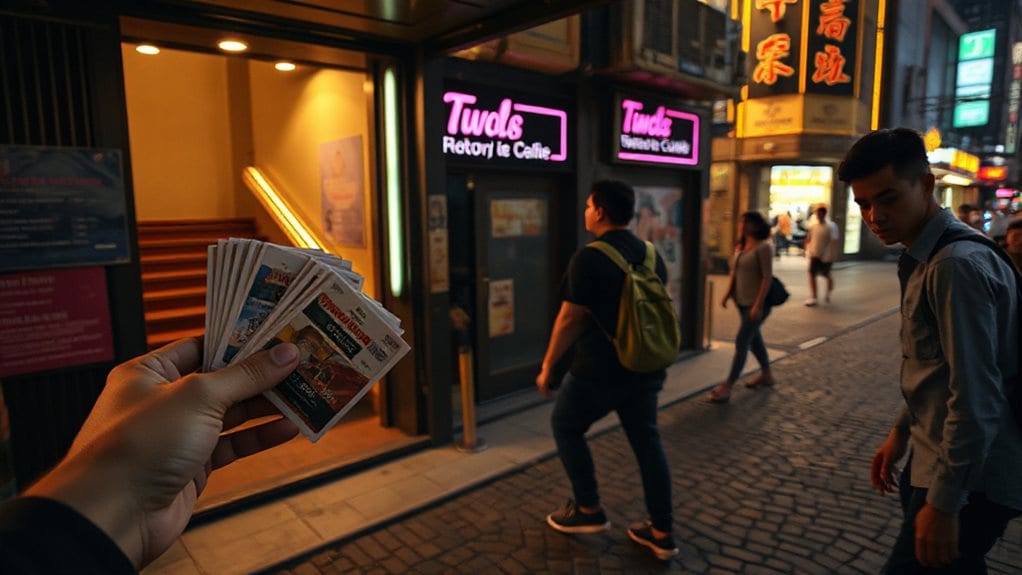
You’ll likely get stopped on Patpong’s streets by touts handing out laminated deals promising free entry and 100 baht drinks.
These invitations hide steep charges—like 1,200 baht per act or inflated drink prices—that appear only on your final bill.
Stay firm, avoid engagement, and remember: if it sounds too good to be true, there’s always a catch waiting inside.
Many visitors combine Patpong visits with nearby nightlife areas like Khao San Road, so plan your evening and avoid the touts to keep costs down.
Free Entry, Hidden Costs
Don’t be fooled by the promise of free entry when street promoters beckon you toward a “special show” in Bangkok’s nightlife districts. They lure you in with no upfront charge, but hidden fees stack up fast—seat fees, viewing charges, inflated drink prices, and forced tips. What seems free ends up costing 3800–6000 baht.
Always ask what’s not included, and remember: if it sounds too good to be true, it probably is.
Aggressive Touts, Fake Promises
Often, the moment you step into Bangkok’s Patpong district, aggressive touts swarm with laminated menus promising cheap drinks and free entry to ping pong shows.
They quote 100–200 baht, but bills jump to 3,000+ with hidden fees.
Promises of low prices vanish at checkout.
Avoid eye contact, refuse menus, and walk away—engaging triggers the “you look, you pay” rule.
Stay free by staying uninvolved.
Spot Currency Exchange Scams
Always stay alert when exchanging money in Bangkok, as scams can quickly drain your travel budget.
Scammers offer poor rates or damaged bills—always check notes for tears or stamps.
Verify exchange rates online, use banks or reputable bureaus, and avoid street touts.
Refuse wrong change or fake bills immediately.
Choose Thai Baht at ATMs to skip fluctuating conversion fees.
Stay informed, stay free.
Also be mindful of broader regional travel safety advice, including that carry document copies and using money belts can reduce losses and disputes.
Protect Yourself From Pickpocketing Hotspots
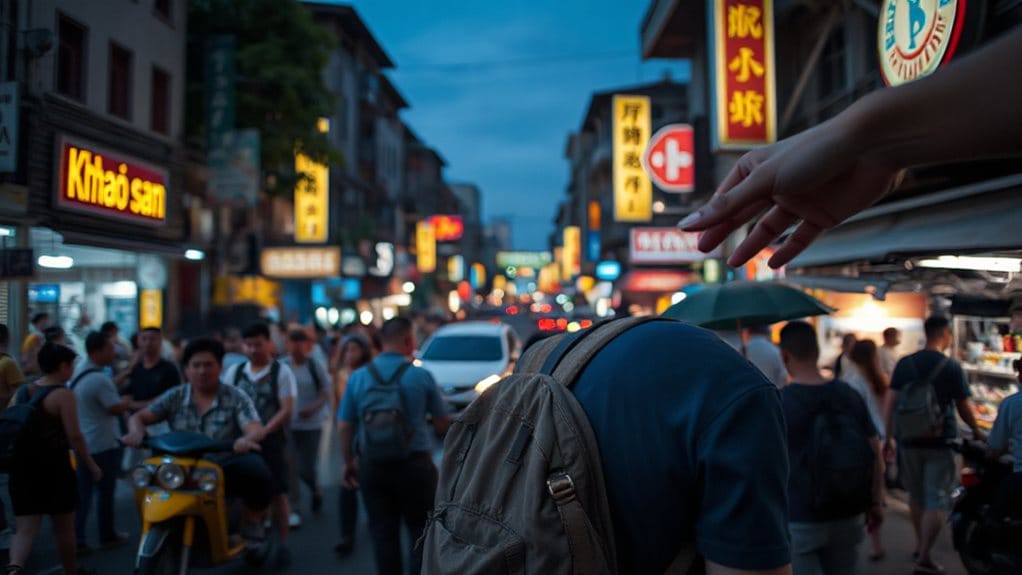
You’re especially vulnerable to pickpocketing in Bangkok’s most visited areas, where thieves target distracted tourists with well-practiced tactics.
The Grand Palace, Wat Pho, and Chatuchak Market have high theft rates, often involving coordinated gangs using umbrellas or disguises.
CCTV recently captured thefts in Chinatown.
Keep precious items in front-zippered bags, avoid displaying phones, and stay alert—especially in crowded spots where theft networks operate.
Follow airline and customs rules when traveling with plants, and consider that some destinations require plant health certificates.
Identify Digital Fraud Tactics
Digital deception in Bangkok has evolved into a sophisticated threat, targeting tourists through carefully crafted online schemes.
Scammers use fake job ads on Facebook or TikTok to lure victims into trafficking rings or pyramid scams like iCON Group.
Fraudulent travel bookings, QR code malware via LINE, and crypto investment traps are rampant.
Romance scams and fake tours exploit trust.
Use digital wallets and verify links to stay safe.
Empty water bottles are allowed through TSA checkpoints in carry-on and checked bags, so consider carrying one to refill after security at airport water fountains and reduce plastic waste empty water bottles.
Watch Out for Rental Vehicle Traps
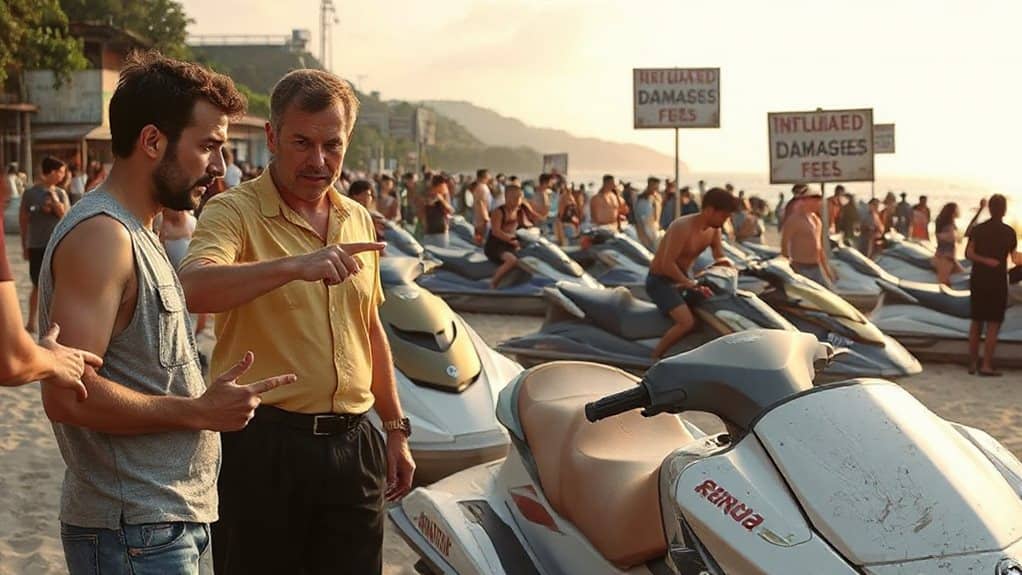
When renting a vehicle in Bangkok, watch out for scams that can turn a convenient ride into a costly headache. Owners may blame you for pre-existing damage or even stage theft using spare keys. Always photograph the vehicle, inspect it thoroughly, and document scratches.
Avoid shady operators in tourist zones. Choose reputable agencies with solid reviews to protect your freedom and wallet.
Stay Alert in High-Tourist Congestion Areas
While traversing Bangkok’s busiest districts, you’ll quickly notice how heavy foot and vehicle traffic can turn simple trips into slow, frustrating crawls.
Tourist zones like Siam and Chidlom face severe congestion, worsened by taxis, tuk-tuks, and buses idling for passengers.
Expect delays, especially during rush hours, and plan extra travel time to stay stress-free and keep your freedom on the move.
And Finally
You can avoid tourist traps in Bangkok by staying alert and questioning offers that seem too good to be true. Watch for pushy tuk-tuk drivers, fake gem scams, and misleading show invitations. Be cautious with currency exchanges, pickpockets, and rental vehicles with hidden fees. Scammers often target crowded areas, so remain aware. Recognizing common fraud tactics helps you make smarter choices, saving time and money while keeping your trip safe and enjoyable.


