
Yes, you can bring a car seat on a plane if it meets FAA safety standards and is certified with an approval label. It can be used as a seat for your child during the flight or checked as baggage if it’s not FAA-approved. Make certain the seat is under 16 inches wide and follow your airline’s policies for installation and baggage check. To learn more about choosing, installing, and traveling with your car seat, keep exploring these important details.
TLDR
- Car seats are allowed if they meet FAA safety standards and have an FAA approval label.
- Use an FAA-approved car seat for your child during the flight; non-approved seats must be checked as baggage.
- Ensure the car seat is no wider than 16 inches and properly installed using the aircraft’s seat belt.
- Choose lightweight, compact, and easy-to-install car seats suitable for air travel.
- Follow airline policies and check manufacturer instructions for safe installation and usage.
Are Car Seats Allowed on Planes and How Do You Know if Yours Is FAA-Approved?
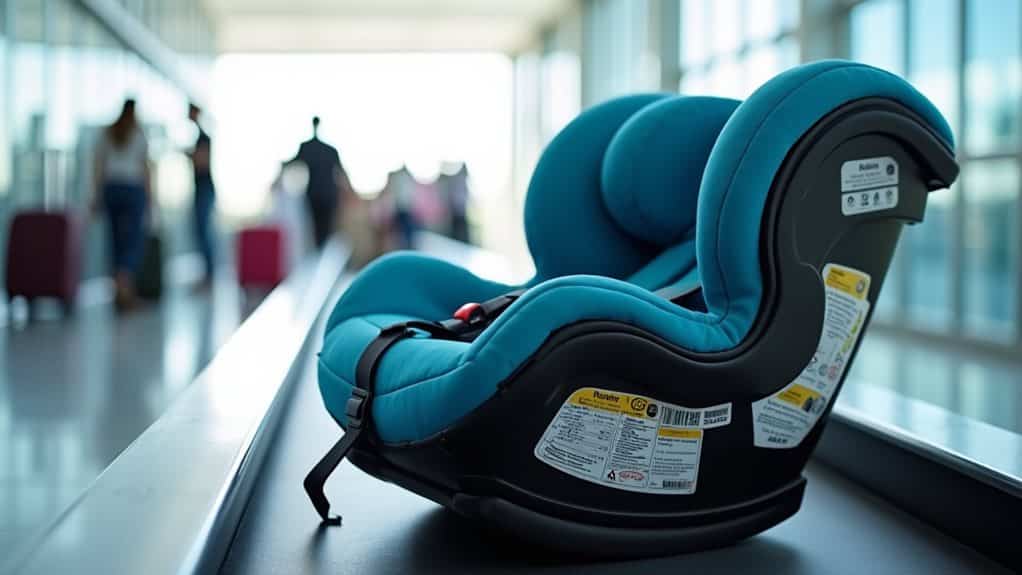
Car seats are generally allowed on planes, but only if they meet specific safety standards. To confirm yours is FAA-approved, look for a label certifying it for use in aircraft. Only certified car seats can be used as a seat on a plane, and airline staff may request to see this label. seat belt extenders must be provided by airlines upon request if a standard seat belt does not fit, and this safety support may be relevant if your child’s car seat requires it. Non-FAA-approved seats must be checked as baggage.
Why Using a Car Seat on a Plane Is Safer and Worth the Effort
Using a car seat on a plane offers a level of safety that simply can’t be matched by holding a child on your lap. FAA-approved car seats are tested for crash safety, providing better protection during turbulence or sudden movements. Properly installed, they keep children secure during takeoff, landing, and turbulence, markedly reducing injury risk and enhancing child safety during air travel. In addition, you should keep all important documents securely handled and never hand over a passport or wallet to anyone claiming to be an officer without verifying their identity.
How to Check if Your Car Seat Meets Airline and FAA Requirements
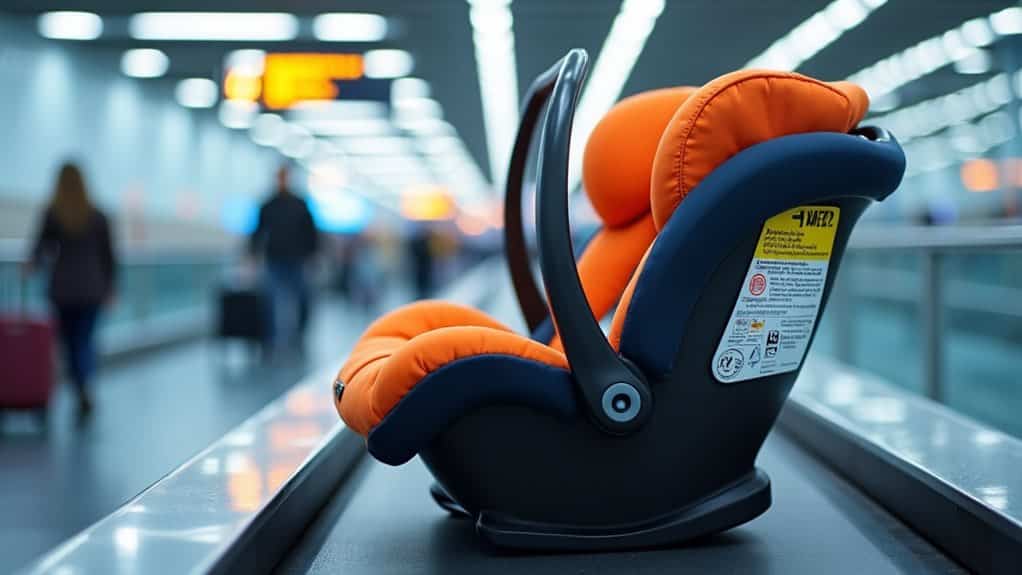
Before attempting to bring a car seat on a plane, it’s important to verify it meets airline and FAA requirements. Look for a label indicating FAA approval, usually with certification markings. Confirm the car seat’s width is 16 inches or less. Check your airline’s policies and review the user manual or online guidelines to verify FAA compliance and proper installation. If you’re bringing any adhesives for the seat’s parts, remember that super glue is generally restricted because it may be considered flammable unless you can confirm it is non-flammable from the product label or MSDS.
Choosing the Best Travel Car Seat for Air Travel
When choosing a travel car seat for air travel, you should prioritize models that are lightweight and compact to make carrying and fitting in airplane seats easier. Make certain the seat has FAA-approved safety labels to meet airline requirements. Look for features that allow for easy installation without much hassle. Considering these factors will help you select a seat that’s safe, convenient, and suitable for your travel needs. fast charging (18W+) is also helpful for keeping your devices powered during trips if you’re using entertainment accessories in the seat.
Lightweight and Compact Design
A travel car seat that’s lightweight and compact makes flying with a young child much more manageable.
Opt for a lightweight, portable, FAA-approved travel car seat with a compact design, ideally under 16 inches wide.
Many fold or collapse for easy storage, and carrying straps or backpacks simplify handling through airports, ensuring convenience without sacrificing safety or comfort.
FAA-Approved Safety Labels
Choosing a travel car seat that’s FAA-approved is essential for ensuring safety and compliance during air travel.
Look for a certification label indicating it meets Federal Motor Vehicle Safety Standards (FMVSS 213).
Airline staff may request to see this FAA-approved label to verify the seat’s eligibility.
Without it, your seat should be checked as baggage for safety and compliance.
Easy Installation Features
Look for travel car seats that feature clear, straightforward installation instructions and color-coded belt paths. These ease the setup process, making it faster and less stressful.
Choose lightweight, travel-specific seats with adjustable straps, quick-attach features, and built-in belt lock-off systems.
FAA-approved models with one-step installation mechanisms provide the easiest, most secure setup during air travel, ensuring freedom and convenience.
How to Install Your FAA-Approved Car Seat on the Plane
How you install an FAA-approved car seat on a plane is vital for your child’s safety during the flight. To bring a car seat, follow the manufacturer’s instructions and check for an FAA-approved label. When planning your trip, budget for the essentials since budget travelers in Paris often spend €80–€120 per day. Use the aircraft’s seat belt, threading it through the designated belt path. Make certain the seat is at a 45-degree angle and secure it tightly, testing for stability.
Renting or Checking a Car Seat: What You Need to Know
When it comes to traveling with a car seat, you have several options for how to transport it safely and conveniently. Checking your car seat as baggage is common, often in a protective bag to prevent damage. Some airlines may allow you to use an unoccupied seat for checking, but always verify their policies beforehand to guarantee compliance and avoid surprises. As a general rule, a fanny pack is a personal item on most airlines, so it can affect how many items you’re allowed to bring alongside your carry-on.
Essential Gear and Accessories for Flying With a Car Seat
Traveling with a car seat requires some essential gear and accessories to guarantee it stays protected, secure, and easy to transport.
A sturdy transport bag or stroller travel bag safeguards your car seat during gate checking.
Large carabiners attach easily to strollers or luggage handles.
A lightweight, FAA-approved car seat simplifies travel.
A backpack-style bag offers convenient carrying and organization of your car seat and accessories.
Troubleshooting Common Issues When Traveling With a Car Seat
Car seats can sometimes present unexpected challenges during travel, but knowing how to troubleshoot common issues can help guarantee a smoother voyage.
Make certain your restraint is FAA-approved and properly certified to avoid security delays. Verify airline policies beforehand, install the seat correctly with any needed seat belt extenders, and use a protective cover to prevent damage when gate checking.
And Finally
Traveling with a car seat on a plane is allowed and often recommended for safety. Make certain your seat is FAA-approved, check airline policies, and follow proper installation procedures. You can bring your own seat or rent one at your destination. Be prepared for carry-on restrictions, and use appropriate accessories for ease of use. Proper planning guarantees a safer, more comfortable expedition for your child, making air travel smoother and more secure for everyone involved.