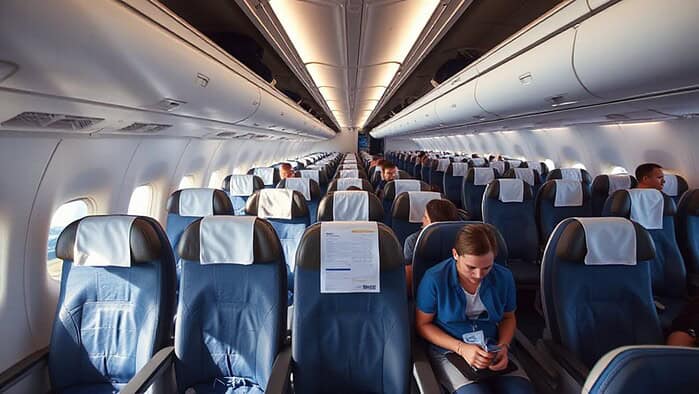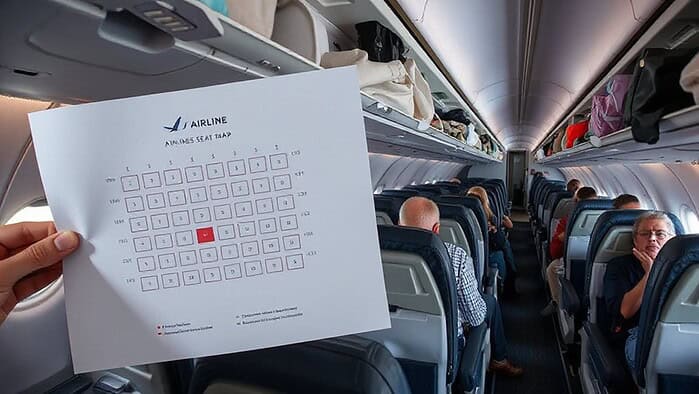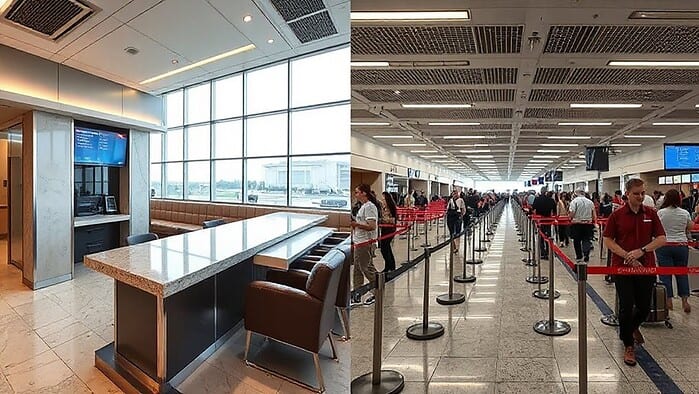
Airlines decide flight departure times based on factors like passenger demand, airline schedules, and airport infrastructure. They consider peak travel hours, seasonal patterns, and real-time demand shifts that influence pricing and timing. Operational constraints such as runway capacity, ground handling, crew rest requirements, and schedule padding also play a role. External factors like weather and air traffic control slot restrictions can cause delays or schedule adjustments. Continuing further helps uncover how airlines balance efficiency with reliability through strategic planning.
TLDR
- Airlines schedule flights based on passenger demand, peak travel hours, and seasonal travel patterns.
- Departure times are coordinated with airport infrastructure, runway capacity, and slot restrictions.
- Crew schedules and turnaround times influence optimal departure slots for efficiency and safety.
- Real-time disruptions like weather or delays are managed with schedule padding and adjustments.
- Operational considerations, including maintenance and ground handling, impact the timing of flight departures.
What Factors Influence Flight Departure Times?
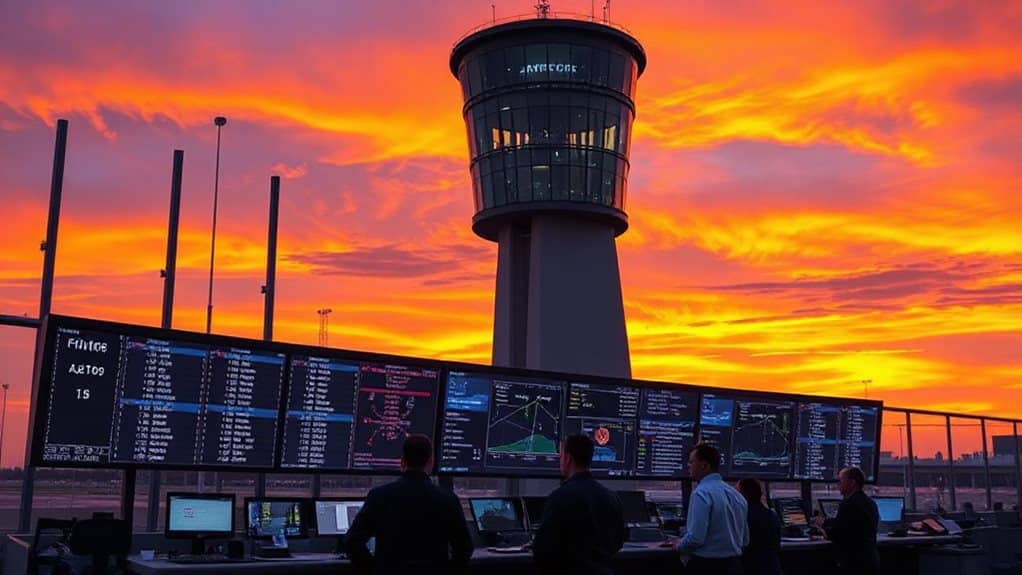
Several key factors influence when airlines decide to depart flights. Your flight’s departure time depends on the airline schedule, passenger demand, and preferred flying hours. Real-time pricing is one way airlines respond to shifting demand and booking patterns throughout the day, which can affect how flights are timed and readjusted in practice. Slot restrictions at busy airports, crew rest requirements, and schedule padding for delays also shape the timing. All these elements work together to optimize operations while giving you a sense of freedom in travel planning.
How Do Airport Operations and Infrastructure Affect Scheduling?
Airport operations and infrastructure play an essential role in determining flight departure times because they directly impact how efficiently flights can be scheduled and executed.
Runway capacity and slot restrictions at busy airports limit departure options, while ground handling capabilities affect turnaround times.
Maintenance or construction can cause delays, requiring airlines to adjust schedules based on available resources and infrastructure constraints.
Similarly, just as BTS access in key Bangkok districts reduces reliance on taxis and improves how quickly visitors can move between attractions, efficient airport transit and gate processes can make departures run closer to plan by lowering bottlenecks on the ground.
How Does Passenger Demand Shape Flight Schedules?
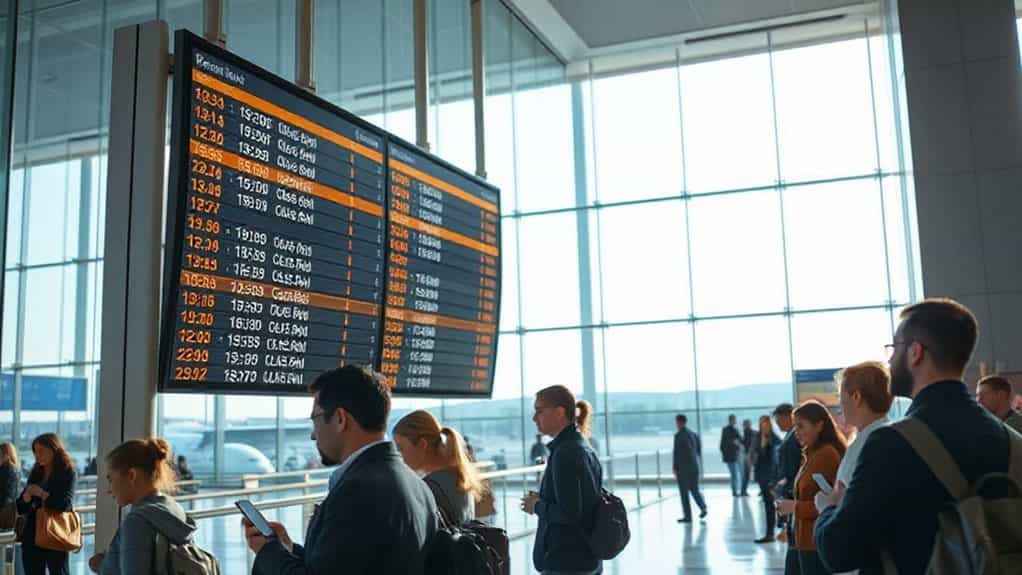
Passenger demand considerably influences flight schedules, as airlines analyze booking patterns to optimize departure times. During peak travel times, such as mornings, evenings, weekends, and holidays, airlines add more flights to meet increased demand. Seasonal variations, like summer vacations or winter holidays, also lead airlines to adjust schedules to accommodate higher passenger volumes. Airlines use real-time dynamic pricing informed by demand, seat availability, and booking patterns to further align flight timing and capacity with passenger demand, including through revenue management systems.
Peak Travel Times
Passenger demand plays a significant role in shaping airline flight schedules, as carriers aim to match their services with periods of high and low travel volume.
Peak travel hours, such as early mornings and late afternoons, influence flight schedules. Airlines analyze passenger demand data to schedule more flights during these times, ensuring efficient seat utilization and accommodating busy travel periods.
Seasonal Demand Fluctuations
Seasonal demand fluctuations have a significant impact on how airlines schedule their flights throughout the year. You’ll notice airlines adjusting their flight schedules based on passenger trends, increasing flights during holidays like summer or Christmas.
They also shift to less convenient times during off-peak seasons. These adjustments help airlines optimize aircraft utilization and meet regional travel peaks effectively.
How Do Airlines Manage Crew Rest and Plane Turnarounds?
Airlines carefully schedule crew rest periods to comply with FAA regulations, which typically require nine hours for flight attendants. They also limit pilot duty hours to guarantee safety. Turnaround times are managed efficiently by coordinating crew changeovers with aircraft cleaning, refueling, and boarding, often within 30 minutes to over an hour. Advanced scheduling software helps airlines optimize crew rotations and adjust for delays, maintaining smooth and compliant operations at all times. Airline policy varies for in-flight or cabin accessory use can also be enforced differently by carriers and airports.
Crew Rest Regulations
To guarantee safety and compliance with regulations, airlines carefully manage crew rest periods between flights. They schedule crew rest based on FAA rules, requiring at least nine hours between duty hours.
Rest often occurs at designated bases or hotels, ensuring pilots and flight attendants are well-rested before their next duty. This planning helps prevent fatigue and keeps flight operations smooth.
Turnaround Efficiency Strategies
Efficient management of turnaround times is essential for maintaining on-time departures and maximizing aircraft utilization. Airlines coordinate ground handling tasks like deplaning, cleaning, refueling, and boarding to reduce ground time.
They also schedule flights considering crew rest requirements and ground handling resources, ensuring quick turnarounds, especially for short-haul flights, to keep schedules tight and optimize flight operations.
How Do Air Traffic Control Slot Restrictions Delay Flights?
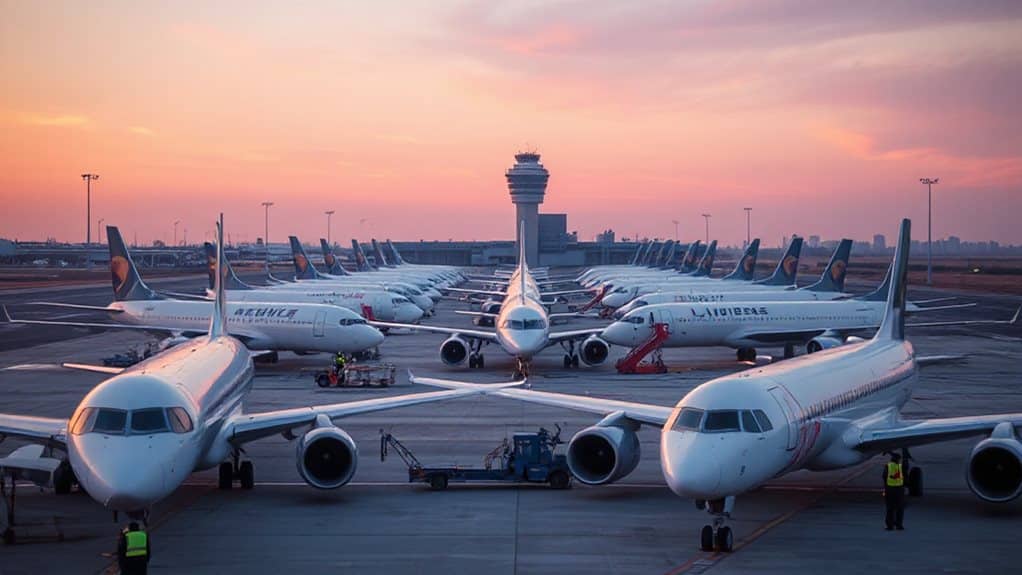
Slot restrictions imposed by air traffic control are a key factor in flight delays at busy airports. These restrictions assign specific time windows for takeoff and landing. These restrictions can cause delays when flights miss their slots or must wait for the next available window. Limited slots, especially at hubs like LaGuardia, lead to cascading delays and scheduling bottlenecks. In the air, TCAS resolution advisories can require immediate vertical maneuvers even when other instructions are in play, adding a layer of time-critical coordination on top of ground-based slot management.
How Do Airlines Handle Weather and Unexpected Disruptions?
When weather conditions turn severe or unpredictable, airlines actively monitor real-time data and forecasts to assess potential impacts on their schedules.
They make schedule adjustments quickly, delaying or sometimes canceling flights due to storms or snow.
These delays are communicated promptly through displays, apps, and announcements, allowing passengers to stay informed and plan accordingly during weather-related disruptions.
To improve stability in disruptions, travelers can use packing stability techniques that keep heavy items low and centered in their luggage.
Why Do Airlines Add Padding to Their Schedules?
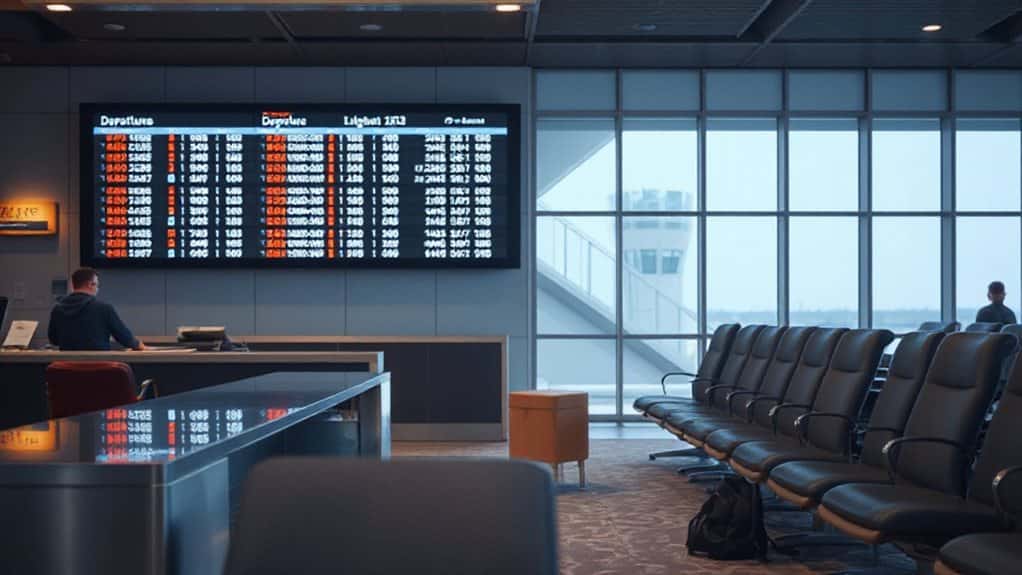
Airlines add padding to their schedules—typically 20 to 30 minutes—to help guarantee flights depart and arrive on time. This padding absorbs potential delays caused by weather, air traffic, or operational issues.
It reduces cascading delays and improves schedule reliability. It also helps airlines avoid compensation costs and assures a smoother travel experience, even when disruptions occur.
How Do Industry Data and Practices Influence Flight Scheduling?
Industry data and established practices play a crucial role in shaping flight schedules, ensuring they’re efficient and realistic. Airlines rely on industry data like airport slot restrictions and connecting times to optimize departure times.
They analyze real-time and historical data on delays, traffic, and passenger demand, helping them create airline schedules that balance operational efficiency and passenger convenience.
And Finally
Understanding how airlines decide flight departure times involves considering factors like airport capacity, passenger demand, crew scheduling, and weather. Airlines also account for air traffic control restrictions and potential delays by adding schedule padding. By analyzing industry data and operational practices, airlines aim to optimize punctuality and efficiency. This thorough approach helps guarantee flights operate smoothly, minimizing disruptions and improving overall travel experience for passengers.