An efficient airport minimizes wait times and streamlines passenger flow through strategic design, such as eliminating bottlenecks, placing security checkpoints thoughtfully, and creating spacious, well-signed layouts. Enhanced connectivity with mobile check-in, real-time updates, and virtual queuing further reduce stress and unpredictable delays. Incorporating local culture and amenities adds to a comfortable experience, while advanced technologies optimize operations and predict congestion. Continue exploring to uncover more ways to make your airport adventure smoother and more enjoyable.
TLDR
- Streamlined passenger flow with well-designed layouts and minimized security chokepoints.
- Integration of local culture and amenities enhances the travel experience and comfort.
- Advanced digital services, such as real-time updates and mobile check-in, reduce wait times.
- Utilization of real-time data and automation optimizes operations and congestion management.
- Clear signage and stress-reducing features help passengers navigate efficiently and feel more at ease.
How Airport Design Reduces Wait Times and Improves Passenger Flow
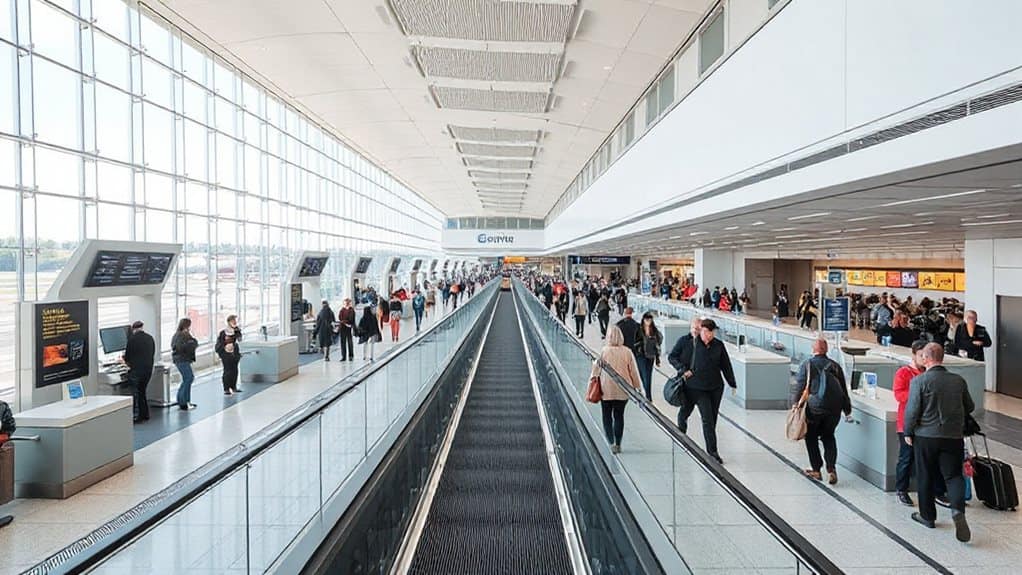
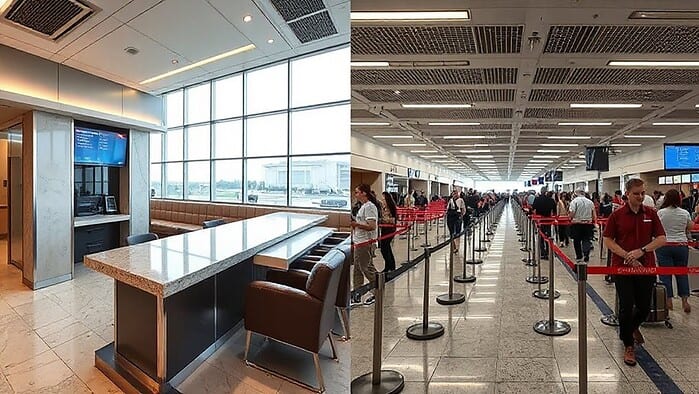
Effective airport design plays a crucial role in reducing wait times and improving how passengers move through the terminal. By eliminating chokepoints and strategically placing security checkpoints, you experience smoother passenger flow. Spacious layouts, clear signage, and automated processes help minimize walking distances and queues. This ensures faster security clearance and shorter wait times, making your trip more efficient and less stressful. In the same way that cabin dimming lights help passengers’ eyes adapt for safe evacuation in low-light emergencies, thoughtful lighting and wayfinding can improve visibility of critical areas during stressful moments.
Enhancing Airport Experience With Local Culture and Amenities
Many airports enhance travelers’ experiences by incorporating elements that reflect the local culture and community identity. These amenities, such as cultural exhibitions, artwork, and regional cuisine, create a richer airport experience. Showcasing local culture and regional identity helps passengers feel welcomed and engaged, nurturing a sense of place even before reaching their final destination. seat belt extenders are also made available by airlines, helping ensure travelers can sit safely and comfortably throughout the journey.
Connectivity and Virtual Services That Make Travel Easier
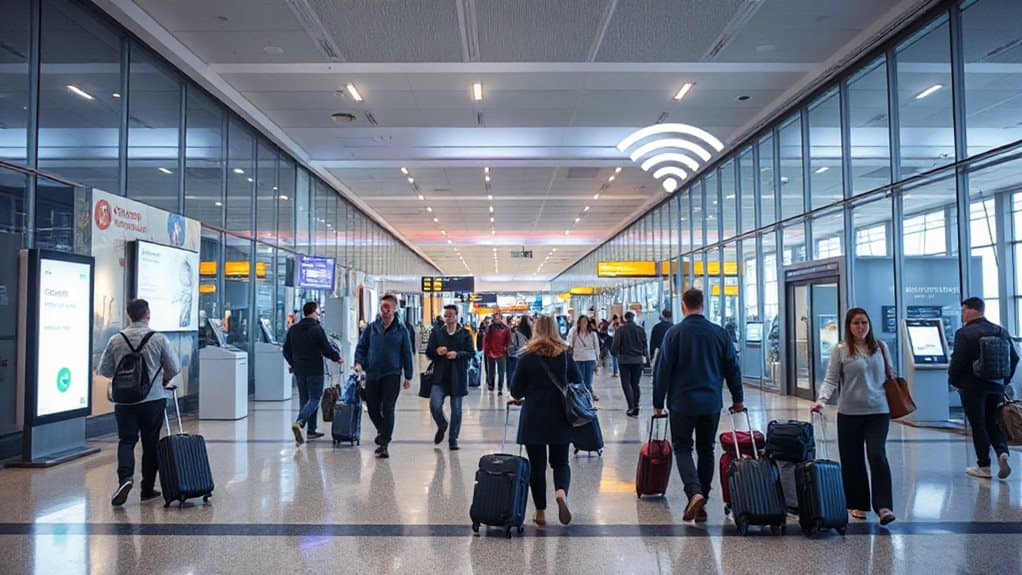
Connectivity and virtual services have become essential features of modern airports, making travel more convenient and less stressful. With digital connectivity, you access real-time updates, mobile check-in, and digital wayfinding apps, enabling seamless orientation. Virtual services like online security pre-appointments and baggage tracking streamline your expedition, reducing wait times and enhancing overall safety and efficiency in your travel experience. Many airlines also let travelers lock in 24-hour check-in and their boarding group using the mobile/app check-in window, helping reduce last-minute uncertainty.
Key Technologies for Smoother and More Predictable Passenger Journeys
Technologies like real-time data utilization and automated process optimization are revolutionizing the passenger experience at airports. They enable staff to make quick adjustments based on current conditions, reducing delays and congestion. In the same way that choosing Bangkok districts can minimize travel time through strong connectivity, airport systems that coordinate services based on live conditions help passengers move more predictably from curbside to gates.
Real-Time Data Utilization
Real-time data utilization plays a crucial role in making airports more efficient for travelers. By monitoring passenger flow, airports can flexibly adjust staffing and resource allocation, reducing congestion.
Live flight data helps optimize gate assignments, while tracking passenger movements enhances operational efficiency.
Integration of real-time data guarantees immediate updates, enabling smoother, more predictable trips with fewer delays and disruptions.
Automated Process Optimization
Automated process optimization involves implementing advanced technologies that streamline various airport operations, making your voyage smoother and more predictable.
Automated systems enhance the passenger experience by reducing wait times in security screening and baggage handling.
Virtual queuing, real-time forecasting, and self-service options help manage demand, coordinate resources, and enable travelers to customize their experience, supporting seamless, efficient travel.
Strategies to Manage Passenger Expectations and Reduce Stress
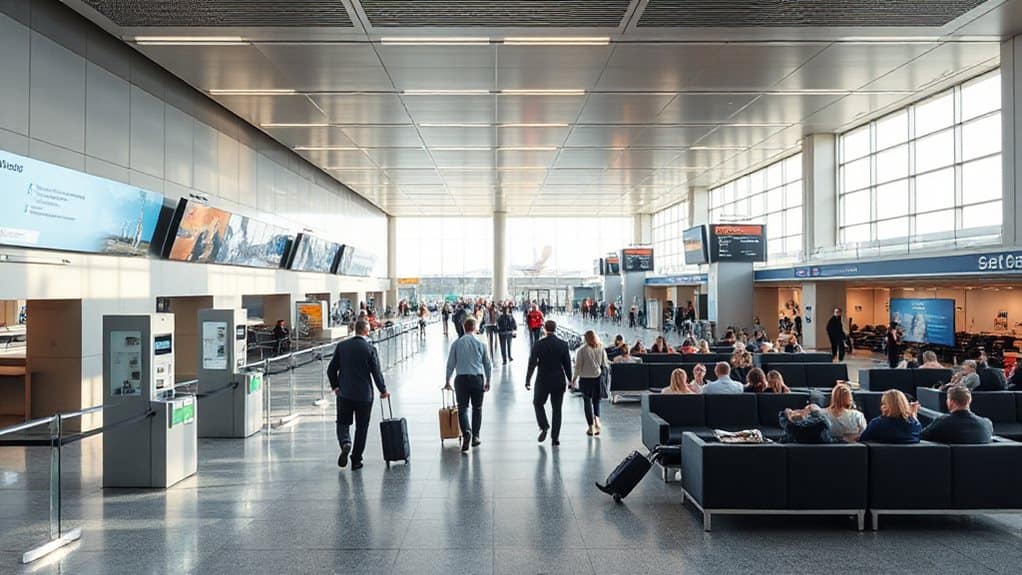
Managing passenger expectations is essential for reducing stress during air travel, and there are several effective strategies to achieve this. Providing real-time flight updates, clear signage, and virtual queuing helps travelers anticipate delays or flight changes, improving passenger satisfaction. Streamlining security and designing direct gate access also minimizes confusion, enhancing overall travel experiences and reducing anxiety. For families traveling with infants, planning for smooth car-to-stroller transitions can significantly lower stress by reducing disruption during movement between car, stroller, and airport areas.
Creating Personalized and Hospitality-Driven Airport Experiences
Creating a personalized and hospitality-driven airport experience involves designing environments and services that prioritize passenger comfort and engagement. Personalization through digital devices offers customized flight updates and customer service. To help travelers plan reef activities, many Cairns-based options schedule experiences around seasonal conditions such as whale migration between July and September, including humpback sightings. Amenities like lounges and cultural exhibits create memorable environments. Well-trained staff guarantee consistent, customer-focused service, and facilities such as relaxation zones enhance overall well-being during your trip.
Building Resilient Infrastructure and Leadership for Future Efficiency
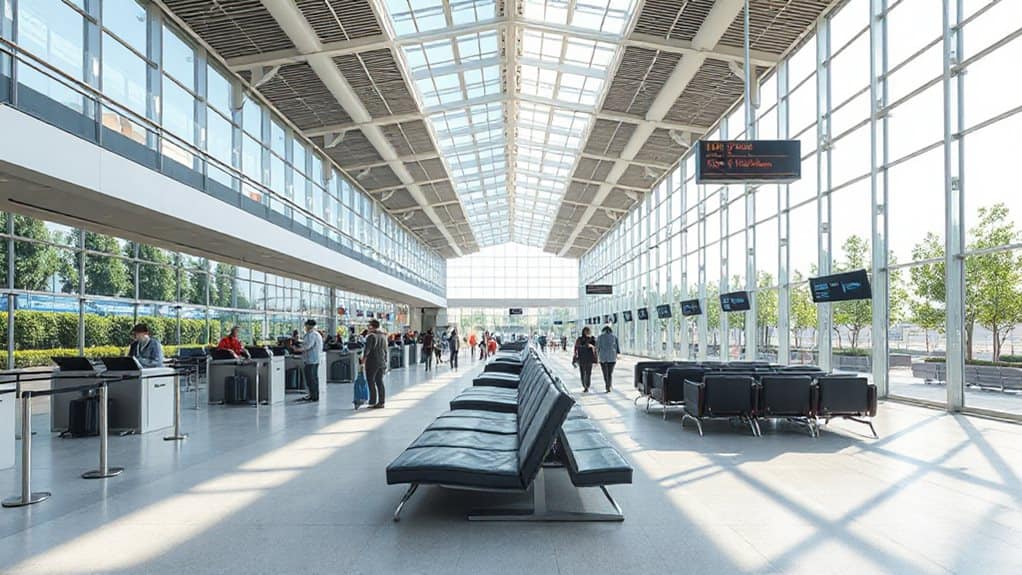
Building resilient airport infrastructure is essential for ensuring smooth operations during both normal and disruptive conditions. Leadership plays a key role by focusing on adaptability, integrating emerging technology, and emphasizing sustainability.
Resilient infrastructure includes flexible security, scalable baggage systems, and energy-efficient facilities designed to withstand weather disruptions and technological failures. These features help maintain efficiency and safety for travelers.
And Finally
An efficient airport prioritizes smooth passenger flow through thoughtful design, advanced technology, and clear communication. By reducing wait times, offering local amenities, and providing seamless virtual services, airports can enhance traveler experiences. Building resilient infrastructure and managing expectations also play vital roles. Ultimately, integrating these strategies creates a more predictable, comfortable voyage, helping travelers arrive at their destinations stress-free and satisfied. Continuous improvements guarantee airports meet changing needs and maintain high efficiency levels.