To compare airline safety records, focus on safety certifications like IOSA, which shows compliance with international standards, and review recent safety audits for updated understanding. Check the airline’s accident history and incident reports, considering both frequency and severity. Evaluate fleet age and maintenance practices, as newer, well-maintained aircraft tend to be safer. Prioritize airlines with high safety scores from reputable sources, but stay aware of limitations in data consistency. Continuing this guide will offer more detailed ways to assess safety effectively.
TLDR
- Check for international safety certifications like IOSA, indicating adherence to rigorous safety standards.
- Review recent safety audit results and compliance with ICAO or national regulatory oversight.
- Consider airline safety ratings from reputable sources analyzing incident history and fleet age.
- Assess the airline’s maintenance practices and fleet modernization efforts for ongoing safety improvements.
- Evaluate the airline’s safety incident history, focusing on frequency, severity, and recent safety performance.
Why Your Travel Safety Depends on Airline Safety Records
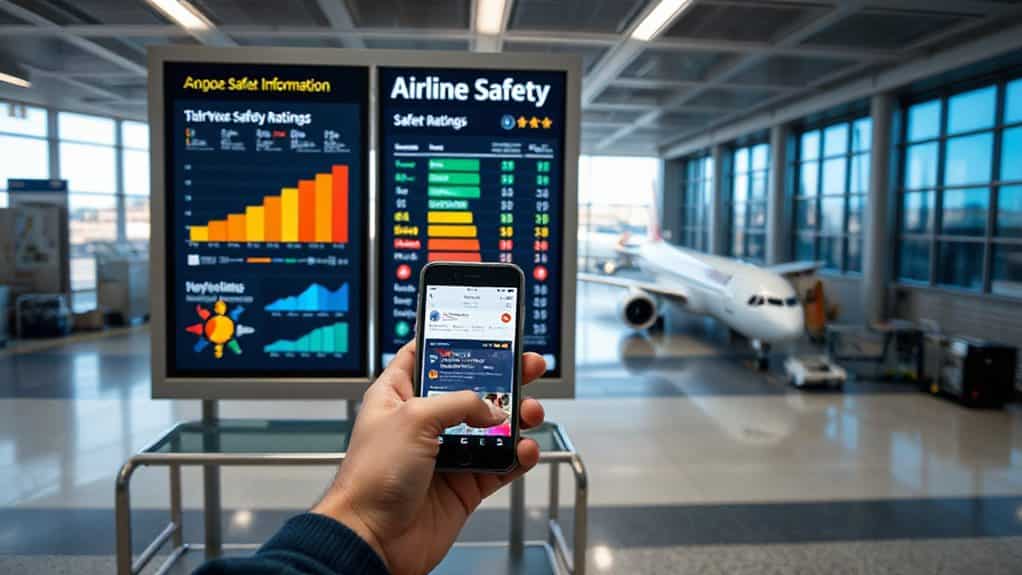
Your travel safety largely depends on the safety records of the airline you choose. Airline safety, including incident history and safety audits, directly influences safety ratings.
Airlines with recent safety audits, well-maintained fleets, and rigorous pilot training tend to be safer. Checking international safety certifications like IOSA can also help you identify carriers committed to high safety standards. waterproof materials are not related to airline safety, but they illustrate how specific, verifiable standards can matter when comparing protection and performance.
What Factors Make an Airline Safer?
Several factors contribute to an airline’s safety performance, making some carriers consistently safer choices for travelers. Strong safety standards are upheld through rigorous pilot training, extensive flight hours, and modern fleets with advanced safety technologies. Regular maintenance, adherence to international safety audits, and strict regulatory oversight from authorities like ICAO all play essential roles in ensuring airline safety. In addition to these airline-level measures, travelers can reduce discomfort and improve circulation during flights by using footrest adjustability devices designed to fit typical seat constraints.
How Do Safety Incidents and Accident History Affect Ratings?
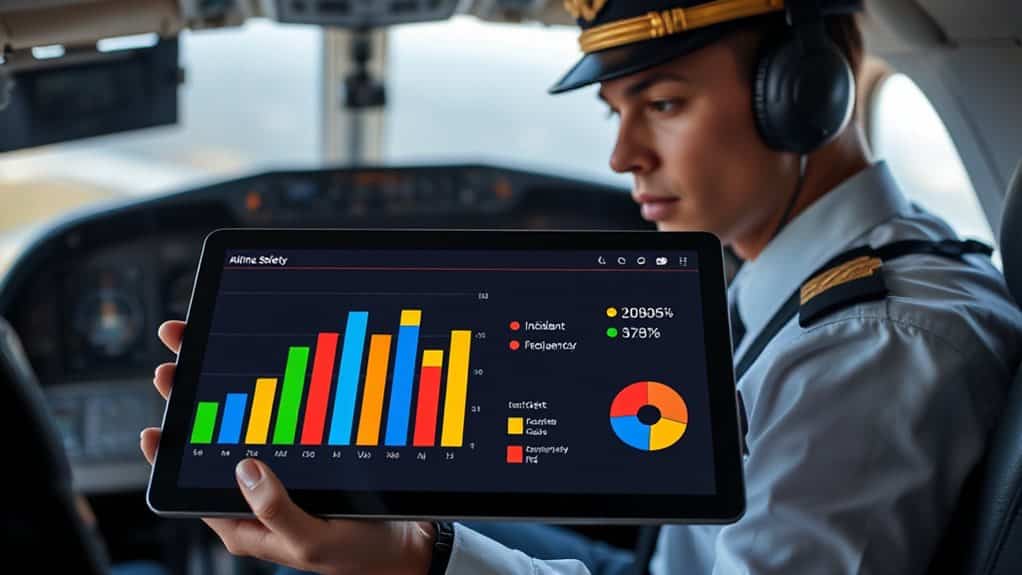
Safety incidents and accident history play a significant role in shaping an airline’s safety ratings, with recent events often having a heavier impact.
Airlines with fewer or no serious accidents tend to score higher, reflecting a strong safety record.
Conversely, frequent or severe safety incidents, and a history of accidents, lower safety rankings, and can influence public perception of reliability.
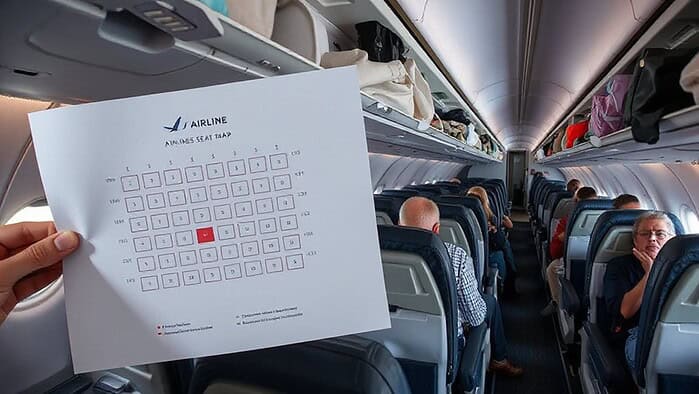
Exit row seats may also have limited or no recline compared with standard economy, which is part of the safety trade-offs airlines incorporate.
What Is IOSA and Why Is It Important for Airline Safety?
The IOSA (IATA Operational Safety Audit) is an internationally recognized system that assesses an airline’s operational management and control procedures.
It’s important for safety because airlines with IOSA registration demonstrate adherence to rigorous safety protocols.
All IATA members must be IOSA registered, making it a reliable indicator for travelers seeking airlines with high safety standards and verified safety management systems.
In practical terms, IATA membership helps travelers narrow down options to carriers that are held to internationally standardized operational audits.
How Do Safety Regulations and Audits Keep You Safe?

Safety regulations and audits play an essential role in maintaining airline safety by ensuring airlines follow international standards and best practices. Regular inspections, conducted by authorities like ICAO and IATA, verify compliance through certifications and routine checks. These inspections help to identify and fix safety issues. This oversight not only promotes consistent safety procedures worldwide but also enhances your confidence when flying. On the ground in major transit hubs, being similarly alert to pickpocketing hotspots can reduce the risk of losing valuables while you travel.
International Safety Standards
How do international safety regulations guarantee that flights remain secure and reliable? They rely on international safety standards established by organizations like ICAO, which set strict guidelines for airlines.
Additionally, IOSA audits evaluate compliance with these standards, ensuring airlines maintain rigorous pilot training, aircraft maintenance, and safety management systems. This structure helps keep safety high worldwide.
Routine Inspection Processes
Routine inspection processes form the backbone of airline safety by ensuring aircraft are maintained properly and meet strict standards before each flight. Regular routine inspections, including daily, weekly, and annual checks, keep your safety intact.
Agencies like the FAA and EASA conduct audits and spot checks, helping airlines stay compliant and maintain high airline safety standards.
Regulatory Oversight Authorities
Regulatory oversight authorities like the FAA in the United States and EASA in Europe play an essential role in maintaining airline safety standards. They enforce safety regulations through regular audits, inspections, and certifications, such as IOSA.
These agencies review airline safety reports, monitor ongoing performance, and publish incident reports.
They ensure airlines follow strict safety standards to keep passengers safe and secure.
Why Pilot Training and Crew Procedures Matter for Safety?
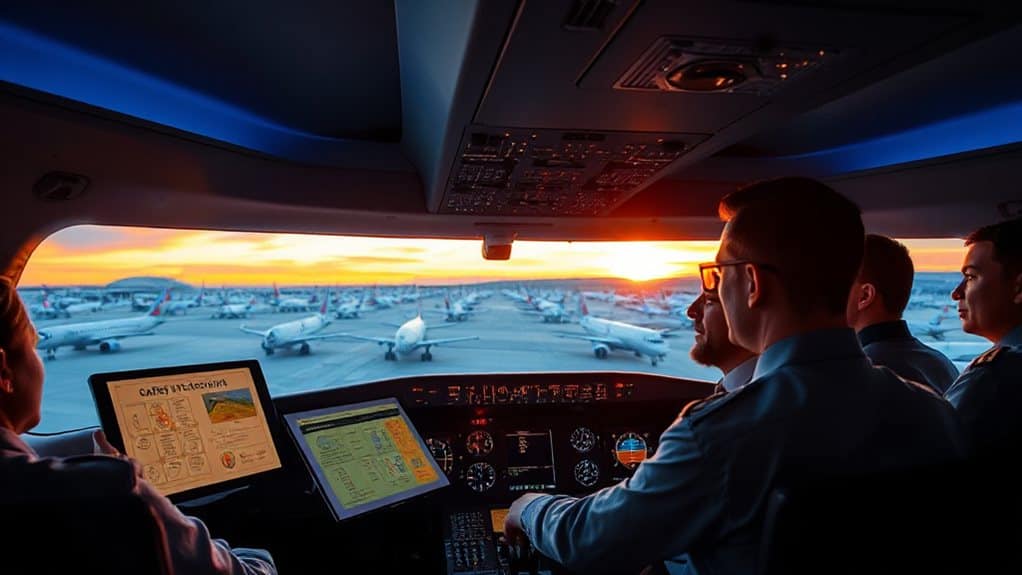
Effective pilot training and well-established crew procedures are essential components of airline safety because they guarantee that personnel are prepared to handle emergencies and decrease the likelihood of errors. Rigorous pilot training, including simulator practice and ongoing certification, assures readiness. Consistent crew procedures, such as safety checks, minimize human error and improve response, directly impacting an airline’s safety record. Additionally, Doppler weather radar helps pilots detect and avoid hazardous thunderstorm cells in real time, reducing exposure to severe turbulence and wind shear.
How Maintenance Standards and Fleet Age Impact Airline Safety?
The safety of an airline often depends on its maintenance standards and the age of its fleet. Airlines that follow strict maintenance schedules and regularly upgrade their aircraft tend to be safer, regardless of whether their planes are new or older.
Additionally, newer fleets typically incorporate the latest safety technologies, further reducing risks.
Maintenance Frequency and Quality
How often an airline conducts maintenance and the quality of that upkeep play a significant role in ensuring flight safety. Consistent maintenance, inspections, and adherence to safety standards contribute to better safety records.
Airlines with rigorous maintenance routines and certified procedures, like IOSA registration, reduce mechanical failures. Fleet age also influences safety, but maintenance quality remains a critical factor.
Fleet Age and Safety
While maintenance practices are a key factor in airline safety, the age of an aircraft fleet also influences safety outcomes. Fleet age affects safety, but strict maintenance schedules and certifications guarantee safety regardless of age.
Modern fleets with advanced safety tech can enhance airline safety, and regulatory inspections assure aircraft of all ages meet high standards, enabling safe flying for passengers.
Upgrades and Modernization
Upgrading to modern aircraft models plays a significant role in enhancing airline safety by incorporating the latest safety features and advanced technology.
A current fleet with modern aircraft typically faces fewer mechanical issues and requires less frequent repairs. While maintenance remains essential, airlines with newer fleets tend to have better safety ratings, reflecting the importance of fleet age and modernization in safety standards.
What Do Safety Ratings Tell You About Airlines?
Safety ratings provide a useful snapshot of an airline’s safety performance by considering factors such as accident history, safety audits, and pilot training.
They reflect airline safety but don’t capture recent incidents or safety culture.
High-rated airlines like Qantas demonstrate consistent safety, while lower ratings may result from fewer audits or maintenance issues.
Use ratings as a guide, not the sole factor.
How to Choose a Safer Airline Using Safety Data?
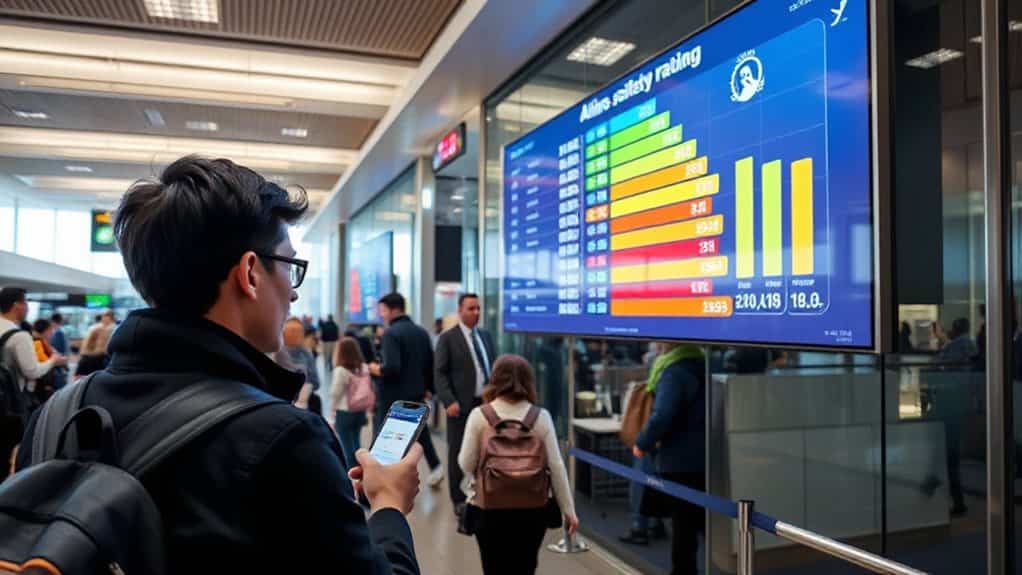
To choose a safer airline, start by checking if it has the necessary safety certifications, such as IOSA registration, which indicates compliance with international safety standards.
Review safety rankings from reputable sources that analyze incident history, fleet age, and audit results. Look for airlines with consistently low incident rates and a long record of safety.
Be cautious of airlines with recent safety concerns or lower safety scores, and prioritize those recognized for maintaining high safety standards.
Safety Certification and Standards
When evaluating airline safety, examining certifications and adherence to international standards can provide useful viewpoints into their safety practices.
Look for safety certification from bodies like ICAO, and check if the airline is IOSA-registered, indicating a thorough safety audit.
Airlines with recent positive safety audit results, modern fleets, and strict maintenance schedules tend to be safer choices.
Incident and Audit Data
Examining an airline’s safety incident and audit data can provide helpful viewpoints into its safety performance. Incident data varies widely and can be inconsistent, so focus on recent audit reports, like IOSA registration, for objective insights.
Reviewing an airline’s history of serious incidents and accident rates helps gauge reliability, but always verify data from reputable sources for the clearest outlook.
Common Pitfalls When Comparing Airline Safety Records?
Comparing airline safety records can be complicated because of inconsistent reporting standards and differences in how incidents are classified across countries.
Safety ratings often rely on limited or outdated data, which may not reflect current conditions.
Relying solely on accident history ignores factors like safety audits, staff training, and maintenance practices, risking misleading comparisons.
And Finally
When comparing airline safety records, focus on factors like accident history, safety ratings, and compliance with international standards. Review their maintenance practices, fleet age, and audit results to get an all-encompassing overview. Be cautious of misleading data or outdated information, and consider multiple sources for an accurate assessment. Making informed decisions based on these details can help you choose a safer airline and travel with greater confidence.