Pick a weather‑sealed mirrorless like the Sony A7C II or a compact point‑and‑shoot such as the Sony RX100 VII for lightweight reliability. Pair it with a versatile 28–300 mm zoom lens to cover wide streets and portrait shots without swapping gear. Pack everything in a quick‑access backpack like the Peak Design Everyday 30L, and bring USB‑C power banks plus spare batteries for long days. Add a compact directional mic (RØDE VideoMic GO) and a sub‑250 g drone (DJI Mini 5 Pro) for audio and aerial shots. Use a portable SSD and cloud sync for fast data transfer. Keep the gear protected with weather‑sealed bodies, filters, and a water‑resistant bag. Continue for deeper details on each component.
TLDR
- Choose a lightweight, weather‑sealed camera body (e.g., Sony A7C II, Leica Q3) with IBIS for versatile shooting in unpredictable conditions.
- Pair it with a single versatile travel lens (28–300 mm) to cover wide‑angle, portrait, and telephoto needs while keeping weight low.
- Use a compact, water‑resistant backpack (Peak Design Everyday 30L or PGYTECH OneMo 2) with quick‑access pockets and padded protection.
- Carry a high‑capacity USB‑C power bank, spare batteries, and a multi‑port charger for uninterrupted power on the go.
- Include a mini tripod or flexible GorillaPod, plus weather‑proofing accessories (lens filters, sealed bag) for stability and protection.
Choose the Right Travel Camera Type for Your Style
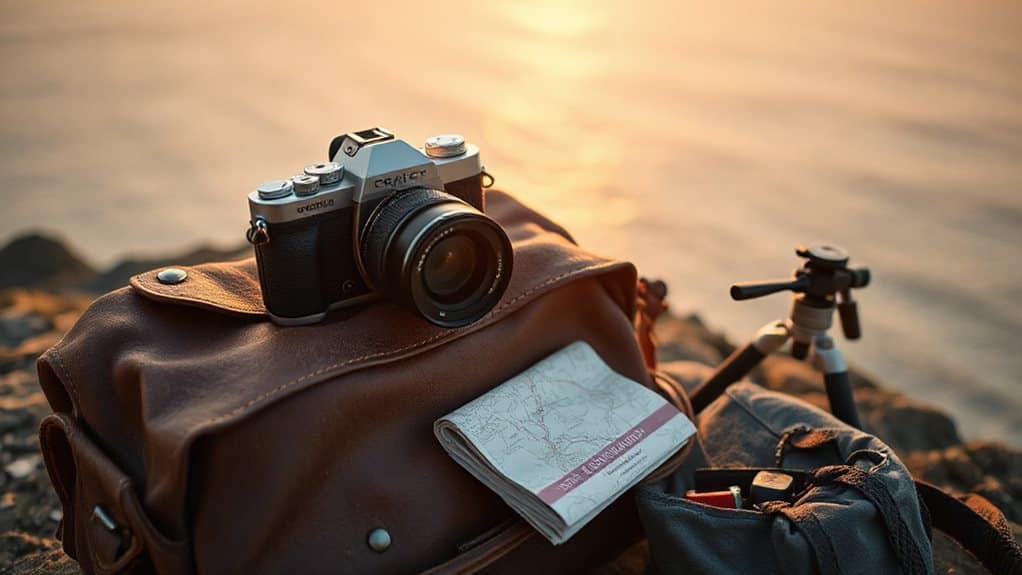
How do you decide which travel camera fits your shooting style? If you crave full‑frame depth, consider Sony Alpha 7C II for its lightweight, compact body, or Leica Q3 for ultra‑high resolution and low‑light speed.
For balanced performance and price, Sony A7 III offers IBIS and 4K.
Compact point‑and‑shoots like Canon G7 X III or Sony RX100 VII give pocket‑size convenience with versatile zooms.
Choose based on sensor size, lens flexibility, and weight to match your roaming freedom. Weatherproofing adds extra protection for unpredictable conditions. Trains are a scenic, budget‑friendly way to travel between major Thai cities, and many photographers enjoy shooting en route for railway landscapes.
Pick a Pocket‑Friendly Travel Mirrorless or Point‑and‑Shoot Body
Where can you fit a capable camera into a pocket without sacrificing essential features? The Canon R50 offers APS‑C quality in a jacket‑pocket body with solid autofocus.
The Olympus OM‑D E‑M10 IV adds in‑body stabilization and an MFT lens ecosystem for versatile kits.
For rugged simplicity, the Pentax WG‑8 provides a 20 MP sensor, 5× zoom, and water‑dust‑drop resistance, all under $340.
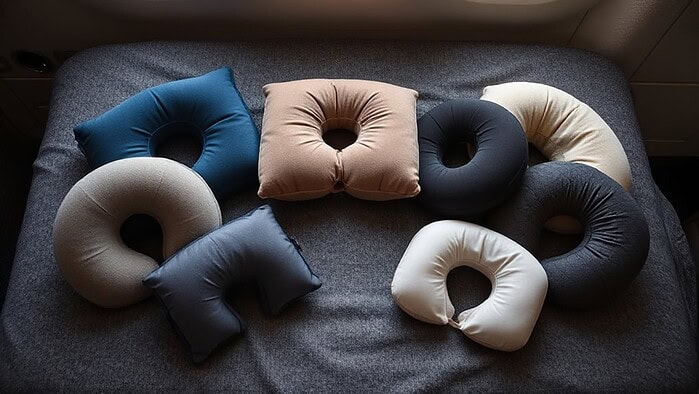
Consider also packing a compact travel pillow like the Trtl Pillow for neck support on long transit days to keep you comfortable between shoots.
Select a Versatile Travel Lens for Wide‑to‑Portrait Shots
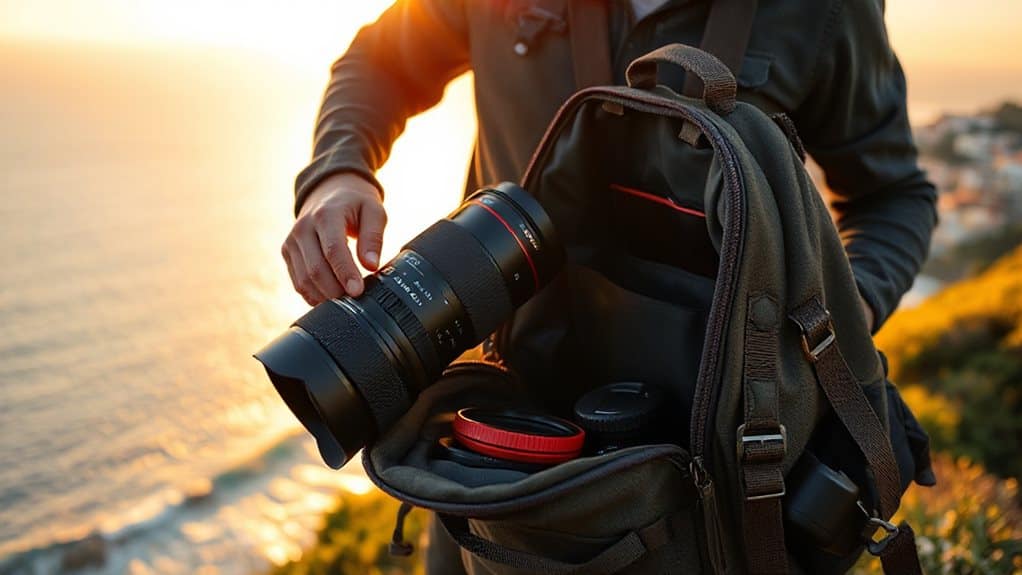
Which lens gives you the flexibility to capture sweeping cityscapes and intimate portraits without lugging a heavy super‑zoom? A 28‑300mm zoom balances wide‑angle storytelling at 28mm with flattering 85mm portraits, staying lightweight for travel. It replaces multiple primes, offers decent depth of field, and avoids distortion. Choose this single lens to cover streets, architecture, group shots, and close‑up faces while keeping your kit portable. Pick a durable, water‑resistant bag to protect your kit and stay within airline checked luggage size limits.
Pack a Compact Travel Camera Backpack for Easy Access
Ever wondered which backpack lets you grab a lens or a laptop without digging through a maze of straps? Choose a compact travel camera backpack like the Peak Design Everyday 30L or PGYTECH OneMo 2. Look for quick‑access magnetic pockets, side openings, and multiple access points.
Ensure padded laptop sleeves, ventilated back panels, and TSA‑approved, water‑resistant fabrics. Ergonomic straps and rigid frames keep weight balanced for freedom on the go. Many photographers also carry a dedicated electronics organizer with waterproof protection to keep chargers and cables safe and tangle-free.
Charge Your Travel Gear With Usb‑C and Spare Batteries
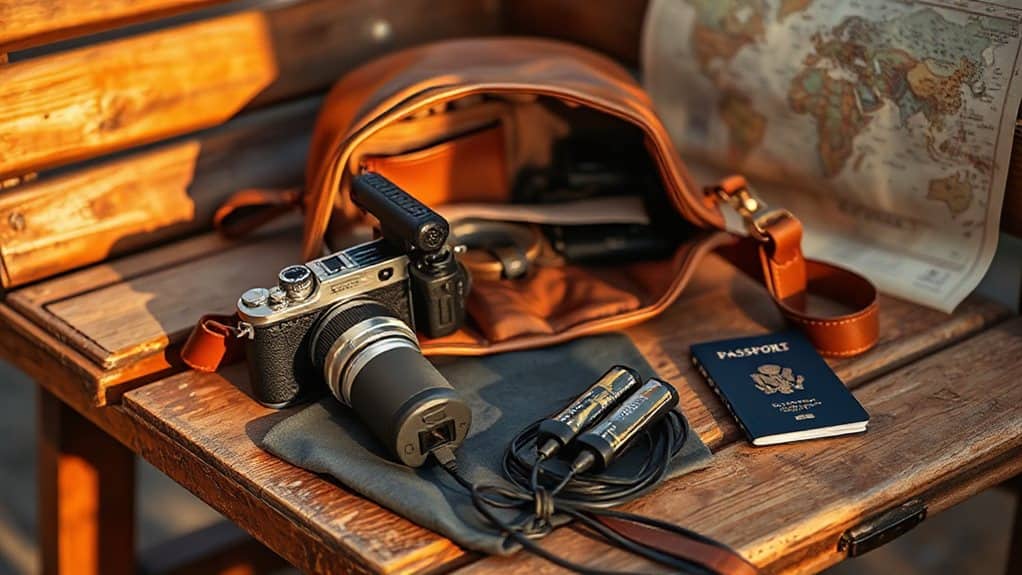
How do you keep your camera, phone, and laptop powered while traversing airports and train stations? Use USB‑C power banks that deliver 7.5 V for ideal camera charging, and carry a spare battery for backup. Multi‑port chargers like Anker Prime 100 W or AmazonBasics 5‑port let you juice gear, iPhone, Apple Watch, and MacBook Air simultaneously. Foldable European pins save pouch space. Phi Phi offers a smaller‑scale nightlife and quieter beach village options for downtime, making it a good place to relax between shoots and recharging Phi Phi Central Area.
Connect Instantly via Wi‑Fi or Bluetooth
You can push photos from your camera to your phone in seconds, letting you share across devices without missing a beat.
With Wi‑Fi 6 or dual‑band support, large 4K files and RAW images transfer quickly, while Bluetooth Low Energy lets you control the shutter and settings without draining the battery.
This combination gives you seamless social‑media uploads and low‑power remote operation, perfect for on‑the‑go shooting.
For long shooting days, consider gear with strong battery life and quick-charge support to avoid downtime and use wired backups like a 3.5mm audio cable when wireless power runs out.
Instant Sharing Across Devices
Why settle for juggling cables when you can share photos instantly over Wi‑Fi or Bluetooth? The RAVPower FileHub turns an SD card into a portable NAS, letting phones, tablets, and laptops pull images via Wi‑Fi without a laptop.
Anker’s 8‑in‑1 USB‑C hub adds fast SD slots and 10 Gbps ports, so you can back up or view shots on any device, wherever you roam.
Seamless Social Media Uploads
Ever wondered how you can get a photo from your camera to Instagram in seconds without hunting for a laptop? Connect your Sony A7RIII via Wi‑Fi and Imaging Edge Mobile for instant live preview, remote trigger, and direct transfer.
Use Instax Share on your phone for Bluetooth‑quick prints.
Pair a portable SSD for rapid backups, then edit on iPhone 14 Pro Max and upload effortlessly.
Low‑Power Bluetooth Controls
How do low‑power Bluetooth controls change the way you shoot on the road? They let you trigger shutter, start video, and switch modes from a ring or handheld unit without line‑of‑sight, even through cases.
Bluetooth 5.3 extends range to ten meters, and 48‑hour battery life keeps you shooting wildlife, astrophotography, or group portraits without spooking subjects or dealing with infrared limits.
Compatibility spans Sony, Canon, Nikon and third‑party kits.
Stabilize Travel Shots With IBIS or a Mini Tripod
You’ll notice that modern IBIS lets you shoot handheld with surprisingly sharp results, especially when you pair it with electronic first‑curtain or electronic shutter to cut down vibration.
When you need extra steadiness on uneven ground or for long exposures, a compact mini tripod offers a solid base, low center of gravity, and quick setup without the bulk of a full‑size stand.
Combining the two—using IBIS for minor hand shake and a mini tripod for major stability—gives you flexibility to capture crisp images in low light, at low angles, or during panoramic sequences.
IBIS Benefits for Handheld Shots
What makes handheld shooting on the road so reliable? IBIS gives you 3‑8 stops of stabilization, letting you shoot sharp 50 mm images at 1/6 s or 1/3 s without a tripod.
It cuts ISO by three stops, reducing noise and preserving dynamic range. Telephoto lenses stay steady, and low‑light scenes become usable at 1/30 s, extending your creative freedom.
Mini Tripod Stability Techniques
IBIS lets you shoot handheld at slower shutter speeds, but a mini tripod can lock that stability in place for longer exposures or heavier lenses. Check payload limits, then extend the thickest upper legs first, spreading them fully for a wide base. Keep the center column low, only raising it minimally. Hang a bag on the hook and use rubber spikes for wind‑resistant, level shots.
Combining IBIS With Tripod Use
Ever wondered whether you should leave IBIS on when your camera sits on a tripod during travel shoots? Modern IBIS often avoids drift, but tests—like Mark Denney’s—show softer images on long exposures, especially at 20 seconds or with telephoto lenses. Turn IBIS off for scenery tripod work, but experiment with your gear. You can still use IBIS on a mini‑tripod for handheld‑style stability when you need freedom without sacrificing sharpness.
Protect Your Travel Gear With Weather‑Sealed Bodies & Filters
When you travel to unpredictable climates, a weather‑sealed camera body and matching lenses become essential safeguards for your gear. Rubberized seals, magnesium alloy frames, and IP54‑rated ports keep dust, rain, and sand out, while lenses like Olympus 12‑40 mm f/2.8 Pro II add protection at the mount.
Expect splash resistance, not full waterproofing, and remember condensation can still appear during rapid temperature changes.
Optimize Audio for Travel Vlogging With External Mics
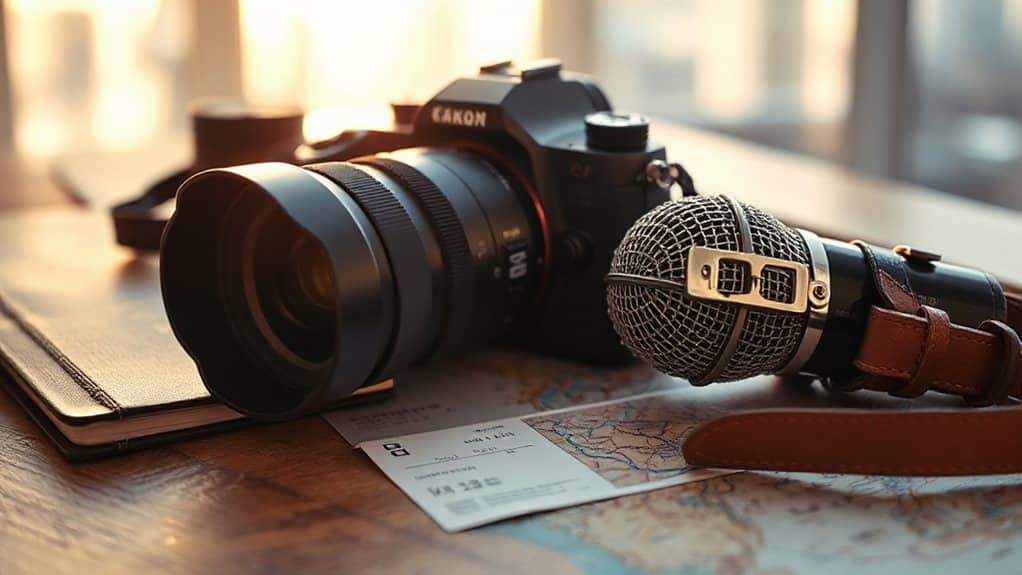
You’ll want a compact directional mic that captures clear sound without weighing you down, like the SYNCO PX or DJI Mic Mini.
Choose a power‑efficient solution that offers long battery life or draws power from your camera, such as the RØDE VideoMic GO or NEEWER KM23.
These options let you record high‑quality audio on the go while keeping your gear lightweight and ready for any vlog.
Compact Directional Mic Choices
Which compact directional microphone gives you broadcast‑quality audio without weighing down your gear? The Rode VideoMic Pro+ remembers digital settings and activates automatically on camera connection, while the Comica CVM‑V30 PRO includes a travel case and calibrated sensitivity to avoid over‑amplification. For ultra‑lightweight options, the DJI Mic Mini (10 g) pairs with action cameras and smartphones, and the BOYA mini 2 (5 g) offers dual‑mode noise cancellation and a wide frequency response.
Power‑Efficient Audio Solutions
Compact directional mics get the job done, but keeping them powered for long‑day vlogs requires a different focus. GODOX offers up to eight hours, while DJI Mic 2 adds intelligent noise‑cancellation without extra draw. NearStream AWM20T runs efficiently to 200 m, and EcoFlow DELTA 2 Max supplies quiet, 2048 Wh backup. LFP batteries stay cool, and Sony MDR‑7506 headphones let you monitor sound without draining power.
Add a Portable Travel Drone for Aerial Perspectives
A portable travel drone adds a new dimension to your photography by letting you capture aerial viewpoints without adding bulk to your luggage.
The DJI Mini 5 Pro stays under 250 g, offers a 1‑inch sensor, 90° vertical shooting, and 45‑minute flights, while the Air 3S balances durability and bright images with 42 GB storage.
Both fit carry‑on limits and provide reliable LiDAR obstacle avoidance.
Streamline Travel Post‑Shoot Workflow With Portable SSDS and Cloud Sync
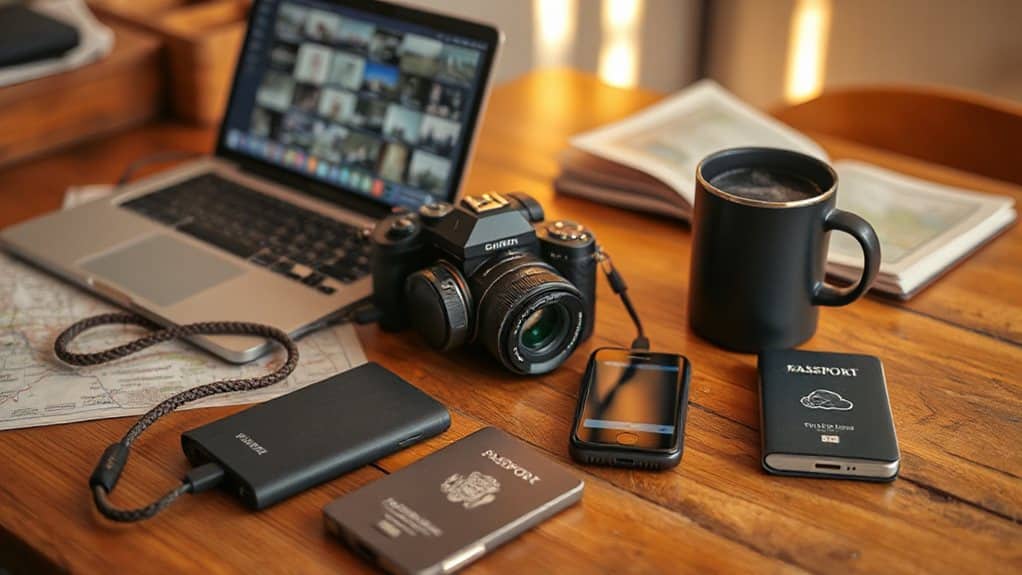
After capturing aerial shots with a portable drone, you’ll need a fast, reliable way to off‑load and organize thousands of RAW files before you even land.
Plug a USB 3.2 Gen 2×2 SSD—500 GB for short trips, 1 TB for daily work, 2 TB for high‑resolution shoots—into your laptop, copy 20 GB in under ten seconds, edit directly, then sync to cloud or a backup HDD.
Use auto‑backup apps, encrypt with FileVault, and label drives by project for seamless, lightweight workflow.
And Finally
By choosing a lightweight, weather‑sealed camera, a versatile zoom lens, and a compact backpack, you keep essential gear within carry‑on limits while staying prepared for any scene. USB‑C charging and spare batteries ensure you won’t miss a shot, and a portable SSD lets you back up files instantly. Adding a small drone and an external mic expands your storytelling options without adding bulk. Follow these guidelines to travel efficiently and capture high‑quality images and video.