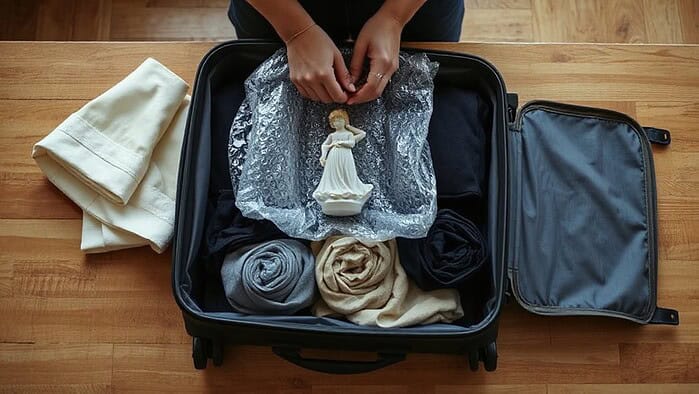
Before you book, confirm the hotel offers an in‑room safe and check its policy; once in the room, set a random 4‑6 digit code that avoids obvious patterns, test it several times, and verify the lock clicks smoothly. Use a front‑desk deposit box for passports, legal documents, and high‑value items, completing the access form and presenting ID. Keep everyday electronics and jewelry out of sight, and always verify staff identity before anyone enters. If you follow these steps, you’ll discover even more safeguards.
TLDR
- Use the in‑room electronic safe, set a random 4‑6 digit code (avoid birthdays or room numbers), and test it several times before leaving.
- Verify staff identity by calling the front desk, requesting government‑issued ID, and matching name, badge, and uniform before granting access.
- Store passports, legal documents, and high‑value items in the hotel safe; keep phones, keys, and jewelry in a locked wardrobe or diversion safe.
- Choose rooms with strong security features: hallway cameras, access‑controlled elevators, motion sensors, and a panic button.
- For front‑desk safes, complete the access application, present ID, and ensure key‑control logs match records before depositing valuables.
Check Hotel‑Safe Availability and Policies Before Booking
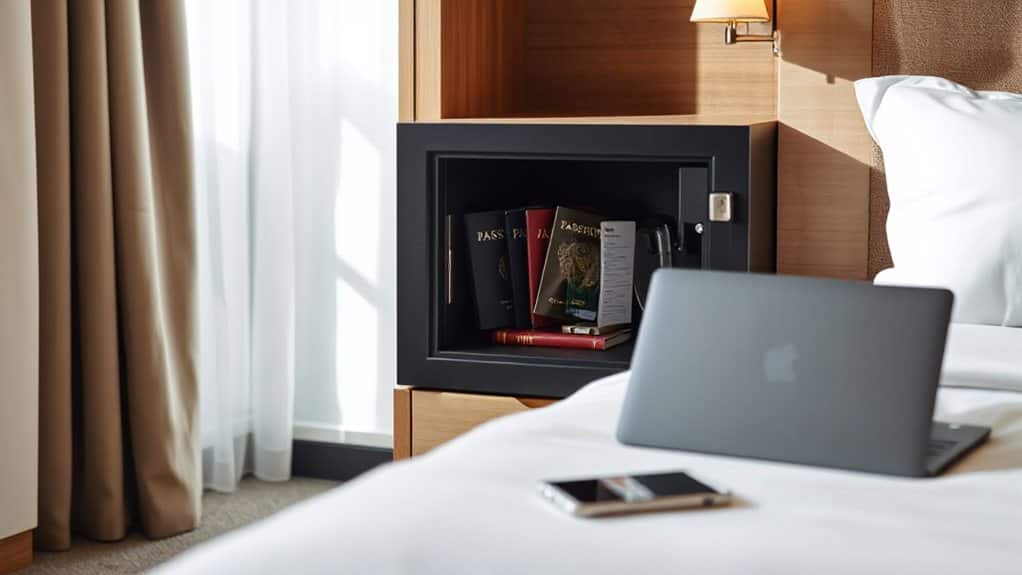
How can you be sure the room safe will actually protect your valuables before you even step through the lobby? Verify that the hotel lists in‑room safes in its amenities and that policies are publicly available. Look for electronic safes, which dominate the market, and note any safety manuals or briefings. Prioritize hotels where 95% properties have cameras, 74% use access control, and staff receive security training. This due‑checking saves time and protects freedom to travel confidently. 68% of guests prioritize safety when choosing a hotel. Also consider whether the hotel offers secure locker options and allows storing larger items in checked luggage if needed.
Set a Strong Hotel‑Safe Combination and Test It
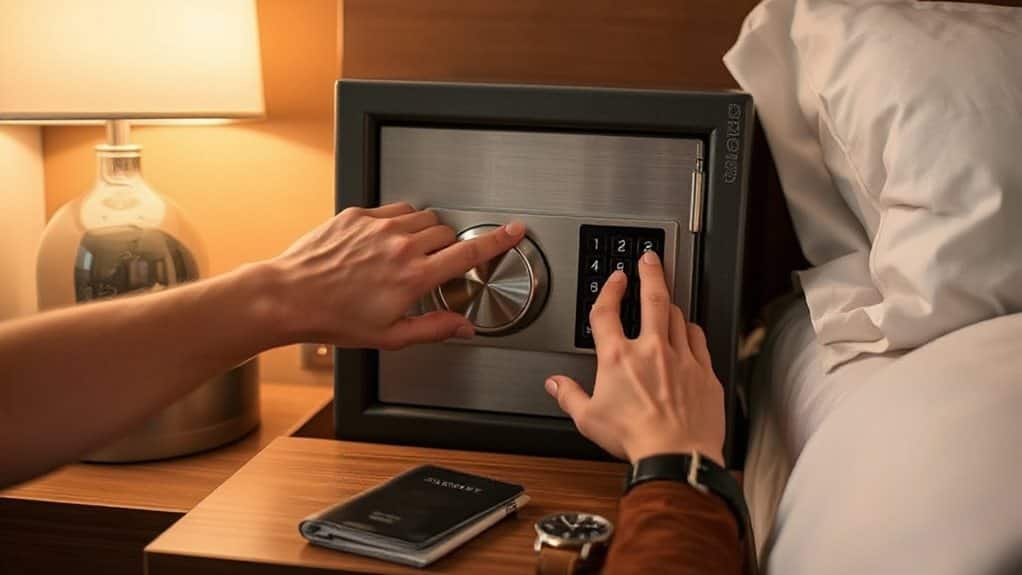
Lock the safe by setting a strong combination, then test it before you store anything.
Avoid using your room number, birthdays, or simple sequences like 1234; pick a random 4‑6 digit code and finish with * or #.
Enter the code several times, confirming the lock clicks and the door opens smoothly.
Check for low‑battery warnings, then re‑enter the code immediately to verify reliable access.
Keep valuables secure by using the hotel safe and being aware that public-area security cameras monitor common spaces for safety and theft prevention.
Reset or Change a Hotel‑Safe Default Code
Ever wondered how to replace a hotel‑safe’s factory default code before you store anything precious? For Truva safes, type 000000, close the door, then set your own six‑digit code with the hash key. Saflok models still use 99999 as the admin code, so test it first. Global Safe Corp requires pressing Clear twice, entering 1111, then programming a new four‑digit admin password. Competition on routes can drive real‑time pricing changes and fare buckets that vary by route.
Store Items in the In‑Room Safe Correctly
First, test the default code with the safe door open to make sure it works before you change anything.
Then, set a unique combination that avoids obvious patterns like birth years or sequential numbers, so only you can access the contents.
Finally, verify the lock’s functionality by closing and reopening the safe a couple of times to confirm the code reliably secures your items.
Consider scheduling larger trips around peak travel season if you plan to visit New Zealand and want to keep valuables secure while away.
Test Default Code
Testing the default code is a quick way to see whether a hotel has left the safe’s primary combination unchanged. Insert your room card, watch the first digit flash, then try common defaults like 0000 or 1234. Hold the lock button and 0 together to enter override mode. If the safe opens, the hotel hasn’t changed the master code, so you should avoid using it.
Set Unique Combination
After confirming the safe isn’t using the hotel’s default master code, you should set a personal combination that only you know. Choose a memorable four‑digit code—perhaps a credit‑card PIN or a personal date—while avoiding obvious sequences like 1234.
Power the safe, close the door, then enter the code, press the A button, and repeat to lock. Test the new combination immediately.
Verify Lock Functionality
How can you be sure the safe will stay locked every time you use it? Press the door firmly; listen for a solid click and check that the latch engages without gaps.
Test the keypad repeatedly, confirming tactile feedback and immediate light activation.
Verify battery indicators, anti‑tamper seals, and that the interior fits your items without obstruction.
Ensure the door closes smoothly and stays sealed.
Store Items in the Front‑Desk Safe Deposit Box
A front‑desk safe deposit box gives you a secure, on‑site place to keep precious belongings while you stay at a hotel.
You’ll fill out an Access Application card, present ID, and sign to match the record.
Both your key and the guard’s key must turn together, recorded by staff.
The vault’s steel doors, CCTV, and optional biometric locks keep your items safe.
Many travelers staying near cultural hubs like Place des Vosges appreciate using front‑desk safes when exploring historic neighborhoods.
Choose Which Items to Keep in the Hotel Safe
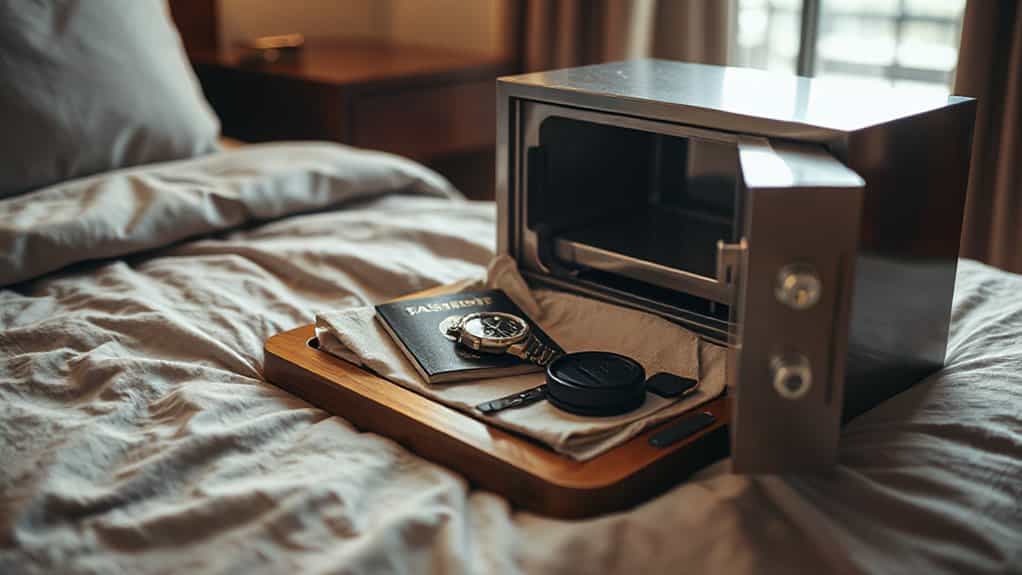
Which items deserve a spot in the hotel safe? Keep passports, original birth certificates, and any legal documents you don’t need daily. Store backup copies of IDs, insurance policies, and vehicle registrations. Place small emergency cash, rarely used credit cards, and key copies for holiday properties. Add high‑value jewelry, watches, and collectible coins. Use a fire‑resistant safe for passwords and digital backups. This protects valuables while you stay free. Consider keeping trays and seating factors in mind when choosing storage and workspace options to avoid posture strain when using in-room desks or folding tables with tray height considerations.
Add Extra Room‑Level Security
Keeping your precious items safe starts with the safe, but adding extra room‑level security layers the protection. Install a door wedge or alarm, use a travel lock like Addalock, and verify tamper‑proof locks. Cover the peephole, request mid‑floor rooms, and ensure key‑card elevator access. Check hallway cameras, request motion sensors, and keep a panic button within reach. This combination deters unauthorized entry while preserving your freedom.
Respond Quickly If You Suspect a Room Theft
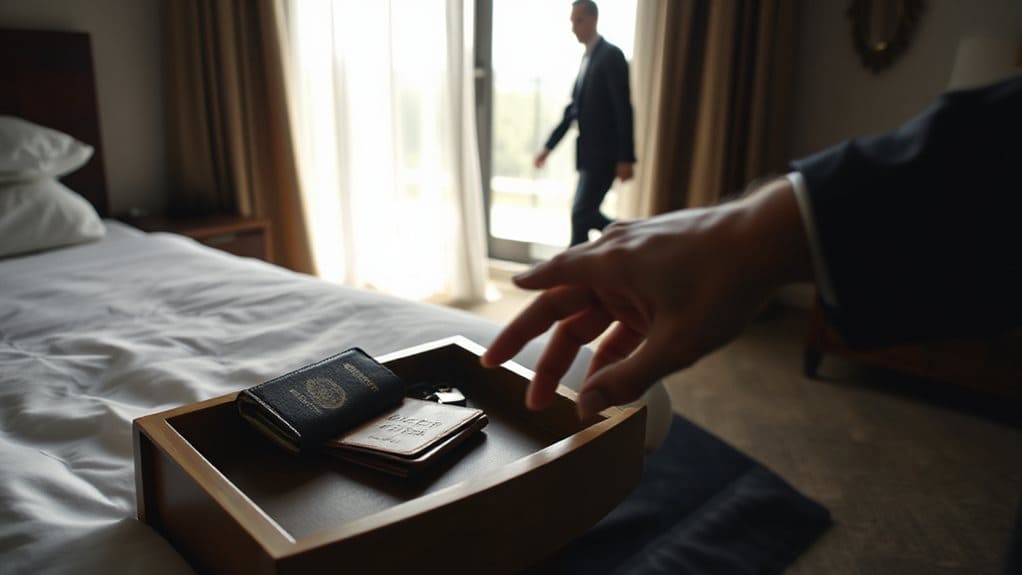
When you suspect a theft in your hotel room, act immediately to protect evidence and increase the chances of recovery. Call the front desk, give your room number and list missing items, and request security to arrive promptly.
Avoid touching anything, lock the door, turn on lights, and note the discovery time. Photograph the scene, record serial numbers, and share details with staff and police.
Use Do‑Not‑Disturb to Limit Housekeeping Access
Hang the Do‑Not‑Disturb sign where staff can see it clearly, and double‑check that any person who claims to be housekeeping shows a proper identification badge before entering.
If the badge matches the hotel’s official list, you can feel confident they’re authorized; if not, politely ask them to return later with a manager.
This simple routine lets you keep valuables out of reach while still complying with the hotel’s safety and welfare policies.
Sign Disturb Sign Effectively
How can you make a Do‑Not‑Disturb sign work for you? Place the sign where staff can’t miss it, and double‑check that it’s firmly attached. Choose a bright, unmistakable design, and consider adding a note like “Please don’t enter.” Knowing that only about 5 % of staff ignore it, you’ll likely keep most interruptions away, preserving privacy and reducing unnecessary service costs.
Verify Housekeeping Identity Before Entry
What steps can you take to be sure the person at your door is truly housekeeping staff?
Use the Do‑Not‑Disturb sign to limit access, then verify identity by scanning the staff badge’s QR code with the hotel app or checking a government‑issued ID against the person’s face.
Call the front desk to confirm the name and badge, and ask a specific housekeeping question only staff would know.
Keep the door chain engaged until you’ve confirmed visual and verbal cues.
Verify Staff Identity Before Allowing Room Entry
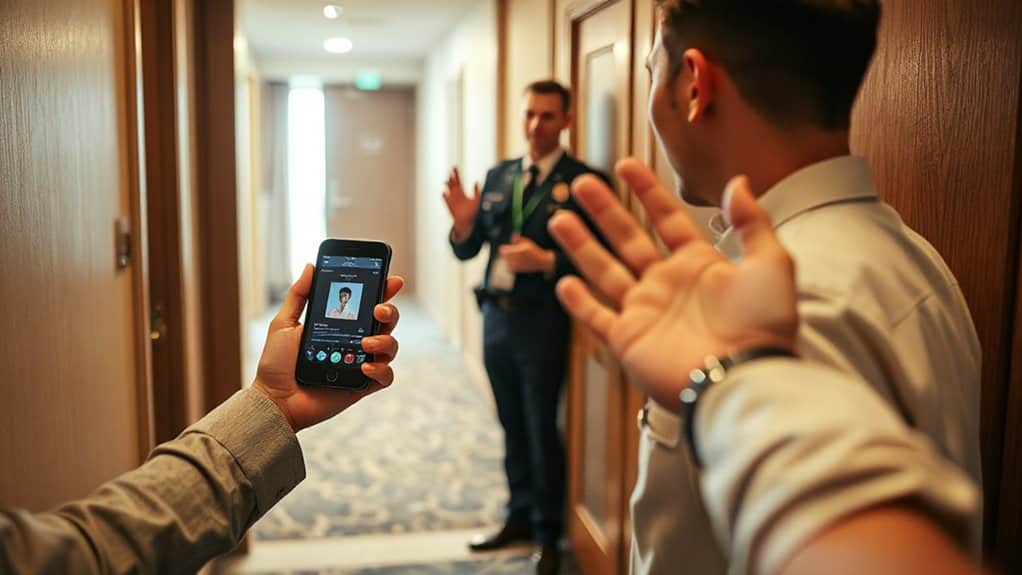
Ever wonder how to be sure the person at your door is truly hotel staff? Call the front desk from your room phone, confirm the staff name and purpose, and match it with the hotel’s directory. Demand a government‑issued ID, check the photo, expiration date, and security features, and compare it to the uniform and badge. If anything feels off, refuse entry and notify security.
Keep Valuable Electronics and Jewelry Out of Plain Sight
After confirming a staff member’s identity, shift your focus to the items you keep inside the room. Store phones, keys, and jewelry in a wardrobe cupboard safe, and lock larger laptops in the built‑in safe. Anchor a portable safe to a desk or dresser for extra protection.
Use diversion safes—empty hairspray bottles or books with hidden compartments—to spread items, and always verify the safe is locked before leaving.
And Finally
By checking safe policies before you book, using a strong, tested combination, and resetting default codes, you protect valuables from unauthorized access. Store items correctly in the in‑room safe or at the front desk’s deposit box, and keep electronics and jewelry out of sight. If you suspect theft, act quickly, and use Do‑Not‑Disturb to limit housekeeping. Always verify staff identity before letting anyone enter. These steps minimize risk and keep your belongings secure.