Pack solid, TSA‑approved snacks like jerky, cheese cubes, single‑serve nut butter, whole‑grain crackers, dried fruit, and nuts in clear 3.4‑oz containers or resealable bags. Keep items non‑messy and label containers for quick security checks. Rotate three mini‑snacks every four hours on an eight‑hour flight to sustain energy, pairing protein with carbs and healthy fats. Avoid liquids, gels, and fresh produce on international trips, and use airtight bins for whole fruits if needed. Continue for more detailed packing tips.
TLDR
- Choose TSA‑approved solid snacks like jerky, cheese slices, nuts, and dried fruit that stay fresh without refrigeration.
- Pack sauces, nut butter, or dressings in clear 3.4‑ounce containers and label them for quick security checks.
- Use zip‑lock bags or mesh pouches for portion‑controlled mini‑meals, mixing sweet, savory, and energy‑boosting items.
- Include whole fruits (apples, bananas) in airtight bins and avoid liquids; remember many countries prohibit fresh produce on international flights.
- Rotate snacks every 4–5 hours, pairing protein with carbs and healthy fats to maintain steady energy throughout an 8‑hour flight.
Select TSA‑Approved Snacks for Long‑Haul Flights

How can you pick snacks that satisfy TSA rules while keeping you fueled for a long‑haul flight? Choose beef, salmon, or mushroom jerky for protein without refrigeration. Pack single‑serve nut butter (≤ 3.4 oz) and whole‑grain crackers. Bring solid fruit like apples or bananas, and dried fruit for hydration. Include nuts, trail mix, and cheese slices that bypass liquid restrictions, ensuring all items fit in a quart‑sized bag. Remember that liquid‑like items such as creamy dressings or yogurts must stay under the 3.4‑ounce limit. Seat maps can be misleading, so consider choosing snacks that keep you comfortable in case you need to change seats at the last minute seat map updates.
Build TSA‑Approved Mini‑Meals: Sweet, Savory, Energy Options
You can balance sweet mini‑meals like muffin slices or fruit salad with savory options such as wraps or jerky, keeping each item in a 3.4‑ounce container to meet TSA limits.
Adding energy‑boosting snacks—protein bars, trail mix, or pre‑portioned powder packets—ensures you stay fueled without exceeding liquid rules.
Declare medical devices and medications early to streamline inspection and avoid smooth screening.
Balanced Sweet Mini‑Meals
When planning a long‑haul flight, you can assemble balanced sweet mini‑meals that meet TSA’s solid‑food rules while providing quick energy and satisfying flavors.
Pack dried mango, banana chips, and freeze‑dried fruit in a zip‑lock bag; add an instant oatmeal packet and a squeeze‑pack of fruit puree.
Use a divided container for protein‑shake mix, chickpeas, and beetroot crisps.
All items stay solid, non‑messy, and ready post‑security.
Savory Energy‑Boost Snacks
What you need to know about building savory, energy‑boosting mini‑meals is that every component must stay solid, fit within the 3.4‑ounce liquid limit, and survive a typical 8‑hour flight without refrigeration. Pack jerky or biltong, cheese crisps, and a single‑serve nut‑butter packet with whole‑grain crackers. Add a mesh bag of mixed nuts, seeds, and dried fruit, plus a few cherry tomatoes or beet chips for fresh crunch. This combo stays TSA‑approved, lightweight, and energizing.
Store TSA‑Approved Snacks in Clear 3.4‑oz Containers
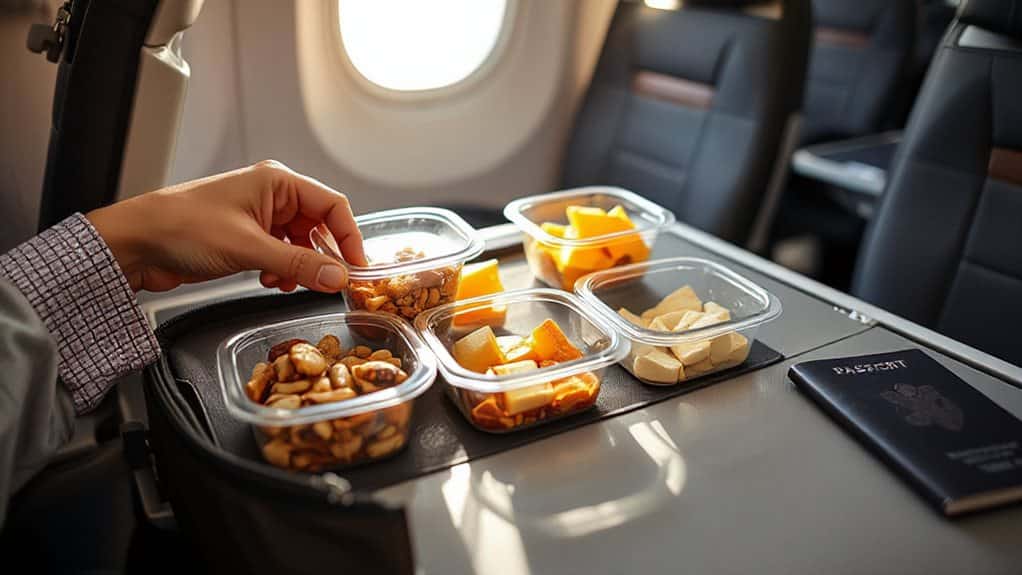
How can you keep your favorite bite‑size snacks compliant with TSA rules while staying organized? Use clear 3.4‑oz containers for sauces, nut butter, or salad dressing. Fill them before security or use empty containers to pack solid items like cheese cubes or roasted veggies. Choose reusable amber bottles or leak‑proof screw caps. Label each container for quick checks, and keep everything lightweight and portable in your carry‑on. Consider pairing snacks with a packable travel pouch to stay organized and protect fragile items.
Pack Fresh Produce Safely and Respect International Rules
Clear containers that kept your sauces organized also work perfectly for fresh produce, but the rules shift once you consider international travel. Pack whole fruits like apples or bananas in airtight bins, avoid liquid gels, and place them in a separate security bin. Remember many countries ban fresh produce; skip it on overseas flights to prevent fines, confiscation, or customs delays. Use sealed containers for cut fruit and reusable napkins for juicy varieties, staying within TSA’s solid‑fruit allowances. Follow TSA guidelines and keep your vape in carry-on luggage with batteries removed if applicable.
Swap Snacks Every 4 Hours for Steady Energy

You’ll want to pair a protein‑rich snack with a modest amount of carbs and healthy fats every four hours, so each bite gives a balanced macro lift without overloading your stomach.
By keeping portions small—like a handful of nuts, a piece of cheese, or a bite‑sized energy bar—you sustain steady energy while avoiding the spike‑and‑crash cycle.
Timing the swaps to align with your flight schedule also helps your digestive system stay comfortable throughout the expedition.
For added practicality, choose compact, lightweight snacks and packaging that stay under carry-on weight limits so you don’t risk extra fees.
Balanced Macro Pairings
When you swap snacks every four hours, you keep your blood‑sugar levels steady and avoid the energy crashes that often accompany long‑haul flights.
Pair nuts with dried fruit for healthy fats, fiber, and protein.
Combine cheese and fruit for balanced protein‑fiber combos.
Use whole‑grain crackers with hummus, or apple slices with nut butter, to sustain focus and maintain macro harmony throughout the journey.
Portion‑Controlled Energy Boosts
What makes a long‑haul flight feel less exhausting is keeping your blood‑sugar stable with portion‑controlled energy fuels every four hours. Pack three mini‑snacks—savory chickpeas, a low‑glycemic bar, and nuts—into resealable bags, swapping them at four‑hour intervals. Use TSA‑approved containers, keep gels under 100 ml, and rotate flavors to sustain energy without crashes or delays.
Timing for Digestive Comfort
Ever notice how a stable digestive rhythm can make a long‑haul flight feel less taxing? Swap snacks every four hours to keep energy steady and gut calm. Small, high‑fiber bites—fruits, veggies, nuts—digest easily, while water prevents slowdown. Aligning snack times with destination daylight helps reset your circadian clock, reduces dietary jet lag, and minimizes bloating or anxiety during the trip.
Pack Light, Mess‑Free, Allergy‑Safe TSA‑Approved Snacks for Delays

How do you keep snacks light, mess‑free, and allergy‑safe while staying within TSA guidelines for delayed flights? Pack individual nut‑butter packets with apples, dry‑roasted nuts in zip‑top bags, and seed mixes that avoid common allergens. Choose fruit pouches, hummus cups, and gluten‑free crackers. Add jerky, roasted chickpeas, and seaweed snacks for protein without crumbs. All items fit TSA limits and stay tidy. Consider bringing a compact seat belt extender to ensure comfort and compliance when space is tight.
And Finally
By following TSA guidelines, you’ll keep your snacks safe, compliant, and enjoyable throughout long‑haul flights. Pack clear 3.4‑oz containers, rotate items every four hours, and choose a mix of sweet, savory, and energy‑boosting options. Include allergy‑friendly choices and respect international produce rules. This approach minimizes mess, avoids delays, and ensures steady nutrition, so you stay comfortable and focused from takeoff to landing.