Grab a Suica or PASMO smart IC card, tap it at any JR, Metro, Toei, or bus gate, and you’ll instantly unlock Tokyo’s seamless, 24‑hour‑wide public‑transport network. Use Google Maps to find the fastest route, view station counts, and see step‑by‑step directions in English or Japanese. Choose a 24‑hour ticket, Common Tokyo Subway Ticket, Tokunai Pass, or Tokyo Free Kippu based on your itinerary’s focus. Load the card onto Apple Pay, Google Wallet, or the Suica/PASMO apps for quick tap‑and‑go, and remember most lines stop around midnight, so check late‑night options or taxis. Continue for deeper details.
TLDR
- Get a Suica or PASMO card (or mobile wallet) for tap‑and‑go access to JR, Metro, Toei, and buses; top up at stations or via app.
- Use Google Maps to plan routes, view transfer stations, and see real‑time schedules; switch language to English if needed.
- Choose a day pass (e.g., ¥600 24‑Hour Ticket, ¥900 Common Tokyo Subway Ticket, or ¥1,600 Tokyo Free Kippu) based on which networks you’ll use most.
- Tap your card or phone at the gate, keep it in Express Mode for instant reads, and recharge online or at ticket machines.
- Check last‑train times (usually midnight–1 a.m.) and have a backup taxi or walking plan for late‑night travel.
Tokyo Transit Guide: Suica vs. Pasmo – Choose Your Smart IC Card
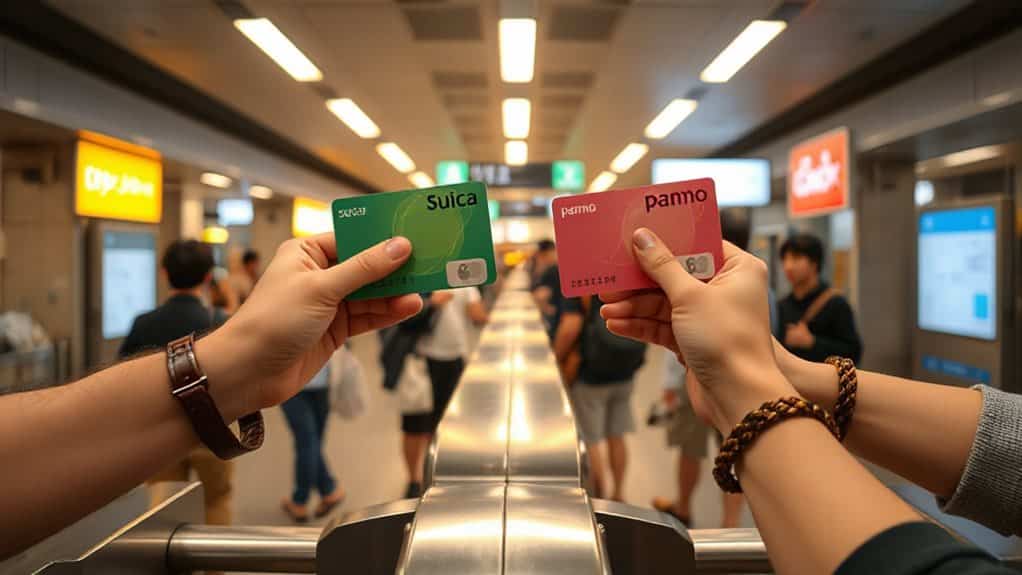
How do you decide which smart IC card to use in Tokyo?
Both Suica and Pasmo cover the same rail, subway, and bus networks, and you can tap‑and‑go without paper tickets.
Choose Suica if you’ll be at JR stations or need broader mobile‑pay support; pick Pasmo for non‑JR home stations or limited‑edition designs.
Tourist versions exist, but one card suffices nationwide. The cards become invalid after ten years of inactivity. Airlines often set staffing minimums based on passenger capacity, so larger services require one flight attendant per specified number of seats.
Tokyo Transit Guide: Map Rail Routes and Master Line Transfers With Google Maps
After choosing your smart IC card, the next step is to traverse Tokyo’s rail network efficiently, and Google Maps makes it simple. Open the app, type your destination, and it shows the fastest route, station count, and transfer points. Pan or zoom the interactive map to view Metro, Toei, and JR lines, offline numbers stations, and follow step‑by‑step directions in English or Japanese. Stay alert in crowded transit hubs and secure valuables to reduce the risk of pickpocketing and other transit thefts.
Tokyo Transit Guide: Pick the Best Day or 24‑Hour Pass for Your Itinerary
Which pass gives you the best value for a day of sightseeing?
If you stay within Metro lines, the ¥600 24‑Hour Ticket covers all eight Metro routes, but excludes Toei. For broader subway access, the ¥900 Common Tokyo Subway Ticket adds Toei lines and serves major districts. The ¥760 Tokunai Pass is ideal for JR local/rapid travel, while the ¥1,600 Tokyo Free Kippu bundles Metro, Toei, buses, and JR. Choose based on your itinerary’s network focus.
Tokyo Transit Guide: Tap‑And‑Go With Mobile Suica, Apple Pay, and Contactless Gates
Ever wondered how you can breeze through Tokyo’s transit gates without fumbling for a paper ticket? Download the Suica or PASMO app, enable NFC, and add the card to Apple or Google Wallet. Hold your iPhone or Apple Watch near the scanner; Express Mode taps instantly, even with low battery. Contactless credit cards work on many lines, and you can recharge via the app or station machines. For travelers carrying craft supplies, remember that airport security may require certain sharp items to be placed in checked baggage, so pack accordingly and check local rules.
Tokyo Transit Guide: Late‑Night Travel Options and Taxi Alternatives
If you’ve already proficiently tapping your phone at the gates, the next step is figuring out how to get around once the trains stop running. Most lines end between midnight and 1 a.m.; check Google Maps or Navitime before then. Taxis are plentiful, though a 10 p.m.–5 a.m. surcharge applies. Combine a short train ride with a cab to cut costs, and walk between nearby nightlife districts for free, safe, and flexible travel. For peace of mind, pack essential items like a small sewing kit in a protective case to avoid accidental injury during travel and screening (see sewing needles).
And Finally
By mastering Suica or Pasmo, using Google Maps for route planning, selecting the right day or 24‑hour pass, and taking advantage of mobile tap‑and‑go options, you’ll pilot Tokyo’s transit system efficiently. Late‑night trains, buses, and reputable taxis fill any gaps when regular service ends. Keep your card topped up, follow station signage, and respect fare rules to avoid penalties. With these tools and habits, you’ll travel confidently across the city’s extensive network.