Carry your meds in original pharmacy containers with labels matching your name and prescription, and keep a doctor’s letter on official letterhead that lists each drug, dosage, and medical necessity. Include translations of the letter and prescription for the destination, and bring copies plus a photo of the label. Pack everything in a clear, TSA‑approved carry‑on, declare it to security, and verify the country’s drug laws and any required permits before you travel. Follow these steps and you’ll avoid most hassles.
TLDR
- Carry all medications in original pharmacy‑labeled containers in your carry‑on, with a doctor’s letter and prescription copies.
- Include a notarized, translated doctor’s letter (generic/brand names, dosage, medical necessity) and a QR code for verification.
- Declare medications to TSA and customs early; request a manual inspection if needed and keep documentation accessible.
- Verify destination country regulations, obtain required permits, and ensure labels match your passport name.
- Bring a 30‑90‑day supply, extra days for emergencies, and a backup plan (local doctor, embassy contact) in case of denial or loss.
Quick‑Start Guide: How to Travel With Prescription Meds
Where do you start when you need to bring prescription meds on a trip? Check your destination’s rules first—some countries ban ADHD stimulants, strong painkillers, or medical marijuana. Schedule a doctor’s appointment three weeks out, get a 90‑day supply, and keep each pill in its original, labeled container. Pack everything in your carry‑on, split doses between bags, and declare them at customs if required. This protects your supply and keeps you compliant. Confirm legality of the medication in the destination country before you travel. You should also keep a printed prescription label with your name and dosage to help with airport screening and customs.
Documentation Checklist: Doctor’s Letter, Translations & Copies
You’ll need a doctor’s letter that lists each medication, its generic and brand names, dosage, and why it’s medically necessary, plus the doctor’s contact info for verification.
Make sure the letter and your prescription copy are translated into the destination’s language if required, while keeping an English version for U.S. entry.
Gather all documents—doctor’s letter, translated versions, and prescription copies—into a single checklist so you can present them quickly at customs or border control.
Notify customs or security officers in advance and request a hand inspection for any medications that could be sensitive during screening.
Doctor’s Letter Essentials
Need essential to know what a doctor’s letter must contain before you pack your meds for a trip, because airlines and customs will often ask for proof of medical necessity. Include your full name, birthdate, passport number, medication list with dosage, strength, frequency, route, and a clear health‑condition statement. Print on official letterhead, date, sign, add doctor’s contact info, and attach a QR code for verification. Carry multiple copies and a photo of your passport.
Translation Requirements Overview
Your doctor’s letter already lists the medication details, but most airlines and customs officials also expect those details in the language of your destination.
Translate the letter and any prescription labels into the host country’s language, including generic, brand, and chemical names.
Verify embassy requirements for controlled drugs, keep translations with original packaging, and match your name to your passport for smooth clearance.
Copy Documentation Checklist
When you travel, a complete documentation checklist keeps customs and airline staff from questioning your medication. Pack a doctor’s letter that lists each drug by generic name, dosage, and condition, plus the doctor’s contact info. Include English copies of every prescription, and the original pharmacy‑labeled containers. Add translations if needed, and verify limits with the embassy or CDC. This guarantees smooth, hassle‑free passage.
Why Original Containers and Matching Labels Matter
You’ll find that keeping meds in their original containers with matching labels makes compliance verification a breeze, because officers can instantly see the prescription details.
This simple step also smooths customs clearance, as authorities recognize the official packaging and can process your items quickly.
Finally, the proper labeling helps you avoid medication errors, ensuring you take the right drug at the right dose throughout your trip.
TSA officers may still exercise discretion and ask you to place items in checked baggage or take other actions if they have security concerns.
Compliance Verification
Because customs officials rely on the packaging and label to confirm a medication’s legitimacy, traveling with the original pharmacy container and a matching label is essential. You’ll verify dosage, patient name, prescription number, and prescriber details instantly, preventing red flags. Matching labels also speed visual inspections, reduce confiscation risk, and satisfy strict country limits, ensuring you stay compliant and keep your medication accessible.
Easy Customs Clearance
Why do original containers and matching labels matter for easy customs clearance? You keep medication in its pharmacy bottle with the doctor’s prescription printed, letting officials verify authenticity instantly. The label shows brand, generic name, dosage, and strength, preventing confusion. A copy of the prescription in English and a doctor’s letter back you up if needed. This documentation speeds entry, avoids delays, and supports your personal‑use claim.
Prevent Medication Errors
Original containers and matching labels are a simple yet powerful safeguard against medication errors, especially when you travel. They give you complete drug information, preventing look‑alike mix‑ups that cause 18.60 % of errors. Without original packaging, 58.14 % of mistakes arise from missing data. Keep prescriptions in their bottles, attach clear labels, and verify each dose before use to stay safe and free.
Packing Prescriptions for Carry‑On: TSA Exemptions & Liquid Rules
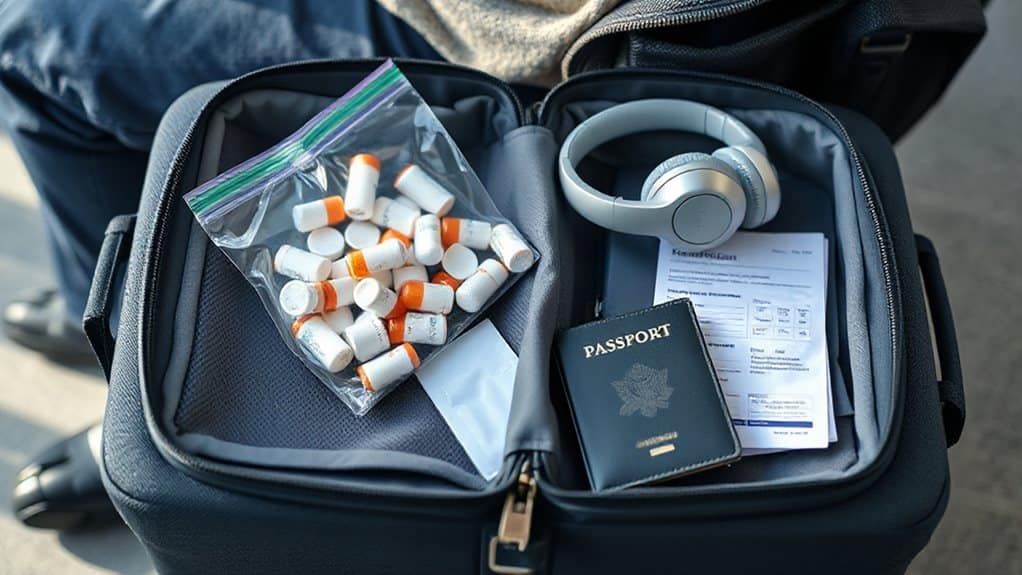
Where are you heading with your medication? Pack every prescription—liquid, pill, or cream—in its original labeled container and place it in a clear bag. Declare it to TSA; it’s exempt from 3‑1‑1 limits. Keep over‑the‑counter pills and syringes with the same bag. Store devices and batteries in carry‑on, not checked luggage. Carry a prescription label photo for proof. Be aware that many hotels treat vaping the same as cigarette smoking, and no-smoking policies often prohibit e-cigarettes and vaping indoors.
Check Destination Drug Laws & Get Required Permits
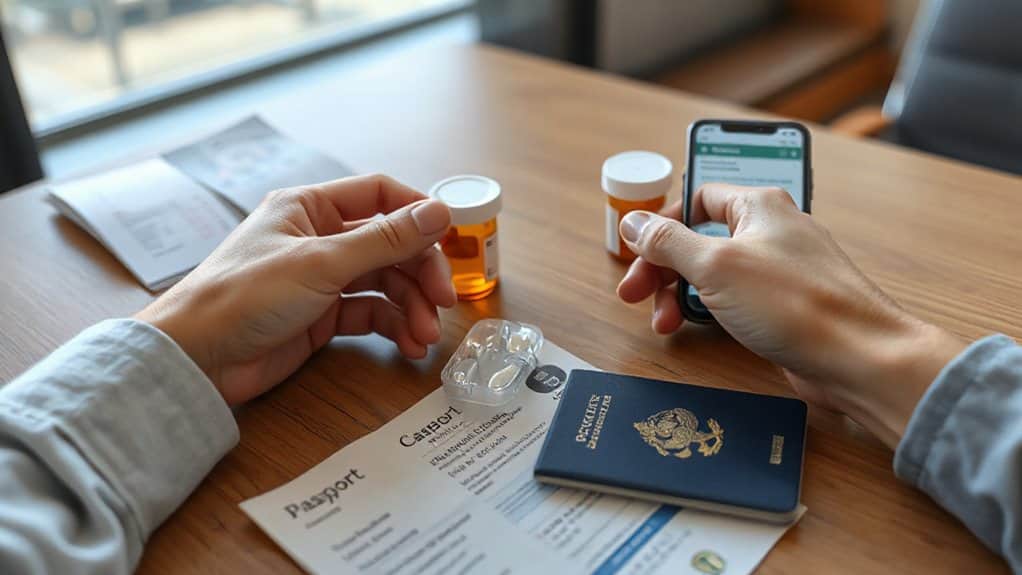
After you’ve packed your prescriptions in a clear, labeled bag, the next step is to verify that each medication is legal in the country you’re visiting and to secure any permits you might need. Check embassy websites, the INCB database, and contact local health ministries. Obtain a doctor’s letter, a valid prescription, and any required annex certificates before you travel.
Managing Quantity Limits for Travel With Prescription Meds
How many pills or milliliters of liquid medication can you legally bring on a trip? You can carry unlimited solid pills in a TSA‑approved carry‑on, but liquids must be reasonable for the trip; TSA waives the 3.4‑ounce rule for essential meds.
For foreign destinations, expect 30‑90 day caps, tighter for controlled substances.
Pack bulk in checked bags, keep labels, and bring a doctor’s letter if you need more than the local limit.
Also, declare medical devices and medications early at security to streamline screening and avoid random searches, and consider using TSA‑approved locks for checked luggage to prevent damage during inspections.
Prescription‑Only OTC‑Like Restrictions by Country
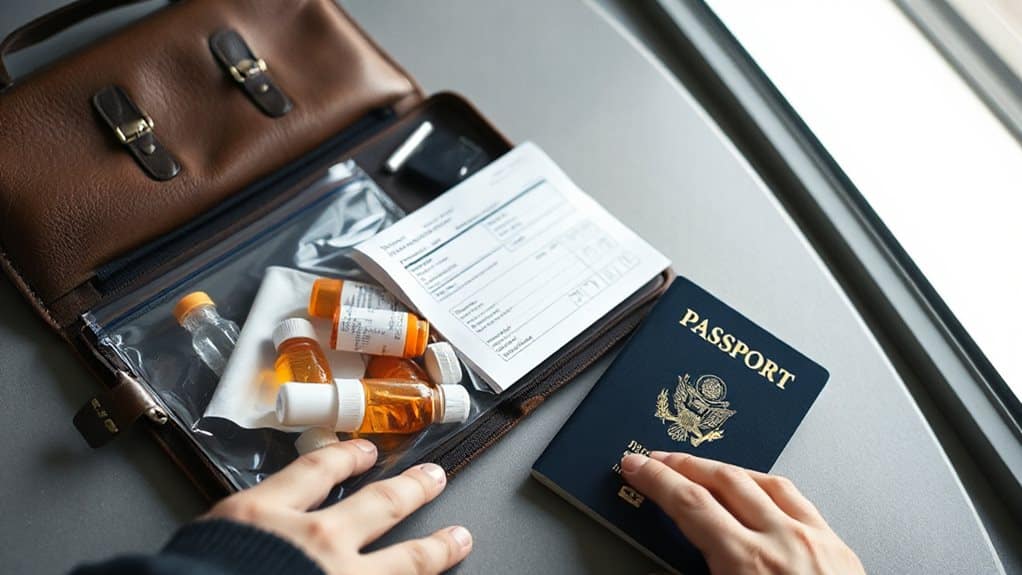
You’ve already learned how many pills or milliliters you can bring, but the next hurdle is that some medications that are over‑the‑counter (OTC) in your home country become prescription‑only—or even prohibited—once you cross a border.
Japan bans pseudoephedrine and many stimulants; the UAE bans CBD and scrutinizes diazepam; Mexico and Colombia outlaw Sudafed, ADHD drugs, and certain painkillers; Europe often requires permits for codeine or fentanyl and restricts mifepristone.
Check embassy guidance to avoid confiscation. Travelers on multi‑day city itineraries should note local access to Thai massages and pharmacies when planning medication schedules.
Handling Controlled Substances & DEA‑Approved Imports
Where can you find the essential steps for traveling with controlled substances and meeting DEA import rules? Pack all Schedule II‑V meds in their original labeled containers, carry a doctor’s letter, copy of the prescription, and any DEA‑approved documentation in your carry‑on. Inform TSA, request manual inspection if needed, and keep a 90‑day supply for U.S. entry. Declare everything at customs and avoid mailing.
What to Do If Your Meds Are Denied, Lost, or You Need an Emergency Fix?
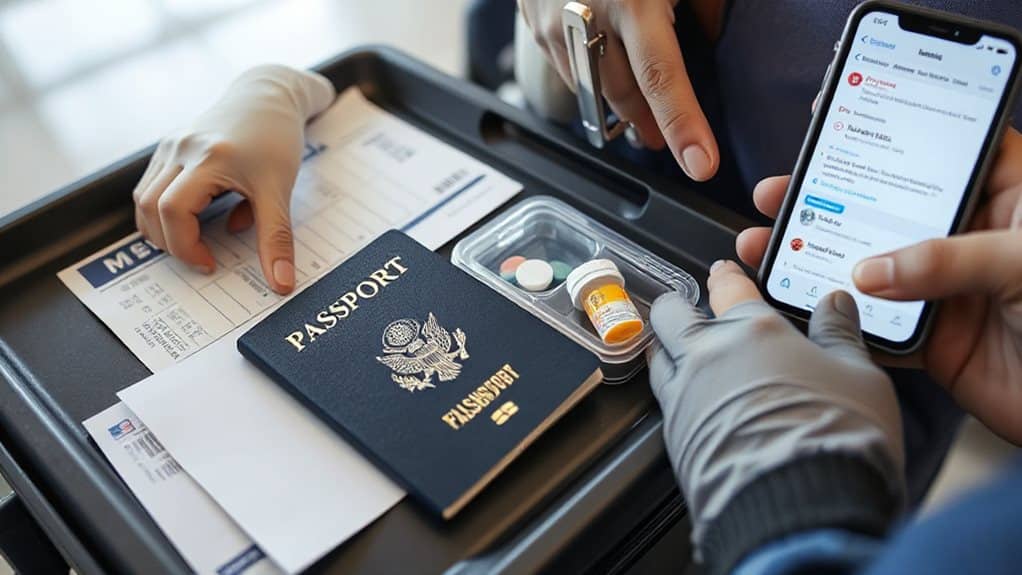
When customs officials deny your medication, you’ll need to act quickly to avoid fines, confiscation, or legal trouble. Keep meds in carry‑on, split supplies, and carry a doctor’s letter with generic names. If denied, contact your embassy for guidance, seek a local doctor with translated docs, and use reputable pharmacies. If lost, rely on extra days’ supply and emergency local prescriptions.
And Finally
By following these steps, you’ll keep your meds safe and compliant throughout your trip. Keep original containers, a doctor’s letter, and copies handy; pack them in your carry‑on to meet TSA exemptions. Verify destination drug laws and any required permits before you leave. Respect quantity limits and controlled‑substance rules, and know the process for lost or denied medication. With proper documentation and planning, you can travel confidently without medication interruptions.