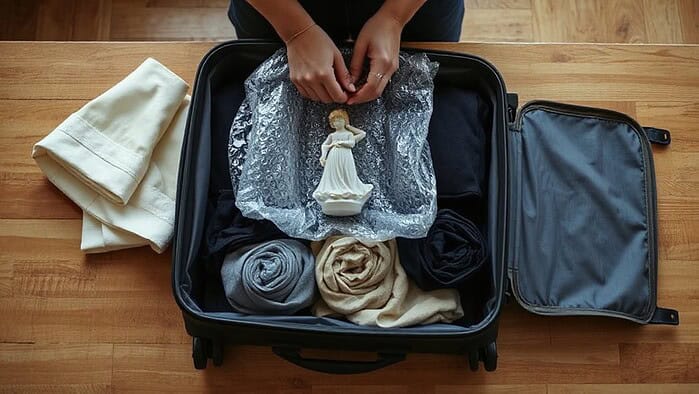
Check each airline’s carry‑on policy before you pack, then pick a fare class that permits a personal item plus a standard overhead bag. Measure both bags to stay within the airline’s linear‑inch limit—typically 22 × 14 × 9 in for U.S. carriers or 24 × 16 × 10 in for Southwest—and keep weight under the 15–22 lb range unless you’re on Frontier, which allows 35 lb. Pack heavier items in the overhead bag, lighter essentials in the personal item, and use compression cubes or a vacuum bag to shrink volume. If a gate agent flags your bag, repack or gate‑check it to avoid fees, and consider shipping bulky items for cost‑effectiveness. Continuing will reveal more detailed tactics and cost‑saving tips.
TLDR
- Choose airlines that permit two cabin bags (e.g., Southwest, Delta business‑class) or use premium boarding to avoid gate‑check fees.
- Verify each bag’s dimensions and weight against the carrier’s specific limits (e.g., 22×14×9 in, 15‑22 lb) before packing.
- Pack the heavier items in the overhead bag and lighter essentials in a personal item that fits under the seat.
- Use compression cubes, rolling, and vacuum bags to maximize space and keep total linear inches within allowed limits.
- Arrive early or purchase priority boarding to secure overhead space and prevent unexpected gate‑check charges.
Assess Airline Policies Before You Pack
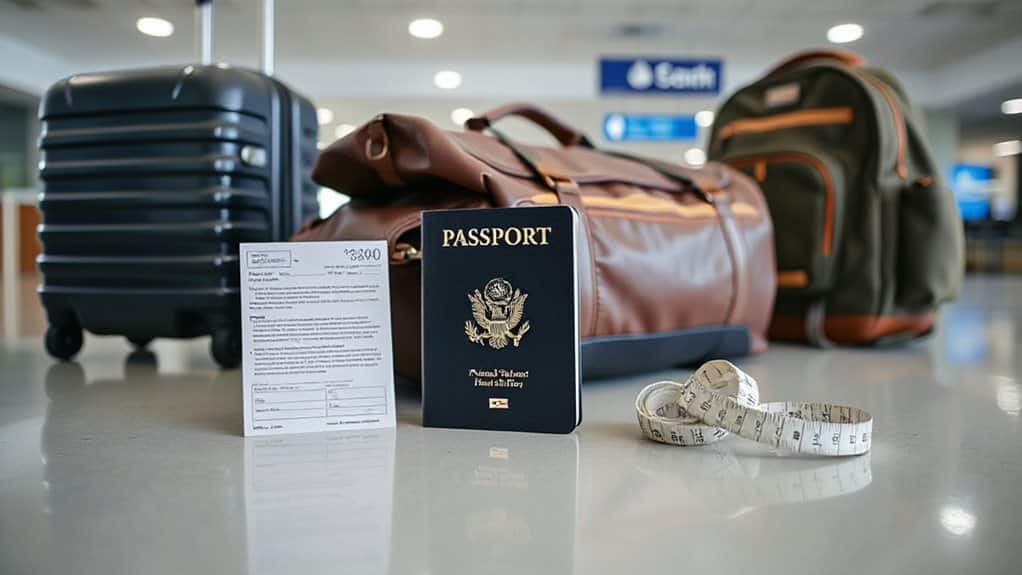
What do you need to know before you start packing? Check each airline’s carry‑on rules: Delta allows one bag (22″ × 14″ × 9″) plus a personal item, but small‑flight gate checks may limit size. United’s basic economy often restricts you to a personal item unless you’re a MileagePlus Premier. Frontier charges carry‑ons on most tickets, with a 35‑lb weight cap. JetBlue consistently permits one carry‑on and one personal item across all fares. Verify class‑specific limits and gate‑check policies to avoid surprises. Personal item must fit underneath the seat in front. The city’s Botanic Gardens and parks are useful places to test carrying comfort on a short walk before a long trip.
Identify Carriers That Truly Allow Multiple Carry‑Ons
You’ll find that Delta’s business‑class tickets let you bring a full‑size carry‑on plus a personal item without extra fees, and the airline’s gate scanners in 2026 enforce the standard 22 × 14 × 9‑inch limit consistently.
Southwest, on the other hand, permits two bags—an overhead carry‑on and a personal item—on every fare, and its larger 24 × 16 × 10‑inch allowance gives you extra flexibility.
Both carriers thus stand out as airlines that truly support multiple carry‑ons for a wider range of passengers.
Kuching’s waterfront promenades and landmarks, including the historic Kuching Waterfront, make it a pleasant place to stroll while waiting for connecting flights.
Delta Business Class Perks
How far do Delta’s Business Class perks stretch when it comes to cabin baggage? You still get only one carry‑on plus a personal item, even in Delta One or Premium Select. The bag must fit 22 × 14 × 9 inches, and the personal item must stay under the seat. Checked‑bag allowances improve—70 lb limits and free bags for elite status—but no extra cabin bags are added.
Southwest Two‑Bag Policy
Delta’s business‑class allowance still caps you at one carry‑on and one personal item, so you don’t get extra cabin space even in Delta One or Premium Select.
Southwest lets you bring a 24 × 16 × 10‑inch carry‑on plus a personal item, free on any fare. The bag fits the overhead bin, the item under the seat.
Compared with most U.S. carriers’ 22 × 14 × 9‑inch limit, Southwest offers genuine freedom for travelers who need two bags.
Calculate Size‑And‑Weight Limits for Multiple Carry‑Ons
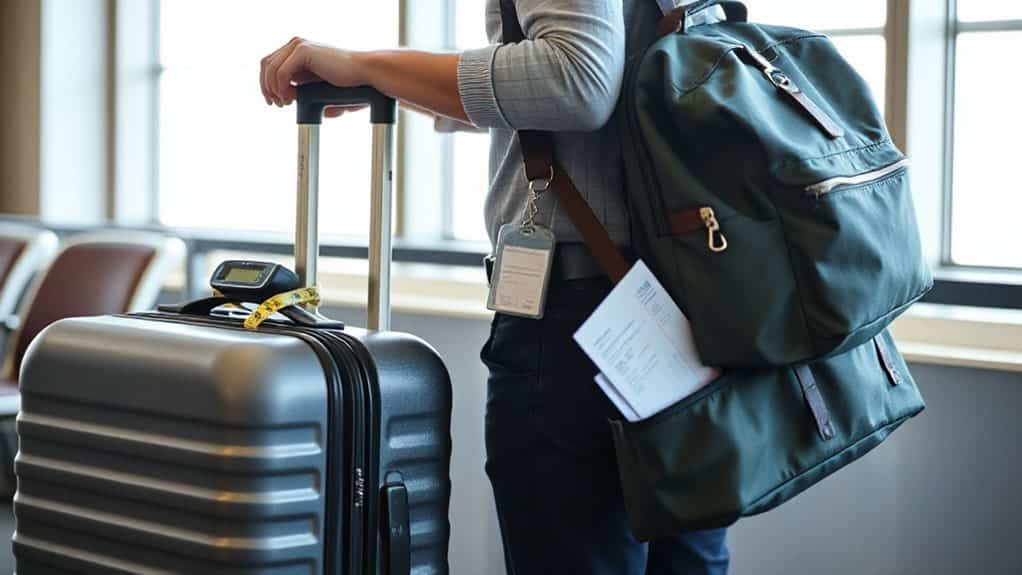
Ever wonder how to stay within each airline’s size‑and‑weight limits when you bring more than one carry‑on? Measure each bag’s length, width, and height, then add them for linear inches—Delta, China Southern, and Cape Air allow 45, Air New Zealand 46.5. Check weight caps: most airlines 15–22 lb, Frontier 35 lb, Air China 11 lb. Compare personal‑item dimensions—Spirit 18×14×8, British Airways 16×12×6—to ensure both bags fit. Competition on routes and ancillary rules can influence how strictly airlines enforce carry‑on fees and size limits.
Pack a Dual‑Bag System for Overhead & Under‑Seat
You’ll need to keep each bag within the airline’s size limits—one personal item for the under‑seat and one carry‑on for the overhead bin—while balancing the weight so neither bag becomes a hassle to lift. By placing heavier, non‑essential items in the overhead bin and keeping lightweight, frequently used things like your tablet, passport, and snacks in the under‑seat bag, you ensure quick access and a smoother boarding experience. This approach maximizes your total packing space and lets you stay organized without risking gate‑checking. Consider planning a layover visit to iconic city sights like the Petronas Twin Towers if you have extra time between flights.
Bag Size Limits
How big can your bags be before the gate agent stops you? Most U.S. airlines cap carry‑ons at 22 × 14 × 9 inches, wheels and handles included. Southwest stretches to 24 × 16 × 10 inches, while Frontier and Spirit stay near 18 × 14 × 8 inches, charging fees for larger items. Personal items must fit under the seat, typically 17 × 10 × 9 inches, with American allowing 18 × 14 × 8 inches. Automated scanners now enforce these limits strictly.
Weight Distribution Tips
What’s the best way to keep your luggage balanced when you’re juggling a rolling carry‑on for the overhead bin and a slim personal item for the seat?
Place heavier items like shoes or books in the overhead bag, where the aircraft’s structure supports weight.
Pack lighter clothing and electronics in the under‑seat bag, using dedicated laptop pockets and compression cubes.
Secure both bags with straps or interlocking handles to prevent shifting during boarding.
Quick Access Essentials
Balancing weight between your overhead bin and under‑seat item is just the first step; now focus on arranging the things you’ll need during the flight.
Pack a soft‑sided overhead bag for laptop, work gear, and front‑pocket essentials, and a compact under‑seat bag with RFID‑protected passport pocket, separate zipper compartments for snacks, and a small packing‑cube for toiletries.
Use clamshell openings for quick access without fully unpacking.
Roll, Packing Cubes, and Vacuum‑Bag: 3 Compression Hacks for Multiple Carry‑Ons
Ever wondered how to squeeze three carry‑ons into a single overhead bin without sacrificing organization? Roll each garment tightly, then slot them into compression cubes; the double‑zipper squeezes bulk from wool, denim, and puffer jackets down to an inch.
Add a vacuum‑bag for seasonal pieces, removing air to shrink volume further. Combine rolling, cubes, and vacuum to create Tetris‑like packing, maximizing space while keeping items accessible. Airlines often adjust carry-on policies based on aircraft and fare class, so check limits before you pack.
Leverage Elite Status or Credit‑Card Perks for Extra Carry‑On Allowances
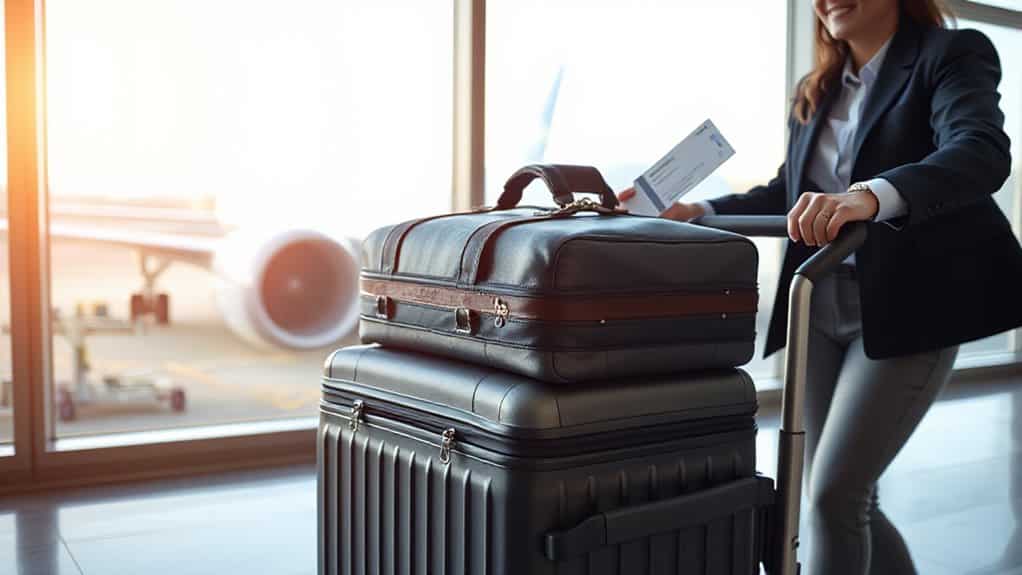
How can you turn elite status or a premium credit‑card into a tangible advantage for carry‑on limits? Use Aeroplan Super Elite or Frontier Diamond status to claim extra bags for you and companions.
Delta Medallion and American AAdvantage Gold waive fees and add weight allowances.
Many credit‑cards grant free checked bags, priority boarding, and lounge access, which often translates into larger carry‑on allowances.
Check each program’s specific rules before you fly.
Shorter routes can accelerate pressurization cycles and influence how airlines apply cycle-based equipment restrictions.
Use a Personal Item as a Hidden Second Carry‑On – Step‑by‑Step
Wondering how to squeeze a second carry‑on into the cabin without paying extra fees?
First, choose a soft‑shell personal item that compresses to 17×10×9 inches. Unzip it before boarding, tuck a small sling bag or laptop inside, then zip it up. Slide the bag under the seat after stowing your main carry‑on overhead. Keep passports, gadgets, and a light jacket inside for easy access and concealment. Verify dimensions with a gate sizer to avoid fees.
When Your Personal Item Is Denied, Repack or Gate‑Check
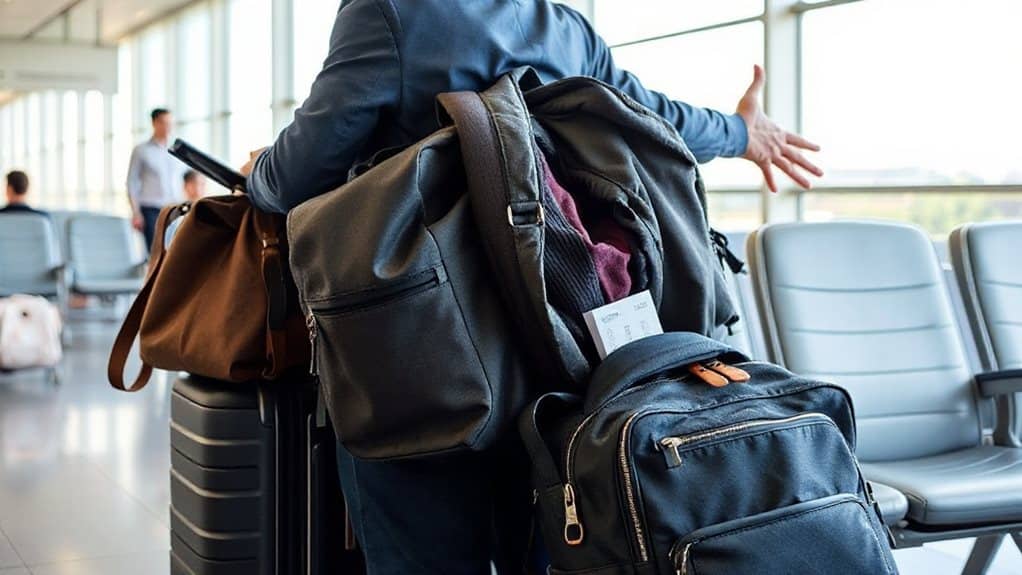
What should you do when the gate agent tells you your personal item doesn’t meet the airline’s size limits? First, measure the bag against the airline’s exact dimensions—American Airlines allows 18 × 14 × 8 in, Philippine Airlines 17.7 × 13.8 × 7.9 in, etc.
If it’s oversized, quickly repack essentials into a smaller pouch or shift items to your carry‑on.
If repacking isn’t possible, request a gate‑check; most carriers will accept it without fee, especially when the bag won’t fit the overhead bin.
Verify airline‑specific limits before you travel to keep your freedom unimpeded.
Gate‑Agent Flags? Quick Fixes to Avoid Fees
Ever noticed how a gate agent’s quick glance can turn a harmless carry‑on into an unexpected fee? You can dodge those $10 incentives by boarding early—choose premium economy or extra‑cabin seats, or pay for the bag online.
Stick to airline‑specific dimensions, especially on narrow‑body jets.
Consistent compliance prevents agents from flagging you, keeping fees out of your travel budget.
Ship or Carry Bulky Items? Quick Cost‑vs‑Convenience Guide
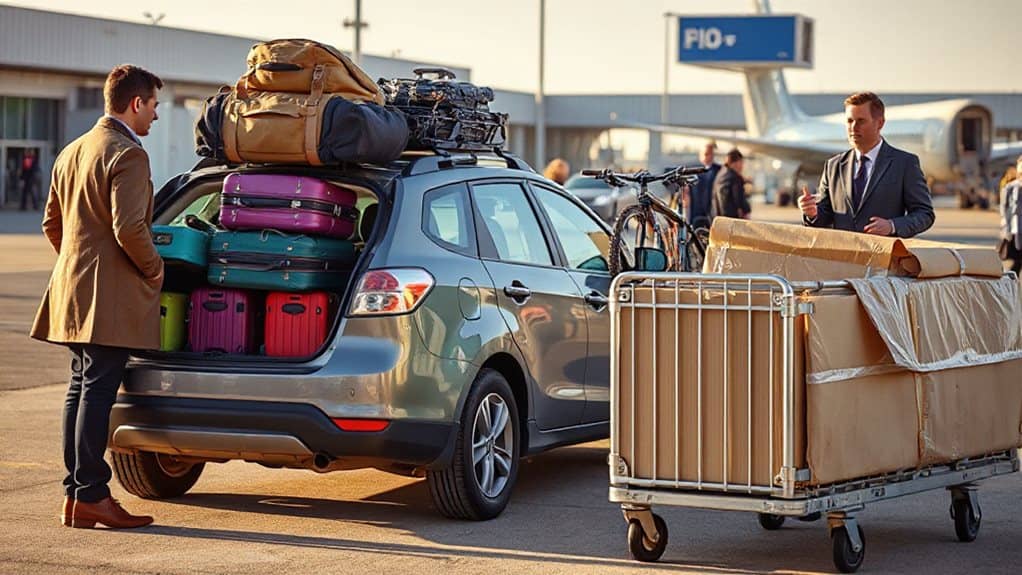
When you have bulky items, weighing the cost and convenience of shipping versus checking them in can save both money and hassle. A checked bag costs $70‑80 round‑trip, while two 10‑lb USPS boxes run $40‑54, saving $20‑45. UPS ground for two 20‑lb boxes is $60‑90, far cheaper than $200‑260 for an overweight bag. Couriers add door‑to‑door service and tracking, ideal for families or international trips. Choose shipping when multiple bags or excess weight apply.
Final Checklist: Verify Every Carry‑On Before You Board
Before you step onto the jetway, double‑check that each bag’s dimensions, including handles and wheels, fall within the airline’s size limits and that the combined weight stays under the permitted range. Use the gate‑side sizer or a tape measure to confirm the linear dimensions, and weigh the bags on a portable scale to avoid surprise fees.
Finally, make sure the contents meet TSA rules—liquids in a quart‑size bag, no prohibited items—so you can board without delays.
Measure Dimensions Measured
A quick visual check with a ruler or tape measure can save you a lot of hassle at the gate, because every airline’s carry‑on limit includes wheels, handles and any protruding straps.
Measure your bag fully expanded, include wheels and handles, and compare against airline‑specific limits—22 × 14 × 9 inches for most U.S. carriers, 24 × 16 × 10 inches for Southwest, and varying international sizes.
Test it in a home sizer frame to certify it fits before you board.
Weight Limits Confirmed
If you double‑check the weight limits for each airline before you step through the gate, you’ll avoid last‑minute surprises and potential fees. Weigh every bag at home or with a portable scale, noting that US carriers range from 25 lb (Hawaiian) to 35 lb (Frontier), while many international airlines cap at 15‑22 lb. Verify personal‑item allowances, confirm connection‑carrier rules, and adjust loads to meet stricter 2026 gate checks.
And Finally
By checking policies, measuring limits, and using a dual‑bag system, you’ll stay within airline rules and avoid extra fees. Pack efficiently with cubes, rolling, or vacuum bags to maximize space, and be ready to repack or gate‑check if a personal item is denied. Knowing carrier‑specific allowances and having a quick‑fix plan for gate‑agent flags keeps your trip smooth. Verify each bag before boarding, and you’ll travel confidently with multiple carry‑ons.