Pick a fitness‑friendly hotel that offers in‑room gear like a treadmill, TRX, or yoga mat, and use the built‑in app or kiosk to guide quick workouts. Pack lightweight resistance bands, a jump rope, and ankle weights that fit in a quart‑sized toiletry bag. Block 10–20 minutes each day for a 30‑minute circuit: warm‑up, push‑ups, squats, lunges, bicycle crunches, and mountain climbers, then stretch. Stay hydrated with a collapsible bottle, sip regularly, and add electrolytes. Schedule these sessions like appointments, map nearby gyms or parks, and turn sightseeing into active walking. Follow these steps, and you’ll discover even more practical tips.
TLDR
- Pack lightweight resistance bands, a jump rope, and ankle weights for full‑body workouts in hotel rooms or parks.
- Schedule 10‑20‑minute movement blocks as fixed appointments and map nearby gyms, pools, or trails before you travel.
- Use in‑room fitness gear (e.g., Five Feet to Fitness mini‑gyms) or hotel apps that guide quick circuits and track progress.
- Stay hydrated with a collapsible bottle, sip every 20‑30 minutes, and supplement with electrolytes and water‑rich foods.
- Incorporate active sightseeing—walk, bike, or use transit—to turn exploration into cardio while reducing travel emissions.
Why Fitness‑Friendly Hotels Matter for Your Trip
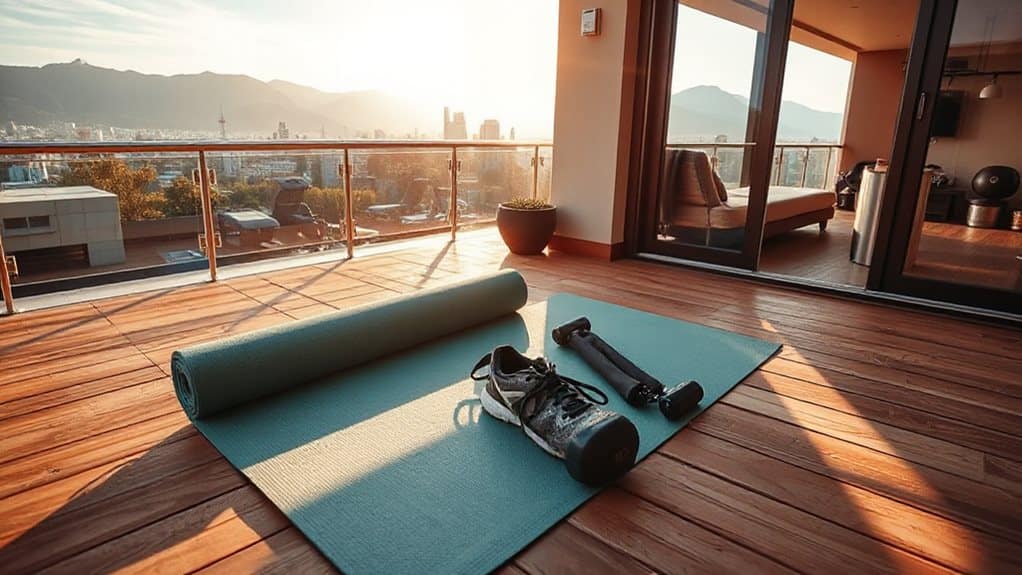
When you book a fitness‑friendly hotel, you’re basically bringing your workout routine along for the ride, and that can keep your energy levels steady and your health goals on track while you travel.
In‑room gear like treadmills, TRX, and yoga mats lets you train on your schedule, while integrated kiosks and apps guide sessions.
Advanced tech tracks progress, and recovery tools—meditation chairs, protein stations, cryotherapy—support wellness, freeing you to stay active without missing sights. Five Feet to Fitness mini‑gyms are already available in select Hilton rooms across the country. Hybrid hotels often include on‑site in‑room gear and amenity options tailored to frequent travelers.
Choose Hotels With Gyms, Pools, or Nearby Outdoor Spaces
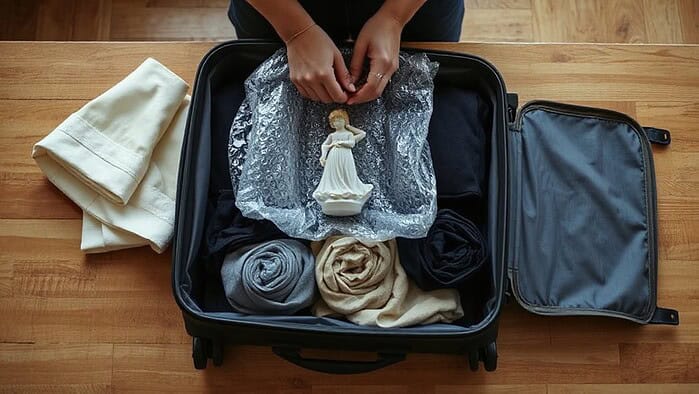
Often, the easiest way to keep your workout routine intact while traveling is to pick a hotel that offers a gym, pool, or easy access to outdoor exercise spaces. Choose places like Four Seasons Denver, Sofitel Los Angeles, or the Venetian in Las Vegas, which provide premium equipment, lap pools, and nearby trails. High‑density gym cities—Los Angeles, Denver, Las Vegas—ensure you stay flexible and free. Consider packing compression cubes to keep your workout clothes organized and save suitcase space.
Pack Lightweight Travel‑Fitness Gear That Fits Any Luggage
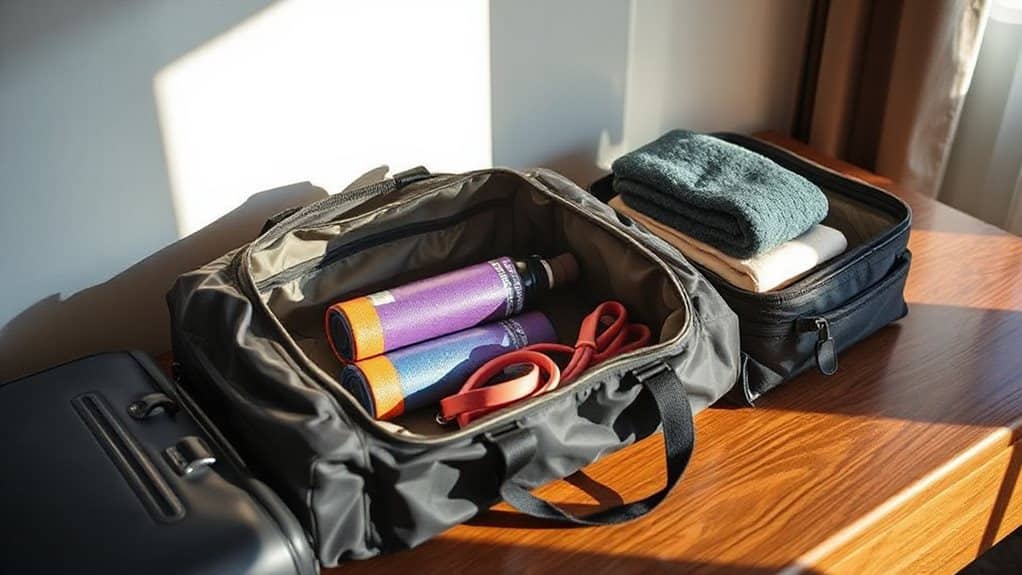
You can slip compact resistance bands into any carry‑on, and they’ll give you a full‑body workout without taking up much space.
A packable jump rope adds cardio in seconds, and its lightweight design means it won’t compete with your clothes.
Adding a set of ankle ankle weights lets you increase intensity while staying within luggage limits, and they’re easy to adjust on the go.
Choose breathable, moisture-wicking fabrics for workouts on the road to stay comfortable in varying climates and reduce clamminess material comfort.
Compact Resistance Bands
You can target every major muscle group with squats, rows, lunges, and tricep extensions, while low‑impact tension protects joints.
The set costs far less than a gym membership, lasts years, and fits any travel itinerary.
Packable Jump Rope
After swapping out bulky gym equipment for a set of compact resistance bands, the next lightweight travel‑friendly tool is a packable jump rope. You’ll fit it in any bag, adjust its length, and start a 5‑minute HIIT session that burns about 100 calories—equivalent to a 30‑minute jog. It strengthens quads, calves, and glutes, boosts cardiovascular fitness, improves agility, coordination, and balance, and works anywhere from hotel rooms to outdoor parks, all for under $5.
Lightweight Ankle Weights
Where can you find a fitness tool that adds resistance without taking up space? Lightweight ankle weights slip into any suitcase, offering 1‑3 lb per ankle for walks, yoga, or daily chores. Secure Velcro straps keep them stable, while thin neoprene wraps stay discreet. They elevate glutes, quads, hamstrings, and core, increasing calorie burn and balance. Start light, avoid high‑impact moves, and progress gradually to protect joints.
Build a Simple 30‑Minute Routine You Can Do Anywhere
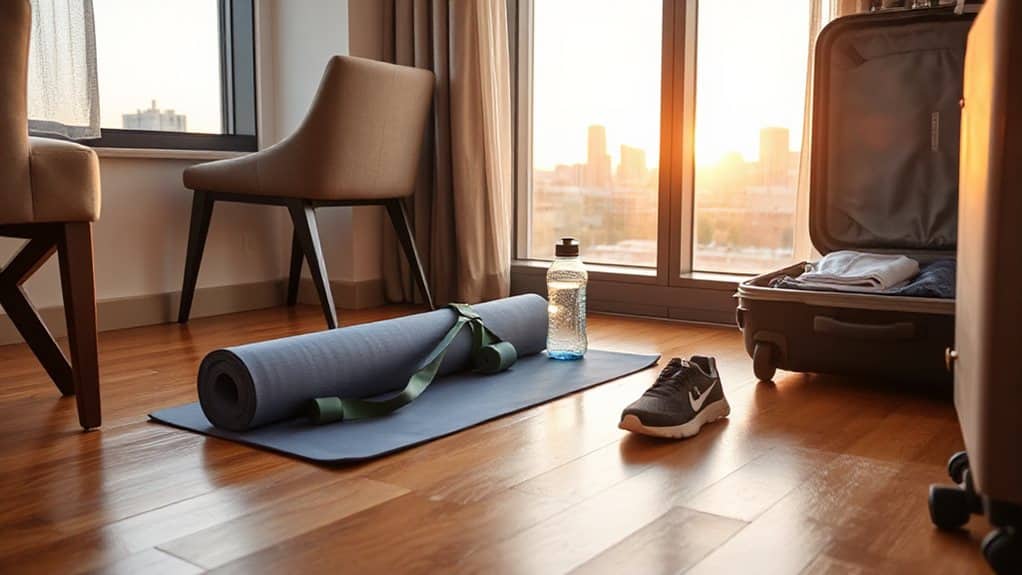
Wondering how to squeeze a full‑body workout into a half‑hour when you’re on the road? Start with a one‑minute jumping jack warm‑up, then a minute of high knees, arm circles, and marching in place, plus shoulder rolls.
Follow a circuit: 15 push‑ups, 20 squats, 20 walking lunges, 15 bicycle crunches each side, and one‑minute mountain climbers.
Repeat three times, finish with a minute of pliable stretching.
Consider packing a lightweight travel pillow to support proper neck alignment during rest and recovery after workouts, especially on long trips where 360° support helps prevent strain.
Schedule Consistent Travel‑Fitness Sessions on Your Calendar
Your 30‑minute circuit works great, but keeping it regular while on the road requires a concrete plan on your calendar. Block 10‑20 minutes each day for movement, and treat those blocks like fixed appointments. Before you leave, map nearby gyms, parks, or spaces, and pack minimal gear to signal intent. Consistent scheduling counters unpredictable itineraries, maintains rhythm, and balances indulgent meals without sacrificing freedom. Choose a quart-sized, clear toiletry bag made from durable 0.3–0.6 mm PVC or PEVA to keep your essentials organized and TSA-compliant.
Turn Sightseeing Into a Calorie‑Burning Adventure
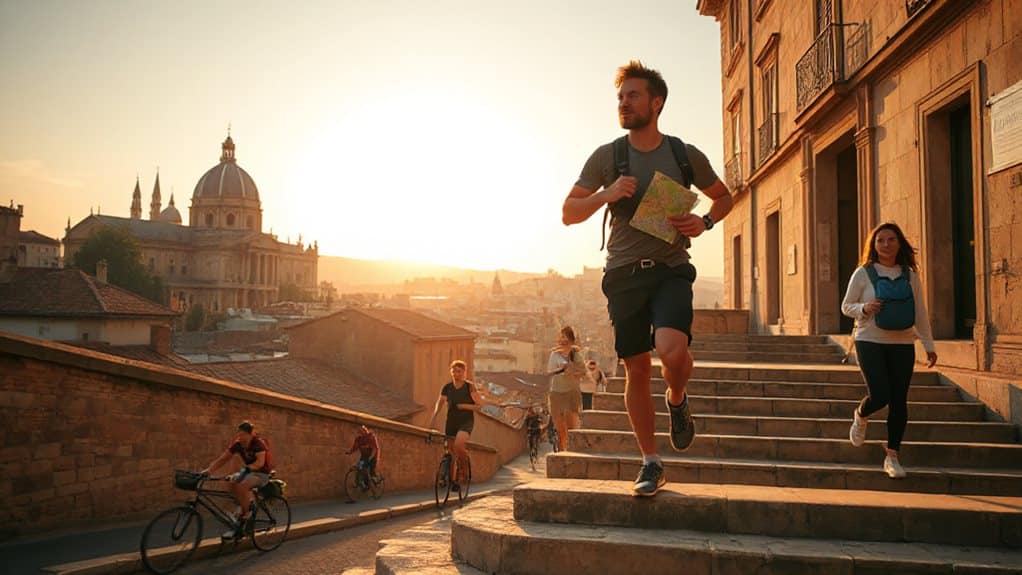
You can turn every landmark into a workout by picking scenic walking routes that let you cover miles while soaking in the view, and you’ll burn roughly 140 calories per half‑hour at a moderate pace.
Swapping a taxi for a bike or a scooter adds active transportation, and hills or uneven streets amplify the calorie count beyond flat walking.
For travelers packing gear or shopping for souvenirs, choose a luggage scale with at least 50 kg / 110 lb capacity to avoid overweight surprises at the airport.
Explore Scenic Walking Routes
Lacing up your shoes and heading out on a scenic walking route turns sightseeing into a calorie‑burning adventure, letting you explore landmarks while staying active. Choose paths like Corsica’s 200‑km ridge trail, Turkey’s Lycian Way along turquoise coasts, Peru’s Inca Trail to Machu Picchu, Jordan’s desert‑to‑mountain trek, or Croatia’s Krka River waterfalls. All offer marked routes, varied terrain, and nearby food or lodging for flexible, self‑paced travel.
Choose Active Transportation Options
After strolling scenic routes, swapping your shoes for a bike, scooter, or public‑transit leg lets you keep moving while you see the city. Active transportation cuts emissions, enhances calories, and bridges first‑ and last‑mile gaps.
Cities like D.C. offer thousands of shared bikes; e‑bikes and scooters fill short‑trip needs.
Walking, biking, or transit adds daily activity, reduces vehicle miles, and supports health benefits without sacrificing sightsee.
Integrate Movement Into Sightseeing
Integrating movement into sightseeing turns a typical city tour into a calorie‑burning escapade without sacrificing the experience. You can stroll at a moderate 3 mph pace, burning about 180 calories per hour, or pick up the tempo to 3.5 mph for 300‑plus calories.
Add a quick jog, climb a tower, or dance at a local market—each activity adds 150‑600 calories per hour while you investigate freely.
Nail Bodyweight Moves You Can Do in Any Hotel Room
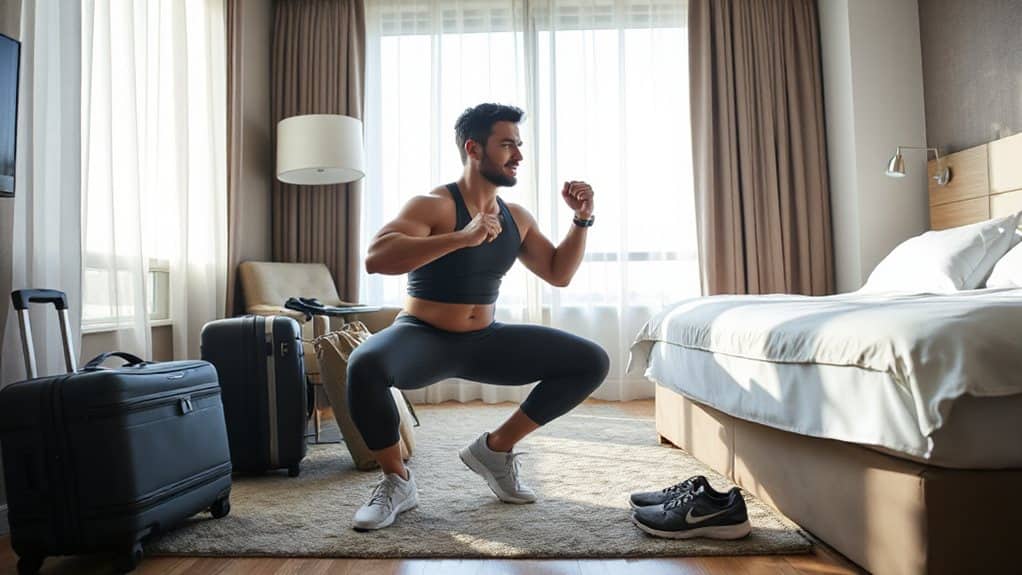
Ever wondered how you can keep your muscles working without a gym? You can squat 15‑25 reps, using a chair for incline support if needed, then switch to push‑ups on a desk or bed for chest and core.
Add inverted rows under a sturdy table, hold a plank with arm reaches, and finish with a bridge lift. All moves fit any hotel room.
Add Minimal‑Equipment HIIT Bursts to Your Routine
How can you squeeze high‑intensity interval training into a cramped hotel room without a gym? Use a 10‑minute circuit: 30 seconds each of jumping jacks, squat jumps, high knees, and mountain climbers, with 10‑second rests. Repeat three rounds after a brief warm‑up. This low‑impact, no‑equipment routine enhances metabolism, torches calories, and fits any travel schedule.
Hydrate, Rest, and Protein‑Fuel While Traveling
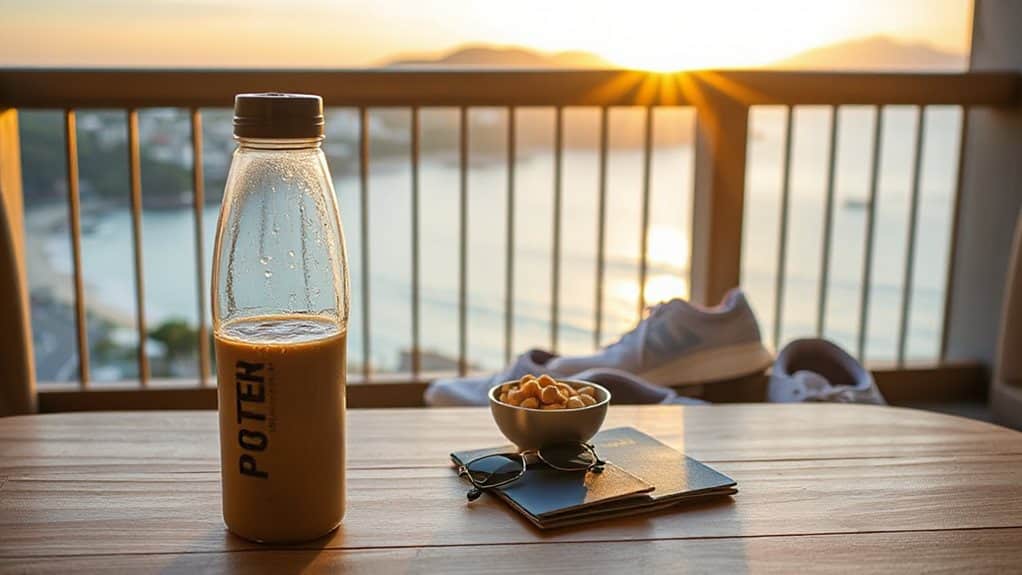
Where does your water bottle go when you’re on a flight, a bus, or a train? Keep it handy and sip every 20‑30 minutes; aim for 2.1–2.6 L daily, adding electrolyte powders or coconut water for balance. Rest in low‑humidity cabins, use collapsible bottles, and snack on fruit, yogurt, or veggies for 20 % fluid from food. Limit caffeine and alcohol 24 hours before travel.
And Finally
By planning ahead, you’ll keep fitness on track no matter where you wander. Choose hotels with workout spaces or nearby parks, pack compact gear, and follow a 30‑minute routine that fits any schedule. Schedule sessions, turn sightseeing into active time, and use bodyweight or minimal‑equipment HIIT to stay strong. Prioritize hydration, rest, and protein, and you’ll maintain health while enjoying your travels.