Use the metro or bus to hop off at lesser‑known stops and elevate Paris’s hidden gems. Wander the glass‑roofed Passages Couverts for boutique shopping and cafés, then stroll the cobbled streets of La Butte‑aux‑Cailles to see Miss Tic murals and Art Deco pools. Walk the Marais block around Musée Carnavalet for historic rooms, wander the elevated La Promenade Plantée for green views, and follow Canal Saint‑Martin’s waterside for independent shops and relaxed cafés. Check the RATP app for real‑time routes, grab a bite at nearby bistros, and visit in early spring or autumn for fewer crowds and pleasant weather—more details await if you keep going.
TLDR
- Explore lesser‑known passages (e.g., Galerie Vivienne, Passage Jouffroy) for boutique shops, cafés, and historic architecture.
- Wander village‑like districts like La Butte‑aux‑Cailles to discover street‑art murals, Art Deco swimming pools, and local cafés.
- Follow elevated green routes such as La Promenade Plantée for scenic walks, jogging, and hidden city vistas.
- Use metro and bus lines (e.g., 42, 69, 38, 72) with a Navigo card; consult the RATP app for real‑time routes.
- Visit during late spring or early autumn for milder weather, thinner crowds, and optimal café and market experiences.
Hidden Neighborhood: Passages Couverts – Why Locals Love It
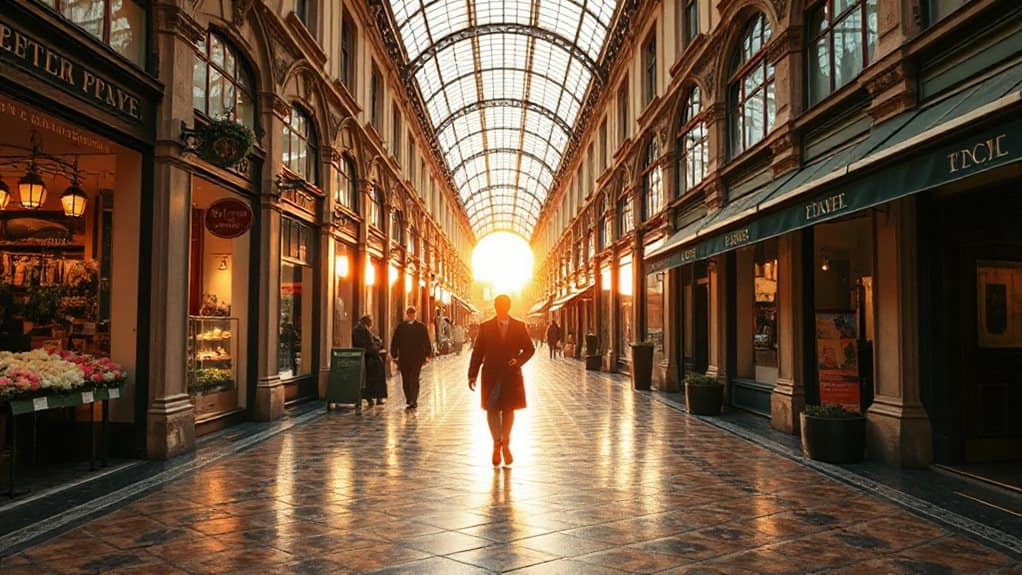
Why do Parisians keep returning to the covered passages? You’ll find glass‑roofed walkways that shield you from rain, while mosaics, stained glass, and wrought‑iron gates create a timeless atmosphere. Built between 1798 and 1860, passages like Galerie Vivienne, Passage Jouffroy, and Passage des Panoramas offer boutique shops, cafés, and shortcuts that blend historic architecture with modern convenience, preserving 19th‑century urban charm. Over 150 passages once criss‑crossed the city, but only 18 survive today. Many visitors also carry their electronics in carry-on items to keep fragile purchases and devices safe while exploring the passages, following carry-on safety guidance.
Hidden Neighborhood: La Butte‑aux‑Cailles – Cobblestones & Street Art
After wandering the glass‑roofed passages, you’ll find a very different vibe in La Butte‑aux‑Cailles, a former village that still feels like a small town tucked inside the 13th arrondissement.
Cobblestone streets wind past Miss.Tic murals, while low‑rise homes, the Art Deco Piscine, and Wallace fountains preserve its working‑class charm.
Explore Rue des Cinq Diamants for boutiques, and notice the historic plaques commemorating the 1783 balloon landing and the 1871 Commune.
This neighborhood blends history, street art, and a relaxed, village atmosphere.
You’ll also find easy access to vibrant nightlife and local bars similar to the Bastille local energy.
Hidden Neighborhood: Marais (Musée Carnavalet) – Paris History in a Block
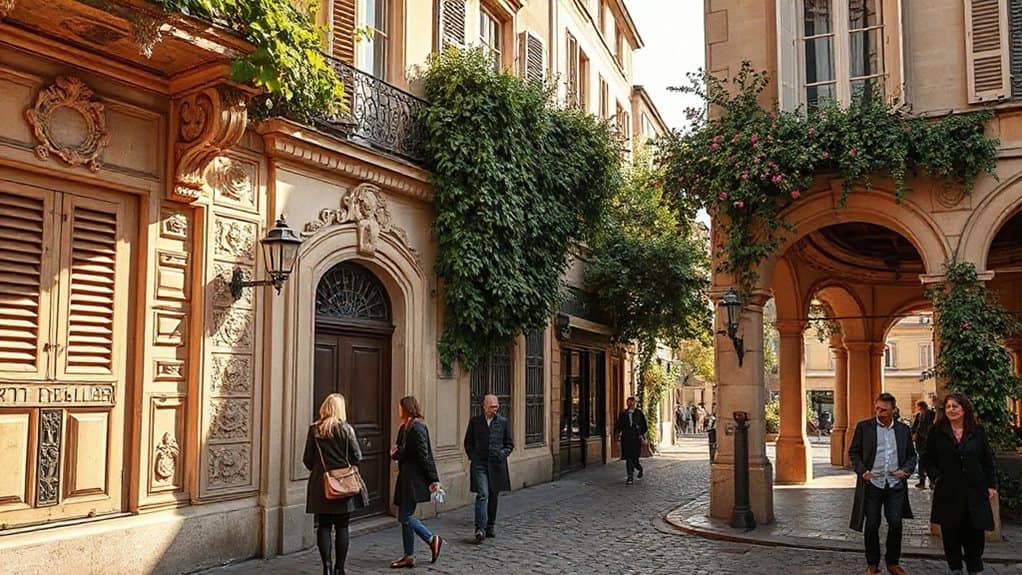
Ever wondered why the Marais feels like a living museum? You’ll find Hôtel Carnavalet, built 1548‑1560 for Jacques de Ligneris, now Musée Carnavalet, free to investigate. Its 140 rooms span two mansions, showcasing 618,000 items from prehistory to today, including a charred Hôtel de Ville door. Open Tuesday‑Sunday, 10 am‑6 pm, near Saint‑Paul Metro. Many travelers manage costs by staying in budget areas like Deira or Bur Dubai and using affordable transport options.
Hidden Neighborhood: La Promenade Plantée – Elevated Park Walk
What makes La Promenade Plantée stand out is its elevate from a 19th‑century railway line into a 4.7 km elevated park that winds through Paris’s 12th arrondissement. You’ll walk 10 m above streets, passing artisan shops in the Viaduc des Arts and leafy sections near Porte Dorée.
The 1993 design by Vergely and Mathieux offers lifts, jogging routes, and a spiral exit toward Bois de Vincennes, connecting historic rail‑bed charm with modern green space. Off-peak travel can make visiting such sites more pleasant and affordable, especially for travelers mindful of daily costs.
Hidden Neighborhood: Canal Saint‑Martin – Waterside Strolls & Cafés
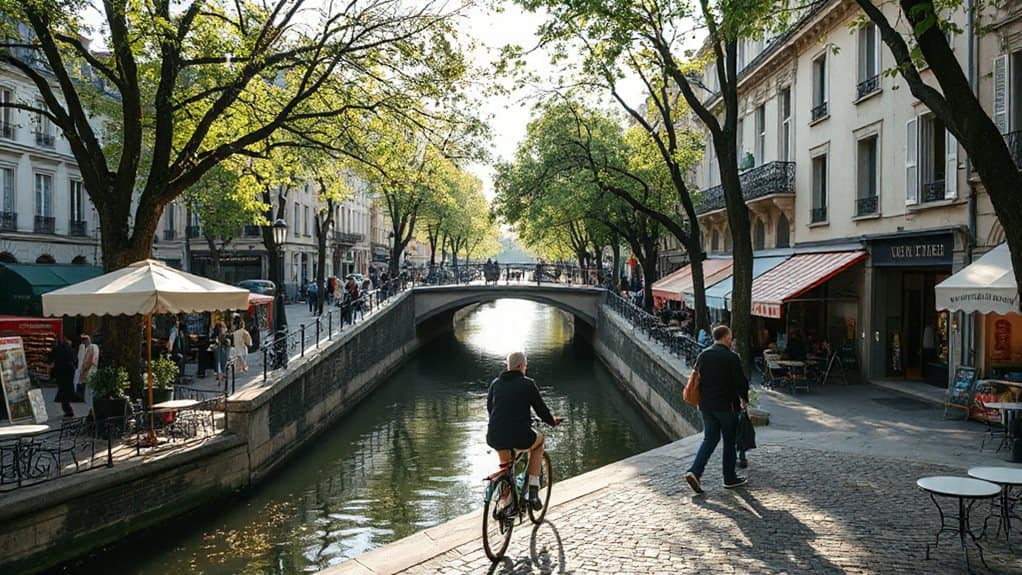
Where does the charm of Paris’s Canal Saint‑Martin begin? You’ll walk 4.6 km of low embankments, cross historic locks, and pause at the Square Frédéric‑Lemaître tunnel.
The area, built by Napoleon in 1802 and revived after 2001 cleanup, hosts independent boutiques, cafés, and the Marché Couvert Saint‑Martin. Its narrow bridges, boat‑friendly waters, and vibrant nightlife offer a relaxed, open‑air experience. Solid snacks like nuts, protein bars, and dried fruit are perfect for a picnic along the banks when passing through waterside strolls.
Hidden Neighborhood: Parc Des Buttes‑Chaumont – Hills, Cliffs & City Views
You’ll find sweeping views over Paris from the park’s 50‑meter hill, where the city spreads out beneath you.
The artificial cliffs and rock formations create a rugged backdrop that feels surprisingly natural amid the urban setting.
Along the winding paths you can set up a picnic or simply relax on the many leisure spots dotted throughout the green space.
Several riverside parks in major cities similarly combine scenic views with leisure facilities, much like Riverside destinations that link cultural sites and transport.
Views Over Paris
Ever wondered how a former quarry became one of Paris’s most striking lookout spots? From Butte Fessart you see Montmartre’s rooftops, while the Temple of the Sibyl offers 360‑degree city panoramas. The park’s 105‑meter elevation creates shifting vistas, and its cliffs frame distant landmarks. These high points let you scan Paris freely, without crowds or ticket lines.
Natural Rock Formations
From the sweeping city vistas you just explore, the park’s true character emerges in its rugged geology. You’ll see gypsum layers capped by marl, cliffs formed from 19th‑century quarry blasts, and the 50‑meter‑high Belvedere Island with its steep limestone-gypsum faces.
The grotto, arches, and Collina abrupte reveal ancient sediments, while the Temple de la Sibylle crowns a dramatic stair‑climb. These natural rock formations define the park’s wild, free‑spirit landscape.
Picnic & Leisure Spots
Where can you find the best spots for a relaxed picnic in Parc des Buttes‑Chaumont? Grab a crusty baguette from La Boulangerie par Véronique Mauclerc, cheese from Fromagerie Secrétan, and a bottle of natural wine from L’épicerie 104. Set up on the hillides, beside the lake, or near the stream. Enjoy nearby bars like Rosa Bonheur, playgrounds, pony rides, and dog‑friendly spaces, all within easy walking distance.
Getting There: Metro and Bus Tips for Each Hidden Spot
How do you reach each hidden gem efficiently? Use the metro’s 16 lines for quick hops; validate single tickets or a Navigo card on both metro and buses.
Check the RATP app for real‑time routes, especially on scenic Bus 42, 69, 38, or 72.
Buses run every 5‑7 minutes daytime, offering cheaper, less crowded rides to hidden corners.
Validate tickets before boarding and enjoy seamless transfers.
Where to Eat: Local Cafés and Bistros Near Each Neighborhood
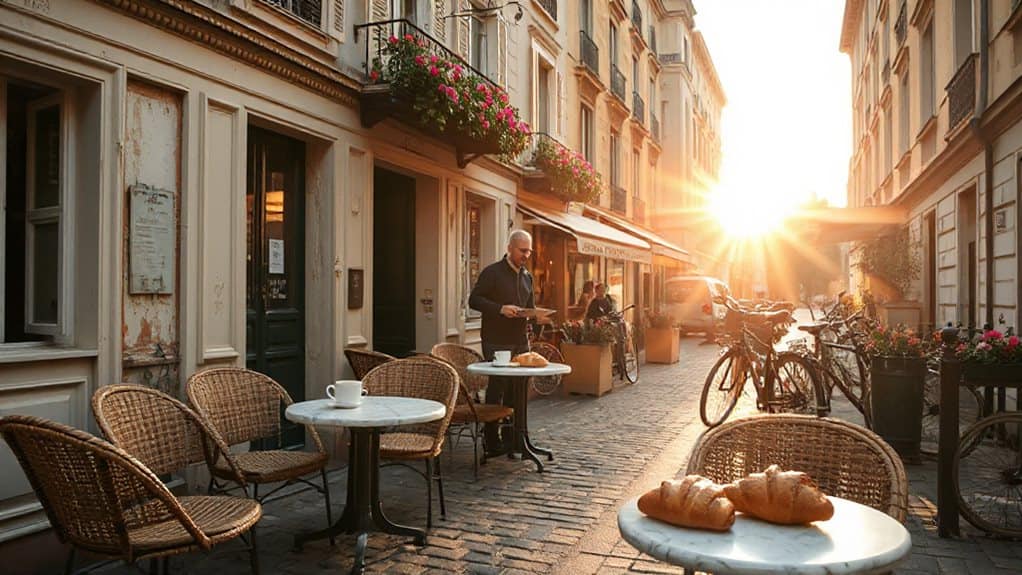
What cafés and bistros should you target when exploring each hidden corner of Paris? In Le Marais, sip brunch at Café Charlot or share plates at Donna.
On the Left Bank, linger at Le Bonaparte or enjoy Maison Fleuret’s specialty coffee.
Belleville offers La Fontaine’s terrace and Dandelion’s creative dishes.
Montmartre’s Fringe and Le Troubadour serve coffee and cocktails, while Batignolles welcomes Le Quatre Vingt Neuf and Le Verre Volé for wine and people‑watching.
Best Times to Visit: Avoid Crowds and Catch the Vibe
After sampling the cafés and bistros that pepper each Parisian neighborhood, you’ll want to plan your visit so the streets and attractions stay enjoyable rather than overwhelming. Late spring (April‑June) and early autumn (September‑October) give mild weather and thinner crowds, while January‑March offer the quietest museums and shorter lines. Summer months surge with 50 million tourists, so avoid July‑August for a freer vibe.
Putting It Together: A One‑Day Itinerary to Explore Paris’s Hidden Gems
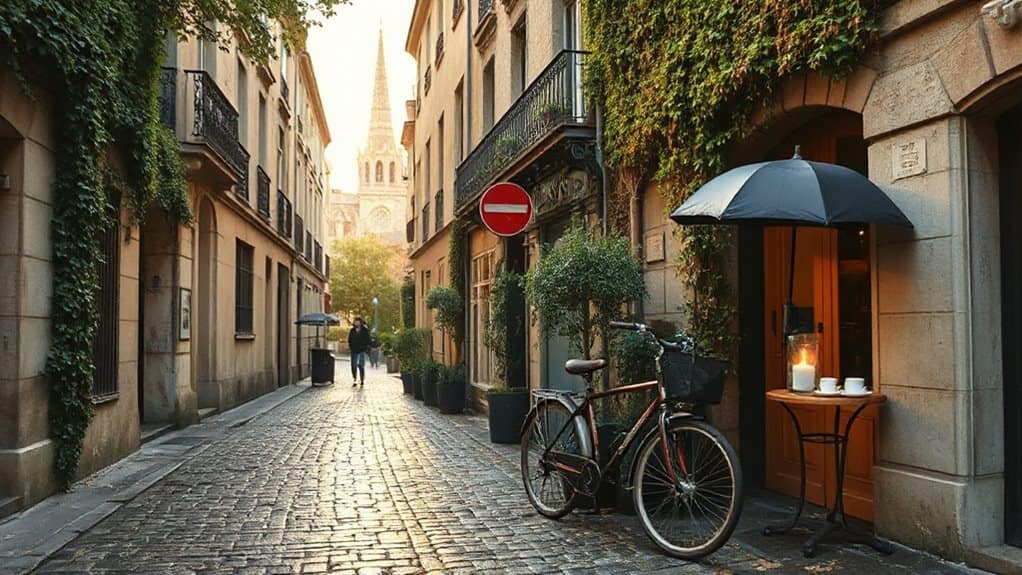
Where do you begin when you want to see Paris’s hidden gems without feeling rushed?
Start at Jardin des Plantes, cross Pont d’Austerlitz, sip coffee at Pierre Hermé, then wander Saint‑Sulpice.
Head to Île de la Cité, peek at Notre‑Dame, browse Shakespeare & Company, and relax in Luxembourg Gardens.
Cycle to Hôtel de Sully, visit Musée de l’Orangerie, explore the Catacombs, then finish on Montmartre’s winding streets and sunset at Sacré‑Coeur.
And Finally
By following the transit tips, timing your visits, and stopping at the suggested cafés, you’ll experience Paris beyond the usual sights. The hidden neighborhoods each offer distinct atmospheres—quiet passages, lively street art, historic blocks, raised greenways, and canalside charm. This itinerary maximizes exposure to local culture while minimizing crowds, allowing you to appreciate the city’s lesser‑known treasures efficiently and comfortably.


