You’ll find Brazil’s Florianópolis, Portugal’s Lisbon, Thailand’s Chiang Mai, Mexico City, and Vietnam’s Da Nang at the top of 2026’s digital‑nomad list. They combine reliable high‑speed internet, coworking hubs, affordable housing, and visa options that require proof of remote income—typically €870 in Portugal, €2,700‑€2,800 in Spain, and $2,000‑$3,500 in Brazil or Greece. Costs stay between $800 and $1,500 monthly, covering rent, food, transport, and data. Keep exploring to uncover detailed city guides, visa steps, and budget breakdowns.
TLDR
- Portugal offers a digital‑nomad visa with a €870 monthly income threshold and vibrant hubs like Lisbon and Florianópolis.
- Spain’s visa requires €2,700‑€2,800 income, providing stable internet and a thriving startup ecosystem.
- Greece’s visa sets a €3,500 income bar, featuring affordable coastal cities and strong cultural appeal.
- Brazil’s visa allows $1,400 monthly income or a $17,000 annual balance, with low‑cost living in Florianópolis and Da Nang.
- Vietnam, Colombia, and Panama deliver cheap rent, reliable internet, and easy visa options, keeping monthly budgets under $600.
Best Digital‑Nomad Destinations for 2026

Where should you set up your next remote office? Florianópolis offers surf‑ready beaches, reliable Wi‑Fi, coworking hubs, modern apartments, and good healthcare, balancing work and leisure at a low cost. Lisbon blends European culture, stable internet, and a vibrant startup scene, while Chiang Mai provides affordable cafés, yoga studios, and a 5‑year visa. Mexico City delivers bustling energy, diverse food, and ample coworking spaces. Da Nang combines coastal views, clean coworking, and a $800 monthly budget. Digital nomad visa options are expanding across these destinations, making long‑term stays easier for remote workers. Bangkok also offers underground night markets and local gems for off‑hours exploration with an authentic local vibe.
Digital‑Nomad Visa Policies Shaping 2026 Choices
After highlighting the lifestyle perks of spots like Florianópolis and Lisbon, the next step is to understand how visa policies will shape your 2026 options. You’ll need proof of remote income—€870 in Portugal, €2,700‑€2,800 in Spain, €3,500 in Greece, $2,000 in Georgia, $1,400 or $17,000 balance in Brazil—plus health insurance, clean record, and a valid passport. Durations range from six months to two years, often renewable, and processing takes 10‑45 days. Extensions usually require revisiting immigration offices. For added safety while traveling, consider using onboard systems like ADS‑B In to stay aware of nearby traffic.
Affordable Digital‑Nomad Hotspots: Vietnam, Colombia & Panama

What makes Vietnam, Colombia, and Panama stand out as affordable digital‑nomad hotspots in 2026 is their blend of low living costs, reliable internet, and easy‑to‑navigate visa options.
You can rent a studio for $220‑$300, eat street food for $1‑$3, and pay $17 for a 5 GB SIM. Motorbike rentals sit at $50‑$80, coworking spaces cost $40‑$120, and daily expenses often stay under $600 on a lean budget. Thunderstorms cause significant disruptions to travel and operations, accounting for about 41.98% of flight cancellations and delays.
Fastest Internet for Digital Nomads in 2026
How fast can you work when your connection isn’t a bottleneck? Singapore leads with a 410 Mbps median fixed speed and 416 Mbps overall, while the UAE follows at 382 Mbps fixed and 686 Mbps mobile. France, Hong Kong, and Iceland each hover around 345‑350 Mbps overall. Japan, Chile, the US, Canada, and Israel also offer solid 400 Mbps fixed connections for nomadic productivity. Be cautious when handling online transactions and offers while traveling, and verify requests through official channels before sharing payment or personal details.
City‑by‑City Digital‑Nomad Guide: Fast Internet & Affordable Living
Fast internet speeds are only useful if the cost of living lets you stay productive without draining your budget, and several cities combine both. In Chiang Mai you rent a modern studio for $300 and enjoy $0.41/GB mobile data, leaving over $1,000 disposable on a $2,000 budget.
Medellín’s low rent and coworking cafés keep monthly expenses under $1,400.
Lisbon offers European lifestyle at $1,500‑$2,200, with visa‑linked income above costs.
Istanbul’s central rent $700, cheap groceries, and efficient transport fit a $1,100‑$1,700 budget.
Yerevan stays under $2,000, with $677 rent, $135 coworking desk, and $0.98/GB data.
Visit London during March–April or September–October for fewer crowds and lower prices, making it easier to enjoy attractions and lower flight and hotel costs.
Culture, Climate & Community Highlights
Where can you find a blend of welcoming locals, pleasant weather, and active expat circles? Portugal offers Mediterranean sunshine, English‑friendly cafés, and thriving coworking hubs in Lisbon and Porto.
Spain delivers 300+ sunny days, fast internet, and affordable towns beyond Barcelona.
Mexico’s lively culture, low costs, and emerging coworking scenes create strong community ties.
Thailand combines cheap living, reliable connectivity, and bustling nomad hotspots in Bangkok and Chiang Mai.
Many nomads also prioritize travel gear like compact, machine-washable microfleece blankets for comfort and easy packing.
How to Land a Digital‑Nomad Visa in 2026?
You’ll need to meet the basic eligibility requirements, such as proof of income, a valid passport, insurance, and a clean criminal record.
The application process typically involves submitting an online form or visiting a consulate, providing remote‑work documentation, and scheduling a residence‑permit appointment, with most permits arriving within two to three weeks.
After you arrive, keep your insurance up to date, maintain the income threshold, and be ready to renew your visa according to each country’s timeline.
Eligibility Requirements Overview
How do you meet the basic eligibility requirements for a digital‑nomad visa in 2026? You must show a monthly income between $750 and $5,000, depending on the country, and prove it comes from foreign employment or self‑employment. Provide a valid health‑insurance policy covering the host nation, a lease or booking for accommodation, a passport with six‑plus months validity, and a clean criminal‑record certificate. Age limits and nationality restrictions may also apply.
Application Process Timeline
Ever wondered how long each step takes when you chase a digital‑nomad visa in 2026? First, spend 1‑2 months gathering income proof, criminal record apostilles, and any dependent certificates, then email the complete set. Book an embassy appointment within two weeks of contact; slots open 2‑4 weeks later. Attend, submit, and keep the receipt. Consular processing runs 15‑45 days, overall 4‑12 weeks to obtain the visa, then collect it within a month of approval.
Post‑Arrival Compliance Tips
After you’ve secured the visa, the next step is to meet the post‑arrival requirements that keep your status valid. Schedule an immigration appointment, bring proof of remote work, housing lease, and health insurance covering the whole stay.
Submit bank statements showing required income, a clean criminal record, and a passport with at least six months left. Expect a two‑to‑three‑week processing period before your residence permit card arrives.
Budget‑Friendly Cost‑of‑Living Insights
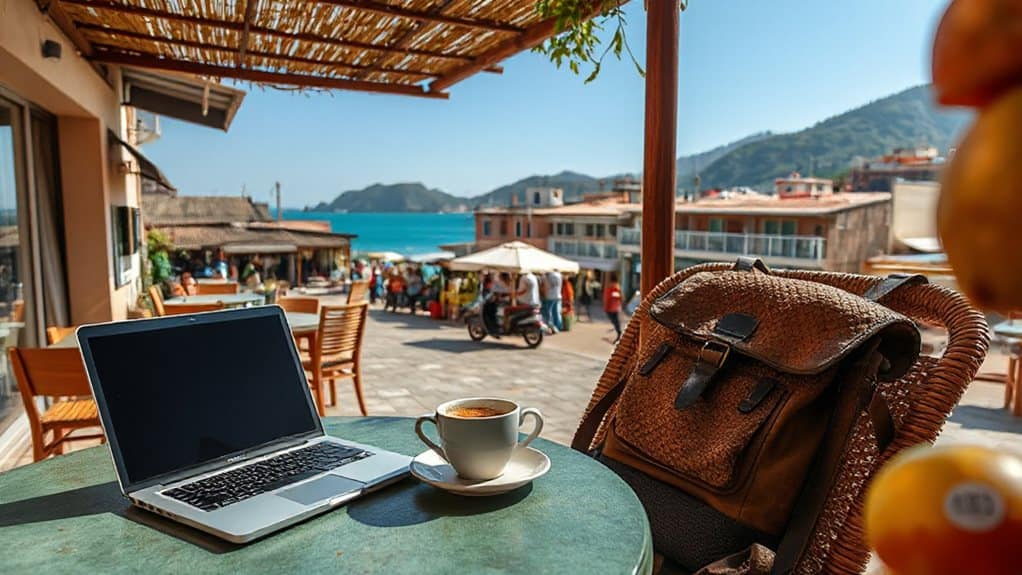
You’ll find low‑cost housing options in many regions, from studio rentals around $300 in Chiang Mai to one‑bedroom apartments under $500 in Latin‑American cities. Affordable food and drink keep daily expenses low, with street meals costing $1‑$3 and local grocery bills around $150‑$250 per month. Transportation remains budget‑friendly, too, as you can rely on cheap public transit, bike rentals, or inexpensive ride‑share services to get around.
Low‑Cost Housing Options
Many low‑cost housing options let digital nomads stretch a modest budget while still enjoying a comfortable lifestyle. In Chiang Mai you can rent a studio for $320 and stay under $1,000 total; Da Nang offers modern apartments under $400, keeping utilities low.
Medellín’s simple houses cost $350, while Cuenca and Goa both keep monthly housing under $600, preserving disposable income for work and travel.
Affordable Food & Drink
Ever wondered how far your food budget can stretch in a digital‑nomad hotspot? In Chiang Mai you can eat street meals for $1.50, keeping daily costs at $5‑$10. Da Nang offers $2‑$5 meals, while Bali’s low‑rent lifestyle covers many café visits. Yerevan’s cheap groceries and cafés elevate disposable income, and Dakar balances local flavors with moderate prices. All stay within $800‑$1,500 monthly totals.
Budget‑Friendly Transportation Choices
After enjoying cheap meals, the next cost to watch is getting around. Monthly local transport passes range from $10 to $40 in low‑expense cities, with Da Nang at $40 and Medellín at $60. Scooter rentals stay under $80 across Asia, while India’s combined scooter and transport averages $50. Mobile data or eSIMs cost $10–$30, keeping overall transport budgets near $80 for solo nomads.
And Finally
By 2026 you’ll have a clear set of options: prioritize countries with strong visa programs, reliable high‑speed internet, and low living costs. Vietnam, Colombia, and Panama remain affordable hotspots, while Estonia, Portugal, and Georgia offer streamlined visa processes. Check each destination’s internet speed, climate, and community before committing. With the right research, you can match your work style to a location that balances cost, connectivity, and quality of life.