
On a plane, you can carry lithium-ion batteries up to 100 watt-hours (Wh) in your carry-on luggage without approval. Batteries between 100 and 160 Wh require airline approval and are limited to two per passenger. Batteries over 160 Wh are generally not permitted. To guarantee safety, protect spare batteries from short circuits and pack them carefully. If your battery exceeds these limits, you’ll need to follow specific procedures. Continue to investigate this topic to learn more about airline regulations and safety tips.
TLDR
- Lithium-ion batteries up to 100 Wh are allowed in carry-on luggage without approval.
- Batteries over 160 Wh are prohibited unless specifically approved by the airline.
- Batteries between 100 Wh and 160 Wh require airline approval, with a maximum of two per passenger.
- Watt-hours are calculated by multiplying voltage by capacity in ampere-hours (Ah).
- Proper packing, such as protective cases, is essential for safety and compliance during travel.
What’s the Maximum Watt-Hour Limit for Batteries on Flights?
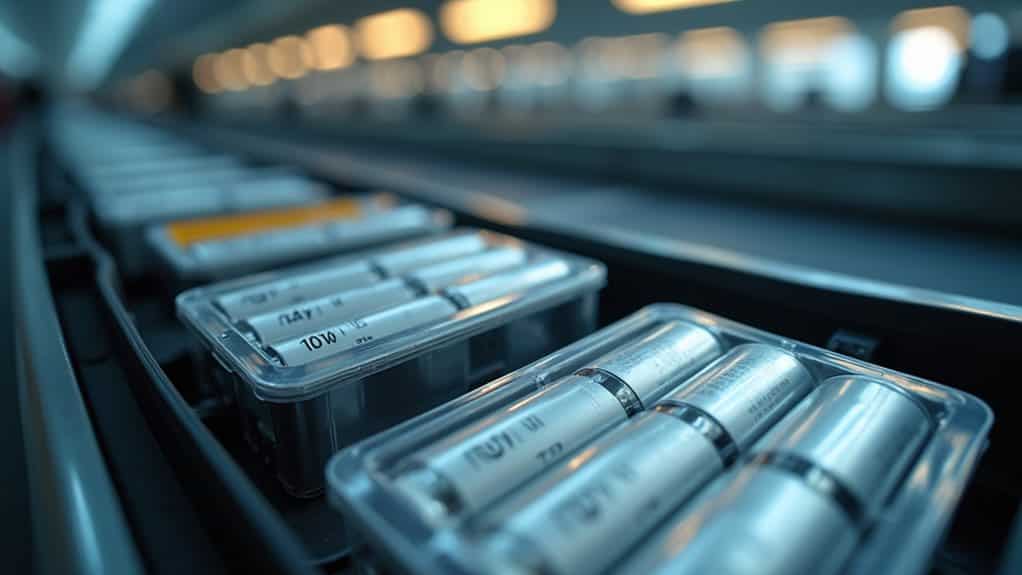
When flying with batteries, it’s important to know the maximum watt-hour (Wh) limits set by airline regulations and aviation authorities. Lithium-ion batteries with a capacity of 100 Wh or less are generally allowed in carry-on baggage without approval. Batteries over 160 Wh are prohibited unless specifically approved, ensuring battery safety and compliance for portable electronic devices on passenger aircraft. You should also remember that spare battery limits generally require batteries to be individually protected in carry-on luggage to prevent short circuits during screening and travel.
How to Calculate Your Battery’s Watt-Hours Before Traveling
Calculating your battery’s watt-hours before traveling is an important step to guarantee compliance with airline regulations. To do this, multiply the voltage by the battery capacity in ampere-hours (Ah). If given in milliampere-hours (mAh), divide by 1,000 before multiplying. This battery calculation helps confirm your lithium batteries meet airline safety standards and stay within the Wh rating limits. When you’re packing for a flight, also review any related airline carry-on storage rules since device or accessory size/placement can affect whether it’s allowed at your seat.
Which Batteries Are Allowed on Planes? : Limits for Lithium-Ion and Lithium Metal
Are you aware of the specific limits airline regulations set for carrying lithium batteries?
Lithium-ion batteries up to 100 watt-hours are generally allowed in carry-on baggage without approval.
Batteries over 100 Wh but not exceeding 160 Wh need airline approval, limited to two.
Lithium metal batteries with over 2 grams of lithium are prohibited, regardless of capacity limits.
seat belt extenders are available from cabin crew if a seat belt does not fit properly.
What Should You Do If Your Battery Exceeds the Allowed Watt-Hours?
If your battery exceeds the allowed watt-hours, you need to obtain airline approval before traveling. For batteries over 160 Wh, you can’t carry them on passenger planes, but those between 100 and 160 Wh require airline permission, and you may be limited to two. Watt-hours (Wh) ratings determine whether your battery is permitted on a passenger flight. Always verify your battery’s Wh rating and contact your airline to confirm you follow proper packing and approval procedures.
Obtain Airline Approval
When your lithium battery exceeds 100 Wh but falls between 101 and 160 Wh, you need to obtain airline approval before your flight.
Follow airline procedures by contacting customer service or checking their website, providing battery specifications, watt-hour rating, and manufacturer details.
This approval process guarantees compliance with battery regulations and allows you to carry-on batteries within the battery restrictions.
Properly Pack Batteries
Properly packing batteries that exceed the watt-hours limit is crucial for airline safety and compliance.
Use protective packaging to shield battery terminals, such as tape or protective cases, to prevent short circuits.
Always carry these batteries in your carry-on baggage, declare them to airline staff, and follow specific airline approval procedures to guarantee safe handling under lithium battery regulations.
How to Pack and Protect Your Batteries for Safe Travel
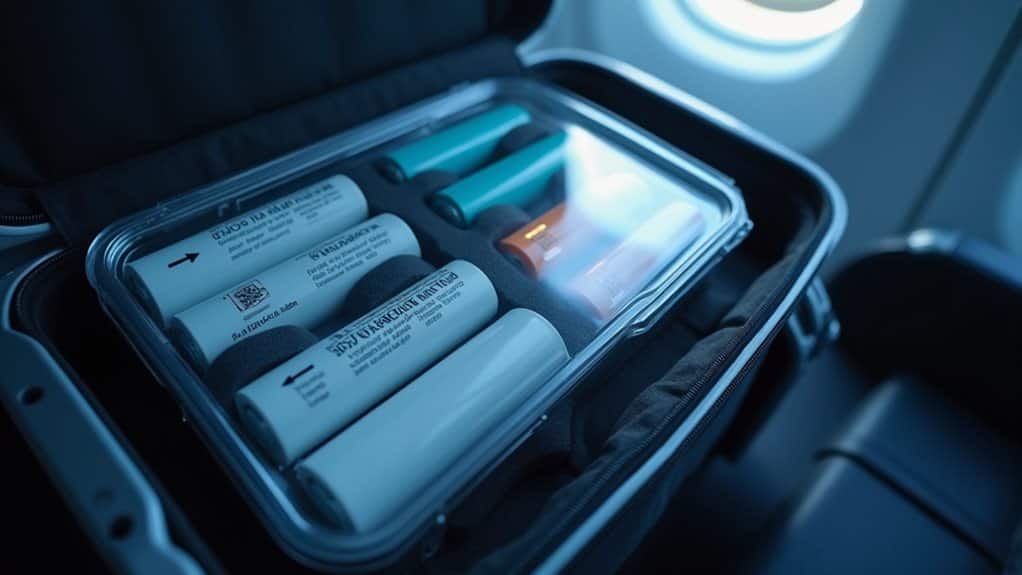
To guarantee your batteries are transported safely, you need to take specific precautions when packing them for travel. Use protective cases or cover terminals with tape to prevent short circuits. Pack spare lithium batteries in original packaging or protective pouches. Keep them in carry-on baggage for easy access, and make certain they aren’t crushed or damaged. Proper battery protection guarantees safe travel and compliance, and it also complements TSA blanket guidance—blankets are allowed in carry-on—if you’re bringing personal items for comfort during the trip.
Common Questions About Battery Limits and Flying : Quick Answers
Understanding the limits on battery watt-hours is essential for safe and compliant air travel.
Airline regulations specify that batteries up to 100 Wh are allowed in carry-on luggage without approval.
Wh rating limits between 100 and 160 Wh need airline approval, limited to two per passenger.
Batteries over 160 Wh are prohibited unless approved for medical or essential use, ensuring flight safety and compliance.
And Finally
Understanding battery watt-hour limits is essential for safe air travel. Most airlines allow batteries up to 100 watt-hours in carry-on luggage, with some permitting up to 160 watt-hours for larger batteries, such as those used for professional equipment. Always check your battery’s watt-hours before flying, pack and protect your batteries properly, and follow airline regulations. If your battery exceeds the limits, you’ll need special approval or to ship it separately. Staying informed helps guarantee a smooth and safe voyage.


