The best cabin location on a cruise ship is usually midship on lower decks, as it offers the most stability and reduces noise from entertainment venues or active areas. These cabins are also near elevators and main amenities, providing easier access without excessive movement. Avoid cabins near pools, theaters, or crowded zones for a quieter experience. Prioritizing proximity to safety exits and elevators balances comfort with convenience. Continuing will uncover more tips to optimize your cabin choice.
TLDR
- Choose midship cabins on lower decks for optimal stability and reduced motion.
- Select cabins near central elevators for easy access to amenities and main areas.
- Avoid proximity to noisy venues like pools and entertainment zones.
- Opt for cabins surrounded by other passenger rooms for enhanced privacy and sound insulation.
- Consider safety and accessibility features when selecting cabins near emergency exits and elevators.
How Cabin Location Affects Stability and Noise
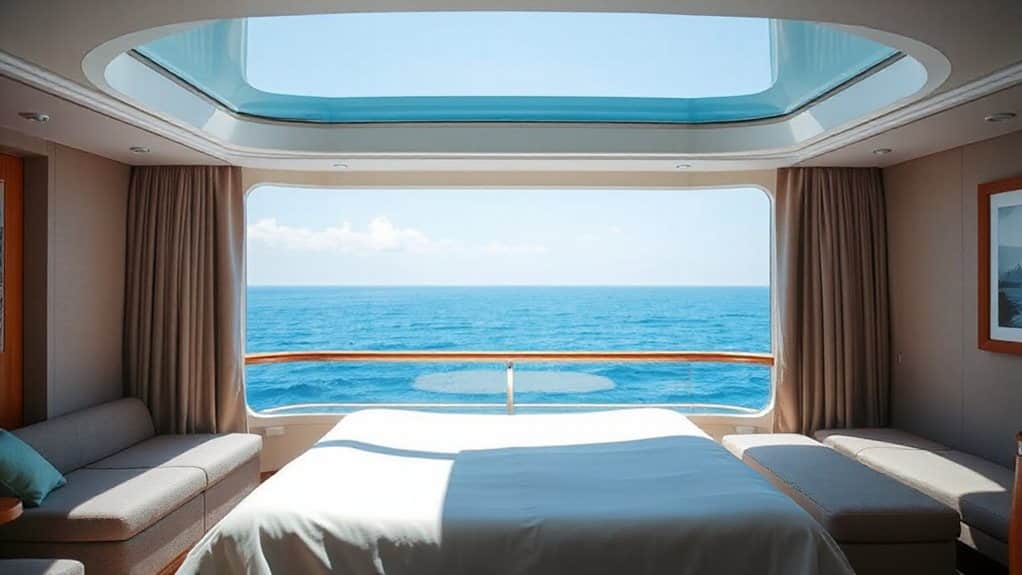
The location of your cabin on a cruise ship can significantly impact your comfort by affecting both stability and noise levels.
Midship cabins offer greater stability and lower noise, making them ideal for restful sleep.
Upper decks tend to be noisier.
Aft and forward cabins experience more vibrations and creaking, especially near entertainment venues or active areas.
When you’re trying to improve comfort during travel to the ship, consider a foot hammock or other adjustable foot support to reduce leg fatigue before and after sailing.
Why Midship Cabins Are Best for Smooth Sailing
Choosing a cabin located midship offers several advantages for passengers seeking smooth sailing. Midship cabins are near the ship’s pivot point, reducing ship motion and seasickness risks.
They provide better stability, noise reduction, and comfort, thanks to their central cabin location. Additionally, these cabins often offer easier access to elevators and main amenities, enhancing onboard convenience. For travelers who like a “core” base with minimal hassle—similar to staying centrally in Central and Sheung Wan for quick access to top sights—midship positioning helps you move around the ship more efficiently and enjoy the cruise with less disruption.
How to Find Quiet Cabins Away From Noisy Areas
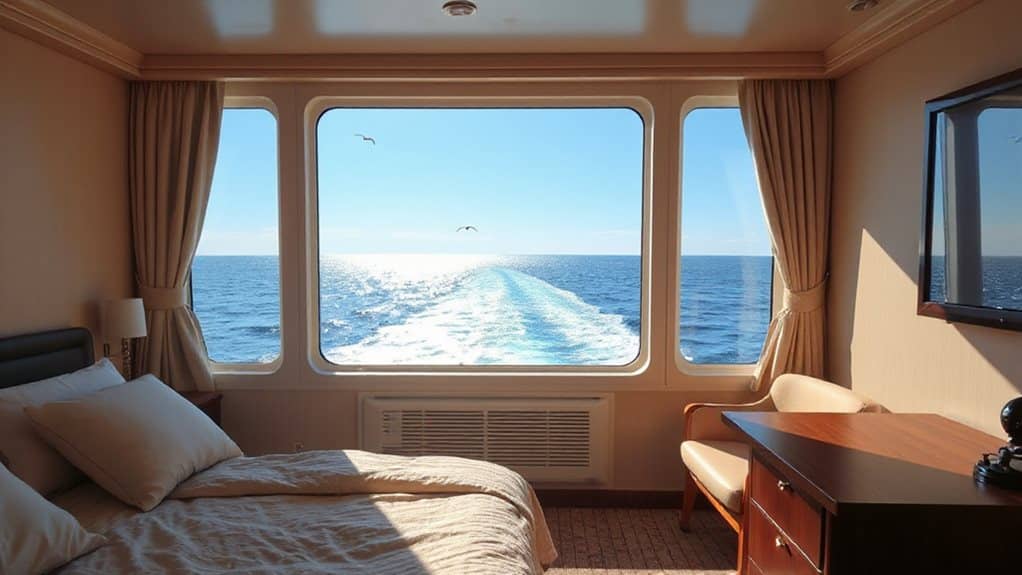
Finding a quiet cabin on a cruise ship involves strategic planning and careful selection of location. Look for midship cabins on lower decks, where noise reduction and sound insulation are better. Use ship deck plans to avoid high-traffic areas like pools or entertainment venues. Choose cabins surrounded by other passenger rooms for added privacy and quieter surroundings. As with choosing the best Bangkok district, picking the right base makes it much easier to limit disturbances and reach key sights comfortably.
Choosing the Right Deck Level for Comfort and Access
Choosing the right deck level can profoundly impact your comfort and access on a cruise ship. Midship decks, around decks 8 to 10, tend to offer better stability and minimize motion, making them ideal for those prone to seasickness. Lower decks are often quieter and more stable. Upper decks can be noisier and experience more movement, which may not suit everyone. If you’re worried about safety restraints or accessibility, remember that seat belt extenders are available onboard if a belt doesn’t fit properly.
Midship for Stability
Have you ever wondered why midship cabins are often recommended for a smoother and more comfortable cruise experience? Positioned near the ship’s center, these cabins offer greater stability, especially on lower decks, reducing seasickness and ship’s movement.
They provide a calmer experience by minimizing sway and vibrations, making them ideal for travelers seeking comfort and stability during their voyage.
Lower Decks for Comfort
Lower decks are often the most stable and comfortable locations for cabins on a cruise ship, especially for travelers prone to seasickness. Staying on lower decks, particularly mid-ship, offers better stability and noise reduction.
These quiet cabins are close to amenities like dining and pools, providing easy access while mitigating seasickness through reduced vibrations and movement.
Avoid Noisy Decks
To guarantee a restful cruise experience, it’s important to avoid cabins located near noisy areas such as the pool deck, gym, or galley.
Choosing a cabin on the ship’s center and away from noisy decks minimizes vibration and engine room noise.
Reviewing the deck plan helps identify quiet areas, reducing disturbances and ensuring better noise reduction during your voyage.
Proximity to Elevators and Amenities: What Works Best
Choosing a cabin near the central elevators often offers the most convenient access to key areas of the ship, such as dining rooms, theaters, and pools.
Elevator proximity and amenities are best accessed from a central location on mid to lower decks, balancing convenience with noise levels.
Consider deck placement and ship layout to find a quiet, accessible spot that suits your needs, while also keeping valuables secure in busy transit-like areas with pickpocketing risks.
Accessible Cabins for Travelers With Mobility Needs
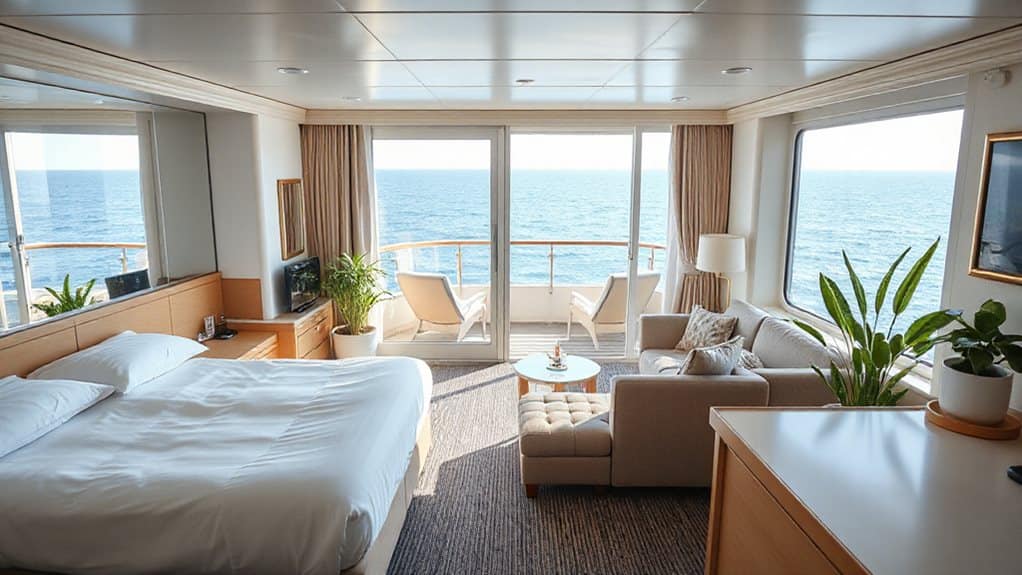
Accessible cabins are typically located near main elevators and emergency exits to guarantee quick and easy access.
They feature wider doorways, grab bars, and roll-in showers to accommodate mobility aids like wheelchairs and walkers.
Choosing a cabin close to essential amenities and safety features can greatly enhance comfort and security during your cruise.
If you use nicotine vape devices, keep in mind that TSA prohibits use on planes, and plan accordingly once you’re aboard.
Proximity to Elevators
Have you ever wondered why accessible cabins are often located near main elevator banks on a cruise ship? This elevator proximity offers easy access to onboard amenities, dining, and entertainment, especially on lower decks.
Positioned in a central location, these cabins provide efficient routes for mobility, reducing travel time and ensuring you can move freely and comfortably throughout your voyage.
Accessible Bathroom Features
What features make the bathrooms in accessible cabins especially suited for travelers with mobility needs? Accessible cabins include accessible bathrooms with wider spaces, grab bars, and roll-in showers that meet ADA standards. These features accommodate mobility aids like wheelchairs and walkers, with lowered sinks and accessible storage, providing safety, convenience, and easy access to ship facilities and emergency exits.
Near Emergency Exits
Why is choosing an accessible cabin near an emergency exit particularly beneficial for travelers with mobility needs? These cabins are strategically located near emergency exits, ensuring quick evacuation routes.
Situated on lower decks, they meet safety standards, with wider doorways, grab bars, and ample space for mobility aids.
This placement provides easier access to evacuation routes and safety features during emergencies.
Top Tips for Picking Your Perfect Cruise Cabin
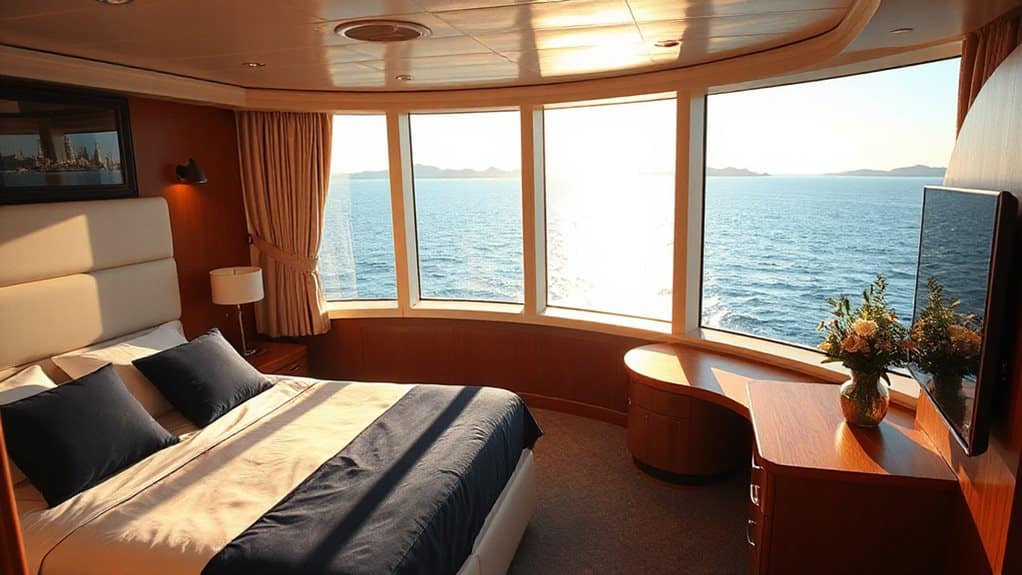
Choosing the right cabin is essential for a comfortable and enjoyable cruise experience. Opt for midship cabins on lower decks to minimize motion sickness and vibrations, ensuring a smoother ride.
Check the deck plan to avoid noisy areas like theaters and engine rooms. Select cabins with neighboring rooms to improve sound insulation and noise reduction, especially in balcony cabins near central elevators.
And Finally
Choosing the right cabin location enhances your cruise experience by improving stability, reducing noise, and offering convenient access to amenities. Midship cabins generally provide smoother sailing and less motion, while higher decks offer better views and easier access. Consider proximity to elevators if mobility is a concern, and select quiet areas away from busy zones for rest. By understanding these factors, you can select a cabin that meets your comfort and accessibility needs.