
Watch for drivers shouting “taxi” inside airports or quoting flat rates over €60—real cabs wait outside in marked ranks with lit signs, meters, and logos like G7. Avoid tuk-tuks near attractions; they’re often unlicensed. Use bank ATMs, not tourist kiosks, and always choose euros over your home currency. Compare menus, ask for tap water, and check bills for surprise charges. Stay alert for fake gold scams and pickpockets at major sites. Spotting these signs helps you avoid common traps—and there’s more to stay aware of as you investigate.
TLDR
- Fake taxis operate inside airports and stations; always use licensed taxis waiting outside with lit signs and proper meters.
- Avoid private ATMs in tourist zones; use bank-owned machines and select euros to dodge hidden fees and currency markups.
- Skip restaurants near major attractions with menus over 50% pricier than local spots to avoid inflated tourist pricing.
- Decline unsolicited help or offers from strangers near landmarks, especially for found rings or free items, to avoid scams.
- Exchange money at official banks instead of street kiosks to get fair rates and avoid counterfeit bills or excessive markups.
How to Spot a Fake Taxi in Paris
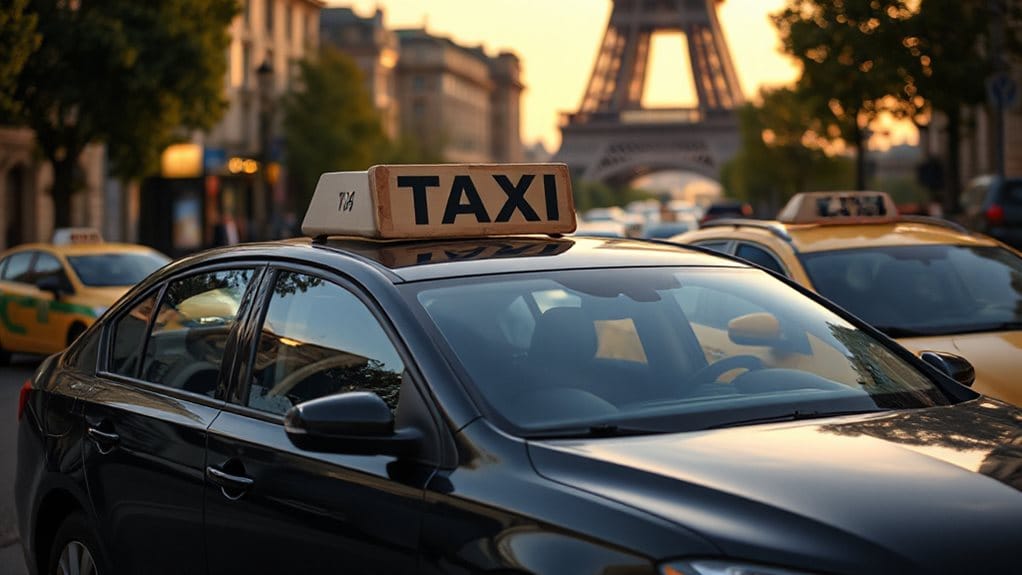
You’ll often spot fake taxis right where travelers are most vulnerable—inside airport terminals and train stations like CDG, Orly, or Gare du Nord.
Avoid drivers shouting “taxi” indoors. Real cabs wait outside in marked ranks. Many airports post official instructions about taxi ranks and safety taxi ranks.
Skip any car without a lit taxi sign, meter, or company logo like G7.
Never accept flat fees over 60 euros from CDG. Demand the meter, card payment, and a receipt.
Official Paris taxi drivers never wait inside terminals or stations, so if a driver approaches you indoors, remember that official drivers wait outside.
Avoid Tuk-Tuk Scams at Major Tourist Sites
Watch out for tuk-tuks touting for business near Paris’s top attractions—most operate illegally and prey on unsuspecting tourists. They often lack licenses, insurance, or safety checks, and many drivers don’t have proper permits.
Scammers quote low flat rates but charge per person, inflating prices mid-ride. Avoid tuk-tuks at landmarks like the Eiffel Tower or Louvre—opt for legal operators with fixed rates, card payments, and EU-certified vehicles instead. Many illegal operators also fail to follow safety regulations, increasing risk for passengers.
Dodge Hidden Fees at Paris ATMs
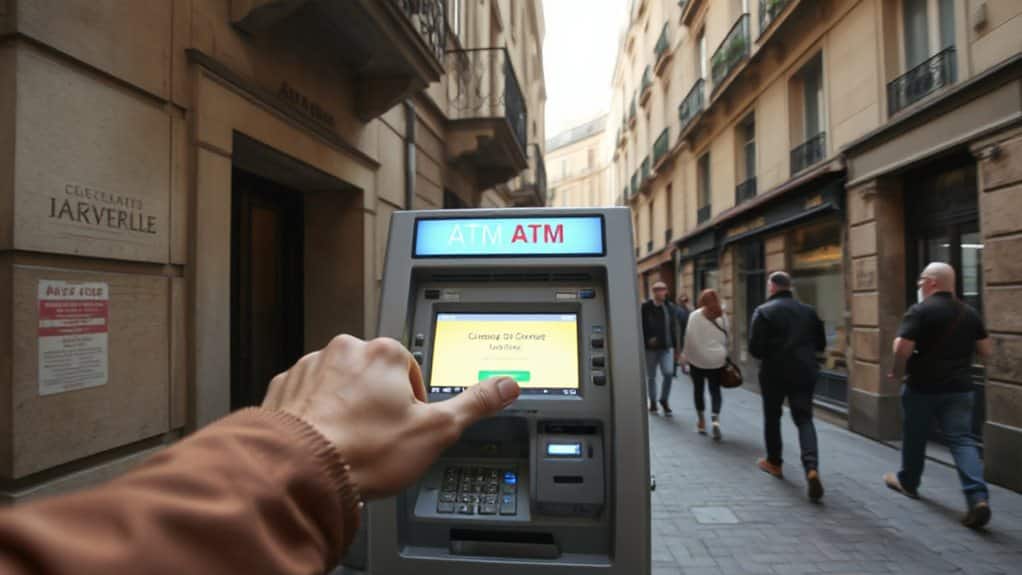
You’ll often pay €4–€6 at private ATMs in tourist areas, especially those run by independent operators like Euronet.
Always choose bank or post office ATMs instead—they’re usually free and don’t add unfair exchange rate markups.
Before withdrawing, check your screen for fees and pick euros over your home currency to avoid variable currency conversion charges.
Also be aware that some transportation hubs and major tourist spots have heightened enforcement of fare and baggage rules, so plan ahead to avoid last-minute charges.
High-Fee ATM Locations
Often tucked inside lively transit hubs or near major landmarks, high-fee ATMs in Paris can quickly drain your travel budget with hidden charges. Avoid machines at airports, train stations, and tourist spots—they’re often run by private operators like Euronet or Travelex.
These charge €4–€6 plus extra fees. Stick to bank-owned ATMs from BNP Paribas or Credit Agricole, clearly branded and located outside branches, for fee-free withdrawals.
Unfair Exchange Rates
Steer clear of hidden costs by understanding how exchange rate markups can quietly eat into your budget at Paris ATMs.
When prompted, always choose euros—never your home currency—to avoid Variable Currency Conversion (DCC) fees. DCC applies poor, unregulated rates, costing you 3–7% per transaction.
Independent ATMs often push DCC; use bank or post office machines instead for fair, transparent rates.
Plan Withdrawals Ahead
Avoiding poor exchange rates is just one part of managing your money wisely in Paris—how and where you withdraw cash also plays a major role in keeping fees under control.
Use bank-owned ATMs like BNP Paribas or Credit Agricole to skip operator fees. Withdraw larger amounts less often to reduce transaction counts. Choose debit over credit, and confirm your bank’s international fees and limits before you go.
Where to Exchange Euros Without Getting Ripped Off
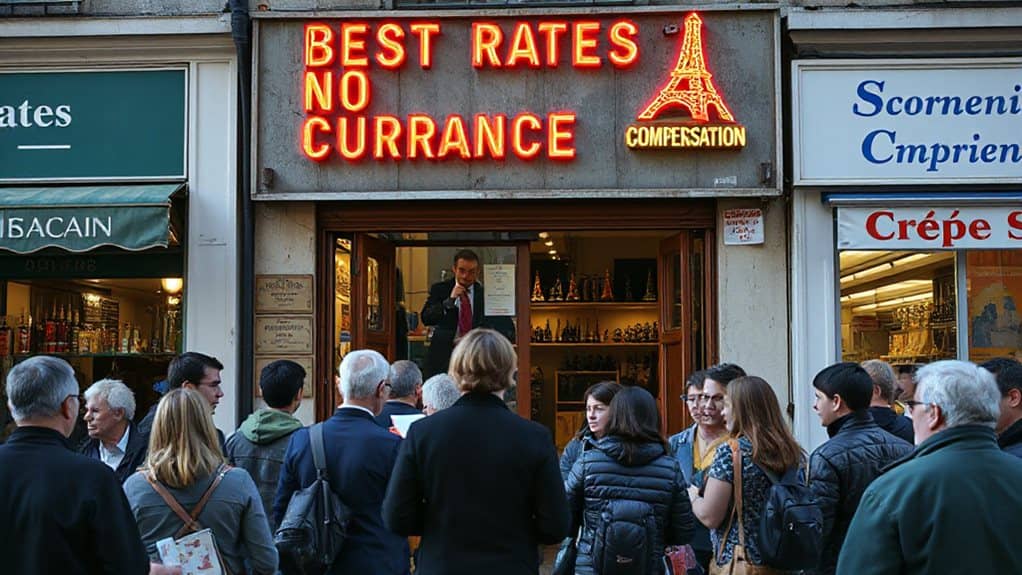
You’ll get the best rates by exchanging money at major banks like BNP Paribas or Société Générale, which offer transparent fees and values close to the ECB reference rate.
Avoid tourist-heavy spots like the Eiffel Tower, where street kiosks charge markups of 10–20% and sometimes hand out counterfeit bills.
Instead, use ATMs from established bank networks and always choose to be charged in euros to avoid variable currency conversion scams.
If you need extra assurance about transaction safety, consider checking the ATM or bank for posted information on seat belt extenders and customer service before using their services.
Best Banks For Exchange
Start your euro exchange strategy by heading to trusted exchange offices or bank ATMs across Paris, where transparent rates and minimal fees protect your budget.
Use BNP Paribas, Société Générale, or Crédit du Nord ATMs for no fees and real-time conversion.
Pick euros, not your home currency, to avoid fluctuating conversion.
Check rates online first, carry ID, and withdraw during business hours for best results.
Avoid Tourist Zone Kiosks
Stepping off the train at Gare du Nord or exiting a taxi near the Eiffel Tower, you’re likely to spot bright blue kiosks and standalone ATMs promising fast euro exchanges—convenient, but often costly.
These tourist-zone machines, like Euronet, charge hidden fees and use poor rates. Avoid them. Instead, use bank ATMs, check rates online, and never accept unsolicited help. Your wallet will thank you.
Use Atm Networks Wisely
Tap into the right ATM network, and you’ll keep more euros in your pocket. Use bank ATMs like LCL or BNP, not Euronet, to avoid hidden fees.
Always choose transactions in euros—never USD—to dodge variable currency conversion scams. Withdraw larger amounts less often, check your daily limit, and use your debit card, not credit, to skip extra charges.
Avoid Overpriced Tourist Restaurants in Paris
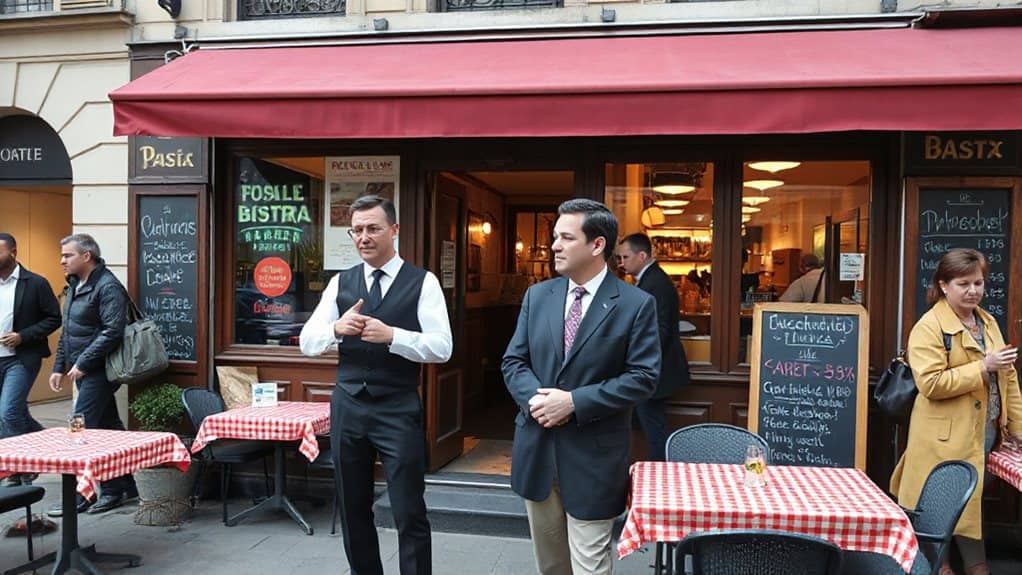
Often, tourists in Paris unknowingly pay far more than locals for the same meal, especially near major attractions like the Eiffel Tower.
You might get charged €6 for garlic bread or bottled water automatically added to your bill.
Servers sometimes suggest pricier options or adjust tip amounts without asking.
Always check menus outside, compare prices, and ask for tap water—it’s free by law.
Review your bill carefully and question unexpected charges.
Sign up for travel credit cards to earn miles and free flights that can offset overall trip costs.
How the Gold Ring Scam Works Along the Seine
You might spot someone suddenly crouch as if something slipped from their hand, and just like that, the gold ring scam begins. They “find” a ring, claim it’s gold, and insist you keep it. Moments later, they ask for a few euros as thanks. The ring is fake—usually brass. Stay alert near the Seine, especially around Pont d’Alma or tourist spots. Ignore, walk away, and avoid conversation to stay safe. Travelers should also be aware that carrying items with drug residue can increase scrutiny and confiscation risk.
Stay Alert for Pickpockets at the Eiffel Tower & Louvre
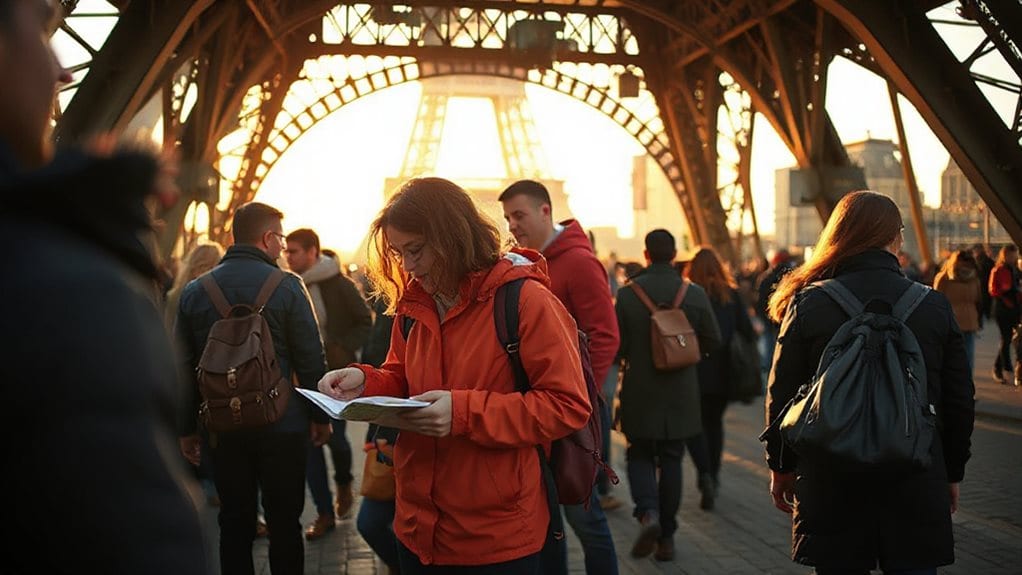
Keep your belongings secure when visiting the Eiffel Tower and Louvre, as these iconic sites rank among the top targets for pickpockets in Paris.
Watch for distractions like strangers asking questions or spilling drinks.
Stay alert in crowds, especially near entrances, elevators, and metro doors.
Organized groups often work together, so if something feels off, trust your instincts and move away.
Don’t Get Stuck With Surprise Bills: Check Prices First
How much should you really expect to pay for a simple café meal near the Eiffel Tower? Considerably less than what tourist-targeted spots charge.
Check menus at multiple nearby cafés—prices over 50% higher than local spots signal overcharging. Always verify water, bread, and service charges. Tourists often pay more for the same meal, so compare first and choose wisely to keep your budget under control.
And Finally
You now know how to avoid common tourist traps in Paris. Watch for unmarked taxis, pushy tuk-tuk operators, and ATMs with hidden fees. Exchange money at official bureaux de change, check restaurant prices before sitting down, and stay alert for scams near the Seine. Pickpockets target crowded spots like the Eiffel Tower and Louvre, so secure your belongings. Always confirm prices upfront to dodge surprise charges. Stay aware, plan ahead, and enjoy your trip without unnecessary hassles.


