Skip rush hour by riding trains before 7 a.m. or after 9:30 a.m., when they’re less crowded. Avoid overpriced souvenirs on Nakamise Street—explore nearby local markets instead. Check café menus carefully for added service charges. Respect temple rules: remove shoes, stay quiet, and don’t touch sacred items. Use standard Suica cards for refunds, carry cash for small vendors, and steer clear of street scams in Akihabara—better choices await with a little insider knowledge.
TLDR
- Avoid rush-hour trains by traveling before 7 a.m. or after 9:30 a.m. to escape extreme crowding.
- Skip overpriced souvenirs on Nakamise Street; explore nearby local markets for authentic, fairly priced crafts.
- Check menus carefully for service charges in cafes, which can add 10% or more to your bill.
- Respect temple etiquette by removing shoes, staying quiet, and walking on pathway sides, not the center.
- Use standard Suica cards instead of Welcome Suica to avoid nonrefundable fees and expiration issues.
Beat Tokyo’s Rush Hour: Like a Local
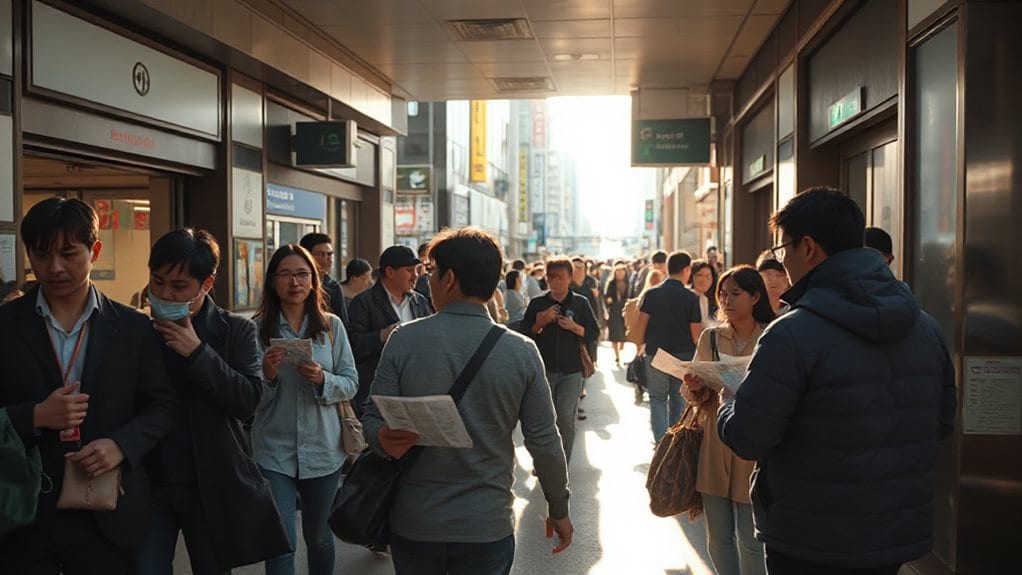
You’ll often find Tokyo’s trains packed to the brim during rush hour, especially between 8 a.m. and 9 a.m., when crowds peak on weekday mornings.
Avoid 7:30–9:30 a.m. and 6–8 p.m. for easier travel. Ride before 7 a.m. or after 9:30 a.m. Morning trains hit 139% capacity—less crowded than before, but still tight. Use weekends or women-only cars for comfort and freedom. Tokyo Metro adjusts train pacing to minimize delays, ensuring smoother service even during high demand, thanks to techniques like evening out delays across trains. Many visitors in Bangkok also find street food readily available at almost any hour, offering quick meals near major stations.
Avoid Nakamise Street Rip-Offs
Stepping off the train outside Asakusa Station, you’ll likely follow the steady flow of tourists down the lively approach to Senso-ji Temple—right into the heart of Nakamise Street.
Shops here sell overpriced, mass-produced souvenirs and snacks, often lacking authenticity.
Crowds make getting around tough, especially at peak times.
Skip the rip-offs—explore quieter streets nearby, check reviews, verify prices, and buy from local artisans for better value and real cultural experience. A better alternative is to visit nearby markets and attractions that offer authentic local crafts and quieter shopping experiences.
Don’T Get Hit With Hidden Café Fees
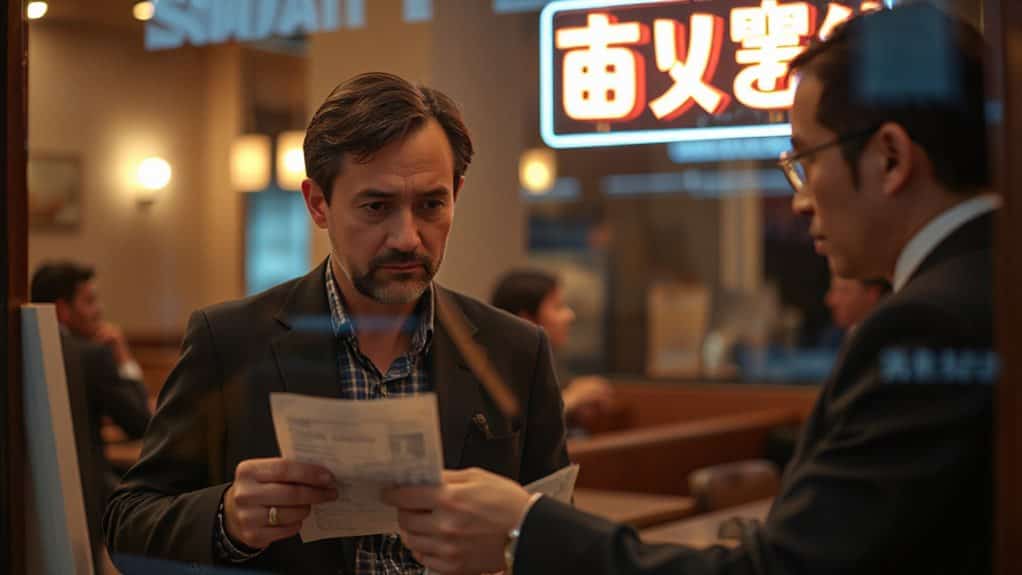
Watch out for surprise charges piling up on your café bill—beyond the standard 10% consumption tax, many popular Tokyo spots add mandatory service fees that aren’t always visible upfront.
These hidden fees, often labeled as “service charges,” can raise your total by 10% or more.
Always check both Japanese and English menus, ask about extra fees before ordering, and consider eating at local supermarkets or side street vendors to save up to 30%.
When traveling, consider packing snacks like solid chocolate bars in your carry-on to avoid unexpected purchases and keep costs down.
Don’t Offend at Temples: Follow These Rules
Always remove your shoes before entering temple buildings, and place them neatly with the toes facing outward.
Walk on the sides of pathways, never the center, as it’s reserved for deities.
Keep your behavior quiet and respectful, avoiding eating or loud talk near sacred spaces.
Consider wearing modest clothing and being mindful of local customs, such as avoiding large Buddha images out of respect, when visiting sacred sites.
Respect Sacred Boundaries
While visiting Japan’s sacred sites, you’ll notice certain customs that help maintain the spiritual integrity of the space, and respecting these traditions shows your awareness as a traveler.
Walk along the sides of pathways—never the center, reserved for deities. Bow before passing through torii gates. Avoid straying from paths or touching sacred objects.
These simple actions honor the site’s sanctity and guarantee your visit remains respectful and meaningful.
Remove Shoes Always
Stepping beyond sacred pathways and into Japan’s spiritual spaces, you’ll quickly encounter another fundamental rule: removing your shoes.
Always step down into the genkan, leave footwear neatly facing out, and never wear them past the entryway. Use provided slippers indoors, switch to bathroom ones when needed, and remove them before stepping onto tatami. Watch locals and signs—this simple act shows respect and keeps traditions intact.
Don’t Lose Money on Suica Cards
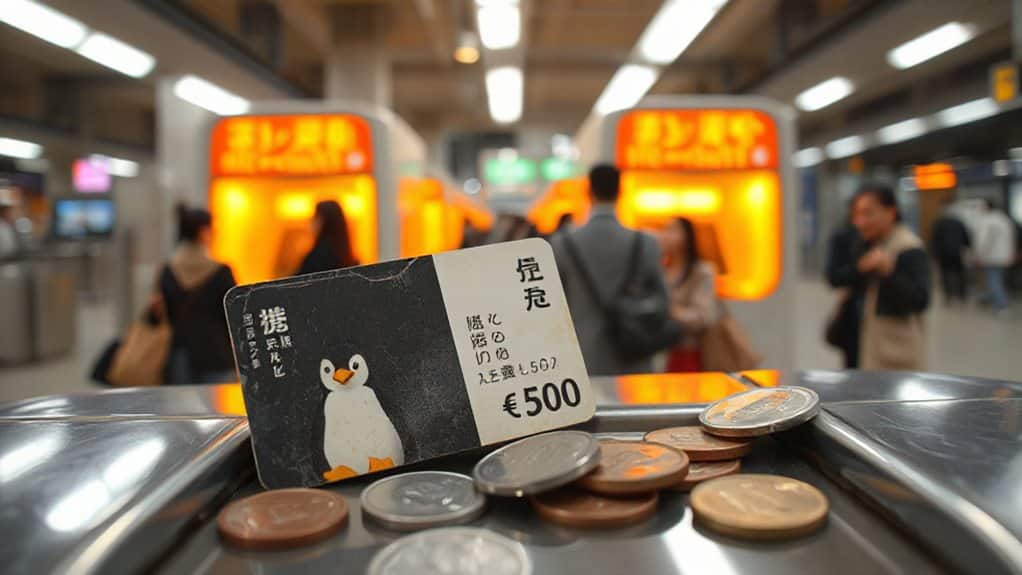
You can’t get your money back on a Welcome Suica card, so keep that in mind when buying one at the airport.
Standard Suica cards let you reclaim a 500 yen deposit only if you return the physical card at a JR East station.
If you lose it or throw it away, you lose the deposit and any remaining balance for good.
Refund Rules Matter
If you’re planning to return your Suica card, knowing the refund rules can save you money.
You’ll get your 500 yen deposit back, but a 220 yen fee applies if your balance exceeds that amount.
Use up small balances at convenience stores to avoid losing value.
Refund only at JR East’s Midorino Madoguchi or Narita Airport, not at Haneda or non-JR stations.
Prepaid Pitfalls Ahead
Watch out for hidden costs when using Suica cards in Tokyo—small oversights can add up fast.
You’ll lose your 500 yen deposit if you don’t return a standard Suica.
Welcome Suica skips the deposit but expires in four weeks with no balance refund.
Top-ups are cash-only, in set amounts, and capped at 20,000 yen.
Tap properly to avoid max fare charges.
Don’t Get Scammed in Akihabara
Stepping into Akihabara, you’re immediately swept into a lively hub of neon lights, anime culture, and state-of-the-art electronics—but beware, as some opportunists prey on tourists’ excitement.
Fake monks sell bracelets as donations, promoters lure you into maid cafes with hidden fees, and scammers inflate bar bills. Avoid street offers, check change, and verify goods. Stay alert, say no, and enjoy Akihabara freely. Many travelers also find that knowing typical seat width measurements helps when planning flights to Tokyo, so compare aircraft and seat specs before booking.
Where to Find Real Culture: Not Tourist Traps
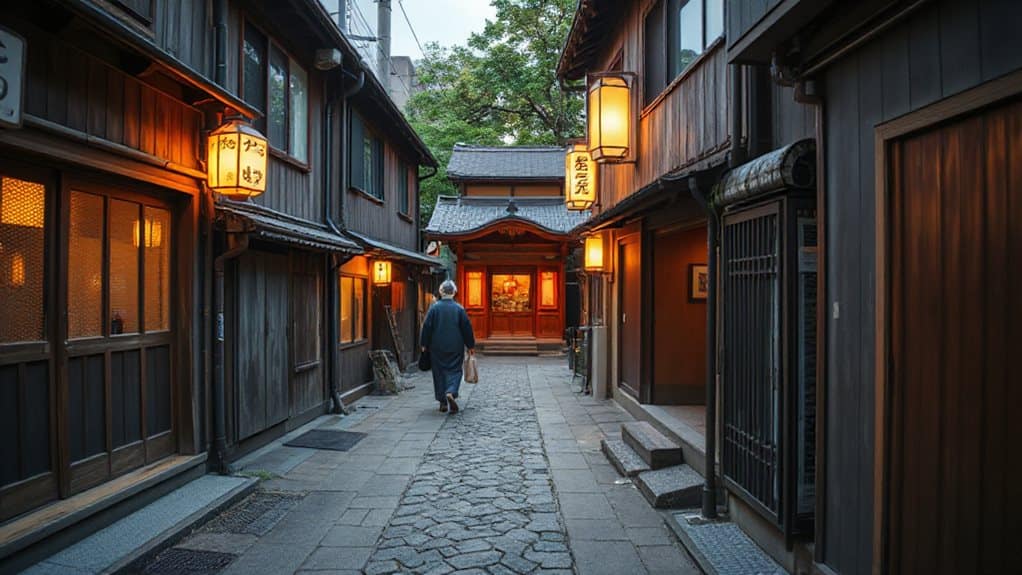
After threading the electric buzz of Akihabara’s tourist-heavy streets, you might crave something quieter and more rooted in daily tradition—something real.
Seek Kagurazaka’s intimate tatami gatherings with geisha, authentic sushi or calligraphy workshops, and private access to expert artisans.
These boutique experiences, led by true practitioners, offer cultural depth no staged show can match—freedom to connect, learn, and experience Japan beyond the surface.
Combine these outings with a day trip to nearby natural sites like the Emerald Pool for restorative downtime after busy urban exploration.
Cash vs. Card: What Works in Tokyo
You’ll want to strike a balance between cash and cards when piloting Tokyo’s payment environment, as both play essential roles despite the city’s modern reputation.
Cards work in major stores and transit hubs, but cash is crucial for shrines, local markets, and small vendors. Even in Tokyo, many places don’t accept cards.
Carry yen and a prepaid IC card like Suica for flexibility and freedom.
And Finally
You now know how to steer through Tokyo like a seasoned traveler. Avoid rush hour by riding outside peak times, skip overpriced Nakamise Street snacks, and check for café cover charges. Respect temple etiquette, use Suica cards wisely, and stay alert in Akihabara to avoid scams. Seek authentic culture in residential neighborhoods, not tourist zones. Carry cash where needed, but know cards are widely accepted. These steps help you save time, money, and avoid common mistakes.