
London is safer after dark than it’s been in years, with violent crime and homicides near historic lows. You’re most at risk of theft, especially in busy spots like Oxford Circus or near transport hubs. Knife crime remains a concern, particularly in areas like Hackney and Lambeth, though overall it’s down since 2016. Robbery has risen slightly, but burglary and other neighbourhood crimes have fallen. Stick to well-lit, busy streets, stay alert, and avoid known hotspots—your safety improves markedly with simple precautions. There’s more to know about staying safe in specific areas.
TLDR
- London’s overall crime has declined, with violent crime below average, but nighttime theft and knife incidents remain concerns.
- Tourist areas like Westminster and nightlife zones in Camden see higher pickpocketing and alcohol-related disturbances after dark.
- Robbery and phone snatching are common at transport hubs, especially in Lambeth, Croydon, and Elephant and Castle.
- Knife crime, while down from peaks, is still prevalent, with around 40 incidents daily and underreporting a major issue.
- Staying on busy, well-lit streets, avoiding isolation, and using real-time crime maps can significantly improve nighttime safety.
How Dangerous Is London After Dark?

While London’s streets after dark may feel intimidating at times, the data shows the city has become markedly safer in recent years.
Violent crime is below the national average, with violence down 14% and homicides near historic lows. Though robbery rose 8.7%, neighbourhood crimes like burglary fell sharply. Knife crime remains a concern, yet overall, your risk after dark is lower than it once was. Long-term trends show a significant decline in overall crime, with the rate now at 107 offences per 1,000 residents.
Where Are London’s Most Dangerous Areas at Night?
London’s nighttime scene varies widely from one borough to another, and knowing where risks are concentrated can help you stay safe.
Westminster’s high crime rate, especially in tourist spots like Oxford Circus, means you should watch for pickpockets after dark.
Camden’s lively nightlife brings disturbances, while Hackney and Tower Hamlets see muggings and drug-related incidents.
Southwark’s theft and knife crime rates also demand caution in areas like Elephant and Castle.
Travelers should keep up with official travel warnings and local advice before going out at night.
What Are the Most Common Night Crimes in London?
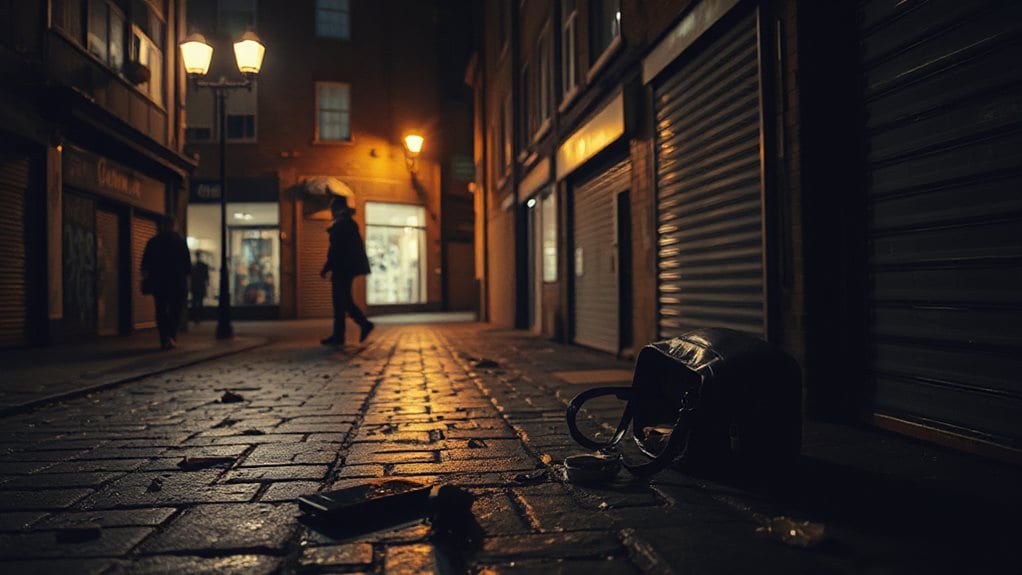
You’ll often encounter theft as the most common night crime across London, especially in busy areas where crowds make it easier for pickpockets to operate.
Phone snatches and bag dips happen frequently in tourist spots and transport hubs.
Violent crimes rise at night, particularly near nightlife zones.
Bike and vehicle thefts persist, while drug offences remain prevalent.
Though alcohol-related incidents have dropped sharply, anti-social behaviour still affects how safe people feel after dark.
How Big Is the Knife Crime Problem in London?
Knife crime remains a significant concern in London, standing out even as other night-time offences like theft and anti-social behaviour persist.
You’ll find London accounts for 29% of UK knife crimes, with 16,344 offences in 2024/25. Though rates dipped slightly recently, they’ve risen overall since 2015.
Serious incidents hit 15,859, the highest in the UK, showing the problem’s scale.
Is Violent Crime Rising in London at Night?

You’ll find that homicide rates in London have stayed below peak levels seen in 2017/18, even as violent incidents at night remain a concern.
Knife-related crimes, while down 13% since 2016, still cluster in busy nighttime areas like Lambeth and Croydon, where assaults and robberies are more common after dark.
Though overall violent crime hasn’t risen sharply, your risk of encountering an incident increases in certain high-footfall zones late in the evening.
Homicide Trends After Dark
While violent crime in London often draws heightened concern after dark, recent data suggests homicide trends at night aren’t on the rise.
You’ll find 70 nighttime homicides occurred from January to September 2025—the lowest for that period on record. Though incidents like the shootings of Andrew Clark and Keanu Harker are serious, overall numbers are declining, with 87 total homicide victims in 2025 as of January 1, 2026.
Knife Crime At Night
Even as overall homicide rates in London have trended downward after dark, knife crime remains a persistent concern during nighttime hours, with recent data showing a notable uptick in offences.
You face 40 knife incidents daily, 3–4 requiring hospital care. Hotspots like Croydon and Newham see violence fueled by gangs and drugs, often near transport hubs or shopping areas.
Though robberies dipped 15%, underreporting hides true scale—42% of stab victims don’t call police.
How Does London’s Night Crime Compare to Other UK Cities?
You’ll find London’s homicide rate has dropped to 13.1 per million, yet it’s still the highest among UK regions despite fewer killings than last year.
Knife crime remains a serious nighttime risk, with over 15,000 offences recorded in 2023/24, many tied to late-night violence in areas like Lambeth.
While cities like Birmingham and Manchester see high theft and disorder, London’s night crime mix of violence and robbery stands out compared to most urban areas.
London Homicide Rate Trends
As of mid-2025, London’s homicide rate continues a long-term decline, with 87 recorded killings by year-end according to non-official tracking sources like MurderMap, well below the peak levels seen in the early 2000s.
Homicides fell nearly 60% compared to 2003, reaching their lowest point since monthly records began. Croydon and Lambeth reported the most cases, yet overall violence remains below national averages, reflecting a sustained, decade-long downward trend.
Knife Crime And Nighttime Risks
While London remains one of the UK’s largest contributors to knife crime statistics, recent data shows a modest decline in offences, with 15,859 incidents recorded in the 12 months to August 2025—a 7% drop from the previous year.
You’ll find knife crime most common in busy urban nightlife areas. London’s rate is 17.89 per 10,000, higher than Birmingham or Manchester, and far above smaller towns.
How to Use Crime Maps to Stay Safe in London at Night
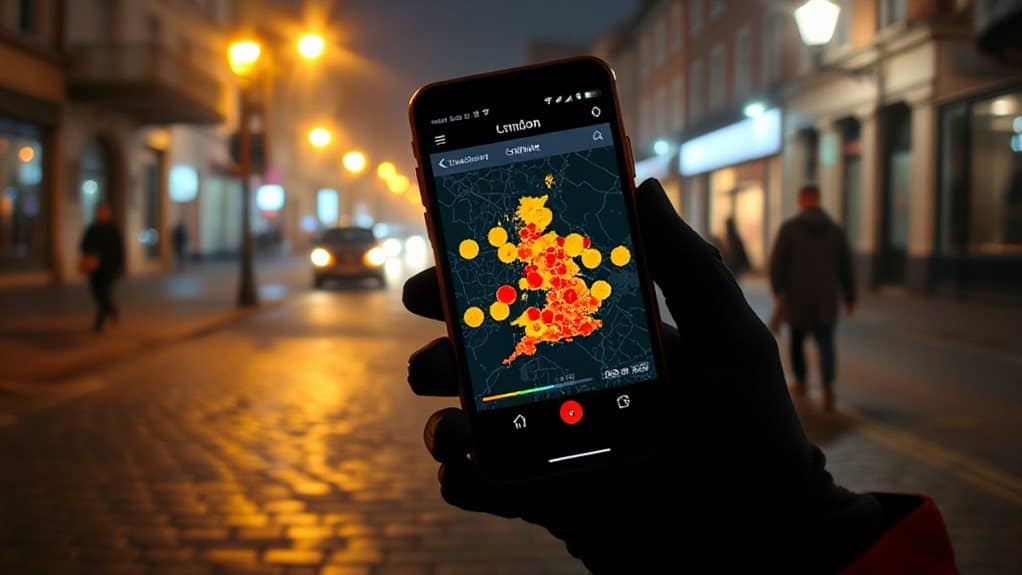
Start by pulling up the Metropolitan Police’s official crime map or visiting the Neighbourhood Watch site, where you can enter your postcode to see local crime data at a glance.
Check the last 90 days for theft, assault, or robbery trends.
Use this info to avoid high-risk areas like Lambeth or Hackney at night, especially near stations or tourist spots, and plan safer routes using real-time, verified crime statistics.
How to Stay Safe Walking in London at Night
Stick to well-lit, busy streets when walking around London at night, as visibility and foot traffic greatly reduce your risk of encountering trouble.
Avoid dark alleys and shortcuts.
Stay alert, keep your phone accessible but don’t use headphones.
Travel with friends when possible, and check routes in advance using maps or TfL.
Use only licensed taxis if needed, and always stay aware of your surroundings.
When possible, consider using airport lounges or short hotel stays for long layovers to rest and stay safe airport lounges.
And Finally
You can stay safe in London at night by staying aware and choosing busy, well-lit routes. While some areas have higher crime rates, most incidents are opportunistic and avoidable. Knife crime and violent offences remain concentrated in specific neighbourhoods, not across the whole city. You can check crime maps to plan safer walks. Overall, London’s night crime is comparable to other major UK cities, and simple precautions greatly reduce your risk.


