You can walk safely in most of Tokyo at night—violent crime is rare, streets are well-lit, and police patrols are visible. Stick to busy main roads and avoid dim alleyways, especially in Kabukicho, Roppongi, or Shibuya’s crowded zones, where scams and pickpocketing happen. Keep your belongings secure and decline unsolicited help. Public transport stays safe late, and taxis are reliable. While overall risk is low, staying alert reduces it further—and knowing which areas to avoid after dark makes your night even safer.
TLDR
- Tokyo is generally safe at night, with low violent crime and high safety perceptions.
- Well-lit streets, active public transport, and visible police enhance nighttime security.
- Petty crimes like pickpocketing and scams occur in crowded nightlife areas after dark.
- Avoid unlicensed bars, touts, and isolated alleys, especially in Kabukicho and Roppongi.
- Use licensed taxis, stay on busy streets, and choose accommodations near transit for safety.
Overall Crime Rates in Tokyo
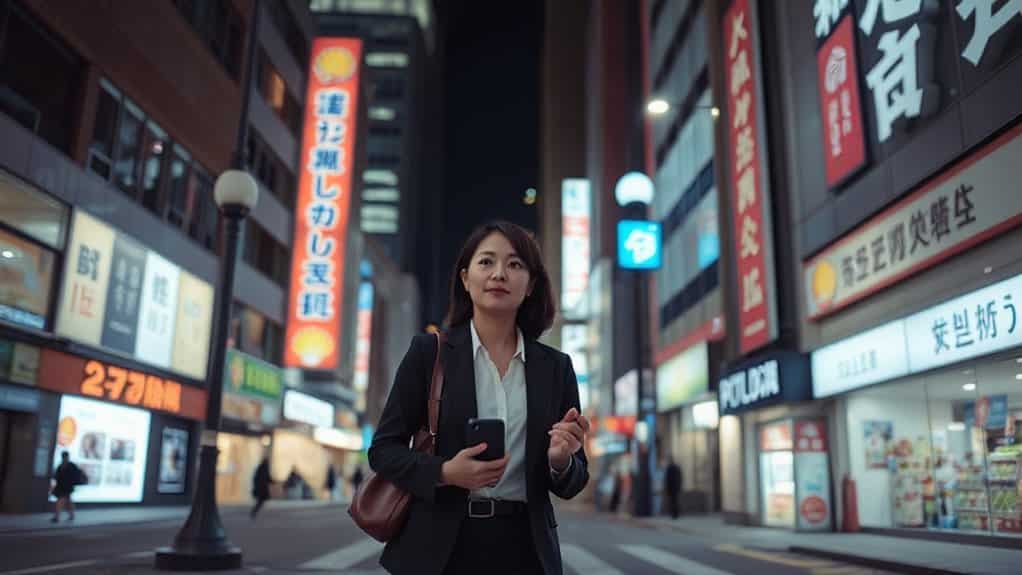
While Japan has long been known for its low crime rates, recent trends show a shift you should be aware of.
Tokyo’s crime index is 24.8, making it one of the world’s safest cities.
Still, national crime rose 4.9% in 2024, with theft and fraud increasing.
Most incidents are non-violent, but staying alert, especially at night, helps you stay safe.
Areas like Kabukicho and red-light district hotspots see higher reports of scams and drink spiking.
High-Risk Neighborhoods to Avoid
You should stay alert in Kabukicho, where night risks like scams, drink spiking, and aggressive touts are common, especially on Sakura and Hanamichi Streets.
Crowded areas like Center Gai and Dogenzaka in Shibuya see frequent pickpocketing, drunk disputes, and harassment near clubs.
Avoid anyone approaching you on the street, particularly overly friendly strangers in Ikebukuro or Roppongi offering help or inviting you to bars.
Kabukicho: Night Risks
Kabukicho stands out as Tokyo’s most notorious nightlife district, but it also carries significant risks after dark.
You’ll face higher crime rates—38.8% compared to Tokyo’s average—especially scams, touting, and drink spiking.
Avoid aggressive areas like Sakura Street, host clubs, and unlicensed bars tied to yakuza groups.
While most tourists stay safe, staying alert and steering clear of shady offers keeps your freedom intact.
Shibuya Crowds Danger
Crowds surge around Shibuya Station late at night, especially on weekends, turning the area into one of Tokyo’s most densely packed and high-risk nightlife zones.
You’ll face pickpocketing, bag snatching, and late-night fights in these throngs.
Fridays and Saturdays bring the highest incident rates.
Stick to well-lit main streets, avoid back alleys, and stay alert—especially during peak events when collisions spark arguments.
Avoid Street Touts
Tokyo’s nightlife draws crowds with its energy and variety, but certain districts carry risks that go beyond overcrowding.
Avoid Shinjuku’s Kabukicho, Ikebukuro’s West Gate, and Roppongi at night—these areas see aggressive touting and minor scams.
Taito’s eastern zones and Chiyoda’s busy spots also have street touts.
While patrolled, they’re best skipped after dark. Stay alert, trust your instincts, and choose quieter, well-lit streets for safer, freer exploration.
Common Nighttime Safety Concerns
You’ll want to stay alert in crowded nightlife areas like Kabukicho, Shibuya’s Center Gai, and Ikebukuro’s east exit, where theft and scams are most common.
Pickpocketing, drunk altercations, and fake helpers demanding payment happen regularly, especially late at night.
Keep your belongings secure, avoid unsolicited offers, and stick to well-lit, busy streets to reduce your risk.
Boat trips on the Chao Phraya River also show how staying aware in busy transport hubs and crowded tourist spots helps prevent common scams and theft.
Crime Hotspots to Avoid
While most of Tokyo remains safe after dark, certain areas report higher crime rates and warrant caution during nighttime hours.
Avoid Kabukicho in Shinjuku due to scams, touts, and occasional fights.
Steer clear of Shibuya’s Center Gai and Dogenzaka for pickpocketing and drunk disputes.
Skip Ikebukuro’s east exit and Roppongi at night, where theft and fraud occur.
Be alert in Setagaya, Ota, Adachi, Katsushika, and Toshima wards.
Staying Safe in Crowds
When exploring Tokyo’s lively night scenes, you’ll often find yourself moving through tightly packed crowds, especially in entertainment and tourist districts.
Stick to designated paths, stay aware, and avoid street drinking zones during events like Shibuya Halloween.
Use collective vigilance—dense crowds can deter crime.
Follow multilingual signs, watch for CCTV zones, and trust well-lit, heavily trafficked routes for safer, freer movement.
Safety While Walking Alone After Dark
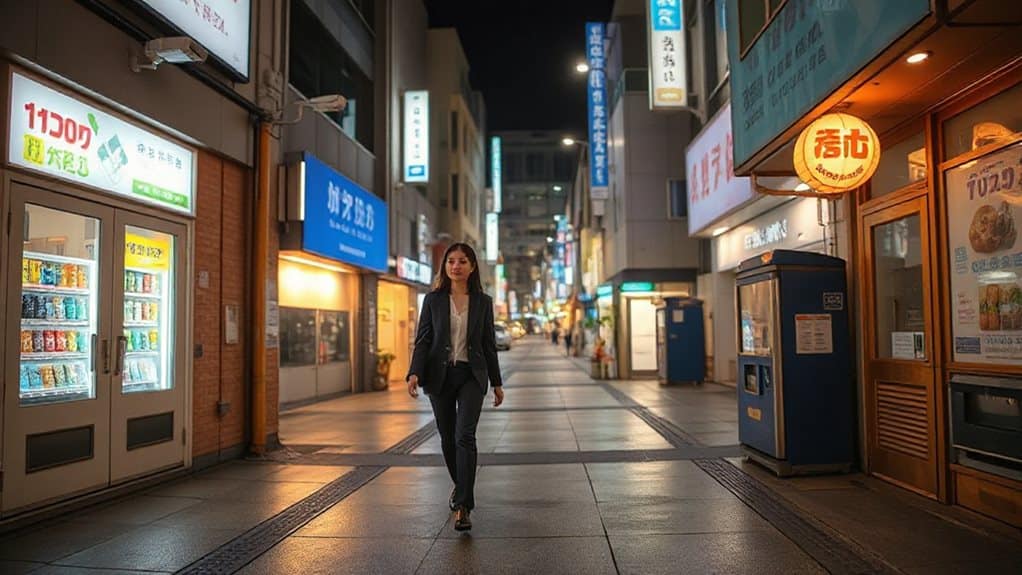
Even though Tokyo is widely regarded as one of the safest major cities in the world, staying alert while walking alone at night remains important.
You can confidently walk in well-lit, busy areas, where low crime and cultural respect enhance safety.
Stick to main streets, avoid empty alleys, and stay aware in nightlife districts like Kabukicho or Roppongi.
Pedestrian-friendly paths and strict social order help protect you after dark.
Many visitors also enjoy cultural performances like water puppet shows as safe evening activities to experience local tradition.
Rising Trends in Theft and Fraud
Tokyo’s reputation for safety doesn’t mean you’re immune to crime, especially as theft and fraud are on the rise.
Theft rose 3.7% in 2024, making up nearly 70% of crimes.
Fraud surged 24.6%, with losses doubling.
Special fraud hit record highs, driven by impersonation scams.
Young adults and seniors are both vulnerable, and scammers increasingly target social media users.
Stay alert, especially online.
Many visitors still enjoy nearby beach escapes like Ko Samet when combining city and coastal travel.
Ward-by-Ward Crime Comparisons
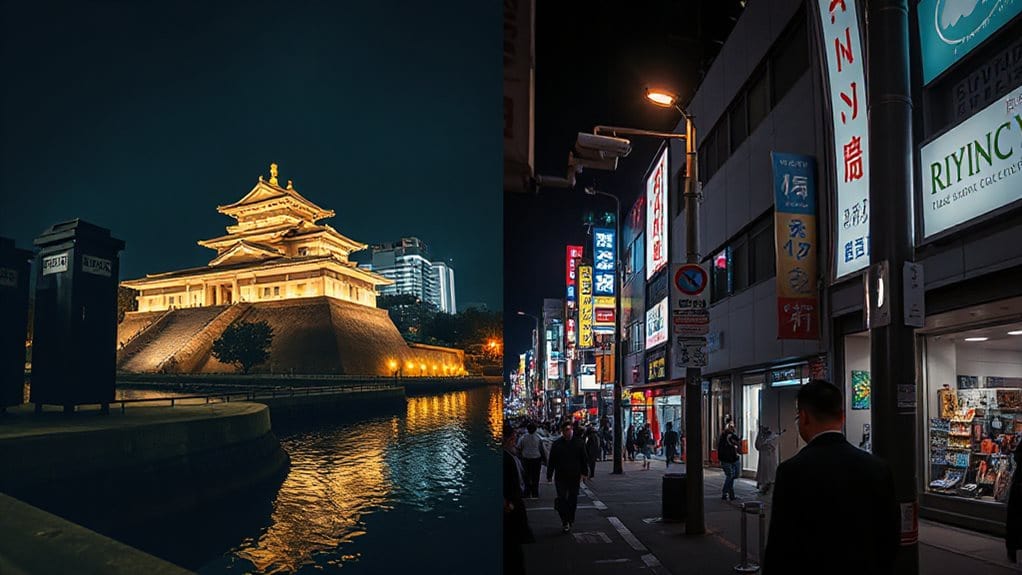
While crime rates vary across the city, you’ll find that safety in Tokyo depends considerably on which ward you’re in.
Bunkyo Ward ranks safest at 0.34% crime, enhanced by institutions like Tokyo University.
Adachi Ward faced higher crime historically, but initiatives like BMW with police and residents improved safety.
Low-rent areas and demographics influence risk, while flat, well-lit streets near trains enhance nighttime security.
Many visitors treat Tokyo as a compact city with excellent subway accessibility, making short trips and ward-by-ward exploration convenient public transit.
Dangers of Popular Nightlife Districts
When you head out to investigate Tokyo’s lively nightlife, certain districts come with risks that demand caution.
Kabukicho sees scams, touts, and theft, while Shibuya’s Center Gai and Dogenzaka report pickpocketing and drunk altercations.
Ikebukuro’s east exit has fake helpers and shady bars.
Overcharging, drink spiking, and credit card fraud occur in bottakuri spots.
Avoid unverified clubs, watch your drink, and stay alert in crowded zones.
Consider keeping small valuables in a secure place and using pickpocket prevention measures to reduce risk.
Real Risks vs. Perceived Safety Levels
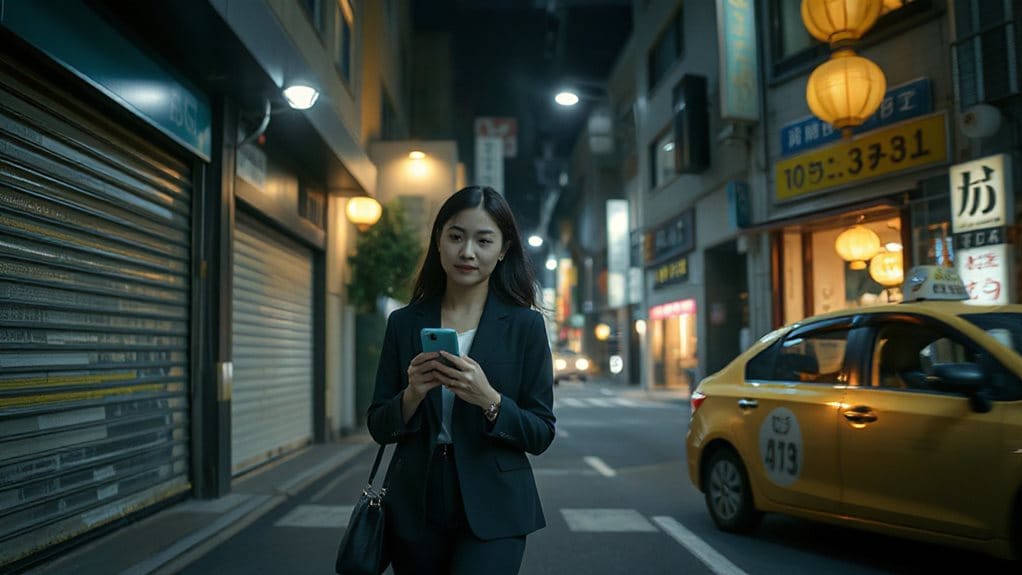
You’ve heard about the sketchy bars in Kabukicho and the pickpockets in Shibuya’s busiest alleys, but how do those localized risks stack up against the broader viewpoint of safety in Tokyo at night?
You’re right to stay alert, yet overall, violent crime remains rare. Theft and fraud are rising, but perceptions still rate nighttime safety high—72.63 on Numbeo—thanks to low assault rates and well-lit, busy streets where you can move freely with basic caution. Visiting well-known cultural sites like the National Museum can be a safe, informative daytime complement to evening exploration.
Practical Tips for Staying Safe at Night
Keep your wits about you and take simple precautions to stay safe as you investigate Tokyo after dark.
Stick to well-lit, busy areas like Ueno or izakaya-lined streets.
Avoid Kabukicho and Maruyamacho late at night.
Secure prized items in hotel safes, use auto-lock apartments, and trust your instincts.
Stay charged, keep data active, and choose women-only or monitored accommodations when possible.
And Finally
You can feel generally safe walking in Tokyo at night, as crime rates remain low across most wards. Still, you should stay alert in busy nightlife areas like Shibuya or Roppongi, where petty theft and scams occasionally occur. Avoid poorly lit side streets and always keep your belongings secure. While violent crime is rare, common sense matters—especially if you’re alone. Overall, Tokyo’s safety stems from strong community policing and public awareness, not absence of risk.