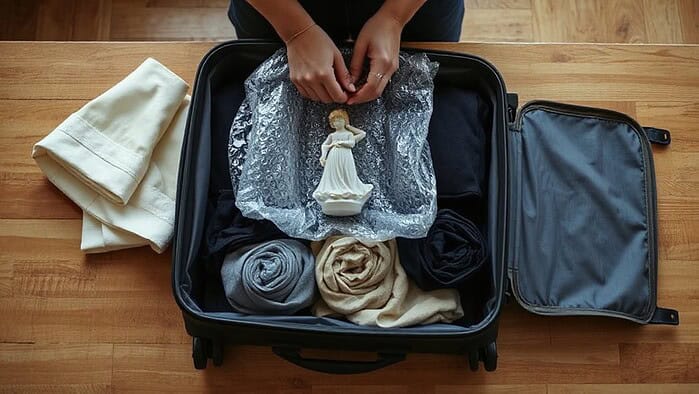
Pick a sturdy double‑walled box with at least two inches of clearance on every side, or a hard‑sided suitcase with adjustable straps. Wrap each souvenir in 2‑3 inches of bubble wrap, placing acid‑free tissue underneath for extra softness, then fill any gaps with crumpled paper, foam pellets, or air pillows. Seal the bottom and all seams with heavy tape, reinforce corners, and label every side with bold red “FRAGILE” and “THIS SIDE UP” stickers. Finally, perform a shake test to ensure nothing moves before you ship, and you’ll discover more tips ahead.
TLDR
- Choose a double‑walled box with at least two inches clearance, or a hard‑sided suitcase, and line it with acid‑free tissue before bubble wrap.
- Wrap each fragile souvenir individually in 2–3 inches of bubble wrap (small bubbles for glass/electronics, medium for frames, large for artwork).
- Fill all gaps with crumpled paper, air pillows, or foam pellets, and perform a shake test; add padding until nothing moves.
- Seal inner and outer boxes securely with heavy tape, reinforce corners, and label every side with bold red “FRAGILE” and “THIS SIDE UP” arrows.
- Verify total weight on a calibrated scale (≤ 50 kg/110 lb) and select a premium carrier with insurance and real‑time tracking.
How to Pack Fragile Souvenirs in 10 Simple Steps

A sturdy, appropriately sized container is the foundation of safe packing for fragile souvenirs. Choose a double‑walled box with at least two inches of clearance on every side, or a hard‑sided suitcase with adjustable straps. Wrap each item in bubble wrap, bubbles inward, and secure with tape. Fill any gaps with socks, tissue, or foam. Cushion items in packing cubes, then double‑box, seal with heavy tape, and shake gently to confirm stability. Use acid‑free tissue as a soft interleave before applying bubble wrap. Nighttime safety in cities like Dubai is supported by heavy monitoring and visible patrols that deter theft and make transporting valuables after dark safer.
Figure Out Which Souvenirs Are Most Fragile (and Why)
Which souvenirs are most likely to break during travel, and why? Glass items—wind chimes, miniature monuments, jewelry, ornaments—shatter from impacts because they’re thin and inflexible.
Ceramic and pottery crack under bumps or temperature shifts; figurines need cushioning.
Wooden crafts chip or warp when edges hit hard surfaces or humidity changes.
Crystal keychains and mineral gems fracture from vibration, while composite pieces tear or dent under pressure.
Recognizing these weaknesses lets you prioritize protection.
Low-season travel often means more time for shopping and potentially better deals on fragile items during May–October, when prices for hotels and tours tend to be lower.
Choose the Right Box Size and Material for Fragile Souvenirs

After identifying which souvenirs are most fragile, pick a box that matches both the item’s size and its vulnerability. Choose double‑walled corrugated cardboard for delicate pieces, or plastic boxes for moisture‑sensitive items. Ensure the box is at least two inches larger on each side, roughly 10‑25 % bigger than the souvenir, and verify it’s clean, dry, and structurally sound. Reinforced corners and proper stamps guarantee durability during handling. For extra assurance, consider a scale-rated capacity and precision when checking packed weight with a 50 kg / 110 lb luggage scale to avoid exceeding handling limits.
Gather Bubble Wrap, Crumpled Paper, and Cling Film
What you need to gather before you start packing fragile souvenirs includes bubble wrap, crumpled paper, and cling film, each serving a specific protective role. Choose bubble wrap with appropriate bubble size—small for lightweight items, larger for heavy or extremely fragile pieces—and consider double‑layering for extra shock absorption. Crumpled paper fills gaps and prevents movement, while cling film seals items against moisture and dust, keeping everything secure during transport. For extra inspiration on peaceful packing breaks, consider visiting St Dunstan in the East to enjoy ivy-clad ruins and a tranquil garden.
Wrap Each Fragile Souvenir Individually With 2‑3 In Padding

You’ll want to pick a bubble wrap that’s small enough to conform to each souvenir’s shape while still providing a cushioning layer, then wrap it tightly and seal the edges with a short strip of tape. After the bubble wrap, add crumpled paper or soft fillers until the total thickness reaches two to three inches, making sure the padding stays in place without shifting. Finally, give the package a gentle shake to confirm nothing moves, and adjust the padding if you hear any rattling. For extra protection during transit, place wrapped souvenirs in the center of your suitcase surrounded by soft layers like clothing or towels and sandwich them in the middle to cushion against impacts.
Bubble Wrap Selection
Which bubble wrap you choose can make the difference between a souvenir arriving intact or shattered. Pick small‑bubble wrap (½‑inch) for delicate glass or electronics, medium (12‑inch) for photo frames or books, and large (24‑inch) for mirrors or artwork. Use 2‑3 inches of padding per item, ensuring bubbles face the surface for optimal shock absorption. Match bubble size to item dimensions for balanced protection.
Secure Tape Method
How do you keep each fragile souvenir from shifting while it’s in transit?
Clean and dry the box, then apply heavy‑duty 2‑inch tape perpendicular to the surface for a firm grip.
Wrap each item in 2‑3 inches of padding, securing it with tape so it stays tight.
Use H‑taping on seams, reinforce edges, and fill gaps with void filler.
Shake the box; if nothing rattles, you’re good.
Position Items to Keep Heavy Pieces at the Bottom and Prevent Contact
When you arrange your suitcase, start by laying a soft base of clothing, towels, or blankets, then place the heaviest souvenirs directly on that cushion.
Next, add a middle layer of padded dividers or foam sheets, positioning fragile pieces in the center and separating them from each other.
Finally, top everything with more clothing to keep items from shifting and to maintain balance.
Place heavier items near the wheels to lower the center of gravity and improve stability, keeping weight centered and low to reduce tipping risk.
Fill All Voids With Wadded Paper, Air Pillows, or Peanuts

Pick the fill material that matches each gap—crumpled paper for tight spaces, air pillows for lightweight cushioning, and peanuts for irregular voids. Layer the chosen fillers evenly around the wrapped items so the pressure is distributed and nothing shifts.
Finally, seal the box and give it a gentle shake to confirm the contents stay stable.
Choose Appropriate Fill Material
Choosing the right fill material is essential for keeping fragile souvenirs from shifting or breaking during transit. You can crumple ink‑free packing paper to lock items in place, use deflated air pillows that expand into protective cushions, or pour packing peanuts to fill irregular gaps. Each option absorbs shock, prevents movement, and offers reusable or recyclable choices, letting you customize protection while staying light and efficient.
Layer for Even Distribution
Ever wonder how to keep every empty space in a box filled without adding unnecessary weight? Start with a 1‑2‑inch layer of crumpled kraft or air pillows at the bottom, then nest your wrapped souvenir in the center. Fill all gaps around it with wadded paper, air cushions, or peanuts until the box feels solid. Shake gently; if nothing rattles, the distribution is even and the item stays secure.
Seal and Test Stability
A solid seal starts with filling every void around your souvenir using wadded paper, air pillows, or packing peanuts.
Pack at least two inches of cushioning on all sides, keeping fillers away from box walls.
Once sealed with strong tape, gently shake the box; if you hear rattling, add more padding.
A silent, firm box means your fragile item stays immobilized during travel.
Tape Box Bottom and Seams for Extra Strength

How can you make sure the bottom of a box stays sealed when it holds fragile, heavy items? Use brown packing tape, not duct or masking tape, and apply multiple overlapping strips across the bottom seams. Tape both directions on top and bottom edges, reinforcing corners and seams. Secure the bottom before loading, then add extra layers after filling to prevent opening during transit.
Use Double‑Boxing for High‑Value or Super‑Fragile Souvenirs
If you’re shipping high‑value or super‑fragile souvenirs, double‑boxing gives them a sturdy, shock‑absorbing shield that ordinary packing can’t provide.
Choose a snug inner box, wrap the item in at least one‑inch bubble wrap, and fill any gaps with crumpled paper. Place a one‑inch padding layer between inner and outer boxes, then surround the inner box with crumpled paper in the outer box. Seal both boxes securely.
Test the Box for Movement and Add Clear “Fragile” Labels

Give the box a quick shake test before you seal it; if anything rattles, fill the gaps with crumpled paper or bubble wrap until it feels solid. Once the contents are stable, write “FRAGILE” in large, bold letters on every side of the box, using a bright red marker for maximum visibility. Adding arrows that say “THIS SIDE UP” and covering any existing stickers with clear tape ensures handlers know how to treat the package.
Shake Test Before Shipping
Why risk a broken souvenir when a quick shake can reveal hidden movement inside the box? Gently shake the sealed package; if you hear rattling or see items shift, add foam pellets, bubble wrap, or a 2‑inch foam layer until nothing moves.
Wiggle sides to mimic transit jostles, repeat until zero movement, then proceed confidently to seal and ship.
Clear “Fragile” Label Placement
Where should you place a “Fragile” label to catch a handler’s eye before the box is moved? Stick bright, contrasting labels on the top edges and largest surface of each side, using bold fonts and clear icons. Apply multiple labels so they’re visible from any angle, and include “Handle with Care” or “This Side Up” arrows. Seal the box first, then affix the labels securely for maximum notice.
Ship the Packed Box and Track Its Delivery
How do you guarantee your fragile souvenirs arrive intact? Choose a premium carrier like DHL Express, UPS, or FedEx that offers pickup, delivery, and real‑time tracking. Purchase insurance covering the declared value, up to $5,000 if needed. Label every side with “Fragile” stickers and “This Side Up” arrows. Prepare accurate customs paperwork and monitor the shipment via the courier’s app until delivery.
And Finally
By following these steps, you’ll protect fragile souvenirs from damage during transit. Selecting the right box, using ample padding, and sealing seams adds strength. Double‑boxing high‑value items offers extra security, while clear “fragile” labels alert handlers. Test the package for movement before shipping, and track the delivery to confirm safe arrival. This methodical approach minimizes risk and ensures your keepsakes reach their destination intact.