You’ll want to stay in Shinjuku for unbeatable transit links and urban energy, or choose Shibuya if you’re after iconic sights and lively street life. Prefer luxury shopping and fine dining? Head to Ginza. Art lovers pick Roppongi, while Ebisu and Daikanyama offer relaxed, local charm. Ueno and Asakusa deliver culture and tradition, and Ikebukuro gives big-city access at lower prices. Each area connects you to Tokyo’s core experiences in a distinct way—your ideal base depends on what you value most. More perspectives await to refine your choice.
TLDR
- Shinjuku offers unmatched transit access with 36 platforms and 3.64 million daily users, ideal for seamless city exploration.
- Shibuya is perfect for first-time visitors, featuring iconic landmarks like the scramble crossing and easy access to major attractions.
- Ginza caters to luxury travelers with high-end shopping, fine dining, and pedestrian-friendly streets on weekends.
- Roppongi and nearby neighborhoods combine art, design, and green spaces, ideal for culture and local charm seekers.
- Ueno, Asakusa, and Ikebukuro provide budget-friendly stays with rich culture, museums, temples, and convenient airport connections.
Shinjuku: Premier Transport Hub and Urban Center
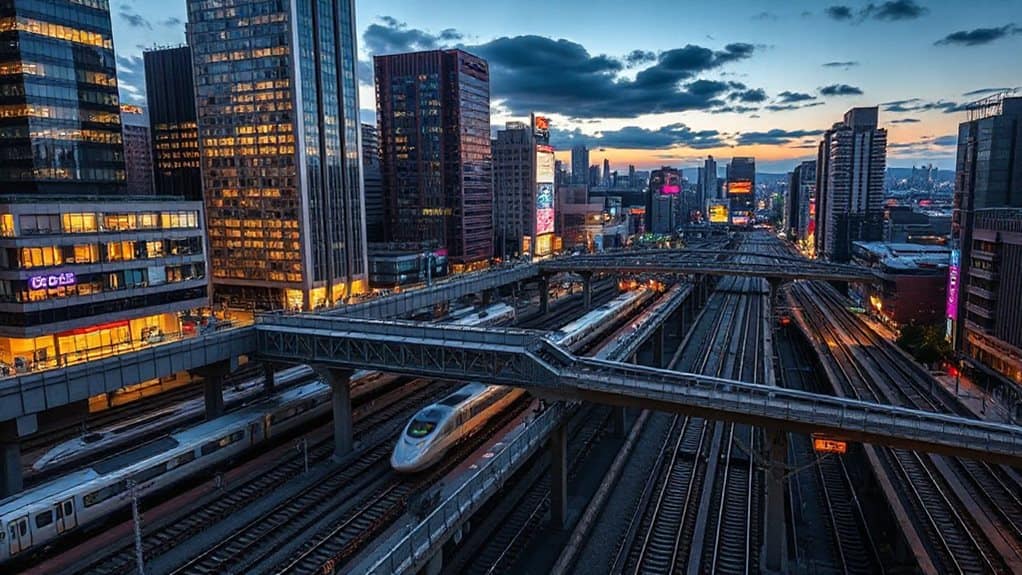
Step into Shinjuku Station, and you’re immediately immersed in the pulse of Tokyo’s busiest transport nexus.
You’ll steer through 36 platforms and over 200 exits, connecting 12 lines across JR East, Keio, Odakyu, and subway networks.
With 3.64 million daily users, it’s a sprawling hub linking western suburbs to urban life.
You’ll find shopping, dining, and seamless transit—all in one energetic, ever-moving complex.
In fiscal 2024, it recorded 666,809 daily boarding passengers, the highest in the JR East network.
Many visitors also use Shinjuku as a gateway to nearby urban parks and outdoor sights.
Shibuya: Heart of the City for First-Time Visitors
Plunge into Shibuya, and you’ll find yourself at the lively core of Tokyo, where energy and culture converge for an unforgettable first impression.
Cross the iconic scramble, visit the Hachiko Statue, or ascend Shibuya Sky for panoramic views.
You’ll access top sights via the Yamanote Line, discover colorful shopping at Parco and Don Quijote, enjoy street performances, and relax in Yoyogi Park—all with ease and freedom.
Nearby, you can also visit the Prado Museum to see masterpieces like Goya’s Pinturas Negras and works by Velázquez and Italian and Flemish artists, making for a full cultural day at one of Madrid’s premier museums Prado Museum.
Ginza: Upscale Shopping and Fine Dining
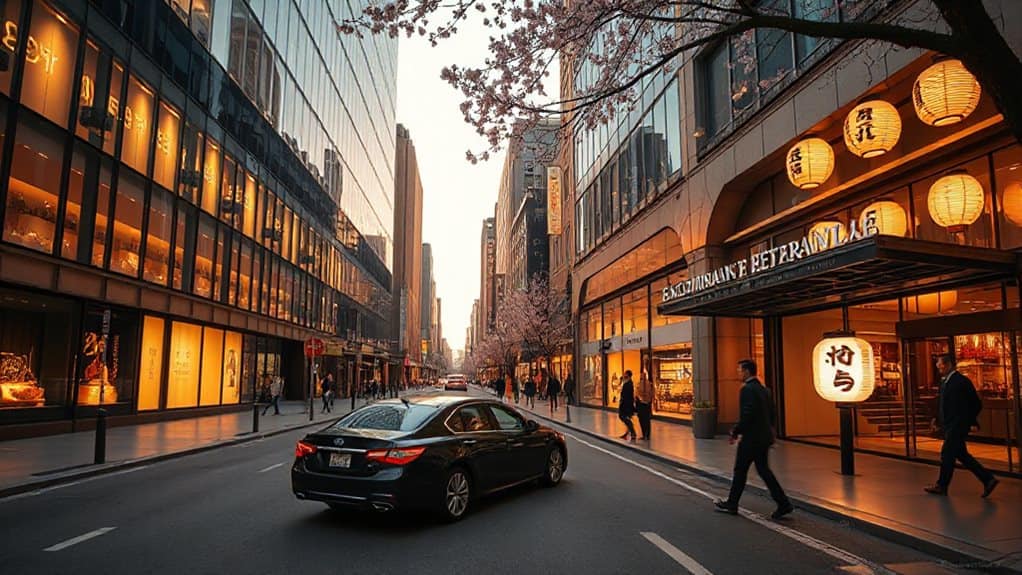
After experiencing the youthful buzz of Shibuya, you can shift gears to Ginza, Tokyo’s refined district where luxury and tradition blend seamlessly.
You’ll find flagship boutiques like Chanel and Louis Vuitton, the historic Mitsukoshi department store, and the iconic Wako Clock Tower.
Ginza Six offers 240 high-end shops, a theater, and rooftop garden.
On weekends, you can stroll freely as the main street becomes pedestrian-only, perfect for exploring art galleries, fine dining, and centuries-old cultural landmarks at your own pace.
Also nearby is the serene Ginza Six rooftop garden that provides a peaceful escape above the shopping bustle.
Roppongi: Design, Museums, and World-Class Cuisine
Uncover Roppongi, a lively district where design, art, and cuisine converge in one of Tokyo’s most structurally striking neighborhoods.
You’ll find landmark buildings like Roppongi Hills and Tokyo Midtown, home to the Mori Art Museum, Suntory Museum of Art, and National Art Center.
Navigate world-class dining, sleek architecture, and the Art Triangle—all within a kilometer, perfect for independent exploration.
You can also explore nearby parks and green spaces such as the Auckland Domain which pair well with cultural outings.
Ebisu, Meguro, and Daikanyama: Local Neighborhood Charm
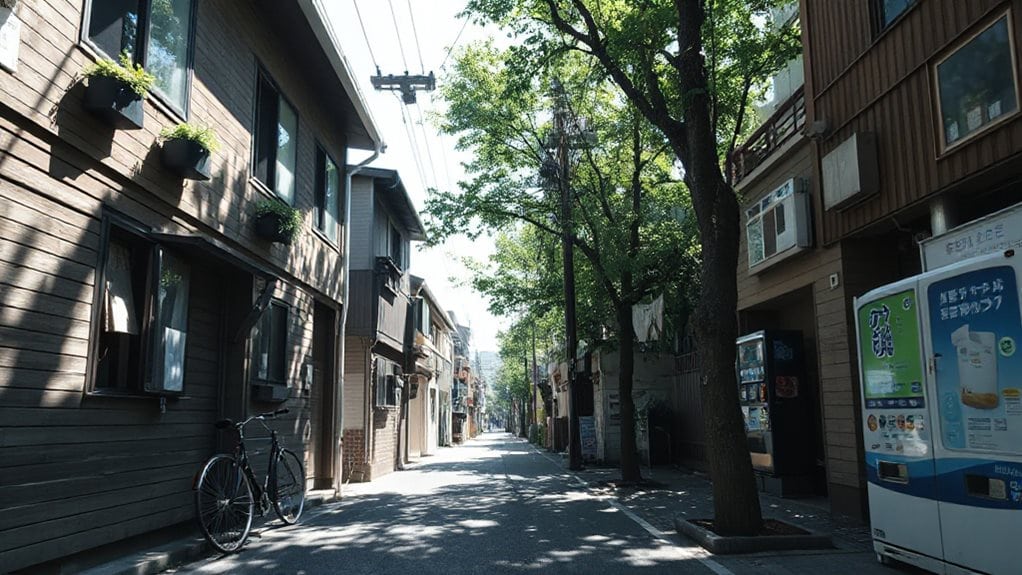
Just a short ride from the high-energy galleries and skyscrapers of Roppongi, the neighboring districts of Ebisu, Meguro, and Daikanyama offer a more relaxed yet equally stylish side of Tokyo.
You’ll find leafy streets, design-forward cafes, and local boutiques. Ebisu connects via Yamanote, Saikyō, and Hibiya lines.
Savor soup curry at Yellow Company, discover Tokyo Photographic Art Museum, or unwind at Meguro River during cherry blossoms.
You can also visit the nearby Meguro River for a peaceful stroll along its cherry-tree-lined banks.
Ueno: Gateway to Tokyo’s Museum District
You’ll find Ueno a practical base for exploring Tokyo’s cultural heart, with easy access to Ueno Park’s museums, zoo, and historic temples.
It’s well-connected by train, offering frequent service to major destinations like Narita Airport and Nikko, while staying budget-friendly compared to central wards.
Though it has a working-class vibe with some crowds and visible homelessness, you’ll appreciate the affordable rents, nearby supermarkets, and quiet residential pockets like Higashi-Ueno.
Cua Dai beach is a popular nearby escape for visitors wanting seaside relaxation and swimming, reachable on a short day trip from town with Cham Island boat options.
Rich Cultural Hub
While Ueno is known for its lively markets and energetic street life, it’s the neighborhood’s deep cultural roots that truly set it apart.
You’ll find six major museums in Ueno Park, including the Tokyo National Museum with over 100,000 artifacts.
The National Museum of Western Art, designed by Le Corbusier, showcases Monet and Van Gogh.
You can discover everything from samurai swords to interactive science exhibits, all within walking distance.
Budget-Friendly Base
Ueno pulls off the rare balance of offering both convenience and affordability, making it an ideal starting point for travelers exploring Tokyo on a budget.
You’ll find rates from $83 at APA Hotel Ueno Ekikita, with off-season savings in January and September.
Enjoy fast airport access via Keisei Skyliner, walk to Ueno Park, and reach all Shinkansen lines north.
Budget stays here don’t skimp on comfort or connectivity.
Asakusa: Traditional Culture and Historic Temples
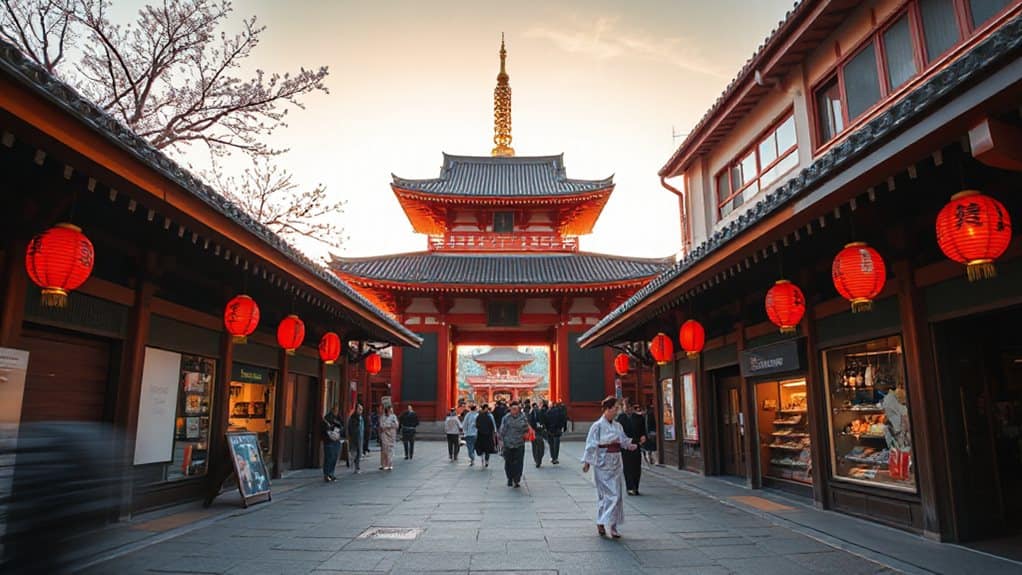
Asakusa stands as a gateway to Tokyo’s past, where centuries-old traditions thrive amid the modern cityscape.
You’ll visit Sensoji, the city’s oldest Buddhist temple, founded in 628 AD.
Walk through the iconic Kaminarimon Gate, home to thunder and wind deities, then wander Nakamise Street for snacks and souvenirs.
Visit the Main Hall and five-story pagoda, both rebuilt after WWII, and uncover nearby shrines like Asakusa Jinja and Hikan Inari.
Ikebukuro: Shopping and Budget-Friendly Stays
You’ll find major shopping destinations at every turn in Ikebukuro, with department stores like Tobu and Seibu offering fashion, electronics, and souvenirs across sprawling complexes.
Affordable accommodation options abound, thanks to budget hotels and hostels that cater to students and travelers watching their spending.
Whether you’re after the latest anime merchandise or a cheap, satisfying bowl of ramen, this district delivers variety without the high price tag.
Major Shopping Destinations
Step into Ikebukuro and you’ll find shopping spread across both sides of the station, each offering distinct experiences.
East Exit boasts Seibu, PARCO, and an electronics battle zone with five BicCamera stores.
West Exit features Tobu’s 15-floor mall, LUMINE, and Don Quijote.
Visit Sunshine City for anime hubs like Pokémon Center Mega Tokyo and Bandai Namco Cross Store.
Otome Road near Higashi-Ikebukuro caters to BL and figurine fans.
Affordable Accommodation Options
Ikebukuro consistently offers some of the most affordable and reliable budget accommodations in Tokyo, making it a smart choice for cost-conscious travelers.
You’ll find 3-star rooms from $34 and 4-star options at $74. Rates drop to $26 on Wednesdays, with August averaging just $30 per night.
Budget hotels like Ryoma and Toyoko Inn deliver clean, efficient stays under $33, backed by solid ratings and easy transit access.
And Finally
You now have a clear overview of Tokyo’s top neighborhoods, each offering distinct advantages depending on your interests. Whether you prioritize transit access, culture, shopping, or local charm, there’s a district that fits your needs. From Shinjuku’s lively energy to Asakusa’s historic temples, your stay can align with both convenience and experience. Choose based on your itinerary, and you’ll find Tokyo easy to get around and rich in variety.