Your seat map doesn’t show real-time occupancy, so open seats may vanish due to no-shows, standbys, or airline blocks you can’t see. Fare class changes and blocked seats for elites or safety often hide true availability. Aircraft swaps can reshuffle the cabin layout overnight, and maps frequently lag behind reality. Even your chosen seat might be reassigned at check-in. What you see now could change—timing and verification matter. Check closer to departure for a clearer image.
TLDR
- Seat maps show booking snapshots, not real-time occupancy, and don’t reflect no-shows or standbys.
- Blocked seats may be held for elites, crew, or revenue reasons, not actual bookings.
- Aircraft swaps can change layouts and seat availability without timely map updates.
- Fare bucket closures signal limited availability even when seats appear open on maps.
- Maps stabilize 24–48 hours before departure; verify close to boarding for accuracy.
The Myth of Real-Time Occupancy
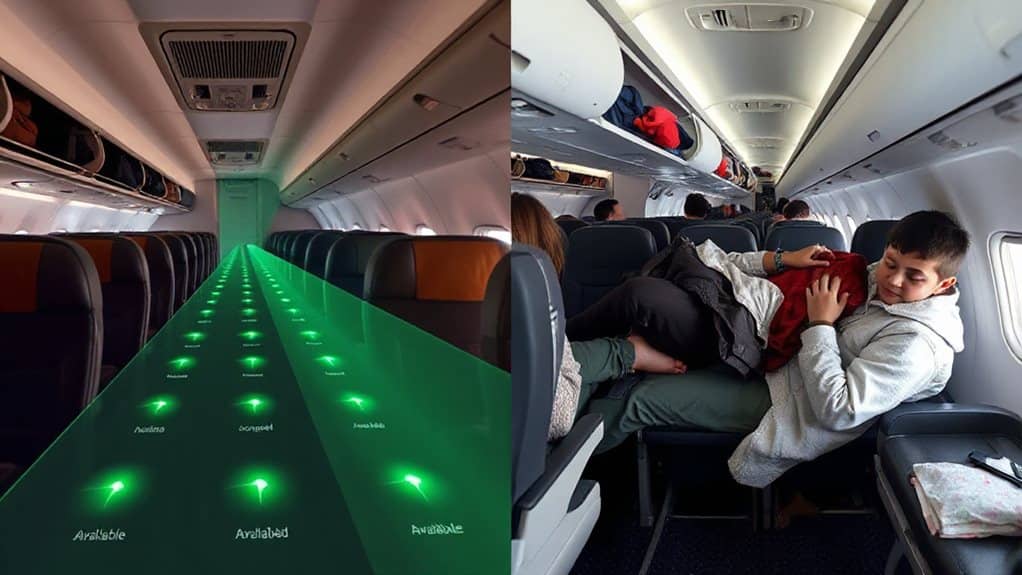
While you might expect the seat map you see online to show exactly who’s sitting where, the reality is that most systems don’t track real-time occupancy at all.
You’re viewing booking snapshots, not live updates. Delays happen, data refreshes vary, and airlines rarely share real-time info.
Booked doesn’t mean occupied—no-shows and standbys change the actual cabin layout without updating the map you see.
In contrast, advanced passenger flow systems can monitor actual movement and occupancy in real time using 3D stereo vision and AI-powered analytics.
Airport layouts, ticketing, and airline policies also affect how and when passenger location data is updated, which can lead to discrepancies between seat maps and actual onboard seating procedures.
Hidden Factors Behind Seat Availability
You might think seat maps show what’s really available, but the booking class you’re in often decides your options before you even search.
Airlines frequently block preferred seats—like exits or front rows—from being selected, even if they appear open. Last-minute aircraft changes can also shift your seat assignment, leaving you reassigned without warning. Seat width and pitch measurements can vary by aircraft and cabin, so what looks available on a map may not offer the actual dimensions you need.
Booking Class Tells Truth
Examine any flight search, and the seat map might show open spots, but the real story hides behind the booking class. You see available seats, but airlines control access by fare type. Your booking code determines flexibility, upgrades, mileage earnings, and change fees—rules invisible on seat maps. Full fares like Y or J offer freedom; discounted codes restrict you. Know your class to reveal what’s truly possible.
Airlines Block Preferred Seats
Airlines often hold back preferred seats from general availability, and the reasons go far beyond what shows up on a public seat map.
They block middle seats for safety during pandemics, honor corporate seat agreements, and combat fraudsters who hoard seats.
These hidden controls shape your choices, even if you’re unaware.
Real-time monitoring and booking rules quietly manage access, ensuring fairness, safety, and business stability behind the scenes.
Last-Minute Aircraft Changes
Equipment changes happen more often than most travelers realize, and they directly impact what you see—or don’t see—when selecting a seat.
Airlines swap planes last-minute, but seat maps lag hours or days behind. Your chosen layout mightn’t reflect the actual aircraft.
AI tools sometimes catch these shifts early, revealing hidden mismatches. Always double-check closer to departure—what’s online isn’t always what’s real.
Why Your Screen Doesn’t Show the Whole Cabin
You’ve probably noticed empty seats that disappear when you try to select them, and that’s because airlines often block off seats temporarily for operational reasons.
Some seats aren’t shown at all until check-in, especially those near exits or bulkheads, which require special eligibility.
Availability shifts constantly due to crew assignments, maintenance, or last-minute upgrades, so the map you see now mightn’t reflect what’s really there tomorrow.
Airlines may also staff more flight attendants than the legal minimum to cover different cabin sections and operational needs, affecting which seats are available minimum number.
Hidden Seats, Visible Gaps
Peering at a seat map online, you might think you’re getting the full image—yet what shows up on screen often glosses over key details.
Those visible gaps? They’re exaggerated, hiding lavatories or crew zones.
Seats angled or facing aisles rarely appear correctly.
Diagonal layouts and premium setups like Qsuite are often missing.
Always cross-check with airline-specific schematics to see what’s really there.
Dynamic Blocks, Shifting Availability
Even if you’ve already picked your seat, don’t assume the layout you see online will match what’s waiting on the plane.
Airlines change aircraft last-minute, shifting seat availability and blocking entire sections without notice. Maintenance, upgrades, or demand adjustments mean your cabin map could be outdated by departure. fluid blocks appear suddenly, so stay flexible—your ideal seat might vanish, and the real layout may differ from what your screen shows.
The Impact of Last-Minute Aircraft Swaps
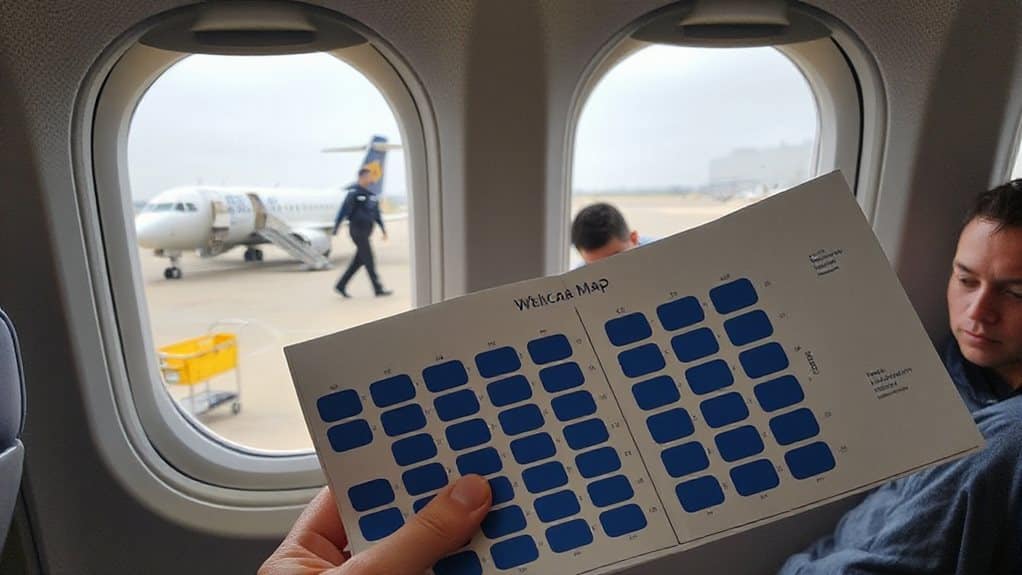
When airlines swap aircraft close to departure, your booked seat and expected amenities mightn’t match what’s actually available.
You could lose recline or overhead space due to downgrades. Fullness on seat maps may hint at swaps, especially within a week of flying.
Operational needs, maintenance, or weather often drive these changes, leaving little time to adjust.
Check updates regularly to stay informed. Additional enforcement of carry-on size and weight limits, especially at major hubs, can further affect what overhead space is actually available, so verify your bag meets carry-on dimensions before arriving at the airport.
How Fare Classes Reveal True Flight Fullness
You can gauge how full your flight really is by tracking fare class availability, not just seat maps. As demand rises, airlines close low-fare buckets and protect high-fare seats, signaling strong bookings.
Fare increases from $225 to $425 over 60 days reflect tightening availability. When economy classes lock out new bookings, your flight is likely nearly full, even if seats appear open. Gate agents often perform size checks and enforce carry-on limits like 22 x 14 x 9 inches during peak times, which can indicate higher load factors on particular flights.
Strategic Seat Blocking and Its Effects
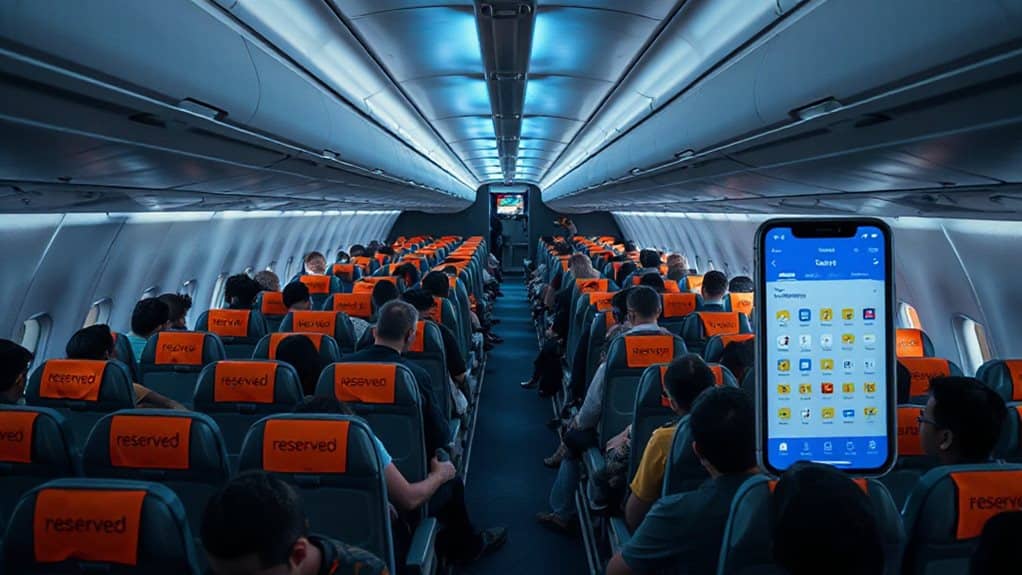
Airlines aren’t just selling seats—they’re reshaping how empty ones generate revenue, building on the same booking patterns you see when tracking fare class changes.
You can now pay to block adjacent seats, with options like Flair’s CAD$49 middle-seat block. Airlines use flexible inventory to offer these closer to departure, ensuring full-price seats sell first while still monetizing space others leave behind. Exit rows often come with extra legroom but sometimes limited recline as a safety trade-off.
Timing Matters: When Seat Maps Become Reliable
Though seat maps appear helpful at first glance, they’re often misleading during the early stages of booking, especially when fare restrictions limit seat selection or passengers delay their choices.
You’ll see real availability only after check-in opens, when assignments fill quickly.
For accuracy, verify your seat 24–48 hours before departure—maps stabilize hours before boarding, reflecting actual occupancy and final layout changes.
Tools That Go Beyond the Standard Seat Map
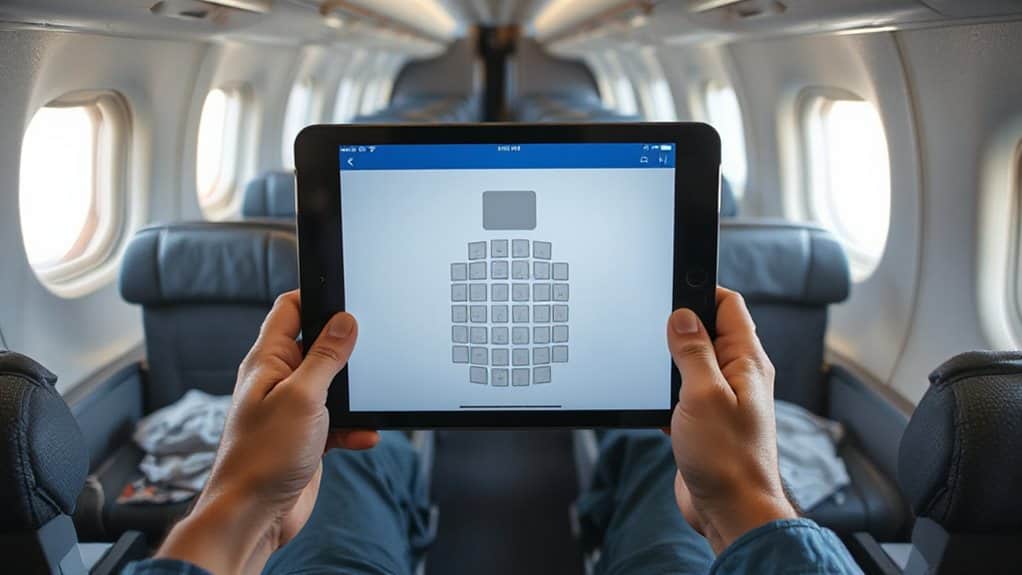
When it comes to securing the best seat, standard airline seat maps often fall short—revealing only a fraction of the full image.
You can use ExpertFlyer to monitor seat changes and fare details, aeroLOPA for scaled layouts and window accuracy, or SeatMaps for real photos and route-based searches.
Seats.aero and AwardFares help track award availability and blocked seats, giving you real-time, precise control beyond basic tools.
Managing Expectations for Smarter Seat Selection
You’ve seen the seat maps, checked the tools, and found what looks like the perfect spot—window in the front, extra legroom, no one beside you. But don’t trust it yet.
Airlines block seats for elite flyers, auto-assign at check-in, and swap aircraft. Empty spots may not be available. Maps lie.
Wait until 24 hours before departure, then recheck. Reality shifts until boarding.
And Finally
You now see that seat maps don’t always reflect reality. Real-time occupancy is often a myth, and hidden factors like fare class rules or last-minute plane changes affect what you’re shown. Airlines block seats for various reasons, and maps update inconsistently. Timing and tools matter—checking closer to departure or using third-party sites helps. Understanding these details gives you a clearer view, so you can choose seats smarter and avoid surprises when boarding.