You’ll pay different airline fees on each route because prices shift based on competition, operating costs, and demand. If a low-cost carrier enters the market, fares can drop by up to 60%. Airport fees, fuel expenses, and crew costs vary by location and flight length, directly affecting prices. High traffic or limited competition keeps fares higher, while real-time data and yield strategies adjust pricing adaptively. Season, timing, and seat availability fine-tune what you pay—understanding these factors reveals how every route’s pricing puzzle fits together.
TLDR
- Airport fees like landing charges and passenger facility fees differ significantly by location, directly impacting route-specific costs.
- Fuel and labor expenses vary by route length and region, making operating costs higher on certain flights.
- Competition from low-cost carriers can drastically reduce fares and ancillary revenue potential on specific routes.
- High-demand or congested routes, such as those to major hubs, often have higher prices due to limited capacity.
- Airlines use dynamic pricing models that adjust fees based on real-time demand, load factors, and booking patterns per route.
Impact of Low-Cost Carrier Competition on Route Pricing

When low-cost carriers (LCCs) enter a market, they don’t just shake things up—they often force prices down across the board.
You’ll see direct route fares drop by around €55, with some falling 55–60% under intense competition.
Legacy carriers slash prices, especially on economy tickets, and even routes without LCC service see lower connecting fares due to spillover effects.
This pattern is supported by studies showing a 17.2–20.6% fare reduction on North Atlantic routes following the entry of long-haul low-cost carriers like Norwegian.
Flight instructors and other high-utilization operators can accelerate market response by increasing available capacity on competitive routes, which further pressures fares annual hours.
How Competitor Market Share Influences Fare Adjustments
You’ve probably noticed fares differ widely on the same route, and that’s closely tied to how much market share each airline holds.
When a carrier dominates with over 30% share, they often keep fares higher, but competition from smaller airlines with lower prices pushes others to adjust.
If a low-share carrier enters the market, bigger airlines might simplify their pricing or unbundle fees to stay competitive.
Enforcement of rules like strict carry-on size limits can also affect ancillary revenue strategies and fare structures.
Market Share Impact
Market dominance shapes airfare levels in ways that directly affect what you pay.
When one carrier controls a large share, like Delta with 62%, fares rise—$198 versus $184 on average.
Dominant airlines maximize yields, especially at hubs.
But when smaller carriers compete, even below 10% share, they pull prices down.
More competition means lower fares, giving you more freedom to choose.
Competitive Pricing Response
Because airlines closely monitor their rivals’ moves, they adjust prices in real time to stay competitive or capitalize on advantages.
You see fluid changes when competitors shift fares, especially on routes where market share is contested.
Using API data and AI, carriers respond instantly, matching or undercutting prices.
Real-time shopping intelligence, not just historical trends, drive these decisions, ensuring precision and agility in competitive environments.
Variable Operating Costs Across Different Routes

You’ll notice fuel and labor costs shift depending on the route, since longer flights spread fixed expenses over more distance and reduce per-unit costs.
Airport fees also vary widely—landing, gate, and parking charges can spike at busy hubs or during peak seasons, directly affecting your bottom line.
On top of that, airlines adjust for stage length and aircraft type, so a short-haul regional jet flight often costs more per seat than a long-haul widebody flight.
Refueling time also varies by aircraft size, with wide-body jets generally requiring longer fueling times than narrow-body or private jets.
Fuel and Labor Differences
While fuel and labor costs aren’t the only expenses airlines face, they’re two of the biggest variables that shift from one route to another.
You’ll find fuel makes up nearly 30% of costs, spiking on long-haul flights. Labor, though smaller, varies by crew scheduling and route demands. Both change with distance, aircraft type, and operational needs, directly shaping the fees you pay.
Airport Fee Variations
Airlines don’t just face shifting fuel and labor costs when flying different routes—landing at various airports brings another layer of expense that directly affects what you pay. You’ll find fees vary widely across Europe, with some airports charging up to five times more than others.
Costs depend on aircraft weight, parking, gates, and passenger numbers, not just location. Even busy hubs like Heathrow or Istanbul show big price differences.
Tourist airports often keep fees low to attract flights, while data shows only a faint link between passenger volume and charges. Smart airlines use secondary airports or negotiate incentives to cut costs, helping keep your fares competitive.
Route-Specific Cost Adjustments
Because fuel, crew, and maintenance costs aren’t the same everywhere, airlines adjust their spending based on each route’s unique demands.
You’ll see higher fuel use on long-haul flights, like those with B777s burning $9,507 per hour.
Short routes raise per-seat costs due to fixed expenses.
Crew and maintenance costs also shift with flight length, frequency, and region, directly affecting how much airlines spend per trip.
Role of Airport-Specific Fees and Regulations

When you book a flight, the price you pay often reflects more than just distance or demand—airport-specific fees and regulations play a key role in shaping the final cost, especially through charges tied directly to where planes take off and land.
You face Passenger Facility Charges of up to $4.50 per segment, capped at $18 round-trip. Airports set landing fees based on aircraft weight, time of day, and operation type, which you indirectly cover. These fees, regulated by the FAA, fund safety, security, and infrastructure.
Airports must use the revenue for aviation purposes only, not general city budgets. Fee structures vary by location, so your route determines what you pay. Additional charges can also reflect airport-specific costs such as landing fees and per-aircraft operating expenses.
Demand Patterns and Dynamic Pricing Strategies
While you might expect flight prices to follow a predictable pattern, they often shift based on how demand builds over time—and airlines use variable pricing strategies to adjust fares in real time.
You’ll see prices rise as seats fill, especially in high-demand or monopoly routes. Airlines track booking trends, competition, and your behavior to tweak fares.
Advanced systems even use AI to analyze millions of data points, ensuring prices reflect current demand, maximizing revenue while offering fluid options across channels.
Commercial air travel is statistically much safer than driving, with about 0.07 deaths per billion passenger miles compared to 7.28 for cars, reinforcing why many travelers choose air travel for long-distance trips.
Seasonal and Time-Based Fare Fluctuations
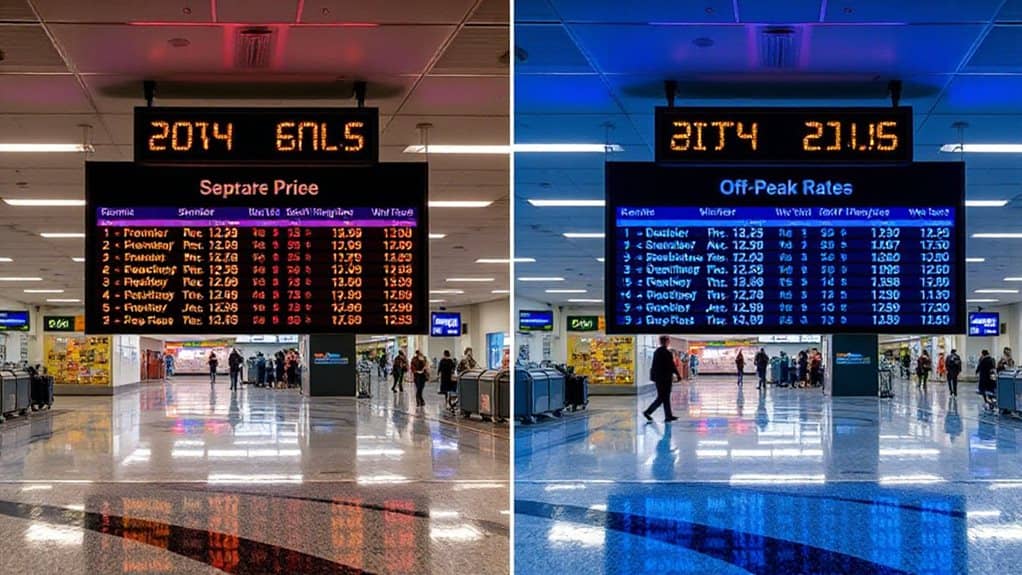
Airlines don’t just adjust prices based on how many seats are left or who’s booking—they also shift fares according to the time of year and day of travel, creating predictable patterns you can use to your advantage.
You’ll save 15–30% in winter or fall, fly midweek for $56 off, and book 28–61 days ahead, especially in spring. Lower demand means lower prices—freedom to discover without the peak-season markup.
Cruise and travel markets also show predictable seasonal dips, such as cheaper Caribbean sailings in September and October, which reflect the same demand-driven pricing dynamics.
Influence of Airport Size and Traffic Growth
Because airport size and traffic levels directly shape operating costs, you’ll often pay more to fly into major hubs where infrastructure demands and congestion drive up fees. Larger airports charge more for bigger planes and busier times.
Congestion increases fares—Heathrow’s are 18% higher. Even with similar traffic, costs vary widely. Strategic limits and agreements often outweigh price, so low fees don’t always mean more flights.
Load Factor and Real-Time Pricing Decisions
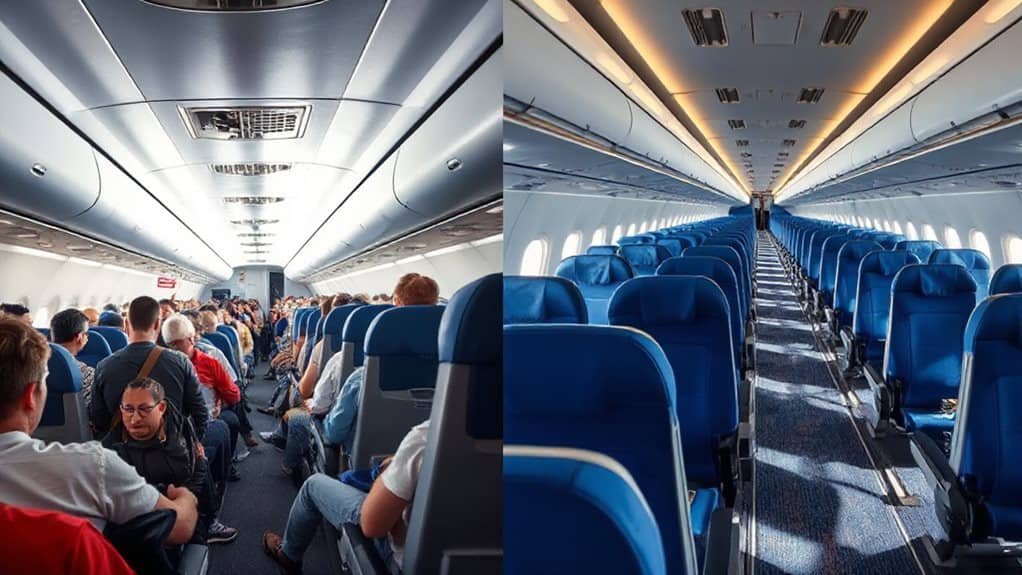
You’ve seen how airport size and congestion influence operating costs and, in turn, ticket prices—now consider how airlines manage those costs by fine-tuning prices based on actual demand.
You’re charged more when flights fill up, less when seats remain.
Real-time data tracks load factors, adjusts fares automatically, and predicts willingness to pay—keeping planes full and prices responsive without manual oversight.
Use of Fare Buckets and Yield Optimization Techniques
When you book a flight, the price you pay isn’t just based on supply and demand—it’s shaped by a structured system of fare buckets and sophisticated yield optimization techniques.
Airlines split seats into discount and full-price buckets to protect high-yield inventory.
They adjust prices adaptively, use booking rules to segment travelers, and apply AI-driven models to maximize revenue while keeping capacity aligned with real-time demand forecasts.
And Finally
You see fare differences across routes because airlines adjust prices based on competition, operating costs, and demand. Low-cost carriers push rivals to lower fares, while airport fees and regulations add variable expenses. Airlines use flexible pricing, reacting to seasonality, time of booking, and load factors. By segmenting fares into buckets and optimizing yield, they maximize revenue. Your ticket price reflects these real-time, route-specific decisions, not just distance.