You can bring fishing gear on a plane, but you must follow airline size and weight restrictions, usually packing rods in cases no larger than 22 x 14 x 9 inches for carry-on or checking larger items. Disassemble reels and pack hooks securely to prevent damage or injury. Sharp items should be sheathed or wrapped, and fragile gear should be packed carefully. Customs rules and import/export regulations vary by country, so preparing proper documentation helps guarantee smooth travel. Continue for detailed guidance on making your trip hassle-free.
TLDR
- Yes, you can bring fishing gear on a plane, but it must comply with airline size and weight restrictions.
- Disassemble rods, pack hooks separately, and use sturdy cases to prevent damage during travel.
- Fishing tackle can be carried onboard or checked, but verify airline-specific policies beforehand.
- Properly pack and declare your gear to comply with TSA security and customs regulations.
- Research destination country import/export rules and secure necessary permits to avoid delays or confiscation.
Can I Bring Fishing Gear on a Plane?
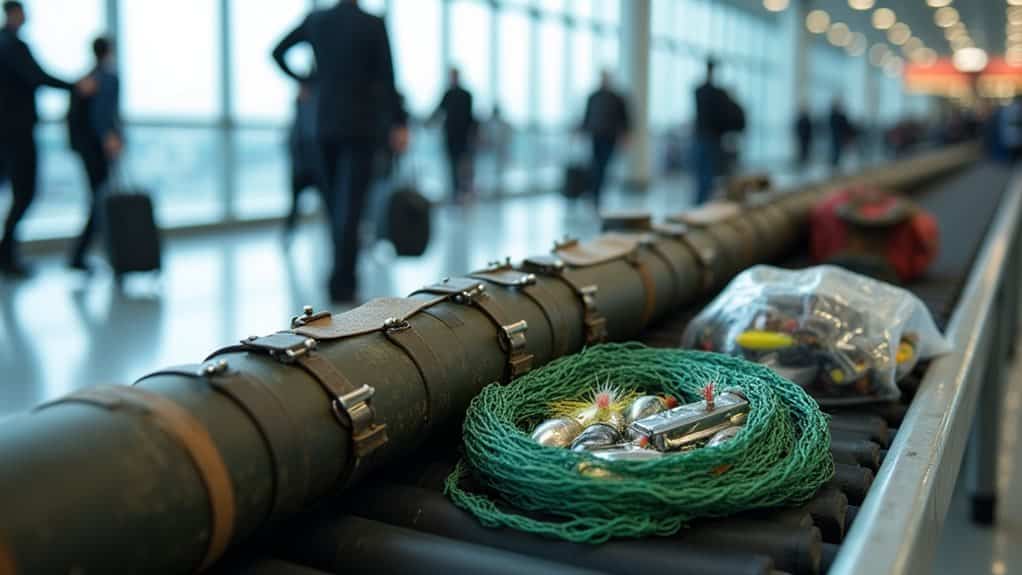
Yes, you can bring fishing gear on a plane, but there are specific guidelines you need to follow. Your fishing gear, including rods and reels, must comply with checked baggage size restrictions. Often, these items should be stored in sturdy tubes to prevent damage. Sharp hooks should be checked in, while reels and fragile items are best carried on. Also, if you plan to listen to music during your flight, remember that offline listening(Premium download requirement) is only available with a Premium subscription and requires downloading beforehand.
What Are the Airline Policies for Carrying Fishing Equipment?
Airline policies on carrying fishing equipment vary, especially regarding size and weight limits for both carry-on and checked bags.
Many airlines allow fishing rods in carry-on luggage if they fit within specific dimensions, typically around 22 x 14 x 9 inches.
Larger rods usually need to be checked in and might incur additional fees.
It’s important to review your airline’s specific rules before traveling, as restrictions can differ between carriers and destinations. airline policy considerations
Size and Weight Limits
What’re the typical size and weight restrictions for bringing fishing gear on a plane?
You can usually check fishing rods as luggage, with size limits around 115 inches combined length and width.
The standard weight limit for checked luggage, including fishing gear, is roughly 50 pounds.
Oversized or overweight rods may incur fees, but policies vary by airline.
Carry-On vs. Checked
When deciding whether to carry fishing gear onboard or check it in, understanding airline policies is key.
If your fishing rod fits within carry-on luggage size limits, usually around 22-24 inches, you can bring it into the cabin.
Otherwise, packing it in a checked bag under 115 inches in total dimensions often avoids extra fees.
Always verify airline-specific rules first.
How Should I Pack My Fishing Gear to Prevent Damage and Ensure Compliance?
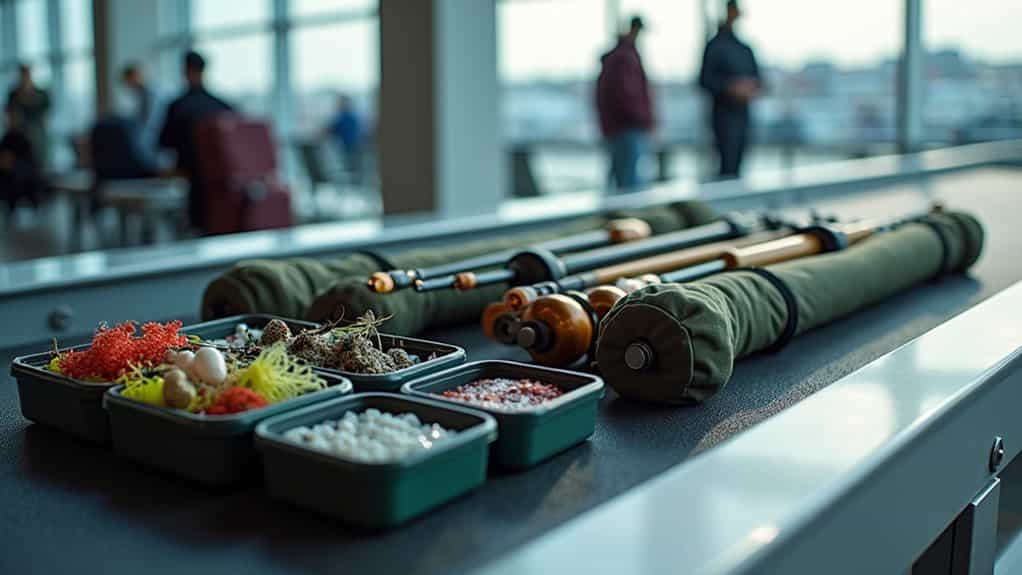
Properly packing your fishing gear is vital to prevent damage and guarantee it complies with airline regulations.
Use a sturdy, rod container that fits airline size restrictions. Disassemble lures, and pack hooks separately for security.
Protect reels with padding like socks or foam. Secure fragile items in carry-on luggage for better oversight.
Label equipment and consider using lockable, hard-shell cases for extra security.
When traveling on standby-only operation, remember that seats are never guaranteed, so pack in a way that allows quick access at the gate and minimizes the chance of needing to rearrange delayed items.
What Are the Size and Weight Limits for Flying With Fishing Gear?
Flying with fishing gear requires understanding airline size and weight limits, which vary. Most airlines allow a fishing rod as checked luggage if it’s under 115 inches in total length and weighs less than 50 pounds. Seat belt extenders are generally available from cabin crew if needed when packing tightly and traveling, so plan accordingly. Oversized or heavy gear may incur fees or need special arrangements. Always verify specific airline policies before traveling to confirm compliance.
Can I Bring Lures, Hooks, and Reels in My Carry-On?
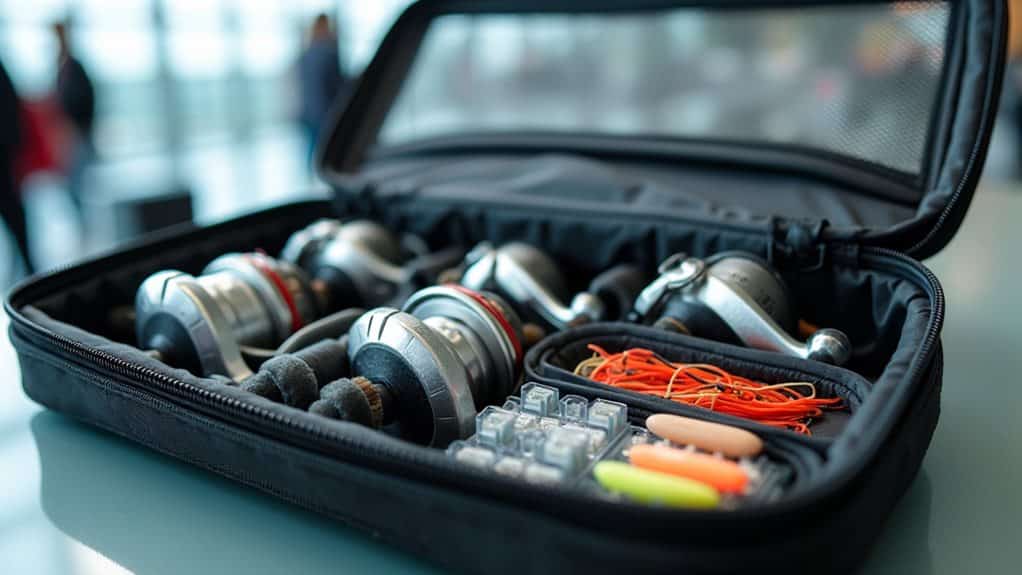
You can generally bring lures, hooks, and reels in your carry-on luggage if you pack them properly and follow size regulations.
Sharp hooks should be disassembled and stored separately to prevent security issues, especially if they’re large or rigged.
Reels, particularly smaller models, are usually allowed in their cases, but larger reels may need to be checked.
Verify airline policies and arrive early for security screening.
You may also want to be prepared for electronics screening, since airport security can require removal of larger devices from carry-on for X-ray checks.
Packing Sharp Hooks Safely
Packing sharp fishing hooks in your carry-on requires careful preparation to guarantee safety and compliance with airline regulations. To assure smooth travel, sheath or securely wrap the sharp hooks to prevent injury or security concerns during screening.
Removing hooks from lures and packing them separately helps avoid delays or confiscation. Always verify airline and TSA guidelines before traveling with your fishing gear.
Carrying Reels Securely
Reels are generally permitted in carry-on luggage, provided they’re packed properly to prevent damage and guarantee safety during screening.
You should place your fishing reel in your carry-on bag, ensuring it’s packed securely with padding or in its original case. This protects the reel from damage and complies with TSA guidelines, making it easier to pass through security.
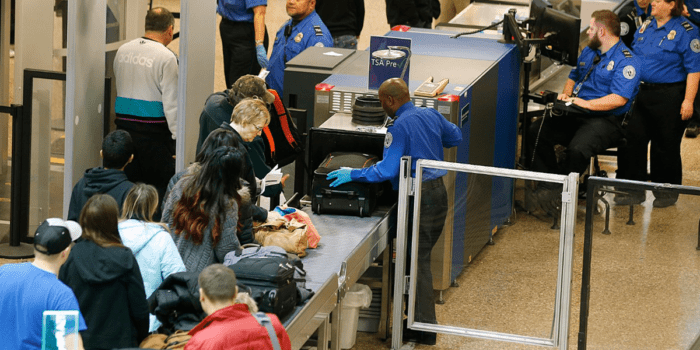
What Does TSA Say About Bringing Fishing Tackle Through Security?
The Transportation Security Administration (TSA) generally allows fishing tackle and hooks in carry-on luggage if they’re properly packed and disassembled.
You can bring small flies and delicate tackle, but larger hooks and metal lures are better suited for checked baggage.
Ultimately, TSA officers decide during screening, so packing safely and securely is essential for smooth security clearance.
As with seat width measurements, TSA screening can hinge on what’s visible and how items are presented.
How Do I Pack Sharp or Fragile Fishing Items Safely and Legally?
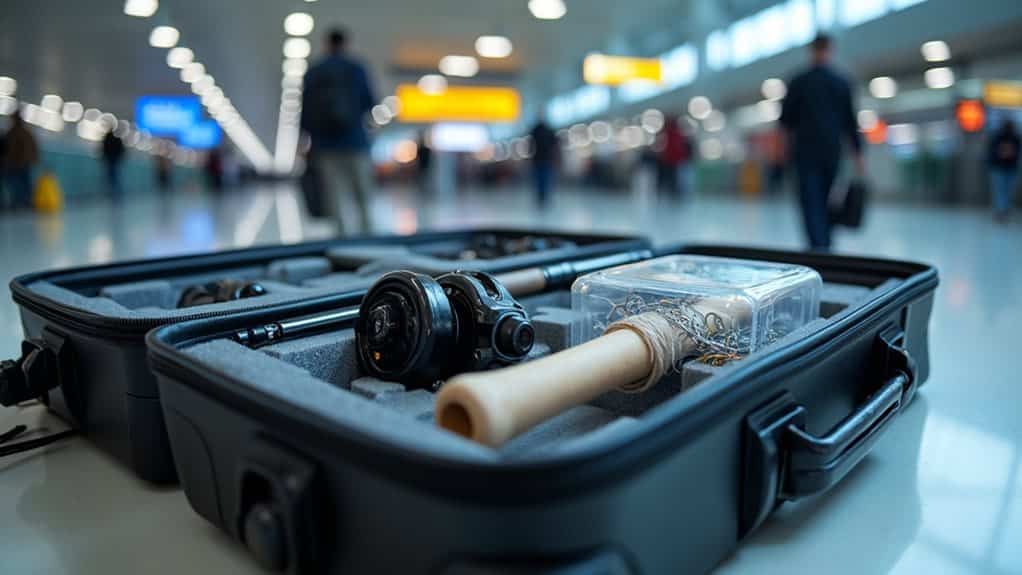
To guarantee sharp items and fragile tackle are packed safely and legally, you should take specific precautions that reduce injury and damage. Remove hooks from lures, and pack sharp items in checked luggage with secure sheaths or wraps.
Use hard-shell cases for delicate gear, and separate sharp items from other gear to minimize security concerns and confirm packing safety.
Is It Better to Check My Fishing Gear or Carry It On?
Deciding whether to carry your fishing gear on the plane or check it as luggage depends on several factors, including the size, value, and fragility of your equipment.
Carry-on allows easier access and less risk of damage for compliant gear, but larger or fragile items are better checked.
Airlines permit fishing rods in checked luggage, with some fees for larger or non-standard gear.
What International Customs and Import Rules Should I Know When Traveling With Fishing Gear?
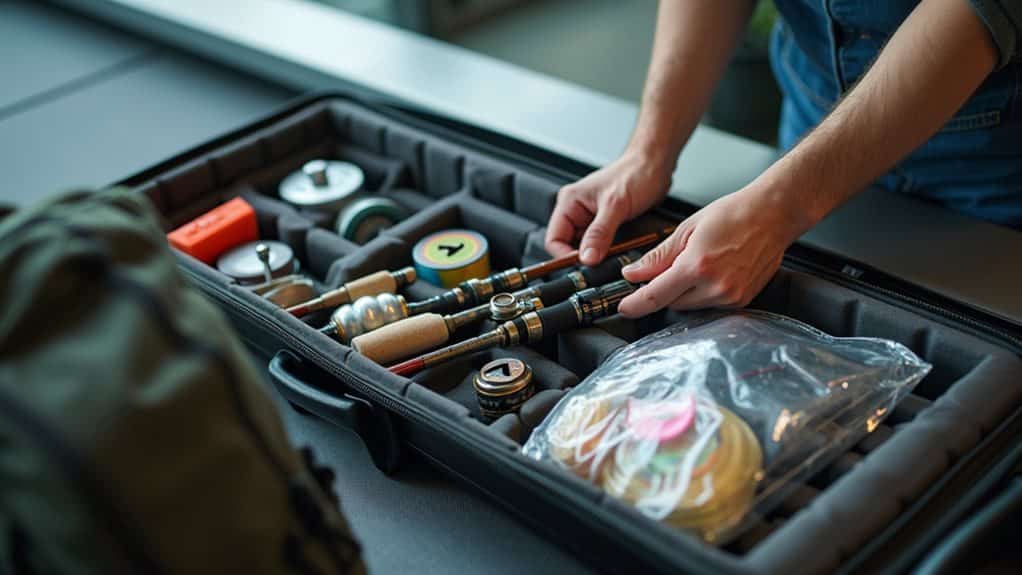
When traveling with fishing gear internationally, it’s important to understand the import taxes and fees that may apply, which can vary greatly depending on the country you visit.
You should also be prepared for border inspection procedures that require declaring your equipment, especially if it’s precious or large, to avoid fines or confiscation.
Additionally, research the export regulations and permits needed in your home country and destination to guarantee your gear complies with all legal requirements.
Import Taxes and Fees
Traveling with fishing gear internationally often involves managing customs regulations and understanding potential import taxes or fees.
You may be charged import taxes or customs fees based on your gear’s value, and some countries require permits or documentation.
Declaring your fishing gear at customs can help you avoid fines, unexpected costs, or confiscation, ensuring a smoother expedition.
Border Inspection Procedures
Understanding border inspection is essential when traveling internationally with fishing gear, as each country has its own customs regulations.
When passing through border inspection, declare your gear and present receipts for expensive items.
Packing gear in checked luggage reduces delays and confiscation risk.
Be aware of specific import rules, potential fees, and biosecurity requirements to guarantee smooth clearance and compliance.
Export Regulations and Permits
Export regulations and permits are critical considerations when traveling internationally with fishing gear, as many countries require export permits and compliance with customs regulations.
If your gear includes biological materials like live bait or fish, health certificates may be necessary.
Without proper documentation, customs may seize or delay your equipment, so research and secure all permits before departure.
How Can I Avoid Delays and Extra Fees When Flying With My Fishing Equipment?
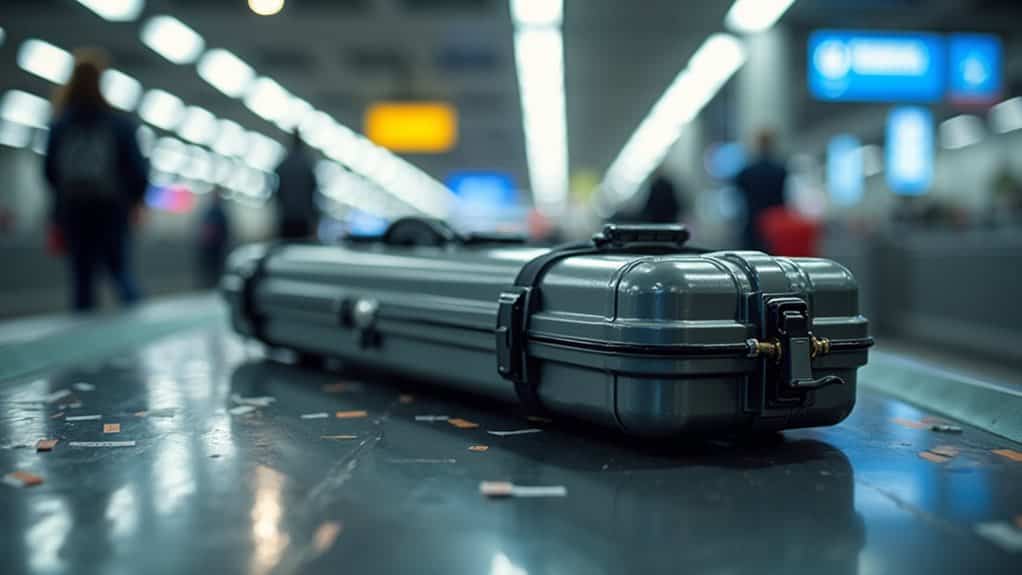
To avoid delays and extra fees when flying with fishing gear, it’s important to plan ahead and communicate with your airline.
Confirm policies and size restrictions for checked baggage, and pack gear securely in sturdy tubes.
Disassemble reels and hooks, label fragile items, and arrive early for security screening.
Checking gear in can also help prevent delays and extra charges.
And Finally
Traveling with fishing gear requires careful planning to comply with airline policies and international regulations. Pack your equipment properly, considering size and weight limits, and choose whether to check or carry on based on fragility and convenience. Be aware of customs rules and potential fees to avoid delays. By understanding these guidelines, you can guarantee a smooth voyage with your fishing gear, making your fishing trip more enjoyable and stress-free.