
You’ll see clear “Connections” signs and digital displays that show real‑time gate changes, while staff or app notifications guide you to the right terminal. Minimum connection times guarantee you have enough time to move, and automated handover points verify your boarding pass and baggage via RFID tags. Transit trains or driverless shuttles run every 10–15 minutes, linking terminals efficiently. A central hub monitors flight status, adjusts security lanes, and AI‑driven wayfinding screens display alerts in many languages, keeping the flow smooth and safe—more details await if you keep going.
TLDR
- Signage, digital displays, and app notifications guide passengers to connecting gates and transfer routes.
- Minimum Connection Times (MCTs) ensure sufficient time for luggage handling and security checks during transfers.
- Airport transit trains or driverless shuttles run every 10‑15 minutes, linking terminals as the primary movement backbone.
- RFID/barcode tags link checked bags to boarding passes; scanners and the departure control system verify matches in real time.
- Centralized AI monitors flight status and shuttle locations, adjusting security lanes and wayfinding screens instantly.
How Airport Staff Guide Connecting Passengers in the Airport Transfer Process
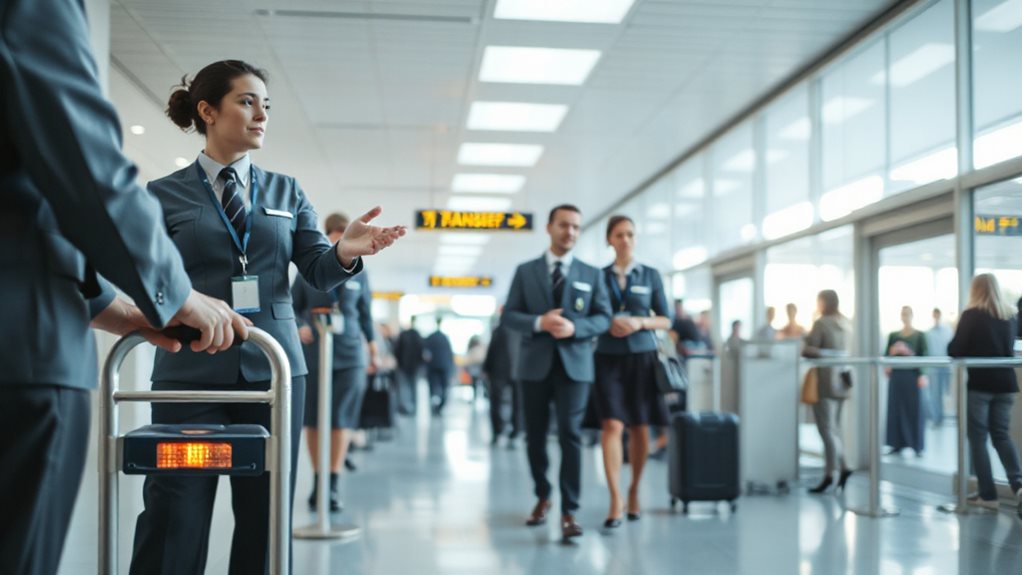
When you arrive at a connecting flight, airport staff steer you through the transfer process using a combination of clear signage, digital displays, and personal assistance. You follow “Connections” signs, check TP‑01 codes, and consult app updates for gate changes. Staff issue boarding passes at kiosks if needed, verify documents, and direct you to secure corridors or customs lines, ensuring a smooth, autonomous handover. MCTs are enforced to guarantee sufficient time for passengers and luggage to make the connection. To keep the handover truly seamless, TSA PreCheck can help you move through screening faster if you’re eligible.
How the Airport Transit Trains Move Travelers Between Terminals in the Transfer Process
Airport transit trains act as the backbone of terminal‑to‑terminal movement, shuttling passengers quickly and reliably across sprawling airport complexes.
You’ll board driverless cars at O’Hare, METRO Blue Line at Minneapolis, or BART Red Line at San Francisco, then ride every 10‑15 minutes to the next gate.
Platforms feature screen doors, digital wayfinding, and canopies, while people‑movers link distant terminals, parking, hotels, and rentals, ensuring you stay on schedule.
To cut delays in your overall transfer experience, use fast-track lanes elsewhere in the airport to reduce time spent in high-wait areas like check-in and security.
How Baggage Reconciliation Keeps Luggage on the Right Flight During Airport Transfers
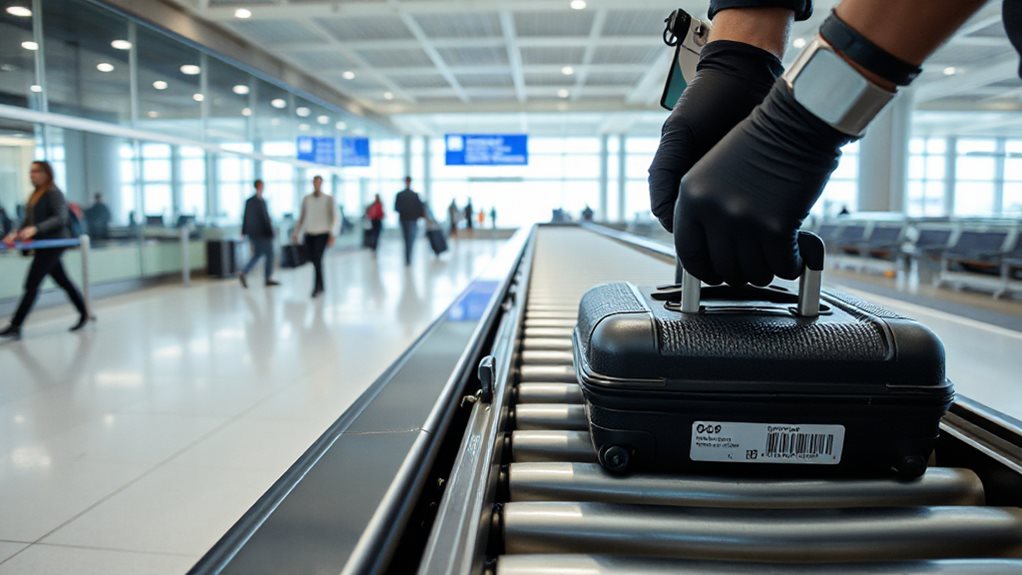
The shuttle trains that whisk you between terminals also set the stage for the next critical step: making sure your checked baggage stays with you.
After check‑in, a barcode or RFID tag links your bag to your boarding pass.
Scanners read the tag at each handling point, and the departure control system verifies the match before loading.
Real‑time alerts flag any mismatch, ensuring only bags belonging to boarded passengers board the aircraft.
Because baggage fees and allowances can vary by airline, baggage allowance rules also help staff confirm that each passenger’s luggage complies with the correct weight, size, and piece limits before transfer loading.
How Real‑Time Data Drives Queue and Flow Management in Airport Transfers
Leverage real‑time data to streamline queue and flow management across airport transfers, and by feeding live flight‑status feeds, passenger‑flow forecasts, and shuttle‑tracking signals into a centralized operations hub, you can instantly adjust staffing, open or close security lanes, and reassign shuttle drivers to match current demand. Live ETA updates let you reroute shuttles, while predictive passenger models trigger lane openings 30 minutes early, keeping movement fluid and freeing travelers from bottlenecks. No smoke-free restrictions also means operators can better forecast screening throughput without accounting for vaping/pouch smoke issues, supporting steadier transfer timing.
How AI‑Powered Wayfinding Screens Optimize Safety in the Airport Transfer Process
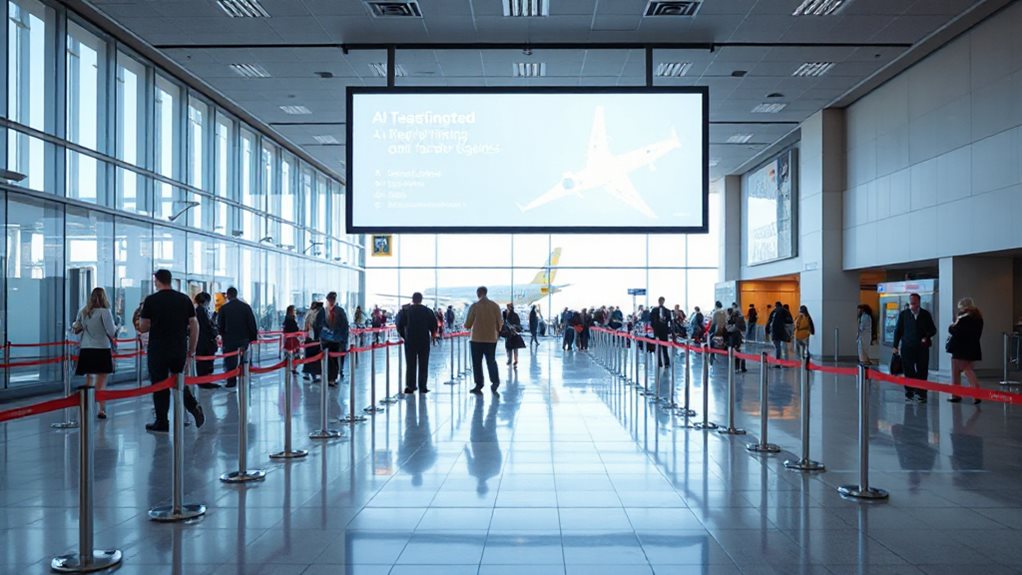
Integrate AI‑powered wayfinding screens into your airport transfer hub, and you’ll instantly enhance safety while guiding passengers.
The displays pull real‑time flight and security data, showing gate changes, checkpoint status, and alerts in dozens of languages.
They flag loitering or wrong‑direction travel, adjust routes instantly, and share heat‑map information with staff, preventing bottlenecks and keeping everyone moving safely.
For transfer passengers carrying electronics, the screens can reinforce carry-on battery rules so spare lithium batteries and power banks stay out of checked luggage.
And Finally
By understanding how staff guide connecting passengers, how transit trains shuttle travelers, and how baggage reconciliation keeps luggage on the right flight, you’ll steer airport transfers more confidently. Real‑time data and AI‑powered wayfinding screens help queues moving and maintain safety, while clear signage and staff assistance reduce confusion. These coordinated systems streamline the transfer process, minimizing delays and helping you reach your next gate efficiently.