You avoid midair collisions by relying on TCAS, which scans for nearby aircraft and tells you to climb or descend if needed. Air traffic control assigns precise altitudes, separating planes by 1,000 or 2,000 feet depending on the flight level. You also scan outside in segments, use ADS-B for real-time traffic updates, and follow alerts from ground systems like STCA—each layer adding protection. Modern procedures and technology work together seamlessly, so you’re always aware of nearby traffic. There’s more to how these systems interact than meets the eye.
TLDR
- Traffic Collision Avoidance Systems (TCAS) detect nearby aircraft and issue climb or descend advisories during close encounters.
- Altitude separation protocols assign specific flight levels, maintaining 1,000 or 2,000 feet of vertical spacing based on altitude and RVSM approval.
- Pilots perform systematic visual scans in 10°–15° segments to detect nearby traffic and support instrument-based awareness.
- Air Traffic Control uses ground radar and Short-Term Conflict Alerts (STCA) to monitor and resolve potential conflicts in controlled airspace.
- ADS-B provides real-time traffic and position data to pilots and controllers, enhancing situational awareness and coordination.
Utilizing Traffic Collision Avoidance Systems (TCAS)
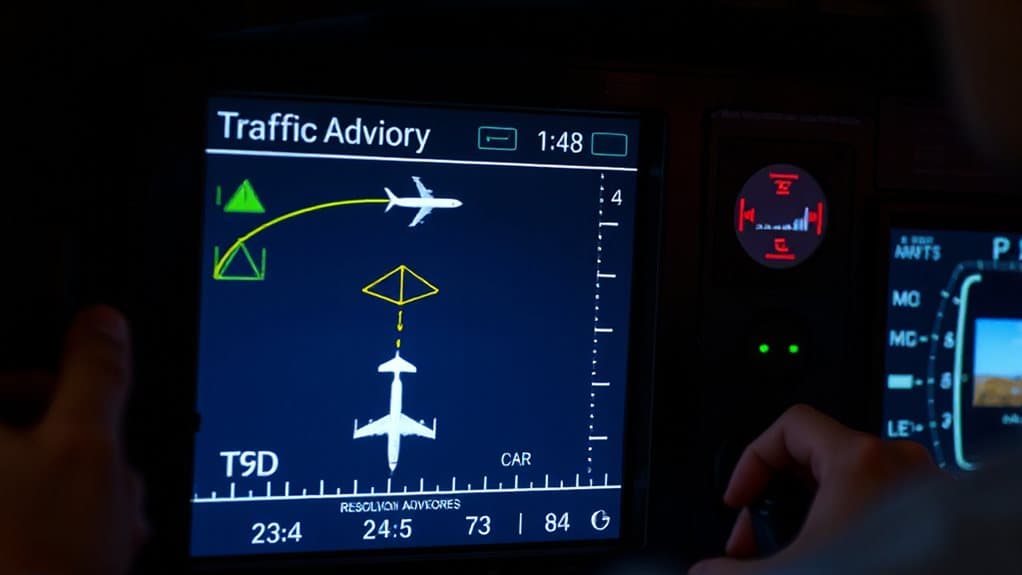
Imagine yourself flying through busy airspace, surrounded by aircraft you can’t see—TCAS helps guarantee you don’t get too near.
You rely on it to scan the skies, using transponder signals to map nearby planes in 3D. It alerts you with “Traffic, traffic” for potential threats, or issues climb or descend commands during close calls, keeping everyone safe.
This system operates independently of air traffic control, ensuring continuous monitoring and operates independently of air traffic control using radar and communication signals. Modern aircraft also include enhanced shielding and other safeguards that reduce the likelihood of electronic interference from personal devices.
Following Altitude Separation Protocols
While maneuvering through controlled airspace, you rely on strict altitude separation protocols to prevent midair conflicts, with Air Traffic Control assigning specific flight levels to maintain safe vertical distances between aircraft.
Below FL290, 1,000 feet separation applies; above, it’s 2,000 feet unless RVSM-approved.
You must have authorization, proper equipment, and verified altitude-keeping performance to fly in RVSM airspace between FL290 and FL410.
Heavy aircraft generate significant wake turbulence, so controllers also apply increased spacing and procedures when sequencing heavy traffic to reduce wake-vortex hazards.
Applying Effective Visual Scanning Methods
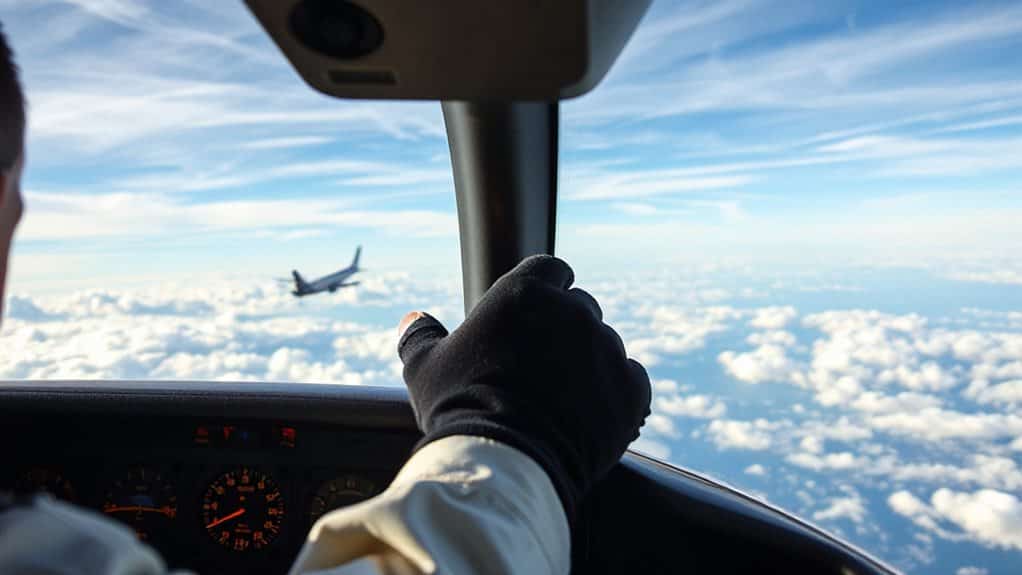
Even with precise altitude assignments from Air Traffic Control, you’re still responsible for actively spotting potential traffic conflicts, especially in visual conditions.
Scan the sky in 10°–15° segments, focusing each for 1–2 seconds. Use horizontal and vertical sweeps, checking above and below your flight path.
Clear before maneuvers with gentle turns, and rely on peripheral vision to catch movement. Combine this with ADS-B and traffic calls for maximum awareness. Hot, dry conditions can help extend an aircraft’s service life by reducing corrosion risk and environmental wear, as shown in desert storage studies.
Leveraging Air Traffic Control and STCA Alerts
Since you rely on multiple layers of safety to prevent midair collisions, it’s essential to understand how Air Traffic Control (ATC) and automated ground-based systems like Short-Term Conflict Alert (STCA) work together to identify potential conflicts.
You receive traffic updates and separation instructions from ATC, while STCA alerts controllers to imminent conflicts.
Though radar updates are slower than onboard systems, these ground tools help maintain safe distances, especially in controlled airspace, giving you an added layer of protection during flight.
Before departing on international flights, you must also complete required flight plan filing and customs procedures according to destination regulations.
Enhancing Awareness With ADS-B and Pilot Communication
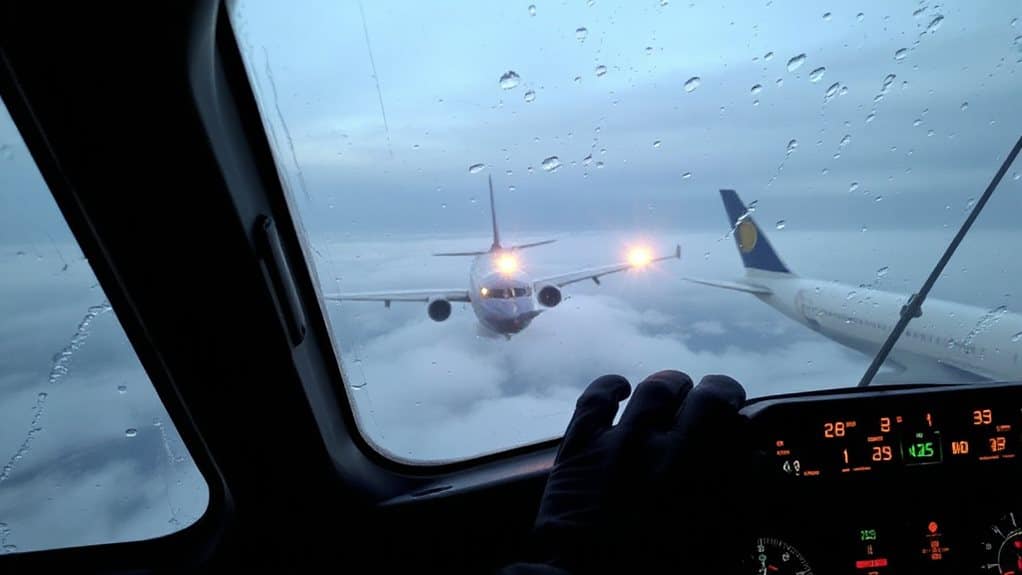
You already depend on Air Traffic Control and systems like STCA to flag potential conflicts from the ground, but now you can take awareness a step further with ADS-B technology.
You receive real-time traffic, weather, and aircraft data directly in the cockpit, enhancing situational awareness.
ADS-B In highlights nearby traffic, issues audio alerts, and supports informed decisions—especially in high-traffic or remote areas—while enhancing coordination with ATC and other pilots.
Small aircraft can further extend safe operational reach by optimizing fuel and weight management for longer time on station and increased flight range.
And Finally
You rely on multiple layers of safety to avoid midair collisions. TCAS alerts you to nearby aircraft and tells you to climb or descend. You follow strict altitude rules based on direction, keeping planes separated. You scan outside and use ADS-B to see traffic around you. Air traffic control and STCA systems back you up. Clear communication and teamwork keep skies safe. These tools work together, reducing risk effectively.