
You can fly to Dubai from the U.S. for around $560 round-trip, with domestic fares as low as $54 one-way if booked early. Budget hostels start at $60, while luxury hotels like Atlantis The Palm cost more. Daily meals range from AED 10 for street food to AED 230 for two at mid-range restaurants. The metro is affordable with NOL cards, and activities like desert camps or spa treatments add to your experience. Cheaper travel times include August. Smart planning helps you enjoy more.
TLDR
- Domestic flights start at $54 one-way, while U.S. round-trip fares begin around $560; book early for best rates.
- Budget accommodations like hostels start at $60/night, while luxury stays such as Atlantis The Palm cost significantly more.
- Use Dubai’s metro with NOL cards for affordable, efficient travel; trams and buses offer additional low-cost options.
- Expect to spend AED 10–35 for street or fast food, and AED 230 for a mid-range dinner for two.
- Traveling in August or February can lower airfare and accommodation costs due to off-peak seasonal pricing.
Understanding Flight Expenses for Dubai Travel
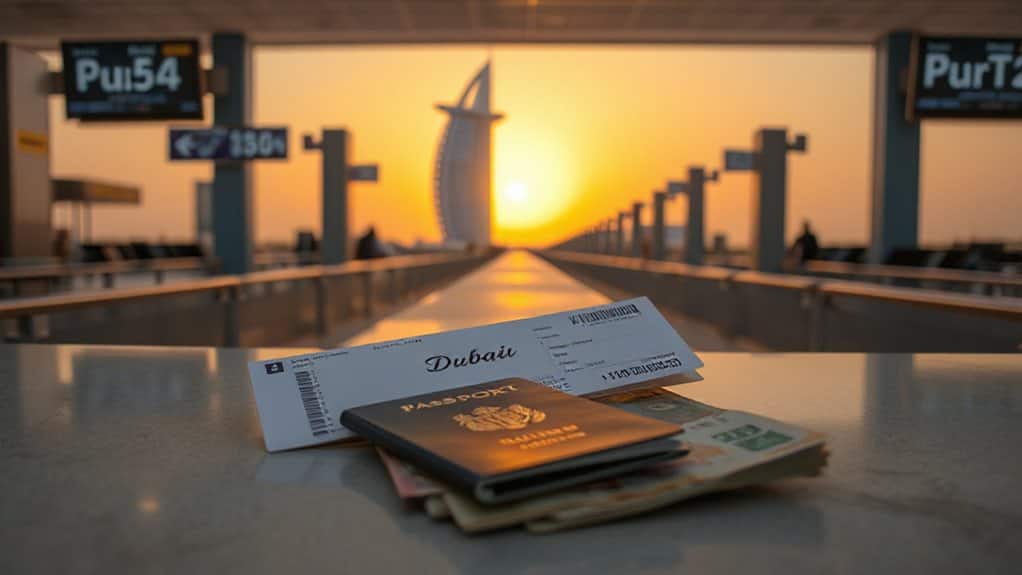
When planning your trip to Dubai, flight costs will likely be one of your biggest expenses, so it’s smart to understand how prices vary by origin, season, and airline.
You can find deals as low as $54 one-way domestically, while U.S. flights start around $560 round-trip. Booking early and using price alerts helps you snag lower fares, especially in cheaper months like February or March. The cheapest month to fly is August, making it an ideal time to visit if you’re seeking lower airfare. Keep in mind that overall travel costs also depend on destination-specific living costs and price differences between cities, such as urban vs rural variations.
Choosing the Right Accommodation for Your Budget
A range of accommodation options in Dubai guarantees you can find a place that fits your budget, whether you’re looking for a no-frills stay or a luxury experience.
Choose budget hostels like Bollywood Beach from $60, mid-range hotels such as Citymax Bur Dubai, or splurge on 5-star stays like Atlantis The Palm.
Location matters—staying outside the center saves money, while areas near Burj Khalifa offer convenience at a premium.
You can also save by choosing neighborhoods near public transport hubs and major attractions like the KLCC Park so you spend less on transit.
Daily Food and Dining Costs in Dubai
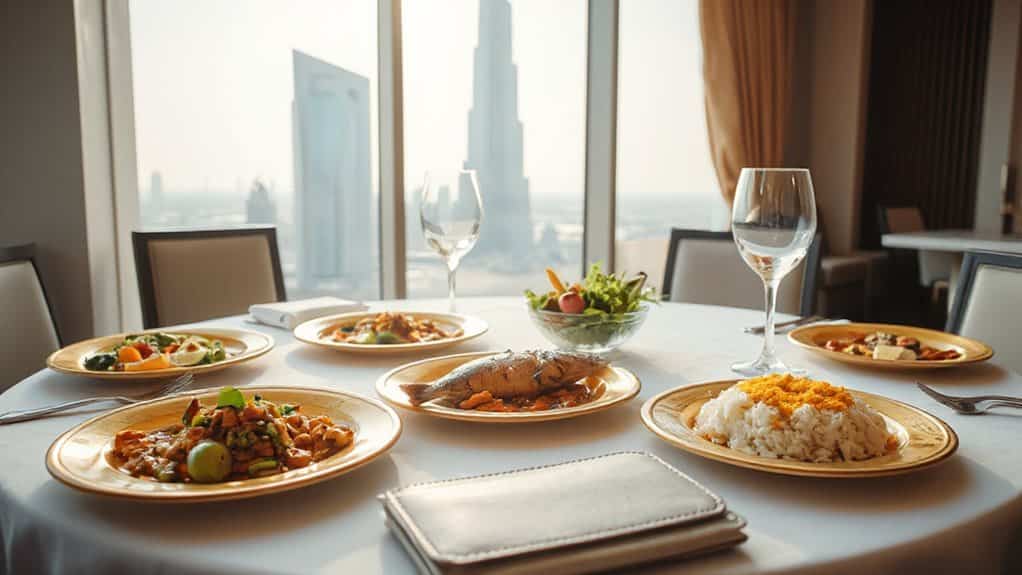
You’ll usually find that eating in Dubai fits a range of budgets, depending on your choices.
Grab a falafel plate for AED 10 or a fast-food meal for AED 20–35. Casual dining runs AED 35–60 per person, while mid-range dinners for two cost around AED 230. For luxury, expect AED 150–400 per person.
Grocery shopping? Budget AED 600–1,200 monthly.
When flying with edible souvenirs, consider packing chocolates in your carry-on inside an insulated bag with frozen gel packs to reduce melting risk and keep them accessible during the flight (carry-on vs checked).
Local Transportation Options and Average Prices
While exploring Dubai, getting around efficiently often means relying on its well-connected public transit network, especially during major events like New Year 2026.
Use the clean, fast metro with NOL cards—trains run every few minutes.
The tram links Marina and JBR, while the Palm Monorail (15 AED one-way) reaches Atlantis.
Buses and over 14,000 taxis offer flexibility; avoid driving due to road closures and congestion.
Flying private jets at high altitudes can reduce travel time for certain routes and help avoid congested commercial airspace.
Top Activities and Sightseeing Experiences
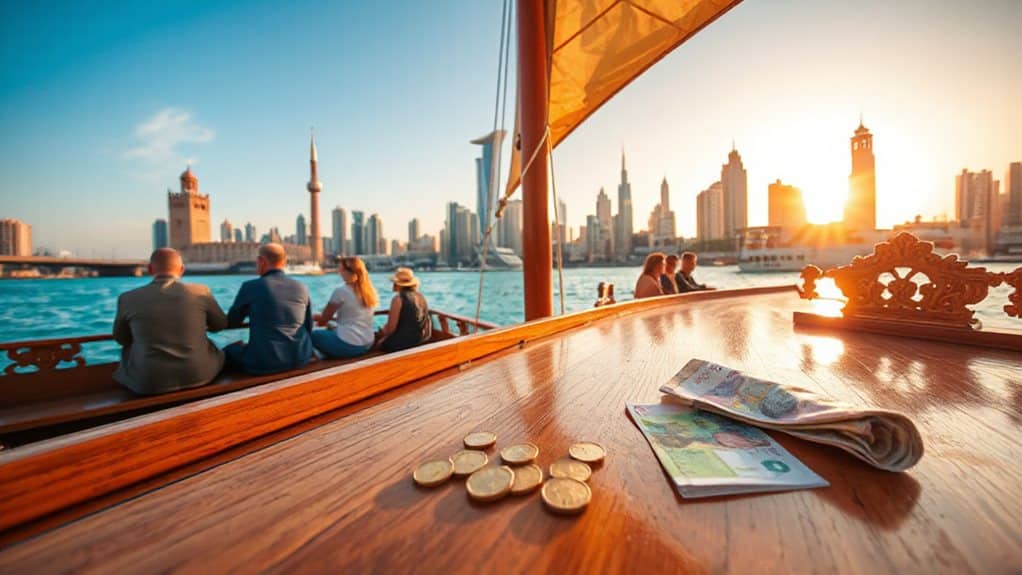
You can discover Dubai’s rich culture through guided walks in the old souks, where traditional markets and street food offer a taste of local life.
For relaxation, try a wellness treatment at a luxury spa, with many resorts offering aromatic therapies and thermal experiences.
These activities provide a balanced mix of heritage and rejuvenation during your visit.
Boat trips along the Chao Phraya River also offer scenic views of riverside life similar to other Asian cities.
Immersive Cultural Experiences
For travelers seeking to uncover Dubai’s rich blend of tradition and modernity, immersive cultural experiences offer a firsthand look at the city’s developing identity through landmark visits, heritage tours, and desert excursions.
You can investigate the Blue Mosque, ride an abra across Dubai Creek, wander traditional souks, or join a desert camp for authentic Arabic coffee and cultural performances—all included in most half-day or full cultural tour packages.
Wellness and Beauty Treatments
If you’re looking to unwind in luxury, Dubai’s wellness scene delivers world-class spa experiences that blend innovation with indulgence.
You can enjoy a 150-minute CBD Ceremony at Amara Spa for AED 1,500 or a Balinese massage at Viator for $98.
At Sofitel, L’Occitane treatments and pool access enhance your escape, while Ciel Spa offers skyline yoga and IV therapy for comprehensive wellness—all open late, many with flexible booking.
Beauty and Wellness Spending Trends for UAE Travelers
You’ll find luxury beauty experiences across Dubai, with high-end spas and salons offering treatments using ethically sourced, clean-label products.
Skincare is a top priority, and many travelers opt for personalized routines powered by AI analysis and biometric diagnostics.
Wellness tourism is growing fast, so expect innovative services like thalassotherapy and digital health tracking during your stay.
Keep in mind that safety matches are restricted for air travel, so if you plan to bring them for spa rituals or candles, check regulations before packing.
Luxury Beauty Abroad
While the UAE ranks just behind Saudi Arabia in per capita beauty spending, its residents still outpace global averages by up to 2.5 times, with an annual expenditure of €119.40 ($135.59) per person—reflecting a deep-rooted cultural and economic commitment to personal care.
You’ll find luxury beauty thriving abroad, especially in Dubai’s high-end spas and duty-free boutiques. Prestige brands like Dior are expanding, offering you indulgent, sustainable, and halal-certified options.
With the UAE’s makeup market growing at 4.3% annually through 2032, your access to premium, innovative beauty experiences is set to rise—blending tradition, luxury, and modern values seamlessly.
Skincare Treatment Trends
The UAE’s passion for beauty extends beyond makeup and luxury spas into a rapidly growing focus on advanced skincare treatments, shaped by both climate challenges and developing consumer priorities.
You’ll find high demand for hydrating serums, SPF enhancers, and anti-aging formulas due to intense sun and dry air.
Facial care dominates, with consumers investing early in preventive routines.
Clinics offer science-backed treatments, while biotech ingredients and microbiome-focused products gain popularity across Dubai’s changing skincare scene.
Wellness Travel Growth
As wellness evolves into a central pillar of modern travel, UAE residents are increasingly prioritizing health-focused experiences when planning trips, both locally and abroad.
You’ll find luxury spa retreats, preventive care, and personalized wellness programs in high demand. With the UAE’s wellness tourism valued at $7.2 billion in 2023, you’re part of a growing trend embracing comprehensive, tech-enhanced getaways across the region.
How Culture Influences Dining and Shopping Choices
Because Dubai is home to nearly 200 nationalities, your dining and shopping choices are shaped by a rich mix of cultural influences.
You’ll find Middle Eastern cuisine dominates, driven by expat communities, while Asian flavors thrive due to large Indian, Bangladeshi, and Filipino populations.
Tourists like you inspire multi-cuisine menus, and Arab hospitality traditions influence portion sizes and service styles, blending generosity with growing awareness around food waste.
Projected Tourism Growth and Economic Impact
With tourism momentum building year after year, you can expect Dubai’s visitor numbers to keep rising through 2026, driven by stronger air links and ongoing global marketing.
You’ll see hotel occupancy and room rates climb, as tourism fuels 5.4% annual economic growth.
Major projects and incentives are expanding capacity, ensuring you benefit from an energetic, well-connected travel setting backed by solid infrastructure and strategic investment.
Balancing Self-Care and Hobbies While Traveling
While exploring a destination on your own, you’re more likely to prioritize personal well-being and meaningful experiences. You can balance self-care and hobbies by choosing activities like hiking or spa visits, common among solo travelers.
Many practice meditation or visit parks regularly. Wellness-focused trips help maintain routines, while mobile apps make booking easy. You’ll find freedom in designing trips that support both relaxation and exploration.
And Finally
You now have a clear overview of Dubai’s travel costs, from flights and lodging to food, transport, and activities. Daily expenses vary by choice, but planning helps manage spending. Cultural norms affect dining and shopping, so awareness is useful. With tourism growing, services improve steadily. Balance your budget with self-care and local experiences to make the most of your trip without overspending.


