You can bring blunt-tipped hiking poles in your carry-on when flying, though sharp-tipped poles have to go in checked baggage under TSA rules. However, you’re allowed to pack them in your checked baggage.
Clean your hiking poles thoroughly before packing to comply with customs and biosecurity regulations. Consider collapsible poles for easier transport, or rent poles at your destination to avoid packing hassles altogether. Remember that TSA enforcement can vary between airports, so always check current guidelines before your trip.
If you have a disability requiring mobility aids, you may be granted exceptions with proper documentation. Understanding these rules will help guarantee a smooth travel experience.
TLDR
- Carry-on with blunt tips: Allowed. TSA lists blunt-tipped hiking poles as permitted in carry-on bags.
- Carry-on with sharp tips: Not allowed. Sharp-tipped poles must go in checked baggage.
- Checked baggage: Allowed, sharp or blunt. Sheath the tips so they do not damage other bags.
- Walking sticks and canes: Blunt-tipped walking sticks are allowed in the cabin. Sharp-tipped ones are not.
- International flights: The departure airport sets the screening standard, and some countries treat poles as sporting equipment.
- Renting at the destination: Often cheaper than a checked bag fee for a short trip, and it avoids the packing problem entirely.
TSA Regulations for Hiking Sticks

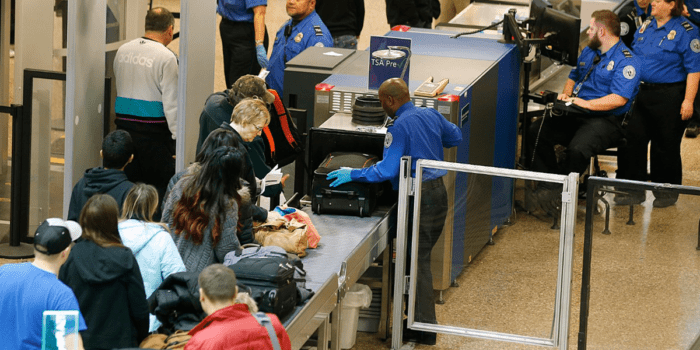
The Transportation Security Administration (TSA) allows blunt-tipped hiking poles in carry-on luggage. Sharp-tipped poles are the ones barred from the cabin and have to be checked.
Additionally, it’s crucial to recognize that hiking sticks can be packed in checked luggage, similar to pocket knives, but TSA knife weapons policies apply to all sharp items.
However, you can pack your hiking sticks in checked luggage. Be aware that TSA officers have some discretion, which may lead to inconsistent enforcement at different airports. Always check current TSA guidelines before traveling.
Carry-On Vs. Checked Baggage
In light of TSA regulations, deciding between carry-on and checked baggage becomes essential when traveling with hiking sticks. As with multitools, items deemed potentially dangerous, like hiking poles, can travel in your carry-on only if the tips are blunt. Instead, pack them in your checked bag to avoid confiscation at security checkpoints.
Remember, TSA officers have the final say, so following these guidelines is best to guarantee a smooth travel experience. For more information on what you can bring, refer to TSA guidelines.
Types of Permitted Hiking Poles

Blunt-tipped hiking poles are allowed in carry-on luggage, and every type of pole is permitted in checked baggage.
Traditional hiking sticks made from aluminum, carbon fiber, or wood are allowed in checked bags. Additionally, you can bring collapsible hiking poles that can be disassembled into smaller sections, which are particularly convenient for travel as they’re easier to pack and comply with airline size restrictions.
For more information about tripod regulations on planes, click here. Understanding how to pack your gear effectively can enhance your travel experience.
International Travel Considerations
Regulations for hiking sticks can differ dramatically when you’re traveling internationally. While some countries allow them as carry-ons, others require them to be checked.
For example, Australia and the UK mandate hiking poles in checked luggage, while New Zealand permits lightweight, collapsible ones in carry-ons. It’s essential to research specific rules for each destination, as a TSA officer’s decision may vary based on local guidelines.
Alternatives to Packing Hiking Sticks

For travelers frustrated by the complexities of transporting hiking sticks, several alternatives can make your expedition smoother. Consider renting hiking poles at your destination or purchasing collapsible hiking sticks that fit easily in checked luggage.
You can also investigate shipping hiking sticks to your location via courier services. Local hiking groups often provide useful information on where to rent or buy equipment near popular trails, offering convenient solutions for your trekking needs.
TSA Enforcement Variability
You’ll find that TSA enforcement of hiking stick regulations can be frustratingly inconsistent from one airport to another. This variability stems from individual TSA agents exercising their discretion when interpreting and applying the rules.
As a result, you might successfully carry your hiking poles on board at one airport, only to have them confiscated at another, highlighting the challenges posed by agent discretion in security protocols.
Inconsistent Rule Application
Inconsistency plagues TSA enforcement of hiking stick regulations across U.S. airports. You might find your hiking poles allowed at one checkpoint, only to have them confiscated at another. The decision often depends on the TSA officer on whether the item is allowed.
This variability can lead to confusion and frustration for travelers, highlighting the importance of checking current guidelines and being prepared for different interpretations at security checkpoints.
Agent Discretion Challenges
Many travelers face a formidable challenge regarding TSA enforcement of hiking stick regulations: agent discretion. The final decision rests with individual TSA officers, who determine whether an item is allowed through security. You might successfully carry hiking poles on one flight, only to have them confiscated on another.
This inconsistency can lead to confusion and frustration, as enforcement varies between airports and even officers.
Packing Tips for Hiking Poles

When packing hiking poles for air travel, proper preparation is key. Remember, sharp-tipped hiking poles aren’t allowed in carry-on luggage, so pack them in your checked bags. Clean them thoroughly before packing to comply with customs regulations.
Consider using collapsible poles for easier packing. Research airline and destination country rules, as policies may vary. If possible, look into renting poles at your destination to avoid any hassles.
Customs and Biosecurity Concerns
Customs and biosecurity regulations can throw a wrench into your travel plans if you’re not prepared.
When crossing borders with hiking poles, you’ll need to guarantee they’re thoroughly cleaned to prevent the spreading of invasive species. Some countries restrict certain materials used in poles, and you might face quarantine measures if organic matter is found.
Check with customs authorities at departure and destination points for specific requirements to avoid confiscation or fines.
Disability Exceptions and Accommodations

Most travelers with disabilities can sigh relief regarding hiking sticks and TSA rules. Mobility aids, including walking canes and certain trekking poles, are generally permitted in the cabin after inspection. A doctor’s note may be required to confirm your need.
Inform the airline about your requirements, and arrive early for security checks. Airlines often provide additional accommodations and assistance for passengers with disabilities.
Frequently asked questions
Can you take hiking poles in carry-on luggage?
Blunt-tipped poles are allowed in carry-on bags under TSA rules. Sharp-tipped poles are not, and they have to be checked. The tip type decides the answer, not the fact that the item is a hiking pole.
Do hiking poles have to be checked?
Only if the tips are sharp. A blunt-tipped pair can fly in the cabin, though the TSA officer makes the final decision and some airlines add their own restriction. If you carry expensive carbon poles, checking them in a padded case is the safer choice.
Are walking sticks and canes allowed on the plane?
Yes, if the tip is blunt. Canes and walking sticks are treated as mobility aids as well as luggage, and sharp-tipped versions are the ones that get refused at the lane. Tell the officer if the stick is a mobility aid rather than hiking gear.
What about hiking poles on international flights?
The screening rules at the departure airport apply, and they are not identical everywhere. Some countries allow blunt poles in the cabin, others require all poles to be checked. Look up the departure country’s rules rather than assuming the US answer carries over.
How should you pack hiking poles for a flight?
Collapse them, sheath or tape the tips, and put them in a padded bag inside checked luggage if they are sharp. If they are blunt and you carry them on, keep them visible in the tray so the officer can see both tips without unpacking your bag.
Primary source: TSA, Hiking poles.
What to do next
Look at the tips before you pack: blunt poles can stay with you, sharp ones belong in the hold. On a short trip, price a rental at the trailhead against the checked bag fee before you carry them at all.